
Zero to One vs The Energy Bus: Which Should You Read?
A detailed comparison of Zero to One by Peter Thiel and The Energy Bus by Jon Gordon. Discover the key differences, strengths, and which book is right for you.
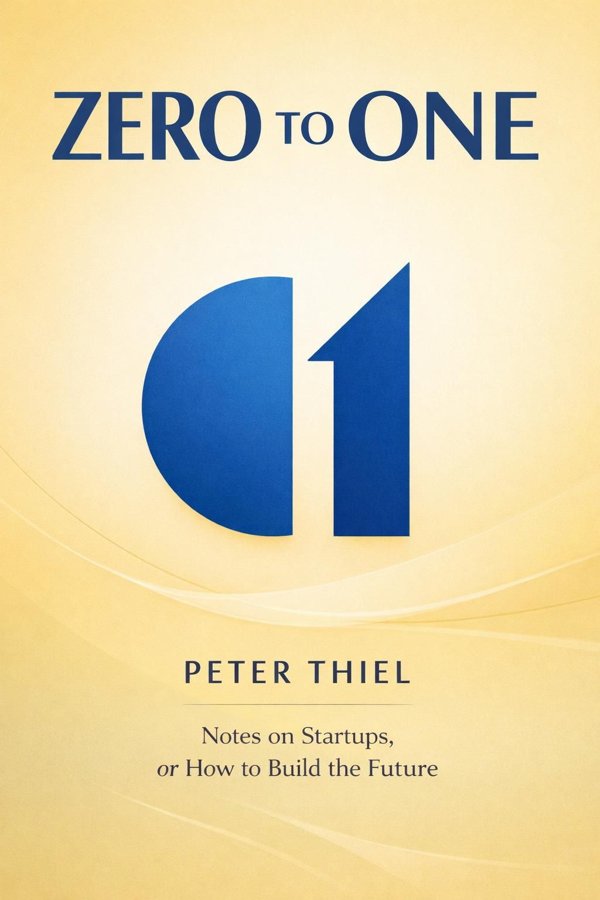

Zero to One
The Energy Bus
In-Depth Analysis
Peter Thiel's Zero to One and Jon Gordon's The Energy Bus both belong to the broad business category, yet they are trying to solve very different problems. Zero to One is fundamentally about how to build the future through innovation, while The Energy Bus is about how to lead yourself and others with positive energy in the present. One is a strategic argument about markets, startups, and technological progress; the other is a motivational fable about mindset, resilience, and team culture. Comparing them in depth reveals not just two styles of business writing, but two distinct definitions of what success in business actually means.
At the center of Zero to One is Thiel's famous distinction between horizontal progress and vertical progress. Globalization, in his formulation, means going from 1 to n: copying things that already work. Technology means going from 0 to 1: creating something new. This is not just clever phrasing; it shapes the whole book's worldview. Thiel believes extraordinary companies are built by escaping competition, discovering hidden truths, and creating monopolistic advantages through innovation. Chapters such as 'Every Happy Company Is Different' and 'The Illusion of Competition' push readers to reject the common business-school assumption that competition is healthy. For Thiel, competition erodes profits and distracts companies from long-term value creation. The ideal company is not one that battles rivals efficiently, but one that defines a unique market category and dominates it.
The Energy Bus begins from a much more personal and immediate place. George is not trying to invent the future; he is trying to stop his life from falling apart. His work project is failing, his marriage is strained, and he has become emotionally depleted. The catalyst is Joy, a bus driver who teaches him ten rules, beginning with the foundational idea that 'You Are the Driver of Your Bus.' Where Thiel asks readers to think contrarian thoughts about markets, Gordon asks readers to take ownership of attitude and direction. Rule #2, about desire, vision, and focus moving the bus in the right direction, turns leadership into a matter of inner clarity before outer execution. In this sense, The Energy Bus is less concerned with strategy than with energetic alignment: what kind of emotional and mental state enables people to function well.
Their methods reflect these priorities. Zero to One works through argument, compression, and provocation. Thiel uses startup history, reflections from the dot-com bubble, and principles drawn from PayPal-era entrepreneurship to build a framework for thinking. Even when he is overstating his case, he does so productively. For instance, his emphasis on monopoly is controversial because many readers instinctively recoil from the term. But this rhetorical choice forces the reader to distinguish between socially harmful monopoly and the kind of differentiated market power that comes from building something uniquely valuable. The book is effective precisely because it makes readers confront ideas they may have accepted too casually, such as the virtue of pure competition.
The Energy Bus, by contrast, relies on parable. Joy is less a realistic character than a teaching vehicle, and George's journey is a structured transformation narrative. That can make the book feel simplistic to readers who prefer analytical complexity, but it also explains its broad appeal. The story gives emotional context to leadership lessons that might otherwise seem generic. Rule #4, 'Invite People on Your Bus and Share Your Vision for the Road Ahead,' is more memorable because it plays out through George's relationships and work challenges rather than being presented as a dry principle. Gordon's framework is sticky because it translates leadership into concrete imagery: buses, passengers, fuel, direction, and energy vampires.
In terms of practical use, the books differ in both scale and immediacy. Zero to One is highly useful for founders deciding what kind of company to build, what market to enter, and how to think about differentiation. The idea of the 'last mover advantage' is especially important: Thiel argues that durable businesses are not those that arrive first, but those that build long-term defensibility. This is a strategic insight with major implications for product design, pricing, timing, and market positioning. However, much of the book's advice is easier to admire than to implement unless the reader is actively building or evaluating a venture.
The Energy Bus is more accessible in everyday professional life. A middle manager, teacher, coach, or employee can apply its lessons without launching a company. Rule #3, to fuel your ride with positive energy, can shape how someone runs meetings, responds to setbacks, or handles conflict the same day they read it. The simplicity is part of the design. Gordon is not trying to explain competitive advantage in software markets; he is trying to improve morale, accountability, and relational leadership.
The books also differ sharply in what they assume about human behavior. Thiel emphasizes rare insight, exceptional talent, and strong founding structures. His view of business rewards those who think differently from the crowd and make concentrated bets. Gordon assumes that many failures stem less from flawed market design than from negativity, drift, and lack of vision. In Zero to One, the hero is the visionary builder; in The Energy Bus, the hero is the discouraged ordinary person who relearns how to lead.
Ultimately, neither book replaces the other because they operate on different planes. Zero to One helps readers answer, 'What should we build, and why will it matter?' The Energy Bus helps answer, 'How do we sustain ourselves and our team while doing the work?' If Thiel gives the architecture of ambition, Gordon provides the emotional fuel. Readers seeking intellectual frameworks, startup strategy, and contrarian business insight will find Zero to One richer and more durable. Readers seeking encouragement, leadership habits, and a fast reset for team culture will likely find The Energy Bus more directly transformative. Together, they reveal that business success depends both on building the right thing and generating the right energy to carry people toward it.
Side-by-Side Comparison
| Aspect | Zero to One | The Energy Bus |
|---|---|---|
| Core Philosophy | Zero to One argues that real value comes from creating something genuinely new: moving from '0 to 1' rather than copying existing models. Thiel centers innovation, monopoly creation, and contrarian thinking as the engines of exceptional business success. | The Energy Bus teaches that success begins with personal responsibility and sustained positive energy. Its philosophy is less about inventing markets and more about shaping mindset, vision, and team culture through intentional optimism. |
| Writing Style | Zero to One is written as a compact business manifesto, blending startup theory, investor logic, and provocative claims. Thiel's style is sharp, aphoristic, and argumentative, often aiming to challenge conventional business wisdom. | The Energy Bus uses a fable structure, following George's transformation through conversations with Joy. Its style is simple, motivational, and story-driven, designed to make leadership lessons emotionally accessible. |
| Practical Application | Thiel offers frameworks for evaluating startups, building founding teams, choosing markets, and seeking durable competitive advantage. The advice is especially applicable to entrepreneurs, founders, and investors making strategic bets under uncertainty. | Gordon provides rules that readers can apply immediately to workplace morale, communication, leadership, and personal discipline. The lessons are easier to implement day to day, especially in team management and self-motivation. |
| Target Audience | Zero to One is best suited for startup founders, ambitious operators, venture-minded readers, and people interested in innovation strategy. Readers with an interest in economics, technology, or competitive positioning will get the most from it. | The Energy Bus is aimed at managers, employees, coaches, and readers seeking encouragement or culture-building tools. It is especially welcoming to beginners who prefer personal development framed through narrative rather than theory. |
| Scientific Rigor | Zero to One has more analytical depth, drawing on business history, startup examples, and economic reasoning, even if some claims are intentionally sweeping. Its arguments feel intellectually structured, though they are often ideological rather than academically evidenced. | The Energy Bus is not a research-heavy work and does not try to ground its lessons in formal behavioral science. Its persuasiveness comes from parable and motivational clarity rather than empirical rigor. |
| Emotional Impact | Zero to One inspires through ambition, intellectual provocation, and the allure of building the future. Its emotional effect is energizing for readers who are motivated by originality, scale, and the possibility of creating category-defining companies. | The Energy Bus is more directly uplifting, aiming to restore hope and agency in both work and life. George's struggles with work, marriage, and morale give the book a warmer, more personally encouraging emotional arc. |
| Actionability | Thiel's recommendations are actionable at the strategic level: avoid crowded markets, pursue secrets, build strong teams, and design for long-term monopoly. However, applying the advice often requires significant resources, risk tolerance, and entrepreneurial context. | Gordon's rules are immediately actionable in ordinary settings, such as meetings, relationships, and daily routines. Readers can begin using its ideas the same day by clarifying vision, managing energy, and protecting team culture. |
| Depth of Analysis | Zero to One digs deeper into economics, innovation, and startup structure, particularly in chapters like 'The Challenge of the Future,' 'The Illusion of Competition,' and 'The Last Mover Advantage.' It asks not just how to work better, but what kinds of businesses are worth building at all. | The Energy Bus offers less structural business analysis and focuses instead on behavioral transformation. Its depth lies in repetition and internalization of simple leadership principles rather than in nuanced market or strategic examination. |
| Readability | Zero to One is concise but conceptually denser, with abstract claims that invite reflection and sometimes disagreement. It is readable for a general audience, but readers unfamiliar with startups may find parts less intuitive. | The Energy Bus is highly readable, with short chapters, a clear plot, and memorable rules. Its narrative format makes it easier for a broad audience to finish quickly and revisit later. |
| Long-term Value | Zero to One has lasting value for readers interested in entrepreneurship because its core ideas about differentiation, monopoly, and technological progress remain central to startup thinking. Even when readers dispute Thiel's conclusions, the book stays useful because it sharpens strategic judgment. | The Energy Bus has long-term value as a morale and leadership refresher, particularly for teams under stress or leaders needing a cultural reset. Its lessons endure best as reminders of attitude and accountability rather than as deep business strategy. |
Key Differences
Innovation Strategy vs Personal Energy
Zero to One is concerned with creating new markets and building companies that achieve durable uniqueness. The Energy Bus is concerned with how an individual or team sustains motivation and focus, as seen in George's journey from discouragement to renewed leadership.
Argumentative Manifesto vs Leadership Fable
Thiel writes in propositions and challenges, using ideas like 'competition is for losers' to provoke strategic reconsideration. Gordon teaches through story, with Joy functioning as a mentor figure who translates leadership into memorable bus metaphors.
Founder-Level Decisions vs Everyday Workplace Behavior
Zero to One helps with choices such as whether a startup should enter a crowded market, how it can achieve monopoly-like differentiation, and why long-term defensibility matters. The Energy Bus helps with choices like how to lead a meeting, recover from negativity, and align a struggling team around a shared vision.
Contrarian Thinking vs Affirmational Motivation
Thiel repeatedly asks readers to identify truths that few people agree with, making contrarian insight central to business success. Gordon instead reinforces uplifting principles such as taking control of your bus and fueling your ride with positive energy.
Selective Audience vs Broad Accessibility
Zero to One is most rewarding for readers interested in entrepreneurship, venture logic, and market structure. The Energy Bus can be read by almost anyone in a workplace setting, from executives to frontline employees, because its lessons require no startup background.
Strategic Defensibility vs Cultural Cohesion
A major concern in Zero to One is how companies secure lasting advantage, illustrated by ideas like the last mover advantage and avoiding commodity competition. A major concern in The Energy Bus is how teams stay aligned and energized, especially when pressure and negativity threaten cohesion.
Intellectual Friction vs Emotional Encouragement
Reading Zero to One often produces disagreement, reflection, and reassessment because many claims challenge conventional wisdom. Reading The Energy Bus more often produces reassurance and motivation, especially for readers who need a confidence and attitude reset.
Who Should Read Which?
Aspiring startup founder or early-stage entrepreneur
→ Zero to One
This reader needs frameworks for identifying unique opportunities, avoiding crowded markets, and building durable competitive advantage. Thiel's emphasis on going from '0 to 1,' rather than copying existing models, is directly aligned with founder-level decision making.
Manager leading a discouraged or fragmented team
→ The Energy Bus
This reader will benefit from Gordon's focus on vision, positivity, and accountability. The book's rules are easy to introduce into team culture, and George's story mirrors the experience of many leaders trying to reverse low morale.
Ambitious professional who wants both strategic and personal growth
→ Zero to One
Although The Energy Bus is more immediately encouraging, Zero to One offers a broader upgrade in how this reader understands value creation, ambition, and differentiated work. It is the better choice for someone who wants not only motivation but a sharper lens on what meaningful progress looks like.
Which Should You Read First?
For most readers, the best reading order depends on your current challenge. If you are feeling burned out, discouraged, or responsible for team morale, start with The Energy Bus. Its narrative momentum and clear rules make it easy to finish quickly, and it can restore a sense of agency before you move on to heavier strategic thinking. Reading it first can also help you approach the more demanding ideas in Zero to One with greater focus and openness. If, however, you are already in founder mode or actively thinking about building a company, start with Zero to One. Its ideas about technological progress, monopoly, and differentiation will shape how you evaluate opportunities from the outset. Then read The Energy Bus afterward as a complement: once you know what kind of business you want to build, Gordon can help with the human side of sustaining momentum and culture. In general, the broadest sequence is The Energy Bus first, Zero to One second: first get the emotional engine running, then decide where the vehicle should truly go.
Want the full summary?
Get instant access to this book summary and 100K+ more with Fizz Moment.
Get Free SummaryAvailable on App Store • Free to download
Frequently Asked Questions
Is Zero to One better than The Energy Bus for beginners?
It depends on what kind of beginner you are. If you are a beginner in startups, venture thinking, or innovation strategy, Zero to One is more valuable because it introduces foundational ideas about monopoly, competition, market creation, and long-term business defensibility. However, if you are a beginner in business reading overall, The Energy Bus is easier to absorb because it uses a simple story and clear rules. Many first-time business readers will find Gordon's fable less intimidating, while aspiring founders may benefit more from Thiel's sharper strategic lens despite the higher conceptual difficulty.
Which book is more practical for managers: Zero to One or The Energy Bus?
For most day-to-day managers, The Energy Bus is more immediately practical. Its lessons on responsibility, vision, positive energy, and inviting people onto your 'bus' can be applied directly to team meetings, morale problems, and communication habits. Zero to One is practical in a different sense: it is useful for strategic managers deciding where to compete, how to differentiate, or whether a business has durable advantage. So if your challenge is culture and leadership behavior, choose The Energy Bus; if your challenge is strategy and innovation, choose Zero to One.
Is The Energy Bus too simplistic compared with Zero to One?
Compared with Zero to One, The Energy Bus is definitely simpler, but that simplicity is intentional rather than accidental. Gordon is writing a leadership parable, not a market analysis. He wants readers to remember and act on a set of principles, such as owning your direction and protecting your energy, rather than debate abstract theories. By contrast, Zero to One is designed to provoke and complicate the reader's thinking. If you want nuance about entrepreneurship, Thiel offers more; if you want memorable behavioral guidance, Gordon's simplicity is a strength.
Which book has better startup advice: Zero to One or The Energy Bus?
Zero to One clearly offers better startup advice. Its whole framework is oriented toward identifying non-obvious opportunities, avoiding commodity competition, building unique products, and seeking lasting market power. Ideas like 'The Illusion of Competition' and 'The Last Mover Advantage' are directly relevant to founders shaping a company from scratch. The Energy Bus can still help startup leaders because attitude and team culture matter, especially under stress, but it does not meaningfully address startup economics, product differentiation, or venture-scale strategic choices.
Should I read Zero to One or The Energy Bus if I want leadership development?
If your primary goal is leadership development, The Energy Bus is usually the better starting point. It focuses on how leaders influence others through energy, vision, and accountability, and it presents these lessons in a way that is easy to discuss with teams. Zero to One also contains leadership implications, especially around hiring, mission, and founding teams, but those insights are embedded in a broader argument about entrepreneurship. In short, Gordon teaches interpersonal leadership habits more directly, while Thiel teaches strategic leadership indirectly through business design.
Which has more long-term value: Zero to One or The Energy Bus?
For readers interested in business thinking over many years, Zero to One usually has greater long-term intellectual value. Its concepts about technological progress, differentiation, and monopoly continue to shape how founders and investors assess opportunities. The Energy Bus has long-term value too, especially as a morale reset or leadership refresher, but its lessons are more repetitive and less expansive. You may revisit Gordon when your energy drops; you may revisit Thiel when making major strategic decisions or rethinking how value is created.
The Verdict
If you want a book that changes how you think about business itself, Zero to One is the stronger and more consequential read. Peter Thiel offers a high-leverage framework for understanding innovation, competition, and why the best companies do not simply outperform rivals but redefine the game. Its ideas are especially powerful for founders, investors, and ambitious professionals who want to think beyond optimization and toward original value creation. Even where the book is debatable, it is productively debatable. If, however, you want a book that improves how you show up at work tomorrow morning, The Energy Bus may be more immediately useful. Jon Gordon's fable is accessible, emotionally engaging, and easy to translate into team leadership, personal accountability, and culture-building. It is less intellectually ambitious than Zero to One, but also more broadly applicable to ordinary workplace struggles. The best recommendation is audience-specific. Choose Zero to One if you care most about strategy, startups, and innovation. Choose The Energy Bus if you care most about mindset, morale, and leadership energy. If forced to name the more important business book overall, Zero to One wins because it offers a more original and durable mental model. But if the question is which book more quickly helps a tired manager or team regain direction, The Energy Bus has the advantage.
Related Comparisons

Want to read both books?
Get AI-powered summaries of both Zero to One and The Energy Bus in just 20 minutes total.