
The 7 Habits of Highly Effective People vs Eat That Frog: Which Should You Read?
A detailed comparison of The 7 Habits of Highly Effective People by Stephen Covey and Eat That Frog by Brian Tracy. Discover the key differences, strengths, and which book is right for you.
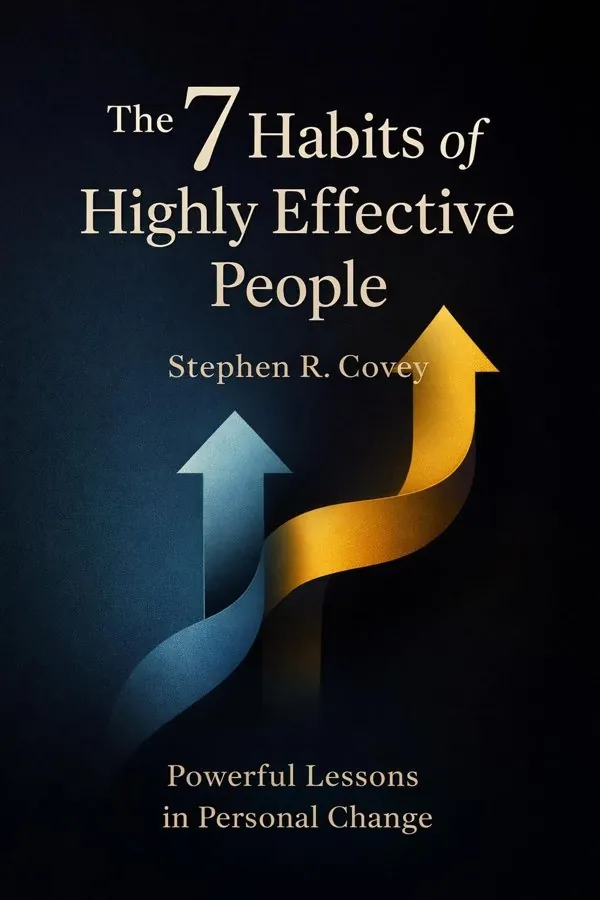
The 7 Habits of Highly Effective People
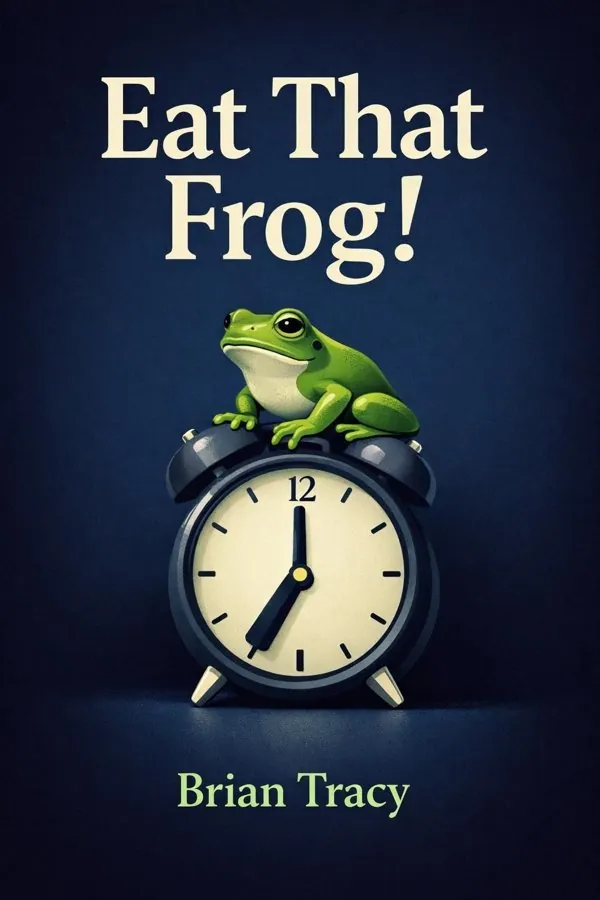
Eat That Frog
In-Depth Analysis
Stephen Covey’s The 7 Habits of Highly Effective People and Brian Tracy’s Eat That Frog are often placed on the same productivity shelf, but they solve different problems. Covey asks how a person becomes effective in the deepest sense—aligned, principled, trustworthy, and capable of meaningful results across life domains. Tracy asks a narrower but urgent question: how do you stop procrastinating and get your most important work done now? Both books are useful, but they operate at different altitudes. Covey builds a philosophy of effectiveness; Tracy delivers a field manual for execution.
The clearest difference appears in their governing metaphors. Covey uses the language of habits, principles, and paradigms. His early habits—Be Proactive, Begin with the End in Mind, and Put First Things First—form what he calls a movement from dependence to independence. This is not merely time management. Habit 1 insists that the crucial human power is the ability to choose a response rather than be ruled by mood or circumstance. Habit 2 asks readers to define success before pursuing it, often through the exercise of writing a personal mission statement. Habit 3 then translates those values into calendar decisions through the famous urgent/important matrix, especially Quadrant II work: activities that matter deeply but rarely feel urgent, such as planning, relationship-building, and prevention.
Tracy’s title metaphor is intentionally more visceral. If the “frog” is your biggest, ugliest, most important task, then success depends on doing that first before avoidance, busyness, and digital distraction take over. Where Covey wants to reshape identity and judgment, Tracy wants to break inertia. His chapters on clarifying goals, planning the day in advance, using the ABCDE method, and applying the 80/20 principle all target a common modern failure: doing many things while postponing the one thing that matters most. In this sense, Eat That Frog is less about purpose and more about throughput.
That does not make Tracy shallow. In fact, his strength is behavioral specificity. A reader can finish one chapter and immediately make tomorrow’s task list, mark items by consequence level, identify the “A-1” task, and start there in the morning. If Covey’s advice often requires contemplation, Tracy’s advice rewards compliance. Someone overwhelmed by email, deadlines, and unfocused work will likely experience immediate relief from Tracy because the book reduces productivity to visible choices: What is the highest-value task? What can be deferred, delegated, or deleted? What should be done first?
Covey, however, is stronger when the productivity problem is not laziness but misalignment. Many readers are already busy and disciplined; their problem is that they are succeeding at goals they never consciously chose. Covey directly addresses this trap. “Begin with the End in Mind” is a challenge to inherited ambition, reactive scheduling, and accidental living. Likewise, Habit 4, Think Win-Win, and Habit 5, Seek First to Understand, Then to Be Understood, expand the concept of effectiveness beyond individual output. Covey insists that productivity without relational maturity is incomplete. A manager may clear tasks efficiently yet still fail by damaging trust, ignoring mutual benefit, or listening poorly. Tracy rarely enters that moral and interpersonal terrain with the same seriousness.
This difference also affects each book’s emotional texture. Eat That Frog is energizing. It speaks to the guilty, delayed, overwhelmed part of the reader and offers relief through decisive action. The emotional promise is competence: you can stop drifting and start finishing. The 7 Habits is more searching. It can provoke discomfort because it asks whether your habits reflect your values, whether your communication is genuinely empathic, and whether your schedule reflects what you claim matters. Its emotional promise is not just productivity but integrity.
In terms of structure, Covey’s book is cumulative. The habits are designed to interlock: proactive choice supports goal clarity; goal clarity enables prioritization; private discipline prepares the reader for win-win relationships and empathic communication. Even though the user-provided material highlights only the first five habits, the larger architecture of the book makes clear that Covey is constructing a full model of human effectiveness. Tracy’s structure is modular. The 21 methods can be sampled, reordered, and applied independently. This makes his book easier to use but less conceptually unified.
Neither book is strongly scientific in a modern evidence-based sense. Both draw more on observation, business wisdom, and practical experience than on formal studies. Yet Covey often feels more intellectually ambitious because he situates productivity within ethics and human development. Tracy feels more entrepreneurial and utilitarian, which many readers will find refreshing rather than limiting.
If forced into a simple distinction, Covey helps readers decide what deserves their life, while Tracy helps them do it today. The best example is priority itself. Covey’s “Put First Things First” asks, “According to what governing values should I rank my commitments?” Tracy’s “Eat the frog” asks, “Given that my priorities are set, what task should I execute before resistance appears?” One clarifies the hierarchy; the other attacks the bottleneck.
For many readers, the books are complementary rather than competing. Read Covey to build the compass; read Tracy to strengthen the engine. Covey prevents empty efficiency. Tracy prevents thoughtful stagnation. If you only read Tracy, you may become better at chasing goals you have not examined. If you only read Covey, you may become wise about priorities yet remain inconsistent in execution. Together, they cover both the moral architecture and daily mechanics of productive living.
Side-by-Side Comparison
| Aspect | The 7 Habits of Highly Effective People | Eat That Frog |
|---|---|---|
| Core Philosophy | Covey argues that true effectiveness grows from character, principles, and disciplined inner change rather than from shortcuts. The seven habits move from private victory to public victory, emphasizing integrity, purpose, and interdependence. | Tracy’s philosophy is more tactical: productivity improves when you identify the highest-value task and do it before easier, lower-value work. The book treats success as the result of prioritization, momentum, and repeated action against procrastination. |
| Writing Style | The writing is reflective, structured, and often philosophical, with memorable frameworks such as the Circle of Concern vs. Circle of Influence and the urgency/importance time matrix. Covey often teaches through extended explanation and conceptual layering. | Tracy writes in a brisk, motivational, checklist-driven style. Chapters are short, direct, and built around immediately usable techniques like goal setting, daily planning, and the ABCDE method. |
| Practical Application | Its applications are broad and life-encompassing, extending beyond work into relationships, leadership, and personal mission. Habits like 'Begin with the End in Mind' and 'Seek First to Understand' require interpretation and sustained practice rather than one-time implementation. | Its applications are immediate and concrete, especially for daily workflow. Readers can use its advice the same day by choosing the hardest task first, making a list, assigning priorities, and working in focused bursts. |
| Target Audience | This book suits readers who want a full operating system for life and work, especially managers, leaders, and readers interested in values-based self-development. It also appeals to those willing to think deeply about identity and long-term effectiveness. | This book is ideal for readers who feel stuck, overwhelmed, or chronically distracted and want straightforward productivity help. It especially fits students, salespeople, freelancers, and busy professionals needing fast behavioral improvement. |
| Scientific Rigor | Covey’s arguments are grounded more in moral philosophy, leadership observation, and anecdotal experience than in formal empirical research. The book feels intellectually serious, but it is not a research-heavy behavioral science text. | Tracy also relies largely on business experience, common-sense heuristics, and motivational reasoning rather than detailed scientific evidence. Its claims are practical and intuitive, though less rigorously supported than modern evidence-based productivity books. |
| Emotional Impact | Covey often creates a deeper emotional response because he links productivity to meaning, conscience, and relationships. Exercises around personal mission and empathic listening can feel transformative rather than merely efficient. | Tracy’s emotional impact comes from energizing readers to act and reducing guilt around procrastination through clear next steps. The book creates urgency and confidence more than introspection. |
| Actionability | The habits are actionable, but many require reflection before execution; for example, writing a personal mission statement or redesigning relationships around win-win thinking. The payoff is large, but the path is slower and more developmental. | Actionability is the book’s biggest strength. Nearly every chapter ends with a behavior readers can perform immediately, such as defining goals, planning the day in advance, or applying the 80/20 rule to task selection. |
| Depth of Analysis | Covey offers far greater conceptual depth, building a coherent framework about human effectiveness that connects self-mastery, communication, trust, and renewal. The habits reinforce each other and operate as a system rather than isolated tips. | Tracy’s analysis is narrower and more operational. He goes deep on procrastination, prioritization, and execution, but he does not attempt a similarly comprehensive theory of human development. |
| Readability | The book is accessible but denser, with more abstraction and longer explanations. Readers may need time to absorb its conceptual distinctions and apply them thoughtfully. | The book is highly readable and fast-paced, making it easy to finish quickly and revisit often. Its concise chapters and repeated emphasis on action make it beginner-friendly. |
| Long-term Value | Its long-term value is exceptionally high because the principles remain relevant across careers, life stages, and social contexts. Many readers return to it for years as a guide to leadership, priorities, and interpersonal effectiveness. | Its long-term value lies in its repeatable tactical usefulness. While less philosophically enduring, it remains a strong practical manual whenever readers need to reset habits, beat procrastination, or regain execution discipline. |
Key Differences
Principles vs. Tactics
Covey is fundamentally concerned with principle-centered living. He asks readers to change the underlying beliefs and habits that shape behavior, whereas Tracy focuses on tactical execution methods like planning ahead and doing the hardest task first.
Life System vs. Daily Workflow
The 7 Habits functions like a full operating system for personal and interpersonal effectiveness. Eat That Frog is more like a daily workflow manual, especially useful when deciding what to do this morning and what to stop postponing.
Identity Change vs. Behavioral Momentum
Covey wants readers to become proactive, mission-driven, and relationally mature. Tracy is less interested in identity formation and more interested in creating momentum through practical habits such as list-making, prioritization, and concentrated effort.
Relationships vs. Individual Output
Covey devotes major attention to interpersonal effectiveness through ideas like Think Win-Win and empathic listening. Tracy focuses far more on the individual’s ability to complete important tasks efficiently, with much less emphasis on dialogue, trust, or mutual benefit.
Conceptual Density vs. Accessibility
Covey’s book is denser and requires more reflection, especially in chapters on proactivity, personal mission, and Quadrant II time management. Tracy’s book is easier to absorb quickly because each technique is framed in plain language and tied to a specific action.
Broad Transformation vs. Immediate Results
Readers often feel Covey’s impact gradually as they rethink priorities, leadership, and personal responsibility over months or years. Tracy tends to produce immediate gains, such as completing overdue work faster or reducing procrastination within days.
Meaning of Priority
For Covey, priority is rooted in values and long-term purpose; what comes first should reflect your mission. For Tracy, priority is defined more operationally by consequence and payoff, as seen in methods like ABCDE and the 80/20 principle.
Who Should Read Which?
The overwhelmed procrastinator with a crowded to-do list
→ Eat That Frog
This reader needs immediate triage, not a deep philosophical reset. Tracy’s emphasis on identifying the highest-value task, planning ahead, and acting before resistance builds is ideal for someone stuck in delay and task avoidance.
The ambitious professional who is productive but feels misaligned
→ The 7 Habits of Highly Effective People
This reader is not lacking effort; they are lacking a coherent framework for meaning, priorities, and long-term effectiveness. Covey’s focus on mission, principles, and the difference between urgency and importance directly addresses that problem.
The manager or team leader trying to improve both execution and relationships
→ The 7 Habits of Highly Effective People
While Tracy can improve personal output, Covey is stronger for leadership because he integrates self-management with empathy, trust, and mutually beneficial thinking. Habits like Seek First to Understand and Think Win-Win are especially useful in team settings.
Which Should You Read First?
For most readers, the best order is to read The 7 Habits of Highly Effective People first and Eat That Frog second. Covey gives you the higher-level framework that makes later productivity tactics more meaningful. Habits like Be Proactive, Begin with the End in Mind, and Put First Things First help you decide what truly deserves your time. Without that foundation, Tracy’s advice can make you more efficient at pursuing goals you have not examined carefully. Then read Eat That Frog as the execution layer. Once you know your priorities, Tracy helps you act on them consistently by planning the day, selecting the most important task, and fighting procrastination with simple systems. This sequence prevents two common failures: reflective readers who never execute, and action-oriented readers who optimize the wrong things. The exception is urgency. If you are currently overwhelmed, missing deadlines, or drowning in avoidance, start with Eat That Frog for quick stabilization. Then move to Covey to rebuild your broader approach to work and life.
Want the full summary?
Get instant access to this book summary and 100K+ more with Fizz Moment.
Get Free SummaryAvailable on App Store • Free to download
Frequently Asked Questions
Is The 7 Habits of Highly Effective People better than Eat That Frog for beginners?
It depends on what kind of beginner you are. If you are new to productivity books and mainly want fast, usable techniques to stop procrastinating, Eat That Frog is usually better for beginners because its advice is simple, immediate, and highly structured. If, however, you want a foundational book that explains why priorities, purpose, and relationships matter in the first place, The 7 Habits of Highly Effective People offers a deeper starting point. In short: beginners who need action should start with Tracy, while beginners who want a life framework should start with Covey.
Which book is better for procrastination: The 7 Habits of Highly Effective People or Eat That Frog?
Eat That Frog is more directly useful for procrastination. Brian Tracy builds the entire book around overcoming delay by identifying the most important task, planning ahead, using clear priorities like the ABCDE method, and taking action before avoidance sets in. Covey certainly helps with procrastination indirectly through Habit 3, Put First Things First, but his focus is broader than task initiation. If your central problem is staring at important work and not beginning, Eat That Frog is the more targeted and effective choice.
What should I read first: The 7 Habits of Highly Effective People or Eat That Frog?
Read The 7 Habits of Highly Effective People first if you feel your problem is not just time management but confusion about values, direction, or personal leadership. Covey will help you define what matters before you optimize your schedule. Read Eat That Frog first if you already know your goals but consistently delay important work or get trapped in low-value tasks. A good rule is this: if you need a compass, choose Covey; if you need traction, choose Tracy.
Is Eat That Frog too simplistic compared with The 7 Habits of Highly Effective People?
Compared with Covey, Eat That Frog is definitely simpler, but that simplicity is part of its design rather than a weakness. Tracy is not trying to build a complete philosophy of character, communication, and long-term effectiveness. He is trying to help readers act on important tasks with less hesitation and more discipline. The 7 Habits is richer conceptually and more transformative over time, but Eat That Frog often produces faster behavioral results. Simplicity here means usability, not necessarily shallowness.
Which book is better for managers and leaders: The 7 Habits of Highly Effective People or Eat That Frog?
For managers and leaders, The 7 Habits of Highly Effective People is usually the stronger book because it extends beyond personal efficiency into trust, mutual benefit, empathic listening, and principle-centered decision-making. Habits like Think Win-Win and Seek First to Understand are especially important in leadership contexts where relationships and influence matter as much as output. Eat That Frog is still useful for leaders who need better execution and prioritization, but it focuses more on individual task management than on leading people well.
Are The 7 Habits of Highly Effective People and Eat That Frog still worth reading today?
Yes, both remain relevant, though for different reasons. The 7 Habits of Highly Effective People endures because its central issues—proactivity, purpose, prioritization, and empathic communication—are not tied to any one technology or workplace trend. Eat That Frog remains useful because procrastination, overload, and poor task selection are timeless problems, even if today they show up through email, apps, and constant notifications. Neither book is the latest behavioral science text, but both still offer durable frameworks that many modern readers can apply immediately.
The Verdict
If you want one book that can reshape how you think about work, relationships, and the architecture of a meaningful life, choose The 7 Habits of Highly Effective People. It is the more substantial and enduring book, not because it offers more hacks, but because it asks better questions: What principles govern your decisions? What does success actually mean to you? Are you organizing your life around urgency or importance? Covey’s strength is that he treats productivity as a moral and relational issue, not just a scheduling challenge. If your immediate pain point is procrastination, inconsistency, or daily overwhelm, Eat That Frog may be the more useful purchase right now. Brian Tracy is less profound but often more immediately effective. His methods are practical, memorable, and easy to implement without a major mindset overhaul. You can begin using the ABCDE method, pre-planning your day, and attacking your top-priority task almost instantly. The best recommendation for most readers is not either-or but sequence. Covey gives you the strategic framework—values, priorities, and human effectiveness. Tracy gives you operational discipline—focus, execution, and anti-procrastination tactics. If forced to rank them overall, Covey’s book has greater long-term intellectual and personal value, while Tracy’s book wins on speed of application. Choose based on whether you need transformation or traction first.
Related Comparisons
Want to read both books?
Get AI-powered summaries of both The 7 Habits of Highly Effective People and Eat That Frog in just 20 minutes total.