
The Art of War vs Tao Te Ching: Which Should You Read?
A detailed comparison of The Art of War by Sun Tzu and Tao Te Ching by Lao Tzu. Discover the key differences, strengths, and which book is right for you.
The Art of War
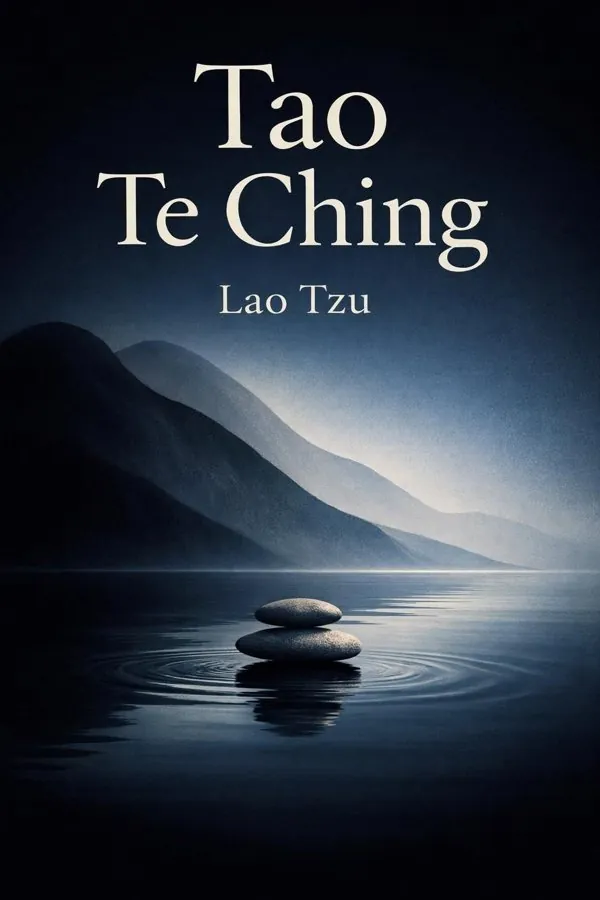
Tao Te Ching
In-Depth Analysis
The Art of War and the Tao Te Ching are often grouped together as ancient Chinese classics, but they operate at strikingly different levels of human experience. Sun Tzu asks how to act effectively within conflict; Lao Tzu asks how to live in such a way that force becomes less necessary. One is a manual of strategic intelligence, the other a meditation on ontological and ethical alignment. Yet they are not opposites. In many places, they appear to meet: both distrust ego, both prize flexibility, both criticize brute force, and both suggest that the highest form of power is indirect.
The clearest distinction lies in each book’s fundamental problem. The Art of War begins from the assumption that conflict is real, recurring, and dangerous. Therefore the leader must understand calculation, terrain, morale, logistics, deception, and timing. Sun Tzu’s famous principle that “all warfare is based on deception” is not a celebration of trickery for its own sake; it reflects a broader belief that outcomes depend on controlling appearances and information. His ideal victory is efficient: to win without prolonged battle, to break resistance while preserving resources, and to avoid the stupidity of acting from anger or pride. This makes the text deeply relevant beyond war. In negotiation, competition, law, or politics, Sun Tzu’s advice still translates: do not enter a struggle blindly, do not fight on unfavorable ground, and do not confuse impulse with strategy.
The Tao Te Ching begins elsewhere. Its foundational claim is that reality has an underlying way—the Tao—that exceeds conceptual capture. “The Tao that can be spoken is not the eternal Tao” immediately warns readers that language, categories, and rigid definitions distort what is most fundamental. From this perspective, the problem is not merely conflict but the human tendency to force, overdefine, accumulate, dominate, and inflate the self. Lao Tzu’s answer is wu wei, often translated as non-action but better understood as non-forcing. The sage acts, but without strain, vanity, or unnecessary interference. Where Sun Tzu seeks mastery through superior awareness, Lao Tzu seeks wisdom through surrender to larger patterns.
Their styles reinforce this difference. The Art of War is aphoristic but directive. It sounds like a field manual compressed into philosophical language. Even when it is abstract, it remains procedural: if the enemy is strong, avoid him; if united, divide him; if angry, provoke him. The Tao Te Ching, by contrast, is poetic and destabilizing. It often teaches through paradox: the soft overcomes the hard, emptiness is useful, the sage leads by not contending. This is not just stylistic decoration. Lao Tzu’s method performs his philosophy by loosening the reader’s dependence on straightforward assertion.
Still, the two books converge in their suspicion of ego. Sun Tzu repeatedly warns against rashness, pride, and emotional reaction because they cloud judgment. A commander who fights from anger is already compromised. Lao Tzu makes a similar claim at a deeper moral and spiritual level: grasping, ambition, and self-display estrange us from the Tao. In both books, the self that wants immediate assertion is the self most likely to fail. This shared anti-egoism is one reason both texts continue to appeal to modern leaders disillusioned with loud, performative models of power.
Another point of overlap is indirectness. Sun Tzu values surprise, misdirection, asymmetry, and the avoidance of costly frontal assault. Lao Tzu values yielding, humility, receptivity, and the mysterious efficacy of what does not contend. But the motive differs. In The Art of War, indirectness is tactically superior because it conserves strength and exploits weakness. In the Tao Te Ching, indirectness is metaphysically and ethically superior because force breeds resistance and excess creates instability. Sun Tzu asks, “How can I prevail efficiently?” Lao Tzu asks, “What kind of action is in tune with reality?”
This difference matters for readers. If someone wants concrete help in handling competition, corporate rivalry, negotiation, or crisis, The Art of War is generally more immediately useful. Its concepts of preparation, foreknowledge, adaptive positioning, and economy of effort provide a disciplined way to think through pressure. If someone is exhausted by modern striving, dealing with burnout, or searching for a calmer model of leadership, the Tao Te Ching may feel more transformative. It offers not tactics for winning contests but a reorientation away from compulsive contest itself.
The books also diverge in ethical atmosphere. The Art of War is not immoral, but it is morally cool. It prioritizes effectiveness, prudence, and preservation over transparent virtue. Deception, properly bounded, is part of intelligent action. The Tao Te Ching is not sentimental, but it is ethically warmer in its praise of humility, simplicity, and non-domination. The sage does not accumulate credit, does not impose excessively, and does not glorify aggression. Readers sensitive to instrumental thinking may prefer Lao Tzu; readers facing adversarial realities may find Sun Tzu more honest about the conditions of life.
Ultimately, these books are best seen not as rivals but as complementary correctives. The Art of War teaches how to navigate conflict without stupidity. The Tao Te Ching teaches how not to become the kind of person who creates unnecessary conflict through ego and force. Sun Tzu sharpens perception outward; Lao Tzu deepens orientation inward. Read together, they form an unusually complete philosophy of power: one explains how to act when struggle is unavoidable, the other how to live so that action emerges from balance rather than compulsion.
Side-by-Side Comparison
| Aspect | The Art of War | Tao Te Ching |
|---|---|---|
| Core Philosophy | The Art of War is built on strategic realism: know yourself, know the enemy, assess conditions, and prevail with minimal waste. Its central aim is effective action through intelligence, timing, discipline, and controlled deception. | Tao Te Ching is grounded in alignment with the Tao, the underlying way of reality that cannot be fully named or controlled. Its philosophy favors humility, paradox, non-forcing, and harmony over domination or direct assertion. |
| Writing Style | Sun Tzu writes in compact, directive aphorisms that often sound like commands or rules: assess terrain, conceal intent, avoid prolonged conflict. The tone is analytical, terse, and practical, with a strong managerial clarity. | Lao Tzu writes in poetic, paradoxical verses that invite contemplation rather than immediate execution. The language is elusive by design, often using reversal—softness overcoming hardness, emptiness proving useful—to unsettle rigid thinking. |
| Practical Application | The Art of War translates readily into leadership, negotiation, competition, crisis management, and organizational strategy. Concepts like foreknowledge, adaptability, and winning without fighting are directly usable in business and politics. | Tao Te Ching applies most strongly to self-mastery, ethical leadership, emotional balance, and sustainable decision-making. Its lessons are practical in a quieter way, shaping how one acts rather than prescribing tactical moves. |
| Target Audience | This book suits readers who want frameworks for conflict, planning, and decisive leadership under pressure. It especially appeals to managers, entrepreneurs, military thinkers, and readers drawn to strategic systems. | This book suits readers seeking spiritual depth, philosophical reflection, and a gentler model of influence. It is especially meaningful to those interested in meditation, ethics, minimalism, and contemplative leadership. |
| Scientific Rigor | The Art of War is not scientific in the modern empirical sense, but it is rigorously observational about human behavior, uncertainty, and systems. Its claims arise from pattern recognition in conflict rather than from formal evidence or experiment. | Tao Te Ching is even less concerned with empirical demonstration and more with intuitive, metaphysical insight. Its truth claims are experiential and philosophical, asking readers to verify them through lived alignment rather than external proof. |
| Emotional Impact | Sun Tzu creates a mood of alertness, restraint, and sharpened perception. Readers often feel empowered by its cool intelligence, though some may find its emphasis on deception and conflict emotionally austere. | Lao Tzu tends to calm rather than sharpen, producing a sense of spaciousness, humility, and release from strain. The emotional effect is often soothing, though its ambiguity can also feel destabilizing to readers who want direct answers. |
| Actionability | The Art of War is highly actionable because its principles can be turned into immediate questions: What is the terrain, where is the advantage, what should be concealed, and when should one avoid engagement? Even outside war, it offers clear decision prompts. | Tao Te Ching is actionable in disposition more than procedure: simplify, yield, avoid excess, lead without grasping, and act without forcing. It changes habits of mind, but often requires interpretation before becoming concrete behavior. |
| Depth of Analysis | Its depth comes from compression: short maxims imply large theories of power, perception, logistics, and psychology. The more one applies it, the more its surface simplicity reveals complex interdependence among information, morale, and timing. | Its depth lies in paradox and inexhaustibility; each chapter can be read ethically, politically, spiritually, or psychologically. Rather than map conflict, it probes the conditions under which wise action becomes possible at all. |
| Readability | The Art of War is easy to read at the sentence level because of its directness, but difficult to master because the advice is context-dependent. Its brevity can make readers overestimate how simply it should be applied. | Tao Te Ching is brief but often more difficult because it resists literal reading. Its readability depends heavily on the translation, and many lines only become clear through slow rereading. |
| Long-term Value | This is a book readers return to whenever they face competition, organizational struggle, or high-stakes choices. Its long-term value lies in sharpening judgment under uncertainty and preventing wasteful confrontation. | This is a lifelong companion text for periods of stress, ambition, aging, leadership, and spiritual questioning. Its long-term value lies in gradually reshaping one’s relation to power, desire, language, and effort. |
Key Differences
Conflict Management vs Existential Alignment
The Art of War is concerned with how to navigate and resolve conflict intelligently, whether military, political, or professional. Tao Te Ching is less interested in winning contests than in aligning oneself with the deeper order of life, so that needless conflict is reduced at its source.
Directive Maxims vs Paradoxical Poetry
Sun Tzu usually speaks in strategic instructions: evaluate, conceal, divide, adapt, avoid costly engagements. Lao Tzu teaches by paradox and inversion, such as showing how softness can overcome hardness or how emptiness can be the condition of usefulness.
External Strategy vs Internal Posture
The Art of War is primarily outward-facing, focused on enemies, terrain, information, morale, and timing. Tao Te Ching is primarily inward-facing, concerned with desire, ego, stillness, receptivity, and the quality of one’s action.
Instrumental Deception vs Non-Forcing
Sun Tzu treats deception as a necessary tool when used intelligently to conserve resources and secure advantage. Lao Tzu emphasizes non-forcing, suggesting that over-manipulation and aggressive control create instability and move us away from the Tao.
Leadership as Control of Conditions vs Leadership as Self-Effacing Presence
For Sun Tzu, strong leadership means reading conditions accurately and shaping them to produce favorable outcomes. For Lao Tzu, the best leader often appears almost invisible, guiding people without domination so that order feels natural rather than imposed.
Urgency and Precision vs Stillness and Spaciousness
Reading The Art of War often produces a sharpened, vigilant mindset suited to pressure and decision. Reading Tao Te Ching tends to slow the mind, creating a spacious awareness in which restraint and humility become forms of strength.
Context-Dependent Tactics vs Universal Temperament
Many of Sun Tzu’s teachings depend on reading specific circumstances correctly, which makes them highly adaptable but also easy to misuse superficially. Lao Tzu offers fewer situational tactics and more a general temperament—simplicity, yielding, modesty—that can be carried into almost any context.
Who Should Read Which?
The ambitious manager, entrepreneur, or negotiator
→ The Art of War
This reader will benefit from Sun Tzu’s emphasis on preparation, leverage, timing, and winning without unnecessary confrontation. The book offers a disciplined vocabulary for competitive situations where information, morale, and positioning matter.
The reflective seeker, meditator, or burned-out professional
→ Tao Te Ching
This reader is likely to find Lao Tzu’s teaching on wu wei, simplicity, and humility more restorative and transformative. The book helps loosen the habits of strain, control, and ego that often underlie exhaustion and dissatisfaction.
The thoughtful leader who wants both effectiveness and wisdom
→ The Art of War
Start with Sun Tzu for strategic clarity, then move to Tao Te Ching for ethical and spiritual depth. For this type of reader, The Art of War provides the immediate framework, while Lao Tzu later prevents strategy from hardening into manipulation or force.
Which Should You Read First?
For most readers, The Art of War should come first. Its ideas are easier to anchor because they attach to visible situations: conflict, competition, planning, negotiation, and leadership under pressure. Starting with Sun Tzu gives you a clear framework for thinking about action—when to engage, what to avoid, how to assess conditions, and why emotional reactivity is dangerous. That practical structure can then serve as a useful contrast when you move into the more elusive world of Tao Te Ching. After that, read Tao Te Ching slowly, ideally in small sections. Lao Tzu complicates and deepens what Sun Tzu has sharpened. If The Art of War teaches strategic effectiveness, Tao Te Ching asks whether your way of pursuing effectiveness has become too forceful, ego-driven, or exhausting. In that sense, the second book acts as a philosophical correction to the first. However, if you are currently burned out, spiritually restless, or seeking calm rather than tactics, reverse the order and begin with Tao Te Ching.
Want the full summary?
Get instant access to this book summary and 100K+ more with Fizz Moment.
Get Free SummaryAvailable on App Store • Free to download
Frequently Asked Questions
Is The Art of War better than Tao Te Ching for beginners?
For most beginners, The Art of War is easier to grasp on a first reading because its advice feels concrete and situational. Ideas like knowing the enemy, choosing favorable ground, and avoiding wasteful conflict are immediately understandable even if the deeper implications take time. Tao Te Ching can be harder for beginners because it speaks in paradox and often resists literal interpretation. However, if a beginner is more interested in inner peace, spirituality, or reflective philosophy than strategy, Lao Tzu may feel more intuitive. The better beginner book depends on whether you want practical frameworks or contemplative insight.
What is the difference between The Art of War and Tao Te Ching in leadership philosophy?
The Art of War treats leadership as the disciplined management of complexity under pressure. A good leader reads conditions accurately, controls information, preserves morale, and chooses the right moment to act or refrain from acting. Tao Te Ching presents leadership more ethically and spiritually: the best leader guides without dominating, influences without self-display, and creates order by reducing friction rather than escalating control. Sun Tzu’s leader is a strategist in a contested environment; Lao Tzu’s sage-leader is a stabilizing presence who aligns people with a simpler, less ego-driven way of living.
Should I read Tao Te Ching or The Art of War first if I want practical wisdom?
If by practical wisdom you mean tools you can apply to work, negotiation, competition, or decision-making this week, read The Art of War first. Its concepts are easier to operationalize because they naturally become planning questions about timing, information, leverage, and risk. If practical wisdom means reducing stress, leading more gently, and avoiding self-defeating overexertion, start with Tao Te Ching. Many readers eventually discover that the strongest practical sequence is both: Sun Tzu for outer strategy, Lao Tzu for inner posture. Together they prevent practicality from becoming either aggression or passivity.
Is Tao Te Ching more spiritual than The Art of War?
Yes, significantly. Tao Te Ching is fundamentally concerned with the nature of reality, the limits of language, the ideal of wu wei, and the cultivation of humility and simplicity in accordance with the Tao. Its questions are existential as much as political or ethical. The Art of War, while philosophical, is not primarily spiritual. It is focused on effective conduct in adversarial situations, though its warnings against ego and emotional excess do give it a contemplative dimension. If you want metaphysical depth and guidance for inner life, Lao Tzu is the more spiritual text by a wide margin.
Can The Art of War and Tao Te Ching be used together for business and personal growth?
Yes, and they are often strongest when paired. The Art of War helps with external strategy: reading competitors, allocating resources, pacing action, and avoiding direct fights you do not need to take. Tao Te Ching complements this by shaping internal character: reducing ego, resisting frantic overcontrol, and leading in a way that does not exhaust yourself or others. In business, that combination can mean strategic clarity without aggression for its own sake. In personal growth, it means learning both when to act decisively and when to stop forcing outcomes that should be allowed to emerge naturally.
Which book has more timeless value: The Art of War or Tao Te Ching?
Both are timeless, but in different ways. The Art of War remains enduring wherever competition, uncertainty, and conflict exist; as long as human beings struggle over power, resources, and influence, its insights into timing, deception, and adaptation remain relevant. Tao Te Ching may be even more universally timeless because it addresses deeper patterns of human dissatisfaction: ego, excess, striving, and alienation from simplicity. Sun Tzu is timeless in situations; Lao Tzu is timeless in condition. If your life is currently conflict-heavy, Sun Tzu may feel more urgent. If your life is spiritually or emotionally overburdened, Lao Tzu may feel more lasting.
The Verdict
If you must choose only one, the better book depends almost entirely on what kind of wisdom you need right now. The Art of War is the stronger choice for readers facing pressure, competition, organizational conflict, or high-stakes decision-making. Its brilliance lies in its compression: in very little space, Sun Tzu offers a durable way to think about leverage, information, restraint, preparation, and victory without waste. It is especially valuable for leaders who need clarity under adversarial conditions. Tao Te Ching is the stronger choice for readers seeking inner recalibration rather than strategic advantage. Lao Tzu offers a profound corrective to modern habits of strain, self-assertion, and overcontrol. Its insights into humility, emptiness, simplicity, and wu wei can quietly reshape how one works, leads, and lives. It is less immediately procedural than Sun Tzu, but potentially more transformative over a lifetime. In terms of literary and philosophical breadth, Tao Te Ching reaches further inward and upward; in terms of direct application, The Art of War reaches more readily into everyday decisions. The ideal recommendation, then, is not either-or. Read The Art of War if you need sharper judgment in conflict. Read Tao Te Ching if you need a wiser relationship to effort and power. Read both if you want the fullest education: Sun Tzu for strategic action, Lao Tzu for the spirit in which action should occur.
Related Comparisons


Want to read both books?
Get AI-powered summaries of both The Art of War and Tao Te Ching in just 20 minutes total.