
Rich Dad Poor Dad vs The Total Money Makeover: Which Should You Read?
A detailed comparison of Rich Dad Poor Dad by Robert Kiyosaki and The Total Money Makeover by Dave Ramsey. Discover the key differences, strengths, and which book is right for you.
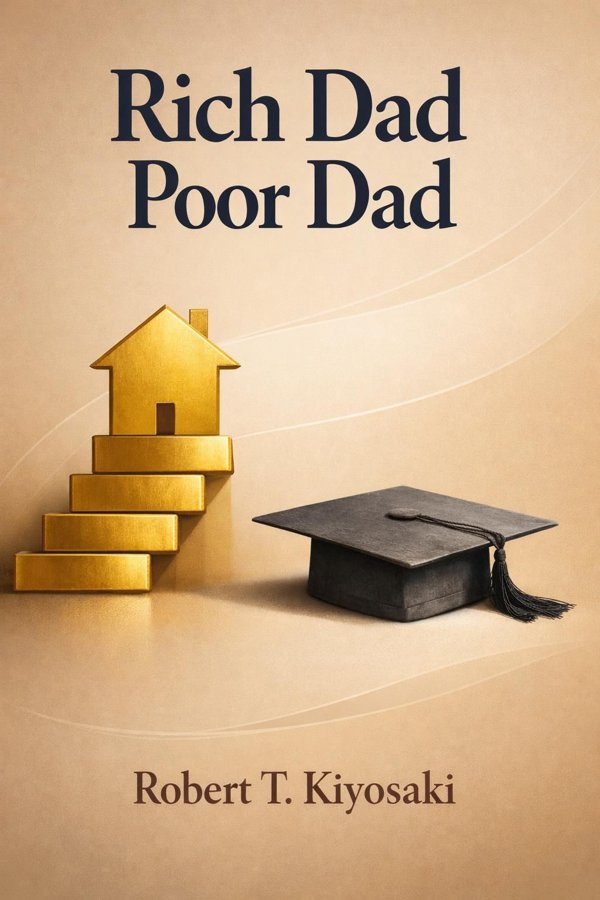
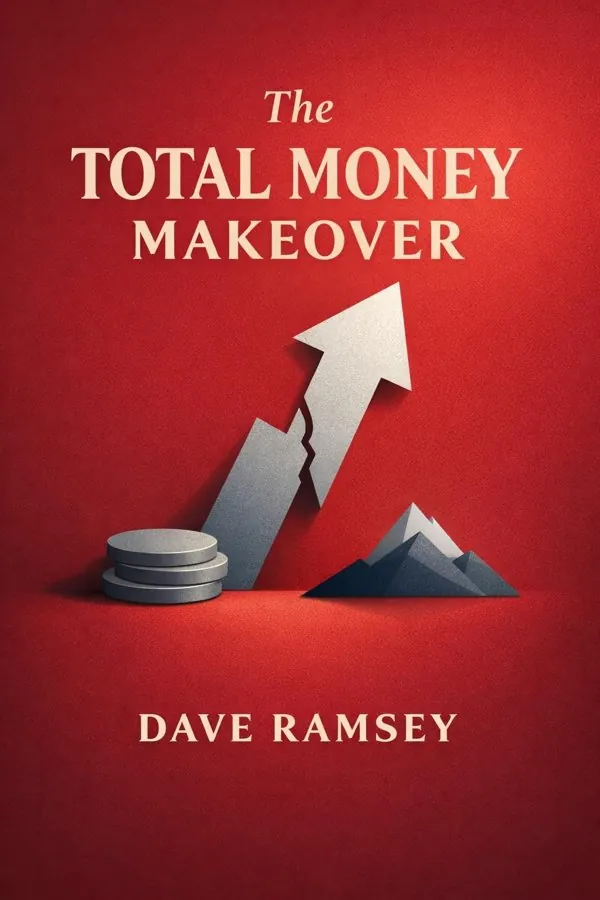
Rich Dad Poor Dad
The Total Money Makeover
In-Depth Analysis
Rich Dad Poor Dad and The Total Money Makeover are both bestselling finance books, but they solve different problems and speak to different financial pain points. Robert Kiyosaki is trying to change how readers think about wealth; Dave Ramsey is trying to change how readers behave with money. That difference shapes everything from tone to usefulness.
Kiyosaki’s book is built around a dramatic contrast between two father figures: the 'poor dad,' who represents traditional education, job security, and credential-driven success, and the 'rich dad,' who represents entrepreneurship, investing, and ownership. Whether readers take this framing literally or as a teaching device, it is the engine of the book’s appeal. Kiyosaki turns personal finance into a worldview conflict. The key lesson is not 'cut expenses' or 'pay off debt'; it is that many people are trapped because they misunderstand what wealth actually is. His most famous simplification—an asset puts money in your pocket, a liability takes money out—works because it changes how people categorize common financial decisions. A house, a car, or a prestige purchase may look like a sign of wealth, but if it drains cash flow, Kiyosaki wants readers to question whether it is really helping them become free.
Ramsey starts somewhere much less philosophical and much more urgent. The Total Money Makeover assumes the reader’s problem is not a defective theory of capitalism but a life cluttered with car loans, credit card balances, and budgetless spending. His opening mindset shift is about denial and debt myths: people tell themselves that 'everyone has debt' or that they are doing fine because minimum payments are still being made. Ramsey attacks those rationalizations with moral clarity. Then he introduces the Baby Steps, which are designed to create order: save a starter $1,000 emergency fund, use the debt snowball to eliminate nonmortgage debt, then build a fully funded emergency reserve of three to six months of expenses. This progression gives the reader not just inspiration, but a sequence.
That sequence is one reason Ramsey is often more effective in the short term. If a reader finishes Rich Dad Poor Dad on Sunday night, they may feel intellectually awakened but still not know exactly what to do Monday morning. Should they invest? Start a side business? Reevaluate their home purchase? Kiyosaki gives a framework, but not a detailed operating system. Ramsey, by contrast, tells the reader exactly what to do next: write a budget, stop borrowing, list debts smallest to largest, and attack the first one. For a household in financial distress, that clarity matters more than ideological sophistication.
Still, Kiyosaki offers something Ramsey largely does not: a critique of the wage-centered life. Rich Dad Poor Dad is powerful because it identifies a hidden tension in modern middle-class ambition. A person can earn more, get promoted, buy a bigger home, and still remain financially fragile if all income depends on continued labor and all spending rises with lifestyle expectations. Kiyosaki’s emphasis on financial education addresses a real blind spot. Schools may produce competent employees without teaching cash flow, investing, taxation, or ownership structures. This is where his influence has been durable. Even readers who later reject some of his oversimplifications often retain the habit of asking, 'Is this purchase producing income or consuming it?' That is a genuine shift in financial consciousness.
Ramsey’s strength, however, is understanding that personal finance failure is often emotional before it is mathematical. His debt snowball is the best example. Critics frequently note that paying debts from highest interest rate to lowest would be more efficient mathematically. Ramsey knows this and rejects it anyway because his method is designed for behavior, not spreadsheet optimization. Small wins build momentum. Paying off a small balance can convince a discouraged reader that change is possible, which increases adherence. In that sense, Ramsey is a practical psychologist of money. He knows many people do not need the theoretically perfect plan; they need the plan they will actually follow.
The books also differ in their treatment of debt and risk. Kiyosaki is relatively open to leverage and often presents risk as something best managed through knowledge and financial education. His worldview can attract ambitious readers who want to build businesses, buy real estate, or increase returns through strategic action. Ramsey sees debt far more categorically as a destabilizing force. He prefers safety, margin, and simplicity. For readers recovering from chaos, this is often exactly right. For readers already stable and seeking higher-level wealth-building strategies, it can feel restrictive.
In terms of rigor, neither book is a highly academic personal finance text, but Ramsey’s prescriptions map more cleanly onto broadly accepted household finance basics: spend less than you earn, maintain emergency reserves, and eliminate toxic consumer debt. Kiyosaki’s work is more vulnerable to criticism because it often uses anecdote, broad generalization, and provocative simplification to make its point. Yet that same style is why the book has reached so many readers. It is less a manual than a mental reorientation.
Ultimately, these books are not direct substitutes. Rich Dad Poor Dad is best understood as a book about financial identity and the architecture of wealth. The Total Money Makeover is a book about financial recovery and execution. One asks, 'What game are you playing?' The other asks, 'What should you do this month?' Readers who confuse those aims may underrate one or the other. Read together, they can be complementary: Kiyosaki expands ambition, Ramsey imposes discipline. But if forced to choose, the better book depends on whether the reader’s primary need is a new philosophy of money or a concrete plan to stop bleeding financially.
Side-by-Side Comparison
| Aspect | Rich Dad Poor Dad | The Total Money Makeover |
|---|---|---|
| Core Philosophy | Rich Dad Poor Dad argues that wealth comes from acquiring assets, thinking like an investor, and developing financial intelligence rather than relying on wages alone. Kiyosaki frames the central problem as a mindset failure: many people are trained to work for money instead of making money work for them. | The Total Money Makeover teaches that financial peace comes from behavior change, strict budgeting, and eliminating debt through a disciplined step-by-step system. Ramsey’s philosophy is less about entrepreneurial leverage and more about household stability, consistency, and rejecting normal debt culture. |
| Writing Style | Kiyosaki uses parable-like storytelling, especially the contrast between 'Rich Dad' and 'Poor Dad,' to make abstract financial ideas memorable. The style is provocative and aphoristic, often favoring bold claims over careful qualification. | Ramsey writes in a direct, coaching-heavy style that sounds like a blunt mentor or radio host pushing readers toward action. His tone is repetitive by design, using slogans, testimonials, and simple commands to reinforce behavior change. |
| Practical Application | Rich Dad Poor Dad offers conceptual tools such as distinguishing assets from liabilities and questioning the job-security mindset, but it provides fewer detailed implementation steps for budgeting or debt payoff. Readers often leave inspired but needing another resource to translate ideas into a monthly plan. | The Total Money Makeover is highly procedural, giving readers concrete Baby Steps, a written budget framework, and the debt snowball method. It is built for immediate use, especially for people who need a sequence rather than a philosophy. |
| Target Audience | Kiyosaki is especially suited to readers who feel trapped by conventional career advice and want to rethink wealth creation, investing, and entrepreneurship. It resonates with people motivated by ambition, independence, and big-picture financial reframing. | Ramsey is ideal for readers overwhelmed by consumer debt, inconsistent spending, or financial chaos at home. It particularly helps families, paycheck-to-paycheck earners, and beginners who need structure more than theory. |
| Scientific Rigor | Rich Dad Poor Dad is often criticized for anecdotal reasoning, simplified definitions, and limited empirical support for some of its broader claims about education, taxes, and wealth building. Its influence is motivational rather than research-driven. | The Total Money Makeover is also not an academic finance text, but its core advice aligns more closely with established personal finance principles like emergency savings, debt reduction, and spending control. Even when Ramsey’s anti-debt stance is stricter than mainstream advice, the practical logic is easier to validate in real household finances. |
| Emotional Impact | Kiyosaki creates emotional impact by challenging deeply held beliefs and making readers feel they may have been taught the wrong rules about money. The book often produces excitement, restlessness, and a desire to escape the employee treadmill. | Ramsey’s emotional force comes from urgency, accountability, and relief. Readers in debt often feel seen by his discussion of denial, then energized by the psychological wins built into the debt snowball. |
| Actionability | Its most actionable lesson is the asset-versus-liability framework, which can immediately change how readers evaluate purchases like cars, homes, or investments. Still, the book is stronger at changing perception than dictating next-week behavior. | Ramsey is exceptionally actionable because each Baby Step tells readers exactly what to do next: save $1,000, list debts, attack the smallest one, then build a 3-6 month emergency fund. The method reduces ambiguity, which is crucial for financially stressed readers. |
| Depth of Analysis | Rich Dad Poor Dad explores the psychology of wealth, social conditioning, and the role of financial education with more conceptual breadth than procedural depth. It asks readers to question systems, incentives, and identity, even if some arguments remain simplified. | The Total Money Makeover goes deeper on household financial mechanics than on macro ideas about wealth. Its analysis is narrower but more operational, focusing on behavior, debt, and budgeting rather than broader investing philosophy. |
| Readability | Kiyosaki’s storytelling makes the book highly readable, especially for people intimidated by technical finance language. The simple recurring contrasts make the lessons easy to remember, even when the details are debatable. | Ramsey is also very accessible, using plain language, repetition, and clear structure that makes the book easy to follow. The reading experience feels more like a workshop manual than a reflective narrative. |
| Long-term Value | Its enduring value lies in reshaping how readers think about income, ownership, and financial education; many people remember the asset/liability lens for years. However, some readers eventually outgrow its generalizations and need more nuanced investing guidance. | Ramsey’s long-term value is strongest for readers who actually implement the system and need a durable framework for spending, saving, and avoiding debt relapse. Its advice may feel conservative later, but the behavioral foundation often remains useful for decades. |
Key Differences
Mindset Shift vs Step-by-Step System
Rich Dad Poor Dad is fundamentally a mindset book. Its core aim is to make readers question beliefs like 'a secure job equals financial security' and to adopt the habit of evaluating whether something is an asset or a liability. The Total Money Makeover is a system book: it gives readers a fixed order of operations, such as saving $1,000 first and then attacking debt through the snowball.
Entrepreneurial Wealth vs Household Stability
Kiyosaki points readers toward ownership, investing, and cash-flow-producing assets as the route to freedom. For example, his framework encourages seeing rental income or business income as preferable to relying only on wages. Ramsey is more focused on stabilizing the household balance sheet through budgeting, debt elimination, and emergency funds.
Ambiguity vs Clarity in Next Actions
After reading Rich Dad Poor Dad, many readers feel inspired but may still need another resource to know exactly what to do this month. Its lessons are conceptual rather than operational. After reading The Total Money Makeover, readers usually know their immediate next move, such as making a debt list or writing a zero-based budget.
Tolerance for Debt and Risk
Kiyosaki treats risk as something that can be managed through financial intelligence and often presents leverage more neutrally or positively in the context of investing. Ramsey is much more categorical, treating debt as a danger to be removed quickly, even if some forms of leverage might theoretically increase returns.
Psychology of Aspiration vs Psychology of Recovery
Rich Dad Poor Dad speaks to aspiration: it appeals to readers who want to escape the rat race and think bigger about freedom. The Total Money Makeover speaks to recovery: it is especially effective for readers burdened by shame, denial, or the exhaustion of living under debt.
Conceptual Breadth vs Operational Precision
Kiyosaki discusses financial education, income types, and the social conditioning behind money habits, giving the book broad conceptual reach. Ramsey narrows the focus to behaviors that improve day-to-day finances, such as budgeting, emergency savings, and debt payoff, which makes it less expansive but more precise.
Provocative Narrative vs Coaching Tone
Rich Dad Poor Dad uses a memorable narrative contrast between two fathers to dramatize competing financial worldviews. The Total Money Makeover sounds more like a firm coach, repeating practical advice and motivational slogans designed to drive implementation rather than contemplation.
Who Should Read Which?
A family overwhelmed by credit cards, car loans, and paycheck-to-paycheck stress
→ The Total Money Makeover
Ramsey directly addresses denial, budgeting failure, and debt overload with a structured recovery plan. The debt snowball and emergency fund steps are especially useful for households that need immediate control and emotional momentum.
A salaried professional who earns decent money but feels stuck and wants to build real wealth
→ Rich Dad Poor Dad
Kiyosaki is better at challenging the assumption that a higher salary alone creates financial freedom. His emphasis on assets, cash flow, and financial education can help this reader move from earning well to thinking strategically about ownership.
A motivated beginner who wants both discipline and a bigger financial vision
→ The Total Money Makeover
As a starting point, Ramsey offers more concrete next steps and lowers the risk of confusion or inaction. After building those habits, the reader can move to Rich Dad Poor Dad for a broader framework on wealth creation and financial independence.
Which Should You Read First?
For most readers, The Total Money Makeover should come first, followed by Rich Dad Poor Dad. Ramsey provides the financial triage that many people need before bigger wealth ideas become useful. If you are carrying credit card debt, skipping a budget, or living without an emergency fund, Kiyosaki’s talk of assets and financial freedom may inspire you but will not solve the instability underneath. Ramsey’s Baby Steps create the discipline, margin, and clarity required to make later investing or entrepreneurial decisions from a position of strength. Once that foundation is in place, Rich Dad Poor Dad becomes more valuable. Its main contribution is not budgeting technique but a new lens for evaluating work, ownership, and cash flow. Reading it second allows you to absorb its challenge to conventional thinking without mistaking inspiration for a complete financial plan. The exception is readers who are already debt-free, organized, and mainly looking to rethink wealth-building; they may prefer to start with Kiyosaki. But for the majority, stability first, philosophy second is the stronger sequence.
Want the full summary?
Get instant access to this book summary and 100K+ more with Fizz Moment.
Get Free SummaryAvailable on App Store • Free to download
Frequently Asked Questions
Is Rich Dad Poor Dad better than The Total Money Makeover for beginners?
For most true beginners, The Total Money Makeover is usually easier to apply right away. Dave Ramsey gives a clear sequence—starter emergency fund, debt snowball, full emergency fund—that tells readers exactly what to do first, especially if they are overwhelmed by bills or spending problems. Rich Dad Poor Dad is often better for beginners who are not in crisis but feel dissatisfied with traditional ideas about jobs, saving, and wealth. It is more mindset-driven than procedural. So if 'beginner' means financially confused and needing structure, Ramsey usually wins; if it means intellectually curious about wealth-building, Kiyosaki may be the more eye-opening starting point.
Which book is better for getting out of debt: Rich Dad Poor Dad or The Total Money Makeover?
The Total Money Makeover is clearly better for getting out of debt. Debt elimination is one of Dave Ramsey’s central goals, and the book provides a specific tool—the debt snowball—to create momentum by paying off the smallest balances first. It also pairs debt payoff with a written budget and emergency savings so setbacks do not immediately drive readers back into borrowing. Rich Dad Poor Dad may help readers rethink consumption and understand why liabilities can keep them stuck, but it does not offer a detailed debt-payoff system. If consumer debt is your main issue, Ramsey is far more practical and targeted.
Should I read Rich Dad Poor Dad or The Total Money Makeover first if I want to build wealth?
If your finances are unstable, read The Total Money Makeover first. Wealth-building is much harder when you are carrying high-interest debt, living without a budget, or lacking an emergency fund. Ramsey helps you stabilize the base of the pyramid. If your finances are already reasonably under control and you want to think beyond earning a paycheck, Rich Dad Poor Dad may be more valuable as a first read because it challenges conventional assumptions about assets, passive income, and ownership. In short: read Ramsey first for stability, Kiyosaki first for mindset expansion. The right order depends on whether your current problem is disorder or limitation.
How do Rich Dad Poor Dad and The Total Money Makeover differ on investing and financial freedom?
Rich Dad Poor Dad treats financial freedom as the result of building assets that generate cash flow independent of your labor. Kiyosaki emphasizes investor thinking, entrepreneurship, and financial education, often pushing readers to see income-producing assets as the path out of the rat race. The Total Money Makeover defines financial freedom more conservatively: live on a plan, stay out of debt, build emergency reserves, and create wealth steadily after your foundation is solid. Ramsey is less interested in sophisticated investing strategies at the start and more focused on behavior and stability. Kiyosaki points toward wealth architecture; Ramsey focuses on financial control and resilience.
Is The Total Money Makeover too conservative compared with Rich Dad Poor Dad?
That depends on your situation. Compared with Rich Dad Poor Dad, The Total Money Makeover is definitely more conservative because Ramsey prioritizes debt elimination, emergency savings, and simple financial habits over leverage, entrepreneurial risk, or aggressive wealth strategies. For a reader with unstable finances, that conservatism is a strength, not a weakness; it reduces fragility and builds discipline. For a reader already debt-free, well-budgeted, and eager to expand into investing or business ownership, Ramsey can feel limiting. Rich Dad Poor Dad may seem more exciting because it frames money as a tool for freedom and opportunity, but that excitement can outpace readiness if the basics are not in place.
What are the biggest criticisms of Rich Dad Poor Dad vs The Total Money Makeover?
The biggest criticism of Rich Dad Poor Dad is that it is often more inspirational than precise. Critics point to anecdotal storytelling, oversimplified definitions like the asset/liability distinction, and limited empirical support for some of Kiyosaki’s broader claims. The main criticism of The Total Money Makeover is that it can be too rigid, especially in its blanket hostility to debt and its preference for the debt snowball over the mathematically optimal avalanche method. In practice, Kiyosaki is often criticized for under-specification, while Ramsey is criticized for over-prescription. One can leave readers asking 'What now?'; the other can leave advanced readers feeling constrained.
The Verdict
These books are best seen as complementary, not interchangeable. Rich Dad Poor Dad is the stronger book for changing how you think about money. It challenges the default script of school, job, paycheck, and consumption, and its lesson about assets versus liabilities remains one of the most memorable ideas in popular finance. If you feel financially trapped despite earning decently, Kiyosaki may help you diagnose why: you may be optimizing income without building ownership. The Total Money Makeover is the stronger book for changing what you do with money. Ramsey excels at turning financial anxiety into a sequence of manageable actions. His written budget, $1,000 starter emergency fund, debt snowball, and fully funded emergency reserve form a practical recovery system that works especially well for readers dealing with consumer debt, disorganization, or recurring money stress. If I had to recommend one for the average reader, I would choose The Total Money Makeover because it is more actionable, more stable, and more likely to produce measurable short-term improvement. But for readers who already have basic control over spending and want a more expansive view of wealth-building, Rich Dad Poor Dad may have the bigger long-term intellectual impact. The ideal approach is to use Ramsey for discipline and Kiyosaki for ambition: first build financial order, then build financial imagination.
Related Comparisons

Want to read both books?
Get AI-powered summaries of both Rich Dad Poor Dad and The Total Money Makeover in just 20 minutes total.