
The 5 Love Languages vs No More Mr Nice Guy: Which Should You Read?
A detailed comparison of The 5 Love Languages by Gary Chapman and No More Mr Nice Guy by Robert Glover. Discover the key differences, strengths, and which book is right for you.
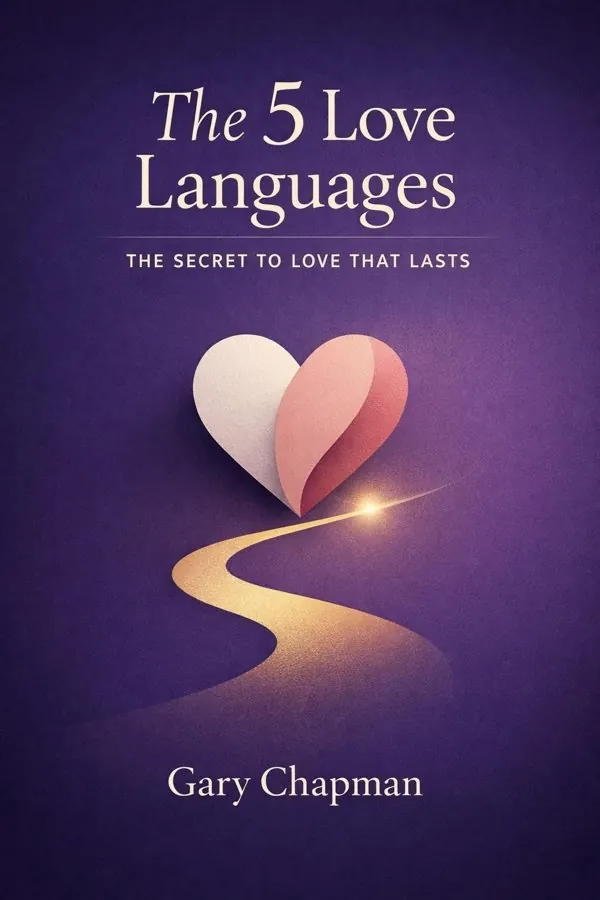

The 5 Love Languages
No More Mr Nice Guy
In-Depth Analysis
Gary Chapman’s The 5 Love Languages and Robert Glover’s No More Mr Nice Guy occupy the same broad relationships shelf, but they diagnose relational pain at very different levels. Chapman looks at how love is communicated; Glover looks at how the self is constructed in relationship. One book says, in effect, 'you may love each other but be speaking past each other.' The other says, 'you may be trying so hard to be lovable that you have stopped being honest.' That difference in diagnostic depth shapes everything else: tone, method, target reader, and ultimate usefulness.
Chapman’s model is elegantly simple. He argues that people tend to receive love most powerfully through one of five categories: words of affirmation, quality time, receiving gifts, acts of service, and physical touch. The memorable strength of the book lies in how it converts vague dissatisfaction into observable behavior. A spouse who feels unloved despite a partner’s constant errands may discover that acts of service are being offered while quality time is actually needed. Likewise, a partner who values verbal appreciation may remain emotionally empty despite expensive presents. Chapman’s examples make these mismatches feel common rather than catastrophic. The concept of the 'emotional love tank' is not scientifically precise, but it is rhetorically effective: it gives couples an intuitive picture of what emotional neglect feels like and what intentional affection can repair.
Glover’s book addresses a more subterranean problem. The Nice Guy, in his formulation, is not simply kind. He is a man who has learned that being agreeable, undemanding, and useful is the safest route to acceptance. This adaptation often leads to covert contracts: 'If I am good, avoid conflict, and meet your needs, then you will love me, desire me, and never reject me.' When life fails to honor those unspoken bargains, resentment builds. The man still appears pleasant, but underneath is anger, passivity, dishonesty, and often a fragmented sense of self. This makes No More Mr Nice Guy less about interpersonal translation and more about recovering adult integrity.
The books therefore differ sharply in where they locate responsibility. Chapman tends to frame relationship distress as mutual misunderstanding. His framework invites reciprocity: each partner learns the other’s language and acts accordingly. Glover, by contrast, often begins with unilateral self-correction. He tells readers to stop seeking validation through self-erasure, to tell the truth, to ask clearly for what they want, and to tolerate the discomfort of not being universally liked. In Chapman, love is optimized through better delivery. In Glover, love becomes possible only after the false self is dismantled.
This distinction matters in practical use. The 5 Love Languages is easy to apply almost immediately. A couple can read one chapter, identify patterns, and change behavior that same week. A husband who assumes his long work hours prove devotion may realize his wife experiences love primarily through focused conversation; a wife who keeps the household running may learn that her partner craves physical affection or verbal appreciation. The speed of implementation is one reason the book became culturally ubiquitous. Its categories are simple enough to enter ordinary speech.
No More Mr Nice Guy is practical too, but in a more demanding way. Glover’s exercises ask readers to identify hidden motives, break secrecy, stop avoiding conflict, and reclaim neglected parts of themselves. The practical result is not just improved romantic communication but a broader restructuring of personality. A Nice Guy may stop offering help he secretly resents, admit when he is angry, or ask directly for intimacy instead of trying to earn it indirectly through compliance. These are harder changes than learning to offer compliments or schedule date nights, but they can produce more foundational transformation.
Neither book is especially rigorous by academic standards. Chapman’s fivefold typology is intuitively appealing but not strongly validated as a fixed psychological model. People often respond to multiple kinds of affection depending on context, history, and stage of life. Glover’s account of male development similarly relies more on clinical patterning than controlled evidence, and some readers may find his framing of masculinity too generalized. Still, both books endure because they capture recognizable experience. Their authority is pragmatic: readers often feel that the books 'fit' what they have lived.
Emotionally, Chapman comforts while Glover provokes. Chapman tells readers that goodwill may already exist; the problem is one of translation. That framing reduces blame and invites experimentation. Glover offers a harsher mirror. He suggests that apparent niceness may mask manipulation, fear, and immaturity. This can feel accusatory, especially to readers attached to a morally flattering self-image. But for the right reader, it is precisely the book’s bluntness that breaks the cycle.
In terms of scope, The 5 Love Languages is narrower but more universally accessible. It is an excellent tool for couples who are fundamentally stable, well-intentioned, and simply out of sync. No More Mr Nice Guy is narrower in audience but deeper in psychological excavation. It is best for readers whose relationship problems persist not because they lack vocabulary for love, but because they cannot risk directness, boundaries, or authentic desire.
Ultimately, the books are not true substitutes. Chapman helps couples communicate affection more effectively once two reasonably intact selves are present. Glover helps a certain kind of reader become one of those intact selves. If Chapman asks, 'How do you best receive love?' Glover asks the more unsettling prior question: 'Do you even know how to live honestly enough to love without bargaining for approval?' Read together, they form a revealing sequence: first build a sturdier self, then learn how to connect that self to another person in ways the other can actually feel.
Side-by-Side Comparison
| Aspect | The 5 Love Languages | No More Mr Nice Guy |
|---|---|---|
| Core Philosophy | The 5 Love Languages argues that many relationship conflicts stem from mismatched modes of expressing and receiving love. Chapman’s central claim is that affection becomes effective when it is translated into the partner’s primary emotional language, such as words, time, gifts, acts of service, or physical touch. | No More Mr Nice Guy argues that relational dysfunction often begins with self-abandonment, covert contracts, and approval-seeking. Glover’s core philosophy is that men create healthier relationships when they stop managing others’ perceptions and instead develop boundaries, honesty, and personal agency. |
| Writing Style | Chapman writes in a pastoral, reassuring, and highly accessible style, using brief anecdotes from couples to illustrate each love language. The tone is gentle and solution-oriented, making the book feel like guided counseling. | Glover uses a more direct, confrontational, and workshop-like style. His prose is blunt by design, often challenging readers to recognize manipulative niceness, suppressed resentment, and conflict avoidance in themselves. |
| Practical Application | The book is immediately practical because it gives readers a simple framework for identifying their own and their partner’s primary love languages. Concrete actions—such as offering verbal appreciation, scheduling focused time, or giving symbolic gifts—make the advice easy to implement. | Glover’s advice is practical in a deeper behavioral sense, asking readers to complete exercises, tell the truth, ask directly for what they want, and stop using caretaking as a strategy for approval. Its application is less about daily gestures and more about restructuring entrenched relational habits. |
| Target Audience | Chapman primarily addresses couples who care about each other but feel unseen or misread in everyday life. It is especially suited to readers seeking a nonthreatening entry point into relationship improvement. | Glover writes chiefly for men who identify with people-pleasing, conflict avoidance, passive resentment, and difficulty expressing desire. It also appeals to readers interested in masculinity, boundaries, and recovering from approval addiction. |
| Scientific Rigor | The 5 Love Languages is influential but not especially rigorous in a research-driven sense; its model is based largely on Chapman’s counseling experience rather than a strong empirical framework. Its typology is memorable and useful, but many critics note that people often value multiple forms of affection rather than fitting neatly into one category. | No More Mr Nice Guy is also more clinically anecdotal than scientifically robust. Glover draws heavily on therapeutic observation and pattern recognition, offering a psychologically plausible account of approval-seeking, but not one grounded in extensive cited research. |
| Emotional Impact | Chapman often produces relief and hope by showing couples that misunderstanding may come from translation problems rather than lack of love. Readers frequently feel seen in ordinary disappointments, such as one partner working hard through acts of service while the other longs for attentive conversation. | Glover can feel more destabilizing because he asks readers to confront shame, dishonesty, and hidden anger beneath the identity of being 'nice.' The emotional effect is often sharper: recognition can be uncomfortable, but also liberating for readers who realize their selflessness has been strategic rather than authentic. |
| Actionability | Its action steps are simple, memorable, and highly repeatable in daily life. Once a couple identifies preferred love languages, they can quickly test changes in communication and often see immediate relational benefits. | Its actionability depends on willingness to do uncomfortable inner work. Glover’s exercises can be transformative, but they ask for more courage and self-examination, particularly around boundaries, truth-telling, sexuality, and unmet needs. |
| Depth of Analysis | Chapman offers a focused framework rather than a deep excavation of personality, trauma, or power dynamics. The strength of the book lies in clarity and usability, though that same simplicity can make it feel reductive in complex relationships. | Glover goes deeper into formative patterns, especially how childhood adaptation shapes adult intimacy. He examines why some men become indirect, resentful, and approval-dependent, making the book more psychologically layered even when its generalizations are broad. |
| Readability | The 5 Love Languages is exceptionally readable, with short chapters, recurring examples, and a concept that is easy to remember after one reading. It is often one of the most approachable relationship books for casual readers. | No More Mr Nice Guy is readable but denser in emotional demand. The language is straightforward, yet the content requires more self-confrontation, which can make it slower to absorb despite its conversational style. |
| Long-term Value | Its long-term value lies in becoming a shared shorthand for couples; even years later, partners can say things like 'I need quality time' or 'that really felt like an act of service.' The framework remains useful as a communication tool, even if readers outgrow its simplicity. | Its long-term value is strongest for readers doing sustained personal development. Because it addresses recurring patterns of passivity, covert contracts, and weak boundaries, it can continue paying dividends across dating, marriage, work, and friendships. |
Key Differences
Communication Tool vs Identity Repair
The 5 Love Languages is primarily a communication framework: it helps couples understand why affection is being missed. No More Mr Nice Guy is closer to identity repair, examining how a person becomes conflict-avoidant, approval-dependent, and emotionally indirect.
Mutual Adjustment vs Personal Accountability
Chapman typically asks both partners to learn and respond to each other’s needs. Glover puts heavier emphasis on the reader’s responsibility to stop using niceness as a strategy, even if that creates discomfort or disrupts the old relational equilibrium.
Low-Friction Advice vs High-Discomfort Growth
Chapman’s advice is easy to begin: give more appreciation, carve out focused time, offer tangible symbols of care. Glover’s advice is harder because it involves truth-telling, setting boundaries, tolerating disapproval, and admitting manipulative motives behind 'helpfulness.'
Broad Couple Appeal vs Specific Male Pattern
The 5 Love Languages can be read by almost any couple, regardless of whether their problems are mild or moderate. No More Mr Nice Guy is more targeted, especially toward men who recognize themselves in patterns like covert contracts, passive resentment, and fear of confrontation.
Symptom Relief vs Root-Cause Excavation
Chapman often addresses the visible symptom—feeling unloved despite effort—by improving the form love takes. Glover digs underneath recurring relationship failures to the hidden belief that acceptance must be earned through compliance and image management.
Pastoral Tone vs Confrontational Tone
Chapman writes with warmth and reassurance, often framing problems as understandable mismatches. Glover deliberately provokes, exposing how the 'nice' persona can conceal anger, dishonesty, and attempts to control others through self-sacrifice.
Shared Vocabulary vs Personal Breakthrough
One of Chapman’s biggest strengths is that couples can use his categories as shorthand in everyday life, such as asking for quality time or verbal affirmation. Glover’s payoff is less a shared vocabulary than an internal breakthrough: the reader becomes more direct, grounded, and less dependent on approval.
Who Should Read Which?
A couple who loves each other but keeps feeling unappreciated in everyday life
→ The 5 Love Languages
This reader will benefit from Chapman’s clear framework for translating affection into forms the partner can actually feel. It is especially useful when both people mean well but repeatedly miss each other through different expectations around time, words, gifts, service, or touch.
A man who avoids conflict, over-gives, and secretly feels resentful when his efforts are not rewarded
→ No More Mr Nice Guy
Glover directly addresses this pattern through the concept of Nice Guy Syndrome and the idea of covert contracts. The book helps such readers understand why their niceness has not produced intimacy and how boundaries and honesty can replace manipulation-by-self-sacrifice.
A self-improvement reader who wants one relationship book with broad everyday usefulness
→ The 5 Love Languages
Chapman’s book offers the widest immediate applicability and the easiest transfer into daily life. Even readers who later want more psychologically complex material often retain its framework as a practical shorthand for discussing needs and affection.
Which Should You Read First?
For most readers, the right reading order depends on whether the primary problem is misunderstanding or self-abandonment. If you are in a basically healthy relationship and simply feel like you and your partner keep missing each other, start with The 5 Love Languages. It gives you a fast, practical framework that can improve daily interactions almost immediately. You may discover that the relationship has more goodwill in it than either of you realized. However, if you suspect you are overly accommodating, resentful, sexually indirect, or afraid to express needs honestly, read No More Mr Nice Guy first. Otherwise, you may misuse Chapman’s framework as another performance strategy—becoming even better at pleasing while remaining disconnected from your own wants. Glover helps clear that foundation by teaching directness and boundaries. After that, Chapman becomes far more effective, because you are no longer using 'loving behavior' to bargain for approval. So the default order for couples is Chapman first; the default order for chronic people-pleasers is Glover first, then Chapman.
Want the full summary?
Get instant access to this book summary and 100K+ more with Fizz Moment.
Get Free SummaryAvailable on App Store • Free to download
Frequently Asked Questions
Is The 5 Love Languages better than No More Mr Nice Guy for beginners?
For most beginners in the relationships category, The 5 Love Languages is the easier starting point. Its central idea is simple, memorable, and immediately usable: identify how you and your partner most naturally give and receive love. No More Mr Nice Guy is also accessible in language, but emotionally it is more demanding because it asks readers to confront people-pleasing, covert contracts, dishonesty, and weak boundaries. If you are new to relationship books and want practical improvements without heavy self-confrontation, Chapman is usually the better first read. If your core issue is approval-seeking or resentment hidden beneath niceness, Glover may be the more necessary book.
Which book is better for fixing communication in a marriage: The 5 Love Languages or No More Mr Nice Guy?
If the marriage problem is mainly miscommunication of affection, The 5 Love Languages is more directly useful. Chapman gives couples a shared vocabulary for understanding why one partner feels unloved even when the other is trying hard. For example, acts of service may not land if the other partner primarily needs quality time or words of affirmation. No More Mr Nice Guy is better when communication problems stem from indirectness, avoidance, resentment, or fear of conflict. In those cases, the issue is not just 'how to express love' but 'how to speak honestly at all.' Many couples may actually benefit from both, but for straightforward communication gaps, Chapman is the cleaner fit.
Is No More Mr Nice Guy only for men, or can women benefit from it too?
Although No More Mr Nice Guy is explicitly written for men and frames its argument around male socialization, many women can still benefit from its analysis of approval-seeking, conflict avoidance, and covert contracts. The core pattern Glover describes—trying to earn love by being indispensable, undemanding, or endlessly accommodating—is not uniquely male, even if he presents it through masculinity and male development. That said, some readers may find the gendered framing limiting or dated. Women looking for universal relationship skills may find The 5 Love Languages more broadly inclusive, but women who recognize themselves in Glover’s psychology of self-abandonment may still find it illuminating.
What are the biggest differences between The 5 Love Languages and No More Mr Nice Guy in relationship advice?
The biggest difference is the level of the problem each book tries to solve. The 5 Love Languages assumes love is present but poorly communicated, so its advice focuses on expressing affection in the form your partner can truly feel. No More Mr Nice Guy assumes many relational failures begin with a distorted self—someone who hides needs, avoids conflict, and tries to control outcomes through being 'nice.' Chapman’s advice is relational and behavioral: offer praise, spend focused time, give meaningful gifts, serve, or show touch. Glover’s advice is structural and psychological: set boundaries, tell the truth, stop caretaking for approval, and ask directly for what you want.
Which book has more long-term value: The 5 Love Languages or No More Mr Nice Guy?
Long-term value depends on your problem. The 5 Love Languages has enduring usefulness as a shared framework couples can revisit for years. Even after the full book is forgotten, the language itself often survives in daily life: partners can quickly name unmet needs and adjust. No More Mr Nice Guy may have deeper long-term impact for readers whose struggles show up repeatedly across romance, work, family, and friendship. Its focus on boundaries, honesty, resentment, and personal agency can reshape a whole relational style rather than just improve one partnership. Chapman offers a durable tool; Glover can offer a deeper renovation.
Should I read The 5 Love Languages before No More Mr Nice Guy if I struggle with people-pleasing?
If people-pleasing is your central issue, reading No More Mr Nice Guy first is often wiser. The reason is that The 5 Love Languages can accidentally be used by chronic pleasers as another way to overfunction—'If I just perform my partner’s language perfectly, everything will be okay.' Glover challenges that entire mindset by exposing covert contracts and self-erasure. Once you begin to act from honesty rather than appeasement, Chapman’s framework becomes much healthier and more effective. In other words, if you lack boundaries, Glover helps you become a more authentic person; then Chapman helps that authentic person love more skillfully.
The Verdict
If you want the more universally useful and immediately actionable relationship book, The 5 Love Languages is the stronger recommendation. Its framework is simple, memorable, and surprisingly effective at solving a common problem: two people care about each other but express love in ways the other does not fully register. For many couples, that insight alone can reduce resentment and increase warmth quickly. But if your relationship struggles are rooted in people-pleasing, conflict avoidance, hidden resentment, or the feeling that you are always being 'good' without getting what you need in return, No More Mr Nice Guy is the more important book. Glover addresses a deeper structural issue: not how affection is translated, but how identity gets distorted by the need for approval. His book is narrower in audience yet more psychologically penetrating. The best way to think about the comparison is this: Chapman is better for communication mismatches; Glover is better for self-abandonment patterns. Chapman improves the exchange of love. Glover improves the integrity of the person doing the loving. If forced to pick one for the average reader, choose The 5 Love Languages for accessibility and broad usefulness. If forced to pick one for a reader trapped in chronic niceness and resentment, choose No More Mr Nice Guy without hesitation.
Related Comparisons


Want to read both books?
Get AI-powered summaries of both The 5 Love Languages and No More Mr Nice Guy in just 20 minutes total.