
The 5 Love Languages vs Mating in Captivity: Which Should You Read?
A detailed comparison of The 5 Love Languages by Gary Chapman and Mating in Captivity by Esther Perel. Discover the key differences, strengths, and which book is right for you.

The 5 Love Languages
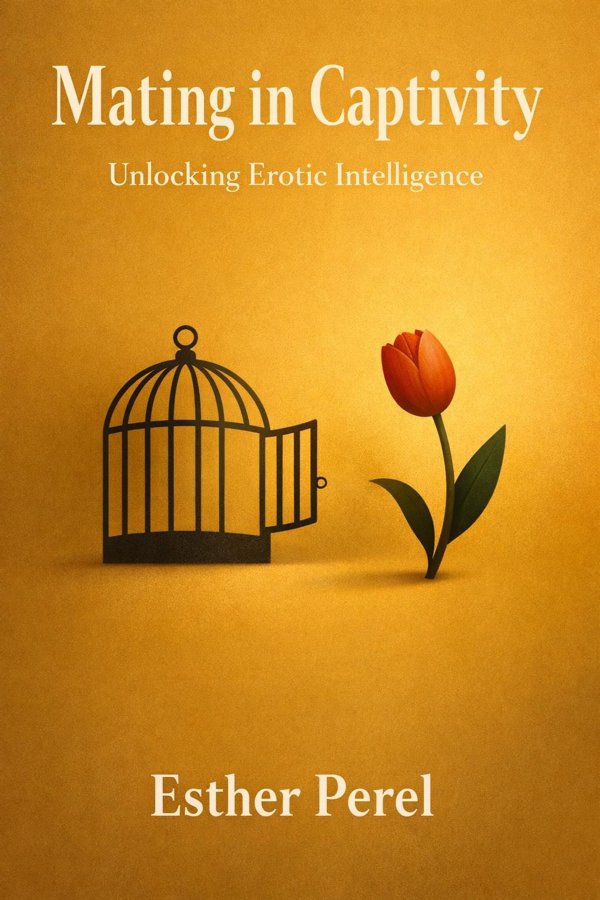
Mating in Captivity
In-Depth Analysis
At first glance, The 5 Love Languages and Mating in Captivity appear to occupy the same shelf: both are bestselling relationship books, both draw heavily from clinical experience, and both promise to help couples understand why love can feel difficult even when commitment is real. But they diagnose relational trouble at very different levels. Chapman asks, in essence, “Why do loving partners fail to make each other feel loved?” Perel asks a more destabilizing question: “Why does secure love so often weaken erotic desire?” One book is about emotional translation; the other is about erotic paradox.
Chapman’s great strength is conceptual economy. His claim that people give and receive love through different preferred channels explains a surprisingly wide range of everyday hurt. A husband may work long hours and take care of logistical burdens, believing acts of service prove devotion, while his wife continues to feel emotionally starved because what fills her “love tank” is quality time or words of affirmation. This is why the framework became culturally sticky: it transforms diffuse disappointment into a solvable mismatch. The categories are memorable, and the examples are ordinary enough to feel instantly recognizable. When Chapman distinguishes “falling in love” from sustaining love, he also usefully reframes romance as a discipline rather than a permanent emotional high.
Perel, by contrast, is interested less in reassurance than in contradiction. Where Chapman says many couples are missing each other’s signals, Perel suggests they may be building a perfectly loving bond that nonetheless suppresses sexual vitality. Her core insight is that intimacy and desire are not identical needs. The things that make us feel safe—predictability, caretaking, constant availability, routine—can diminish the distance and uncertainty that eroticism often requires. This makes Mating in Captivity a more challenging book. It does not tell readers simply to communicate better or meet each other’s stated needs. It asks them to rethink whether modern relationships expect too much from total intimacy and whether complete emotional transparency may flatten the imaginative space where desire thrives.
This difference produces a major contrast in tone. The 5 Love Languages is fundamentally democratic and optimistic. If the issue is miscommunication, then improvement is available through effort, observation, and adaptation. Learn your partner’s language, speak it consistently, and affection becomes legible. Mating in Captivity offers no equivalent simplicity. Perel repeatedly suggests that love contains irreducible tensions: closeness versus separateness, security versus novelty, domestic partnership versus erotic charge. You do not solve these tensions once and for all; you manage them creatively. That makes Perel more nuanced, but also less comforting.
The books also diverge sharply in what they treat as central relationship currency. In Chapman, the unit of analysis is care. The examples revolve around appreciation, attention, helpfulness, symbolic gestures, and touch as signs of being cherished. Sexuality is present in the wider five-language model through physical touch, but it is not the book’s conceptual center. In Perel, the unit of analysis is desire itself—how it is generated, sustained, threatened, imagined. She is especially strong when showing that being deeply known is not always erotic, and that overfamiliarity can replace fascination with management. A couple may be excellent co-parents, logistical partners, and emotional confidants while having lost the sense of otherness that fuels erotic attraction.
In practical terms, Chapman is more immediately usable. A reader can finish one chapter and decide to write affirming notes, schedule distraction-free walks, or bring home a meaningful gift. His framework lends itself to self-diagnosis and quick experiments. That is why it works so well for beginners and for couples who need traction fast. Even if the categories are not exhaustive or scientifically tight, they organize behavior effectively. Perel’s practical application is subtler. Her advice often involves creating psychic and relational space: preserving individuality, resisting the pressure to merge completely, allowing room for mystery, and understanding the role of imagination. These are harder to operationalize, especially for readers who want a clear plan.
Their limitations mirror their strengths. Chapman’s model can flatten complexity. Real people often respond to multiple forms of love depending on stress, context, attachment history, or stage of life. The framework can also encourage a consumer-like mindset—identify your need, ask your partner to supply it—without fully addressing conflict patterns, power imbalances, resentment, sexuality, or deeper psychological history. Perel’s limitation is almost the opposite. Her analysis is richer, but many readers may struggle to convert insight into concrete relational habits. Some may also find her willingness to defend distance, privacy, and fantasy counterintuitive if they have been taught that healthy love means complete openness.
For a struggling couple, the right book depends on the nature of the struggle. If the relationship feels emotionally dry because each person’s efforts are going unnoticed—one partner keeps doing kind things while the other keeps saying, “You’re never really there for me”—Chapman is often the more effective intervention. If, however, the relationship is loving, stable, and cooperative but sexually flat, Perel names a problem Chapman barely addresses. She explains why being excellent life partners does not automatically preserve erotic tension.
Taken together, the two books are almost complementary correctives to each other. Chapman reminds readers that love must become legible through action. Perel reminds them that a relationship cannot survive on legibility alone; desire also feeds on mystery, imagination, and the preservation of a self that is not fully absorbed into coupledom. One teaches partners how to care in the form the other can feel. The other teaches them why care, when made too domestic and predictable, may still fail to keep the relationship alive in a deeper erotic sense. Read side by side, they reveal that mature love requires two literacies, not one: the language of reassurance and the language of desire.
Side-by-Side Comparison
| Aspect | The 5 Love Languages | Mating in Captivity |
|---|---|---|
| Core Philosophy | Gary Chapman argues that many relationship problems come from mismatched modes of expressing love. His central claim is that each person has a primary "love language"—such as words of affirmation, quality time, acts of service, receiving gifts, or physical touch—and relationships improve when partners learn to speak each other’s preferred language. | Esther Perel centers her book on a paradox: the very conditions that create security, closeness, and domestic stability can also dampen erotic desire. Rather than focusing mainly on care and reassurance, she asks how couples can preserve mystery, autonomy, and erotic energy within long-term commitment. |
| Writing Style | The prose is direct, accessible, and highly structured, often built around counseling anecdotes and clear takeaways. Chapman writes like a practical pastor-therapist, aiming for immediate usefulness over ambiguity or nuance. | Perel writes in a more essayistic, psychologically layered, and provocative style. Her language is often more literary and interpretive, drawing on therapy-room observations to challenge assumptions rather than reduce them to a simple system. |
| Practical Application | The 5 Love Languages offers straightforward behavioral adjustments: praise more often, schedule focused time, give symbolic gifts, perform helpful acts, or increase affectionate touch based on a partner’s needs. The framework is easy to test in daily life and can be applied almost immediately. | Mating in Captivity offers practical insight, but the application is less checklist-driven and more reflective. Perel pushes couples to examine over-familiarity, dependency, routine, and the loss of separateness, then rethink how they create conditions for desire. |
| Target Audience | Chapman is especially suited to readers who want a beginner-friendly relationship model, including couples who feel loved in intention but not in experience. It also appeals strongly to readers who appreciate values-forward, marriage-oriented guidance. | Perel is best for readers ready to confront difficult truths about sex, autonomy, fantasy, and ambivalence in long-term relationships. It speaks particularly well to couples whose bond is stable but whose erotic life feels dulled by predictability. |
| Scientific Rigor | The book is influential but not especially rigorous in a research sense; its claims are based more on counseling experience and memorable typology than on a robust scientific framework. The "love tank" and five-language model are heuristically powerful, but they simplify complex relational dynamics. | Perel also leans heavily on clinical observation rather than strict experimental evidence, but her arguments are more explicitly rooted in broader psychological, cultural, and existential tensions. She is not writing a lab-based manual, yet her conceptual framing is more intellectually expansive. |
| Emotional Impact | Readers often find Chapman validating because he explains why sincere effort can still miss the mark. The emotional effect is reassuring: relationship pain may stem less from lack of love than from mistranslation. | Perel’s emotional impact is more unsettling and catalytic. She often forces readers to admit that safety and passion do not always grow together, which can feel both liberating and disorienting. |
| Actionability | Actionability is one of the book’s greatest strengths because the model translates quickly into specific habits and conversations. Many readers can identify a likely primary language and begin changing behavior the same day. | Perel is actionable in a slower, less formulaic way. Her advice often requires changes in mindset, erotic imagination, boundaries, and relational structure rather than simple behavioral substitutions. |
| Depth of Analysis | Chapman prioritizes clarity and usefulness over complexity, which makes the book effective but somewhat reductive. It addresses emotional connection well, yet often leaves larger questions of power, sexuality, personality, and cultural conditioning less explored. | Perel operates with greater psychological and philosophical depth, especially around the tension between intimacy and desire. She treats relationships as dynamic systems shaped by fantasy, individuality, routine, and modern expectations rather than by a single communication mismatch. |
| Readability | The book is extremely readable, with short conceptual steps, memorable categories, and a repetitive structure that reinforces retention. Even readers who rarely pick up relationship books can usually move through it quickly. | Perel remains readable, but she demands more reflection and tolerance for ambiguity. Her arguments are less modular and may resonate more strongly with readers comfortable with complexity and psychological nuance. |
| Long-term Value | Its long-term value lies in providing a shared vocabulary couples can return to during conflict, neglect, or transition. Even critics of the model often admit that it gives partners a simple, durable way to discuss emotional needs. | Its long-term value is strongest for couples who want to revisit not just how they care for each other, but how they maintain aliveness and erotic individuality over years. The book tends to deepen with rereading because its central paradox becomes more relevant over time. |
Key Differences
Communication Mismatch vs Erotic Paradox
Chapman explains relationship pain mainly as a problem of misaligned emotional expression: one partner gives love in a form the other does not register. Perel argues that even when love is well expressed, desire may still decline because eroticism depends on distance, novelty, and mystery that domestic life often erodes.
System-Based Model vs Tension-Based Model
The 5 Love Languages offers a neat classification system with five identifiable channels of love. Mating in Captivity resists tidy categories and instead explores unresolved tensions such as security versus freedom and closeness versus separateness.
Behavioral Fixes vs Relational Reframing
Chapman tends to recommend observable adjustments—compliment your partner, spend focused time, do helpful tasks, give meaningful tokens, show touch. Perel asks couples to rethink the architecture of their bond, for example by preserving individuality and not assuming total emotional merging is always healthy for desire.
Emotional Reassurance vs Productive Discomfort
Chapman’s message is comforting because it suggests love is often present beneath the misunderstanding. Perel is more disruptive, forcing readers to confront the idea that a healthy, loving relationship may still contain boredom, erotic ambivalence, and tension that cannot be solved by more reassurance alone.
General Relationship Health vs Sexual Vitality
The 5 Love Languages is broadly about making a partner feel cherished in everyday life. Mating in Captivity is specifically invested in sexual aliveness within committed partnership, especially where domestic success coexists with erotic decline.
Beginner Accessibility vs Reflective Complexity
Chapman’s framework is highly accessible and easy to remember, which is why it works well in counseling, church groups, and everyday conversation. Perel demands more self-examination and comfort with ambiguity, making her book richer but less plug-and-play.
Simplified Universals vs Cultural and Psychological Nuance
Chapman presents a relatively universal model meant to apply across many couples with minimal modification. Perel gives more weight to cultural expectations, gender scripts, fantasy life, and the modern demand that one partner fulfill both emotional security and erotic excitement.
Who Should Read Which?
The overwhelmed couple who keeps saying, "We love each other, but nothing I do seems to land."
→ The 5 Love Languages
This reader needs a practical framework for translating care into recognizable forms. Chapman is especially helpful when goodwill exists but each partner keeps missing the other emotionally through mismatched habits of affection.
The long-term partner in a stable marriage who feels the relationship is warm, loyal, and sexually flat.
→ Mating in Captivity
Perel directly addresses the tension between domestic security and erotic desire. Her analysis is ideal for readers who do not mainly need more kindness, but rather a deeper understanding of why safety and passion can pull in different directions.
The reflective reader who enjoys relationship psychology and wants both practical tools and conceptual depth.
→ Mating in Captivity
While Chapman is more immediately actionable, Perel offers the richer intellectual experience. This reader is likely to appreciate her treatment of autonomy, mystery, fantasy, and the cultural pressures placed on modern couples.
Which Should You Read First?
Read The 5 Love Languages first if you want a clean entry point into relationship thinking. It gives you a practical shared vocabulary for discussing why one partner may feel neglected even when the other is trying hard. Because the framework is simple and immediately actionable, it can quickly improve everyday interactions and reduce avoidable hurt. In that sense, it builds a foundation: before tackling the harder paradoxes of long-term intimacy, it helps couples become more intentional about basic emotional care. Then read Mating in Captivity to complicate and deepen that foundation. Perel is especially valuable after Chapman because she challenges a seductive assumption that emotional attunement is the whole story. Once a couple understands how to make love more legible, Perel asks whether legibility, routine, and constant closeness may also flatten desire. Her book is best absorbed when readers are ready to move beyond communication mismatches and examine mystery, distance, fantasy, and erotic individuality. In sequence, the two books move from relational maintenance to relational depth.
Want the full summary?
Get instant access to this book summary and 100K+ more with Fizz Moment.
Get Free SummaryAvailable on App Store • Free to download
Frequently Asked Questions
Is The 5 Love Languages better than Mating in Captivity for beginners?
Yes, for most beginners The 5 Love Languages is easier to start with. Chapman offers a simple, memorable framework built around five categories and gives immediate examples such as praise, focused attention, gifts, helpful actions, and touch. A new reader can quickly identify patterns in their own relationship and try small changes right away. Mating in Captivity is better for readers who are comfortable with ambiguity and want to think deeply about intimacy, eroticism, and psychological tension. If you are new to relationship books and want practical traction fast, Chapman is usually the better entry point.
Which book is better for married couples who feel emotionally disconnected but still care about each other?
The 5 Love Languages is usually the stronger fit for emotionally disconnected couples who still have goodwill. Its core premise—that love may be present but poorly communicated—speaks directly to marriages where one partner says, "I do so much for us," while the other says, "I still don’t feel loved." Chapman’s examples are designed for exactly this kind of mismatch. Mating in Captivity can help if the disconnection is specifically tied to loss of erotic energy, but it is less focused on repairing basic emotional recognition. For feeling unseen, unappreciated, or chronically misread, Chapman is more directly useful.
Is Mating in Captivity better than The 5 Love Languages for sexless or low-desire long-term relationships?
In most cases, yes. Mating in Captivity is specifically concerned with why long-term love can coexist with fading desire. Perel explores how domestic routine, overfamiliarity, excessive emotional fusion, and the demand for constant closeness can weaken erotic tension. That makes it far better suited to couples who function well as teammates but feel sexually flat. The 5 Love Languages may improve affection and emotional goodwill, which can help indirectly, but it does not deeply examine the paradox between security and desire. If the central issue is erotic stagnation, Perel is the more relevant and incisive guide.
How do The 5 Love Languages and Mating in Captivity differ in practical advice?
The difference is between a toolkit and a lens. The 5 Love Languages gives behavior-level advice you can implement immediately: offer more verbal appreciation, create uninterrupted time together, perform meaningful acts of service, give symbolic gifts, or increase affectionate touch. Mating in Captivity gives interpretive guidance about the conditions that support desire: separateness, mystery, imagination, and relief from total domestic predictability. Chapman tells you what to do tomorrow; Perel changes how you understand the relationship itself. Many readers find Chapman easier to apply, while Perel offers deeper insight into why some loving relationships still feel erotically dead.
Which book has more psychological depth: The 5 Love Languages or Mating in Captivity?
Mating in Captivity has considerably more psychological depth. Perel examines the tensions between autonomy and closeness, the role of fantasy, the effects of domesticity, and the cultural ideal that lovers should be both safest home and most exciting adventure. Chapman’s book is psychologically useful but intentionally simplified; it focuses on a single organizing model of emotional reception and expression. That simplicity is part of its strength, but it also limits its explanatory range. If you want a broad, nuanced analysis of what long-term intimacy does to desire, Perel operates at a more sophisticated level.
Can reading The 5 Love Languages and Mating in Captivity together improve a relationship more than reading just one?
Often, yes, because the books address different failures in long-term partnership. The 5 Love Languages helps couples make care visible and emotionally intelligible; it is excellent for improving appreciation, responsiveness, and day-to-day connection. Mating in Captivity addresses a separate but equally important issue: how to preserve erotic aliveness once life becomes shared, organized, and predictable. A couple may be good at one and weak at the other. Reading both can prevent a common mistake—assuming emotional care automatically creates desire, or assuming sexual dissatisfaction means there is no love. Together, they create a fuller picture of mature partnership.
The Verdict
If you want the more immediately useful relationship book, The 5 Love Languages is the stronger pick. Its framework is simple, memorable, and behaviorally concrete. For couples who love each other but keep feeling missed, dismissed, or emotionally untranslated, Chapman provides a practical vocabulary that often reduces confusion quickly. The book’s influence comes from this direct utility: it gives readers something they can do today. If you want the more intellectually and psychologically penetrating book, Mating in Captivity is superior. Perel addresses a harder problem that many mainstream relationship guides soften or ignore: why stability, transparency, and domestic closeness can undermine erotic vitality. She offers fewer easy fixes, but her insights are deeper, more original, and more durable for readers trying to understand long-term desire. So the recommendation depends on the problem. Choose The 5 Love Languages if your relationship needs emotional clarity, better expression of care, and a beginner-friendly system. Choose Mating in Captivity if your relationship is loving but sexually dulled, or if you want a richer examination of intimacy, autonomy, and desire. Ideally, read Chapman for relational fluency and Perel for erotic complexity. Chapman helps couples feel loved; Perel helps them ask whether feeling loved is enough to keep desire alive.
Related Comparisons



Want to read both books?
Get AI-powered summaries of both The 5 Love Languages and Mating in Captivity in just 20 minutes total.