
The Mountain Is You vs Man's Search for Meaning: Which Should You Read?
A detailed comparison of The Mountain Is You by Brianna Wiest and Man's Search for Meaning by Viktor Frankl. Discover the key differences, strengths, and which book is right for you.
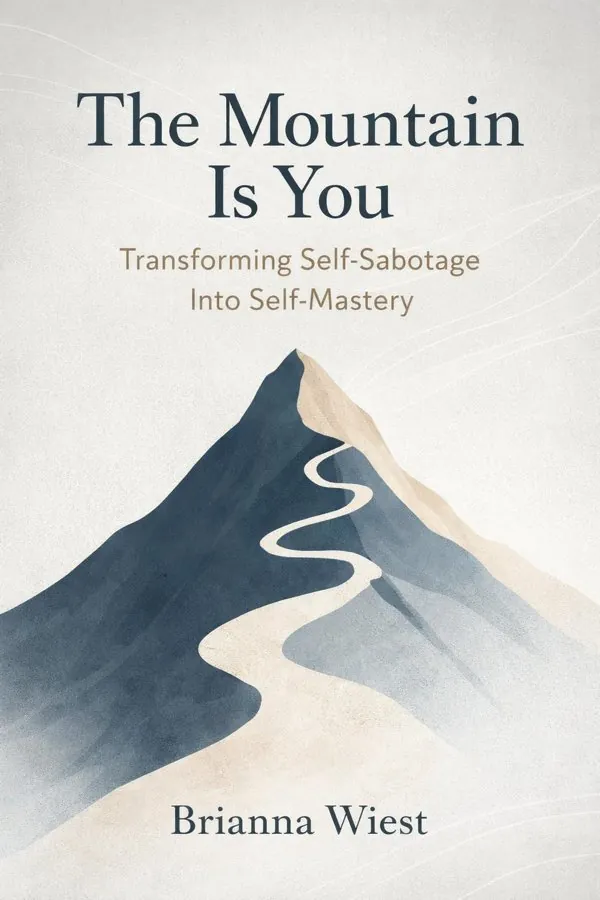

The Mountain Is You
Man's Search for Meaning
In-Depth Analysis
At first glance, The Mountain Is You by Brianna Wiest and Man's Search for Meaning by Viktor Frankl appear to occupy the same broad self-help shelf, but they are operating on very different levels of human struggle. Wiest addresses the modern psychological problem of being trapped by one's own patterns: procrastination, perfectionism, emotional reactivity, fear of change, and the tendency to repeat what hurts because it feels familiar. Frankl, by contrast, writes from the extremity of the Holocaust and asks a more foundational question: what remains of human freedom and dignity when almost everything has been stripped away? Both books are about transformation through suffering, but one focuses on internal behavioral blockage and the other on existential meaning under radical suffering.
The clearest point of contact between the two books is their refusal to treat human problems as purely external. Wiest insists that what looks like laziness or inconsistency is often a protective adaptation. A person may sabotage a relationship, delay a career move, or avoid change not because they do not want a better life, but because some part of them experiences uncertainty as danger. Her central metaphor is the mountain within: the obstacle must be climbed internally, not merely solved externally. Frankl similarly argues that inner life remains decisive. In the camps, prisoners lost possessions, status, health, and often family, yet Frankl observed that they still retained a final inner freedom: the freedom to choose their attitude toward circumstances. In both books, the battle is ultimately inward.
But the scale and texture of that inward battle differ dramatically. Wiest analyzes ordinary but painful psychological self-defeat. Her examples fit contemporary readers: people who know what they should do yet resist it, who want intimacy but fear vulnerability, who long for change but retreat into familiar discomfort. Her interpretation of self-sabotage as pain avoidance is especially useful. She suggests that many people organize life around escaping discomfort, whether by numbing, delaying, overthinking, or controlling outcomes. This turns growth into a threat. The insight is psychologically compelling because it reframes failure not as moral weakness but as misdirected self-protection.
Frankl's account is not about self-sabotage in this modern therapeutic sense. The concentration camps were systems of dehumanization, not arenas of personal development. That distinction matters. Frankl never implies that suffering is chosen or that trauma is a growth hack. Yet he does make a psychologically radical claim: even in enforced suffering, meaning can still be found. He identifies love, future-oriented purpose, moral responsibility, and spiritual life as sources of resistance. For example, he recalls how imagining his wife or mentally lecturing on the psychology of the camps helped him preserve an inner world that the camp could not fully destroy. Meaning, in Frankl's framework, is not a mood but a structure of orientation that lets a person continue.
This difference also shapes each book's practical force. The Mountain Is You is more behaviorally applicable for everyday readers. Its strongest use is diagnostic. Someone caught in a recurring cycle can ask: what pain am I avoiding, what belief is this behavior protecting, and what inner conflict is this pattern trying to resolve? A perfectionist may discover that impossible standards protect them from vulnerability; a procrastinator may realize delay keeps them from confronting the possibility of inadequacy. Wiest's emphasis on self-awareness and thought reframing gives readers tools to reinterpret their impulses before acting on them.
Frankl is less tactical but more profound. He does not offer habit trackers or emotional processing exercises. Instead, he changes the interpretive frame through which suffering itself is understood. His concept of logotherapy suggests that the deepest human drive is not pleasure or power but meaning. This makes his book especially powerful for people facing grief, illness, emptiness, or moral exhaustion. Where Wiest asks, "Why am I getting in my own way?" Frankl asks, "What gives life worth under conditions that seem to erase worth?" That is why Frankl often outlasts many self-help books: he addresses questions that return in every era.
Emotionally, the books are incomparable in intensity. Wiest can be deeply affecting because readers recognize themselves in her descriptions of fear and self-blocking. The discomfort is intimate. Frankl's emotional impact, however, comes from historical and moral gravity. His descriptions of arrival at Auschwitz, the reduction of people to numbers, the apathy born of starvation, and the complex psychology of liberation force readers into confrontation with human extremity. As a result, his insights about inner freedom carry a hard-won credibility that motivational literature cannot easily imitate.
Their limitations are also different. Wiest can sometimes feel broad in its psychological formulations, relying on insight language that resonates strongly without always being tightly evidenced. Readers who want highly structured clinical method may find it more evocative than rigorous. Frankl, meanwhile, can be overextended by readers who universalize his message too quickly. His claim about choosing one's attitude is morally serious, but it must not be turned into a simplistic slogan that blames people for suffering they did not choose.
Ultimately, these books complement rather than replace one another. The Mountain Is You is best read as a guide to identifying and dismantling internal patterns that keep a person small. Man's Search for Meaning is best read as a testament to the human capacity to find purpose even when life becomes unbearable. Wiest helps readers move through inner resistance; Frankl helps readers understand why movement matters at all. One teaches emotional self-confrontation. The other teaches existential orientation. Read together, they offer a layered philosophy of growth: heal your patterns, yes, but also ask what larger meaning your healing is meant to serve.
Side-by-Side Comparison
| Aspect | The Mountain Is You | Man's Search for Meaning |
|---|---|---|
| Core Philosophy | The Mountain Is You argues that many of our problems are forms of self-sabotage rooted in unresolved emotional needs, fear, and protective habits. Brianna Wiest frames transformation as the process of understanding these inner patterns and converting self-defeat into self-mastery. | Man's Search for Meaning centers on Viktor Frankl's belief that human beings can endure immense suffering if they can locate meaning within it. Its core claim is not that pain disappears, but that purpose and attitude remain decisive even in extreme deprivation. |
| Writing Style | Wiest writes in an intimate, reflective, motivational style, often using emotionally resonant generalizations and aphoristic language. The tone is contemporary and accessible, designed to sound like a compassionate but firm internal dialogue. | Frankl combines memoir, psychological observation, and philosophical exposition. His prose is more restrained and sober, with authority coming from lived experience in concentration camps and from the conceptual framework of logotherapy. |
| Practical Application | The book is directly intervention-oriented, encouraging readers to identify triggers, examine thought loops, stop pain-avoidance behaviors, and build new emotional habits. Its lessons can be applied immediately to procrastination, perfectionism, avoidance, and unstable motivation. | Frankl offers practical guidance less as a behavioral program and more as an existential orientation. Readers apply it by rethinking suffering, responsibility, vocation, love, and the meanings they choose under difficult circumstances. |
| Target Audience | This book is aimed at readers actively working on personal growth, emotional healing, or patterns like inconsistency and self-sabotage. It especially suits people who feel blocked in ordinary life despite having options and self-awareness. | Frankl's book reaches a broader audience, including readers interested in psychology, philosophy, trauma, spirituality, and moral endurance. It is especially meaningful for those confronting grief, adversity, or questions about purpose. |
| Scientific Rigor | The Mountain Is You draws on psychological ideas but presents them in a broadly popular self-help format rather than through tightly sourced empirical argument. Its strength lies more in interpretive insight and emotional recognition than in formal evidence. | Man's Search for Meaning is not a laboratory-based psychology text, but it carries intellectual weight through Frankl's psychiatric training and the development of logotherapy. Its authority is philosophical and clinical rather than experimental. |
| Emotional Impact | Its emotional force comes from recognition: readers often see their own cycles of avoidance, fear, and self-protection reflected back at them. The book can feel confronting, but in a therapeutic and hopeful way. | Frankl's emotional impact is deeper and more severe because it emerges from testimony about Auschwitz and other camps. The book confronts readers with dehumanization, survival, loss, and the haunting question of how meaning survives catastrophe. |
| Actionability | Wiest is more immediately actionable because she repeatedly links inner conflict to specific behaviors and invites active reframing, self-observation, and emotional processing. Readers can turn its insights into journaling prompts, mindset shifts, and daily habit changes. | Frankl is actionable at the level of worldview rather than routine technique. His guidance matters most when readers must decide how to face suffering, responsibility, or emptiness without collapsing into despair. |
| Depth of Analysis | The book offers substantial psychological depth about internal contradiction, especially the idea that maladaptive behavior often begins as protection. Its analysis is strongest when exploring why people cling to familiar pain over uncertain growth. | Frankl goes deeper on existential questions: suffering, freedom, morality, love, dignity, and the structure of meaning itself. The analysis extends beyond personal habits into what it means to remain human under annihilating conditions. |
| Readability | The Mountain Is You is highly readable, with short conceptual sections and a modern self-help cadence that encourages steady consumption. It is easy to revisit for encouragement or quick reflection. | Frankl's book is concise and clear, but emotionally heavier and philosophically denser. It is readable in length, though not always easy in subject matter. |
| Long-term Value | Its long-term value lies in repeated use during periods of transition, relapse, or personal rebuilding. Readers may return to it whenever old coping mechanisms reappear in new forms. | Frankl offers enduring value because his insights remain relevant across grief, vocation, illness, aging, and moral crisis. It is the kind of book people revisit at different life stages and discover new meanings each time. |
Key Differences
Everyday Self-Sabotage vs Extreme Human Suffering
The Mountain Is You focuses on ordinary but serious internal barriers such as avoidance, perfectionism, and fear of change. Man's Search for Meaning arises from the concentration camps, where the central issue is not self-improvement but how human beings preserve dignity and meaning under systematic dehumanization.
Behavior Change vs Existential Orientation
Wiest is primarily concerned with changing patterns of thought, emotion, and behavior that keep readers stuck. Frankl is more concerned with how a person interprets suffering, responsibility, love, and purpose, even when practical control is almost gone.
Therapeutic Tone vs Testimonial Authority
Wiest writes like a modern self-help guide, using emotionally affirming language and broad psychological insight. Frankl writes with the weight of witness; his calm, disciplined tone gains power because it comes from lived catastrophe and psychiatric reflection.
Internal Protection Mechanisms vs Moral Freedom
A central claim in The Mountain Is You is that self-sabotage often begins as a defense mechanism, such as staying small to avoid disappointment. In Frankl's book, the key idea is that even in terrible conditions a person retains some moral and spiritual freedom in how they respond inwardly.
Immediate Tools vs Lasting Philosophy
The Mountain Is You offers ideas readers can apply right away through journaling, self-observation, and reframing thought patterns. Man's Search for Meaning offers fewer immediate techniques but a deeper philosophy that readers may carry into grief, vocation, aging, and crisis.
Contemporary Accessibility vs Historical Gravity
Wiest speaks directly to today's self-help audience and uses concepts familiar to readers of emotional wellness literature. Frankl's text is accessible in length but carries immense historical and moral gravity, requiring a different kind of attention and seriousness.
Recognition-Based Emotion vs Reverence and Shock
Readers often respond to The Mountain Is You with recognition: 'This is exactly what I do when I'm afraid.' Readers respond to Frankl with a mixture of shock, humility, and admiration, because the emotional stakes are bound up with survival, loss, and the persistence of meaning.
Who Should Read Which?
The stuck high-achiever who procrastinates, overthinks, and fears failure
→ The Mountain Is You
This reader will benefit from Wiest's analysis of perfectionism, pain avoidance, and internal contradiction. The book speaks directly to people who want growth but keep unconsciously resisting the steps required to achieve it.
The reader facing grief, suffering, or a crisis of purpose
→ Man's Search for Meaning
Frankl is uniquely suited to readers asking how to continue when life feels stripped of coherence. His emphasis on meaning, responsibility, love, and inner freedom offers depth that goes beyond conventional encouragement.
The reflective self-help reader who wants both emotional insight and philosophical substance
→ Man's Search for Meaning
Although this reader may also enjoy Wiest, Frankl offers a more foundational framework that can reshape how all later self-help is interpreted. It provides a philosophical core against which ideas about habits, healing, and personal growth can be measured.
Which Should You Read First?
Read The Mountain Is You first if your main goal is momentum. It provides a contemporary language for understanding self-sabotage, inner conflict, and the way pain avoidance shapes everyday behavior. Starting there can help you identify your own habits before moving into a more demanding philosophical text. It is also emotionally easier to enter, which makes it a useful foundation for readers new to reflective nonfiction. Then read Man's Search for Meaning second. Frankl deepens many questions Wiest raises indirectly: Why change at all? What makes suffering meaningful instead of merely painful? What remains when identity, comfort, and control are stripped away? After reading Wiest, you may approach Frankl with greater self-awareness; after reading Frankl, you may reinterpret Wiest's focus on healing as part of a larger search for purpose rather than just personal optimization. If, however, you are in grief or an existential crisis rather than a pattern-change phase, reverse the order. Frankl will give you the larger frame first, and Wiest can then help translate that insight into everyday personal transformation.
Want the full summary?
Get instant access to this book summary and 100K+ more with Fizz Moment.
Get Free SummaryAvailable on App Store • Free to download
Frequently Asked Questions
Is The Mountain Is You better than Man's Search for Meaning for beginners?
For most beginners in self-help, The Mountain Is You is easier to start with. Its language is contemporary, emotionally direct, and focused on recognizable issues like procrastination, perfectionism, fear, and self-sabotage in daily life. Man's Search for Meaning is short and readable, but it is emotionally heavier because it begins with Frankl's experiences in Nazi concentration camps and then moves into existential psychology. If a reader wants immediate insight into habits and emotional patterns, Wiest is usually the gentler entry point. If a beginner is comfortable with memoir, philosophy, and discussions of suffering, Frankl may be more transformative but also more demanding.
Which book is more practical for overcoming self-sabotage: The Mountain Is You or Man's Search for Meaning?
The Mountain Is You is clearly more practical for overcoming self-sabotage. Brianna Wiest explicitly examines why people avoid change, repeat painful patterns, and cling to familiar discomfort, then connects those tendencies to self-awareness and reframing. It speaks directly to behaviors such as inconsistency, avoidance, emotional reactivity, and fear of growth. Man's Search for Meaning is practical in a deeper, existential sense: it helps readers understand how meaning can stabilize them in suffering, but it does not function as a step-by-step guide to changing habits. If your main struggle is internal resistance in everyday life, Wiest is the more targeted choice.
Is Man's Search for Meaning too heavy if I usually read modern self-help like The Mountain Is You?
It may feel heavier, but not inaccessible. Readers used to modern self-help like The Mountain Is You often notice that Frankl's book lacks the reassuring rhythm of contemporary personal-development writing. The first half is rooted in camp life, dehumanization, apathy, and survival, so the emotional atmosphere is far harsher. However, the book is concise, lucid, and deeply humane. If you appreciate books that connect suffering to purpose, love, and dignity, Frankl can expand your understanding beyond habit change and mindset language. The best approach is to read it slowly and not expect it to function like a motivational manual.
Which book has more psychological depth: The Mountain Is You or Man's Search for Meaning?
That depends on what kind of psychological depth you mean. The Mountain Is You has strong insight into everyday inner conflict, especially the idea that self-sabotage is a protective strategy rather than simple weakness. It helps explain why people fear the very changes they say they want. Man's Search for Meaning is deeper on existential psychology: suffering, freedom, moral choice, identity under pressure, and the human need for meaning. Wiest is more useful for understanding modern emotional patterns; Frankl is more powerful for understanding what makes life bearable and ethically significant under extreme conditions.
Should I read The Mountain Is You or Man's Search for Meaning during a hard season of life?
If your hard season involves confusion, emotional stagnation, burnout, or repeated self-defeating choices, The Mountain Is You may be the better immediate companion. It can help you identify what you are avoiding and why growth feels unsafe. If your hard season involves grief, loss, illness, despair, or a crisis of purpose, Man's Search for Meaning may speak more directly to your condition. Frankl does not promise relief, but he offers a framework for understanding suffering without surrendering dignity. In many cases, readers benefit from both: Wiest for emotional pattern recognition and Frankl for a larger reason to keep going.
What are the biggest differences between The Mountain Is You and Man's Search for Meaning?
The biggest difference is scale. The Mountain Is You is about internal obstacles in ordinary life: fear, avoidance, old emotional wounds, and the habits that quietly undermine us. Man's Search for Meaning emerges from historical atrocity and asks how any sense of purpose can survive extreme suffering. Their tones differ too: Wiest is encouraging, reflective, and therapeutic, while Frankl is restrained, grave, and philosophically precise. Finally, their practical value differs: Wiest helps readers change patterns, while Frankl helps readers orient their entire lives around meaning, responsibility, and spiritual endurance.
The Verdict
If you want the more immediately useful self-help book for everyday change, The Mountain Is You is the stronger recommendation. Brianna Wiest excels at naming the hidden logic of self-sabotage: the way fear disguises itself as procrastination, perfectionism, emotional volatility, or indecision. Her book is especially effective for readers who feel stuck in recurring patterns and want a psychologically intuitive framework for moving forward. It is practical, readable, and likely to generate quick personal recognition. If you want the more profound and enduring book, however, Man's Search for Meaning is the superior work. Frankl's authority comes not from motivational insight but from surviving the concentration camps and turning that experience into a philosophy of meaning, dignity, and moral freedom. His book reaches beyond self-improvement into the fundamental question of what makes life bearable and worthwhile. It is less of a tool kit and more of a compass. So the better book depends on the problem you are trying to solve. For breaking internal cycles in ordinary life, choose The Mountain Is You. For confronting suffering, purpose, grief, or existential emptiness, choose Man's Search for Meaning. If possible, read both: Wiest will help you understand your obstacles, while Frankl will help you decide what your life is ultimately for.
Related Comparisons


Want to read both books?
Get AI-powered summaries of both The Mountain Is You and Man's Search for Meaning in just 20 minutes total.