
Can't Hurt Me vs Man's Search for Meaning: Which Should You Read?
A detailed comparison of Can't Hurt Me by David Goggins and Man's Search for Meaning by Viktor Frankl. Discover the key differences, strengths, and which book is right for you.
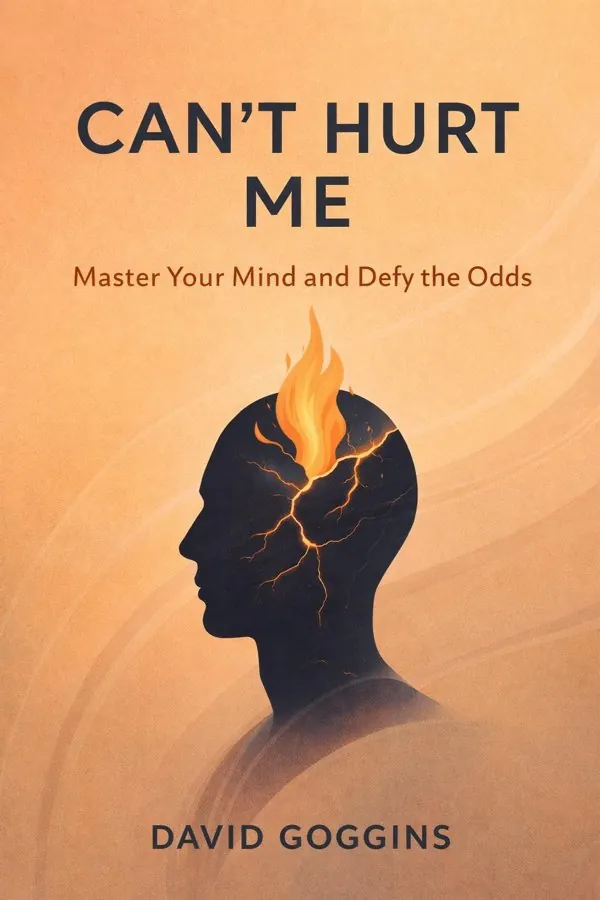
Can't Hurt Me
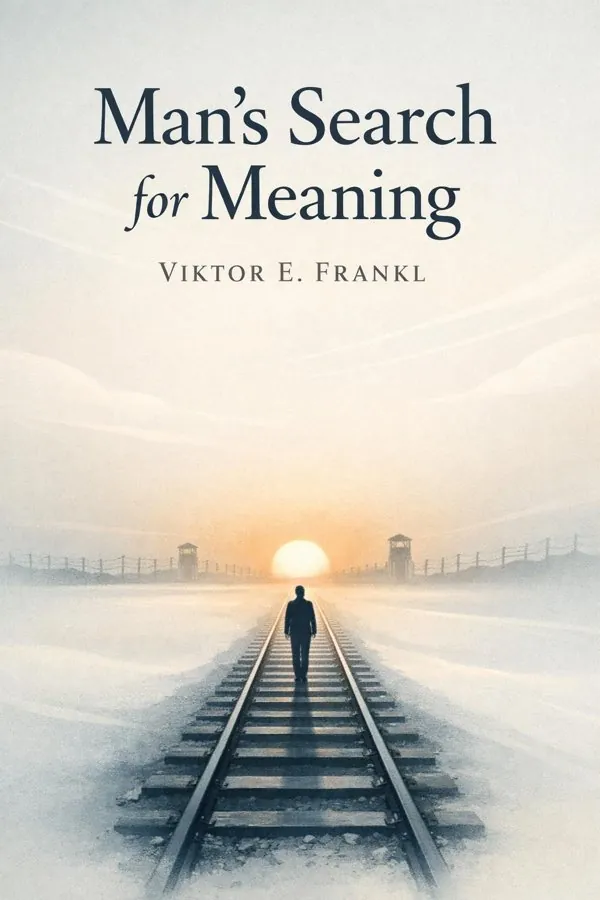
Man's Search for Meaning
In-Depth Analysis
At first glance, Can't Hurt Me and Man's Search for Meaning appear to occupy neighboring shelves for the same reason: both are about endurance, suffering, and the remaking of the self. But they are powered by very different assumptions about what human beings most need. David Goggins asks how far a person can go by refusing weakness, embracing pain, and imposing discipline. Viktor Frankl asks what allows a person to remain human when pain is unavoidable and external control is nearly absolute. One book is a war cry against self-imposed limits; the other is a meditation on meaning under conditions where ordinary agency has been shattered.
Goggins builds his argument through narrative escalation. His childhood abuse, encounters with racism, and later slide into obesity and low-grade despair are not merely backstory; they function as evidence that identity is not fixed by origin. The key pivot in Can't Hurt Me is not a philosophical revelation but a decision: he refuses to keep living as a passive outcome of his past. From there, the book advances through ordeals—drastic weight loss to qualify for military service, repeated attempts at elite training, and eventually ultramarathons and extreme endurance events. Pain becomes instructional. The lesson is that most people stop at what Goggins calls the "40% rule," believing they are finished long before they actually are.
Frankl's book develops almost inversely. In Man's Search for Meaning, suffering is not chosen as training; it is inflicted through the machinery of Nazi concentration camps. That difference matters. Frankl does not present hardship as a challenge one can gamify into greatness. He describes the shock of arrival, the stripping away of possessions and identity, the emergence of apathy as a psychological survival mechanism, and the moral distortions that arise under starvation and terror. Out of this, he formulates his central claim: even when a person cannot control conditions, there remains a final freedom—the ability to choose one's attitude and to orient oneself toward meaning.
This contrast reveals the books' deepest divergence. Goggins treats agency as something to expand through ruthless effort. Frankl treats agency as something to preserve in minimal but decisive form when nearly everything else is lost. In Goggins, the enemy is often internal softness, excuses, comfort, and self-pity. In Frankl, the threat is dehumanization and nihilism. That is why Goggins's methods are practical in a muscular sense: use the Accountability Mirror to confront lies, build a Cookie Jar of remembered victories, seek voluntary discomfort, keep moving the threshold of what you can endure. Frankl's methods are existential rather than procedural: find meaning through work, love, responsibility, or dignified suffering; stop asking what you expect from life and ask what life expects from you.
The books also differ in how they understand suffering itself. For Goggins, suffering is often instrumental. It is useful because it exposes weakness and enlarges capacity. Running on broken feet, surviving punishing training, or entering impossible races becomes a way to harden identity into something unbreakable. This can be electrifying, but it risks implying that pain is valuable mainly when converted into performance. Frankl's view is more morally and psychologically nuanced. He does not glorify suffering in itself; he insists suffering has value only when it is unavoidable and met with meaning. In a concentration camp, achievement, comfort, and future plans may be impossible. Yet a person can still remain inwardly loyal to love, memory, faith, or responsibility. Frankl's famous reflections on imagining his wife, or on sustaining an inner life amid degradation, show that human dignity may persist without outward victory.
Stylistically, this difference is stark. Goggins writes like a drill instructor crossed with a confessor. His book is designed to activate shame, adrenaline, and urgency. The reader is not simply informed but challenged. Frankl writes with measured precision. His prose gains authority from restraint; he does not need to intensify the horror because the reality already does so. As a result, Can't Hurt Me often produces momentum, while Man's Search for Meaning produces perspective.
In terms of intellectual depth, Frankl's book ultimately reaches further. Goggins is powerful on the psychology of self-deception. He understands how people anesthetize themselves with excuses and how discipline can become a counter-identity. But his framework remains heavily tied to willpower and extremity. Frankl offers a more flexible philosophy. His triad of meaning through work, love, and courage in suffering applies to people who are not athletes, soldiers, or high performers. It also remains usable in seasons where strength looks less like conquest and more like endurance, caregiving, grief, or moral clarity.
That said, Goggins has a practical advantage for certain readers. Someone trapped in avoidance, numbed by comfort, or drifting without structure may get more immediate traction from his tactics than from Frankl's existential subtlety. Goggins tells you what to do tomorrow morning. Frankl helps you understand why tomorrow morning matters at all.
The best way to compare the books, then, is not to ask which one is more inspiring in the abstract. It is to ask what kind of crisis the reader is facing. If the problem is underused potential, self-created stagnation, or fear of discomfort, Can't Hurt Me is the sharper tool. If the problem is grief, purposelessness, suffering that cannot simply be outrun, or the need to preserve humanity under pressure, Man's Search for Meaning is the deeper companion. Read together, they form a compelling pair: Goggins teaches how to push beyond the limits we impose on ourselves, while Frankl teaches how to live when limits are imposed by reality itself.
Side-by-Side Comparison
| Aspect | Can't Hurt Me | Man's Search for Meaning |
|---|---|---|
| Core Philosophy | Can't Hurt Me argues that most people live far below their potential and that disciplined exposure to discomfort is the path to radical self-transformation. Goggins frames suffering as a forge for building mental toughness and rejects victimhood as an identity. | Man's Search for Meaning centers on the idea that the primary human drive is the search for meaning, especially under suffering. Frankl argues that even when external freedom is stripped away, a person retains the freedom to choose an inner stance. |
| Writing Style | Goggins writes in an urgent, confrontational, highly motivational voice, mixing memoir with direct challenges to the reader. The tone is raw, colloquial, and often deliberately abrasive, designed to provoke action rather than contemplation. | Frankl writes with restraint, clarity, and philosophical precision, moving from eyewitness testimony to psychological reflection. His style is sober and humane, with moral gravity shaped by the Holocaust context. |
| Practical Application | The book offers explicit practices such as the 'Accountability Mirror,' the 'Cookie Jar,' and voluntary hardship as ways to build resilience. Its advice is concrete and behavior-focused, encouraging readers to train discipline through repeated action. | Frankl's application is less checklist-driven and more existential: identify meaning through work, love, and courageous suffering. Readers are invited to reinterpret hardship rather than attack it with performance systems. |
| Target Audience | Can't Hurt Me is best suited to readers who respond to intensity, challenge, and stories of physical transformation. It especially appeals to people interested in self-mastery, fitness, military-style discipline, and breaking inertia. | Man's Search for Meaning is ideal for readers facing grief, moral struggle, purposelessness, or existential crisis. It also speaks strongly to those interested in psychology, philosophy, trauma, and the ethics of endurance. |
| Scientific Rigor | Goggins relies primarily on autobiographical evidence and extreme personal case studies rather than research-based argument. The book is persuasive as testimony but limited as a generalizable psychological framework. | Frankl combines memoir with the foundations of logotherapy, offering a more formal psychological model. While some claims are philosophical rather than experimentally validated by modern standards, the conceptual structure is more rigorous than Goggins's. |
| Emotional Impact | The emotional force comes from witnessing Goggins move from abuse, obesity, and self-loathing into extraordinary feats like SEAL training and ultramarathons. Readers often feel adrenaline, shame, defiance, and motivation in rapid succession. | Frankl's emotional power is quieter but deeper, rooted in scenes of dehumanization, starvation, and the loss of family and identity in concentration camps. Its effect is less energizing than sobering, often producing reflection, grief, and moral seriousness. |
| Actionability | This is the more immediately actionable book because it repeatedly converts insight into dares, routines, and mental drills. A reader can finish a chapter and know exactly what kind of discomfort, honesty, or training Goggins wants attempted next. | Frankl is actionable in a more interpretive sense: it helps readers ask what life is asking of them rather than handing them a regimen. Its usefulness unfolds through reflection, therapy, journaling, or life reorientation rather than instant tactical change. |
| Depth of Analysis | Goggins excels at examining self-deception, excuses, and the psychology of quitting, but his lens is intentionally narrow and centered on willpower. The book is strongest when analyzing personal limitation, weaker when addressing social, relational, or philosophical complexity. | Frankl offers a deeper analysis of suffering, freedom, morality, and human dignity under extreme conditions. His account moves beyond motivation into a broader theory of what makes life bearable when achievement is impossible. |
| Readability | Can't Hurt Me is highly readable for mainstream audiences because it is fast, vivid, and narratively propulsive. Even readers who do not share Goggins's extremity can follow the dramatic arc of reinvention. | Man's Search for Meaning is concise and accessible, but emotionally heavier and intellectually denser. Its brevity helps readability, though the subject matter demands slower, more contemplative reading. |
| Long-term Value | Its long-term value lies in being a recurring motivational trigger during periods of stagnation or complacency. Many readers revisit it when they need a jolt of courage or discipline. | Its long-term value is broader and more durable because it offers a framework for interpreting suffering across many life stages. Readers often return to it in times of grief, illness, ethical confusion, or major transition. |
Key Differences
Chosen Hardship vs Imposed Suffering
Goggins repeatedly chooses extreme trials—SEAL training, ultramarathons, punishing self-testing—to build identity through voluntary pain. Frankl writes about suffering that was violently imposed, where the question was not how to optimize performance but how to retain humanity in a concentration camp.
Willpower vs Meaning
Can't Hurt Me is driven by the belief that discipline and mental toughness can radically expand human capacity. Man's Search for Meaning argues that what sustains life is not toughness alone but a sense of purpose, whether through love, work, or dignified endurance.
Motivational Tone vs Reflective Tone
Goggins uses confrontation, intensity, and challenge, often trying to jolt the reader out of complacency. Frankl uses restrained observation and philosophical reflection, asking readers to contemplate suffering rather than overpower it.
Tactical Frameworks vs Existential Frameworks
Goggins offers memorable, portable tools like the Accountability Mirror and the Cookie Jar, both aimed at changing behavior and self-talk. Frankl offers a framework for interpreting life itself, especially the idea that one can choose an attitude even when external freedom is gone.
Performance Orientation vs Human Dignity Orientation
In Goggins, growth is often measured by what you can force yourself to do—lose the weight, finish the race, survive the training. In Frankl, growth is measured less by achievement and more by whether one preserves moral and spiritual integrity under pressure.
Broad Accessibility of Application
Can't Hurt Me is most powerful for readers who can channel its lessons into discipline, fitness, work, or measurable self-overcoming. Man's Search for Meaning applies even to people who are weak, grieving, ill, trapped, or unable to act dramatically, because its focus is inner orientation rather than external conquest.
Autobiographical Persuasion vs Theoretical Integration
Goggins persuades mainly through the sheer extremity of his personal example. Frankl not only narrates experience but also integrates it into logotherapy, creating a more explicit psychological and philosophical system.
Who Should Read Which?
The stalled achiever who feels lazy, unfocused, or trapped in excuses
→ Can't Hurt Me
Goggins is especially effective for readers who know they are underperforming and need confrontation more than consolation. His transformation from obesity and avoidance to elite military and endurance accomplishment makes the book a powerful antidote to drift.
The reflective reader facing grief, purposelessness, or a crisis of meaning
→ Man's Search for Meaning
Frankl speaks directly to suffering that cannot be solved by sheer effort. His emphasis on meaning, love, responsibility, and inner freedom offers a steadier and more humane guide for existential pain.
The serious self-development reader who wants both motivation and philosophical depth
→ Man's Search for Meaning
Although this reader should eventually read both, Frankl is the better starting point because his framework is more universal and intellectually durable. Once that base is established, Goggins can be used as a high-intensity supplement for action and discipline.
Which Should You Read First?
For most readers, start with Man's Search for Meaning and then read Can't Hurt Me. Frankl gives you the deeper foundation first: a way to understand suffering, freedom, responsibility, and the role of purpose in survival. That foundation matters because it prevents resilience from becoming mere self-punishment or performance obsession. When you later encounter Goggins's relentless emphasis on discipline and chosen hardship, you can place it inside a larger question: what is all this toughness for? Reading in the opposite order can still work, especially if you are currently stuck and need immediate momentum. Goggins may get you moving faster. But starting with him risks reducing resilience to force of will alone. Frankl broadens the field by reminding you that some of life's hardest trials cannot be conquered through intensity; they must be endured through meaning. In sequence, the books complement each other beautifully: Frankl clarifies the purpose of endurance, and Goggins supplies a method for training it in ordinary life.
Want the full summary?
Get instant access to this book summary and 100K+ more with Fizz Moment.
Get Free SummaryAvailable on App Store • Free to download
Frequently Asked Questions
Is Can't Hurt Me better than Man's Search for Meaning for beginners?
For many beginners in self-help, Can't Hurt Me feels more immediately accessible because it is fast-paced, emotionally direct, and packed with obvious takeaways like radical self-honesty, structured discipline, and deliberate exposure to discomfort. If a reader wants motivation and a strong push to change habits, Goggins is often the easier entry point. However, Man's Search for Meaning may be better for beginners who are less interested in performance and more interested in purpose, suffering, or emotional resilience. The better beginner book depends on whether you need a tactical jolt or a philosophical foundation.
Which book is more practical: Can't Hurt Me or Man's Search for Meaning?
Can't Hurt Me is more practical in a direct, behavioral sense. Goggins gives readers memorable tools and frames, such as confronting yourself in the Accountability Mirror, using the Cookie Jar to recall previous victories, and building mental toughness through voluntary hardship. Man's Search for Meaning is practical at a deeper interpretive level: it changes how you understand pain, responsibility, and purpose. Frankl does not provide a daily protocol so much as a lens through which to answer life's hardest questions. If you want immediate execution, choose Goggins; if you want enduring orientation, choose Frankl.
Is Man's Search for Meaning too heavy compared to Can't Hurt Me?
Yes, Man's Search for Meaning is significantly heavier in subject matter because it emerges from Frankl's experiences in Nazi concentration camps and deals directly with starvation, dehumanization, death, and the psychological aftermath of liberation. It is not heavy in a sensational way; it is heavy because of its moral seriousness. Can't Hurt Me also includes trauma, abuse, racism, and self-loathing, but its emotional trajectory is more overtly triumph-driven. Readers who want energizing intensity may find Goggins easier to process, while readers willing to sit with profound suffering will find Frankl more intellectually and spiritually rewarding.
Which is better for mental toughness: Can't Hurt Me or Man's Search for Meaning?
If by mental toughness you mean grit, discipline, pain tolerance, and refusing excuses, Can't Hurt Me is the clearer fit. Goggins relentlessly trains the reader to reinterpret hardship as a proving ground and to stop negotiating with weakness. But if mental toughness includes the ability to maintain dignity, hope, and inner freedom when circumstances cannot be changed, Man's Search for Meaning may actually offer the more mature model. Frankl's version of toughness is less about domination and more about endurance with purpose. The books define strength differently, and that difference is crucial.
Should I read Can't Hurt Me or Man's Search for Meaning during a life crisis?
It depends on the nature of the crisis. If your crisis comes from stagnation, lack of discipline, fear, procrastination, or feeling physically and mentally soft, Can't Hurt Me can be catalytic because it translates frustration into action. If your crisis involves grief, illness, trauma, moral injury, or the sense that life has lost meaning, Man's Search for Meaning is usually the better companion. Frankl is especially powerful when the problem cannot be solved by working harder. In many cases, the two books work sequentially: Frankl restores purpose, and Goggins helps convert purpose into disciplined behavior.
Is Can't Hurt Me vs Man's Search for Meaning a fair comparison if one is memoir and one is psychology?
It is a fair comparison precisely because both books use lived suffering to make broader claims about human resilience, even though they do so differently. Can't Hurt Me is memoir-driven self-help that turns personal reinvention into a method of self-mastery. Man's Search for Meaning begins as testimony but expands into psychological theory through logotherapy. Comparing them highlights a productive tension: Goggins shows what chosen hardship can do for identity, while Frankl shows what meaning can do when hardship is unchosen. They are not identical genres, but they are deeply related in their concern with human endurance.
The Verdict
If you want the most balanced recommendation, Man's Search for Meaning is the stronger all-around book, while Can't Hurt Me is the stronger situational tool. Frankl's book has greater philosophical reach, more enduring relevance, and a deeper understanding of suffering that applies across radically different seasons of life. It is not simply about surviving catastrophe; it is about discovering what makes life worth carrying when achievement, comfort, and certainty are gone. That gives it unusual longevity. That said, Can't Hurt Me is unmatched for readers who need activation rather than reflection. Goggins is extraordinarily effective when the central problem is drift, self-pity, avoidance, or fear of discomfort. His story of moving from abuse and obesity to Navy SEAL training and ultramarathons can genuinely reorder a reader's sense of what is possible. Few books generate immediate behavioral urgency so well. So the final recommendation is this: choose Man's Search for Meaning if you want the deeper, wiser, more universal book; choose Can't Hurt Me if you want the more kinetic, confrontational, action-first book. If possible, read both. Frankl gives you the reason to endure. Goggins gives you a method for pushing farther than you thought you could. Together, they cover both the soul of resilience and the mechanics of it.
Related Comparisons
Want to read both books?
Get AI-powered summaries of both Can't Hurt Me and Man's Search for Meaning in just 20 minutes total.