
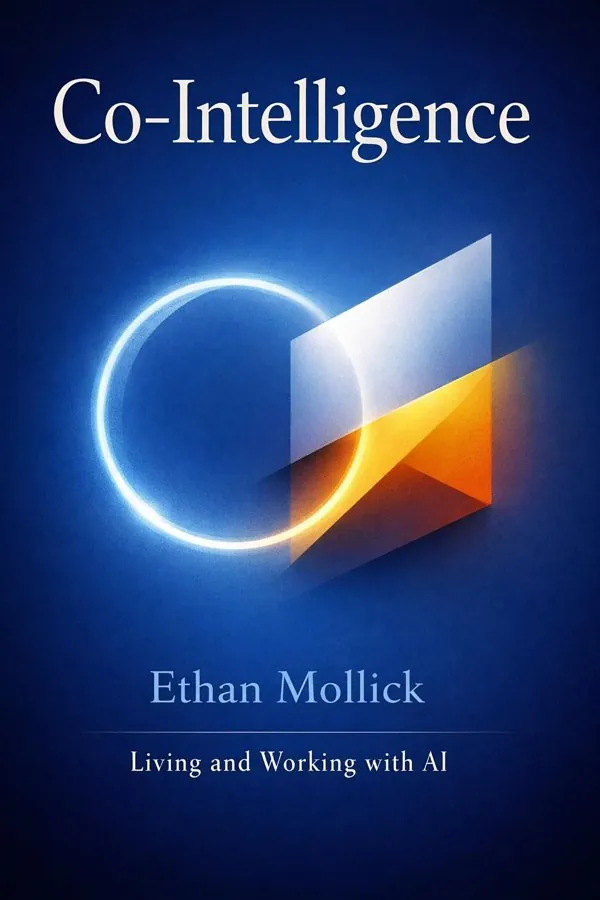
Co-Intelligence: Living and Working with AI: Summary & Key Insights
 10 min9 chaptersAudio available
What Is Co-Intelligence: Living and Working with AI About?
Co-Intelligence: Living and Working with AI by Ethan Mollick is a ai_ml book spanning 9 pages. In "Co-Intelligence: Living and Working with AI," Ethan Mollick explores how artificial intelligence can augment human creativity, productivity, and decision-making. Drawing from his research and teaching at the Wharton School, Mollick provides practical frameworks for individuals and organizations to collaborate effectively with AI tools, emphasizing the importance of human judgment, experimentation, and ethical awareness in the age of intelligent machines.
This FizzRead summary covers all 9 key chapters of Co-Intelligence: Living and Working with AI in approximately 10 minutes, distilling the most important ideas, arguments, and takeaways from Ethan Mollick's work. Also available as an audio summary and Key Quotes Podcast.
Co-Intelligence: Living and Working with AI
In "Co-Intelligence: Living and Working with AI," Ethan Mollick explores how artificial intelligence can augment human creativity, productivity, and decision-making. Drawing from his research and teaching at the Wharton School, Mollick provides practical frameworks for individuals and organizations to collaborate effectively with AI tools, emphasizing the importance of human judgment, experimentation, and ethical awareness in the age of intelligent machines.
Who Should Read Co-Intelligence: Living and Working with AI?
This book is perfect for anyone interested in ai_ml and looking to gain actionable insights in a short read. Whether you're a student, professional, or lifelong learner, the key ideas from Co-Intelligence: Living and Working with AI by Ethan Mollick will help you think differently.
- ✓Readers who enjoy ai_ml and want practical takeaways
- ✓Professionals looking to apply new ideas to their work and life
- ✓Anyone who wants the core insights of Co-Intelligence: Living and Working with AI in just 10 minutes
Want the full summary?
Get instant access to this book summary and 100K+ more with Fizz Moment.
Get Free SummaryAvailable on App Store • Free to download
Key Chapters
To work effectively with AI, we need to understand what it does well—and what it doesn’t. Generative AI systems, such as large language models and image generators, are extraordinary at pattern recognition, synthesis, and replication. They process colossal amounts of data to generate text, code, designs, and strategies that appear startlingly original. Yet they don’t think, feel, or reason in the human sense. They predict. And that distinction matters deeply.
In practice, this means AI excels at rapid ideation and translation of abstract concepts into concrete forms, but it often falters in contextual judgment or empathy. Human oversight becomes the critical ingredient that turns raw generation into meaningful creation. When people ignore this, they mistake fluency for understanding—a dangerous misconception that can lead to error or bias.
Real co-intelligence begins with this awareness. It’s recognizing AI as a capable, tireless contributor whose power scales with your guidance. I often ask my students to treat AI as a junior colleague—a bright one, but prone to confusion and sometimes overconfidence. Your role, then, is not to surrender judgment but to amplify it. By articulating clear prompts, questioning outputs, and infusing human context, you convert prediction into innovation.
When we understand the technology’s limits and potential, we gain a framework for both experimentation and ethics. We realize why the human in the loop is indispensable, not optional.
The idea that AI might replace humans entirely is both misguided and defeatist. What’s happening instead is a reshaping of collaboration—a new era where human imagination and machine capability align. I have seen this in countless projects, where the most effective outcomes come from people who treat AI as a sparring partner rather than a subordinate or a threat.
A true Human-AI partnership revolves around complementary skills. Humans bring purpose, emotional intelligence, and the ability to navigate ambiguity. AI brings efficiency, speed, and expansive recall. When you combine them, you create an adaptive feedback loop: the human provides direction, AI generates possibilities, and the human refines those ideas through intuition and experience.
In business settings, this partnership can mean the difference between being trapped in analysis paralysis and moving decisively toward innovation. In creative endeavors, it unlocks new modes of expression—artists test perspectives they wouldn’t have imagined alone, writers discover fresh metaphors or structures, and entrepreneurs simulate scenarios before committing resources. The point isn’t that AI completes us; it’s that it extends us. But that extension requires trust balanced with discernment.
I always encourage an experimental mindset: talk to the AI, probe its assumptions, request alternatives, and evaluate its suggestions against your own standards. This conversational approach transforms passive tool use into active collaboration. In doing so, you become not just a user but a *co-creator* of intelligence.
+ 7 more chapters — available in the FizzRead app
All Chapters in Co-Intelligence: Living and Working with AI
About the Author
Ethan Mollick is an associate professor at the Wharton School of the University of Pennsylvania, where he studies innovation, entrepreneurship, and the impact of artificial intelligence on work and education. He is known for his engaging teaching style and research on how technology transforms business and creativity.
Get This Summary in Your Preferred Format
Read or listen to the Co-Intelligence: Living and Working with AI summary by Ethan Mollick anytime, anywhere. FizzRead offers multiple formats so you can learn on your terms — all free.
Available formats: App · Audio · PDF · EPUB — All included free with FizzRead
Download Co-Intelligence: Living and Working with AI PDF and EPUB Summary
Key Quotes from Co-Intelligence: Living and Working with AI
“To work effectively with AI, we need to understand what it does well—and what it doesn’t.”
“The idea that AI might replace humans entirely is both misguided and defeatist.”
Frequently Asked Questions about Co-Intelligence: Living and Working with AI
Co-Intelligence: Living and Working with AI by Ethan Mollick is a ai_ml book that explores key ideas across 9 chapters. In "Co-Intelligence: Living and Working with AI," Ethan Mollick explores how artificial intelligence can augment human creativity, productivity, and decision-making. Drawing from his research and teaching at the Wharton School, Mollick provides practical frameworks for individuals and organizations to collaborate effectively with AI tools, emphasizing the importance of human judgment, experimentation, and ethical awareness in the age of intelligent machines.
You Might Also Like
Life 3.0
Max Tegmark
10 min
Superintelligence
Nick Bostrom
10 min
TensorFlow in Action
Thushan Ganegedara
10 min
AI Made Simple: A Beginner’s Guide to Generative AI, ChatGPT, and the Future of Work
Rajeev Kapur
10 min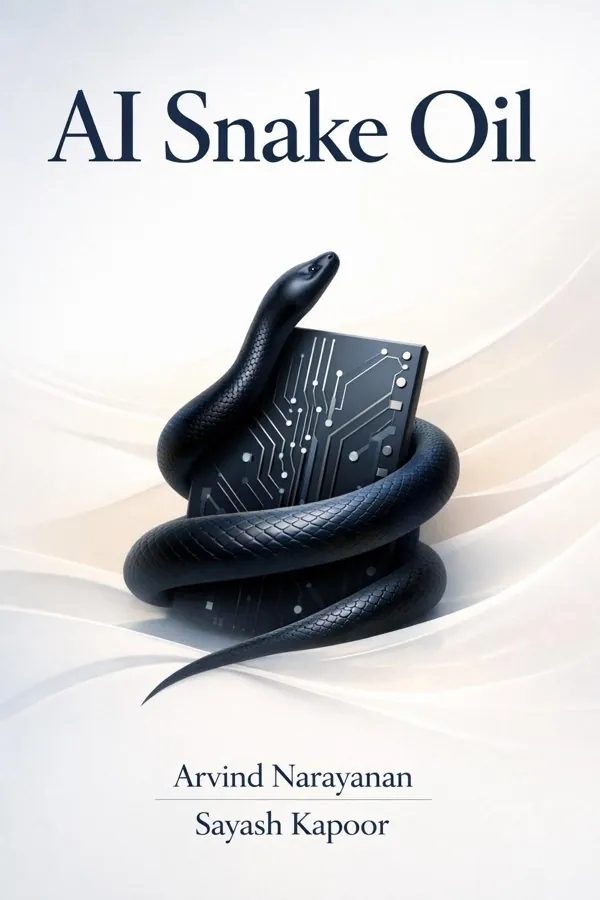
AI Snake Oil
Arvind Narayanan, Sayash Kapoor
10 min
AI Superpowers: China, Silicon Valley, and the New World Order
Kai-Fu Lee
10 minBrowse by Category
Ready to read Co-Intelligence: Living and Working with AI?
Get the full summary and 100K+ more books with Fizz Moment.