
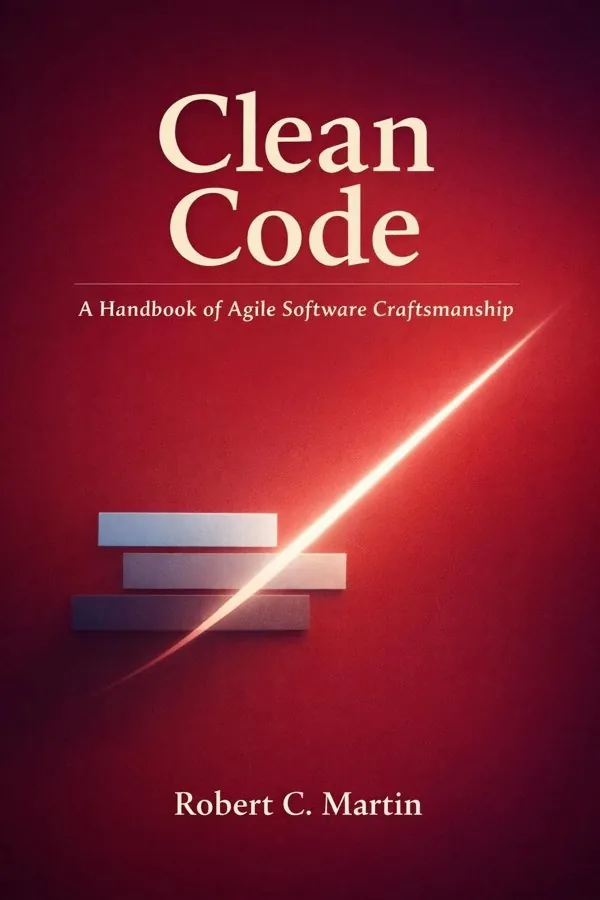
Clean Code: A Handbook of Agile Software Craftsmanship: Summary & Key Insights
 10 min5 chaptersAudio available
What Is Clean Code: A Handbook of Agile Software Craftsmanship About?
Clean Code: A Handbook of Agile Software Craftsmanship by Robert C. Martin is a programming book spanning 5 pages. Clean Code: A Handbook of Agile Software Craftsmanship es un libro técnico que enseña principios, patrones y prácticas para escribir código limpio y mantenible. Dividido en tres partes, el libro aborda la ética del desarrollo de software, ejemplos prácticos de código y un conjunto de heurísticas para mejorar la calidad del software. Es considerado una obra fundamental en la ingeniería de software ágil y la programación orientada a objetos.
This FizzRead summary covers all 5 key chapters of Clean Code: A Handbook of Agile Software Craftsmanship in approximately 10 minutes, distilling the most important ideas, arguments, and takeaways from Robert C. Martin's work. Also available as an audio summary and Key Quotes Podcast.
Clean Code: A Handbook of Agile Software Craftsmanship
Clean Code: A Handbook of Agile Software Craftsmanship es un libro técnico que enseña principios, patrones y prácticas para escribir código limpio y mantenible. Dividido en tres partes, el libro aborda la ética del desarrollo de software, ejemplos prácticos de código y un conjunto de heurísticas para mejorar la calidad del software. Es considerado una obra fundamental en la ingeniería de software ágil y la programación orientada a objetos.
Who Should Read Clean Code: A Handbook of Agile Software Craftsmanship?
This book is perfect for anyone interested in programming and looking to gain actionable insights in a short read. Whether you're a student, professional, or lifelong learner, the key ideas from Clean Code: A Handbook of Agile Software Craftsmanship by Robert C. Martin will help you think differently.
- ✓Readers who enjoy programming and want practical takeaways
- ✓Professionals looking to apply new ideas to their work and life
- ✓Anyone who wants the core insights of Clean Code: A Handbook of Agile Software Craftsmanship in just 10 minutes
Want the full summary?
Get instant access to this book summary and 100K+ more with Fizz Moment.
Get Free SummaryAvailable on App Store • Free to download
Key Chapters
What is clean code? The question sounds simple, yet it has puzzled countless developers. Some equate cleanliness with consistent naming; others think it means uniform formatting. To me, the essence of clean code lies in understandability. Code should express its purpose so clearly that anyone reading it can grasp its intent without additional explanation. If your code reveals what it does and how it was designed simply by being read, then it’s clean.
In the book, I draw on insights from several industry pioneers. Bjarne Stroustrup describes clean code as efficient and logically elegant. Grady Booch calls it “simple and direct.” Dave Thomas believes code should express thought like poetry. These definitions might sound different, but they converge on one truth—clean code shows the author cared.
Clean code is intentional. It communicates purpose, avoids unnecessary complexity, and remains easy to maintain. Others should be able to modify it safely and predictably. Its structure must flow naturally, making the logic easy to follow. Writing clean code is, at heart, the process of stripping away noise and eliminating ambiguity. Developers should routinely ask themselves: “Does this code express what I truly mean?” Only when the answer is yes can the work be considered complete.
Clean doesn’t mean perfect; it means clear within constraints, simple despite complexity. The vitality of software comes not from genius, but from this continued commitment to clarity.
Naming is the first gateway to clean code. A good name makes code self-explanatory; a bad one misleads. Programmers read and write names constantly—variables, functions, classes, modules—and the quality of those names directly affects comprehension speed. A name’s purpose isn’t to make the computer understand—it’s to make the human reader understand.
A meaningful name conveys why it exists, what it does, and how it’s used. A function called `processData` could mean anything, but rename it to `calculateAnnualRevenue`, and its intent becomes immediately clear. I urge developers to avoid abbreviations and vague words; they disrespect the reader. Code is a language of collaboration, and naming provides the common vocabulary.
Naming well is not just about word choice; it’s about semantic consistency. If team members use different naming patterns for similar concepts, the entire system becomes unpredictable. Names should reflect the domain language and align with the underlying business model. In truly clean code, names flow together like sentences in well-written prose, guiding readers through logic instead of leaving them lost in confusion.
Learn to rename courageously. Fixing a poor name is not wasted effort—it’s an investment in future clarity. Each thoughtfully renamed variable spares hours of misunderstanding. Cleanliness begins with naming, because good names let the code speak for itself.
+ 3 more chapters — available in the FizzRead app
All Chapters in Clean Code: A Handbook of Agile Software Craftsmanship
About the Author
Robert C. Martin, conocido como 'Uncle Bob', es un ingeniero de software, consultor y autor estadounidense. Es uno de los fundadores del movimiento Agile y ha contribuido significativamente al desarrollo de principios de programación limpia y diseño orientado a objetos. Ha escrito varios libros influyentes sobre buenas prácticas de desarrollo y arquitectura de software.
Get This Summary in Your Preferred Format
Read or listen to the Clean Code: A Handbook of Agile Software Craftsmanship summary by Robert C. Martin anytime, anywhere. FizzRead offers multiple formats so you can learn on your terms — all free.
Available formats: App · Audio · PDF · EPUB — All included free with FizzRead
Download Clean Code: A Handbook of Agile Software Craftsmanship PDF and EPUB Summary
Key Quotes from Clean Code: A Handbook of Agile Software Craftsmanship
“The question sounds simple, yet it has puzzled countless developers.”
“Naming is the first gateway to clean code.”
Frequently Asked Questions about Clean Code: A Handbook of Agile Software Craftsmanship
Clean Code: A Handbook of Agile Software Craftsmanship by Robert C. Martin is a programming book that explores key ideas across 5 chapters. Clean Code: A Handbook of Agile Software Craftsmanship es un libro técnico que enseña principios, patrones y prácticas para escribir código limpio y mantenible. Dividido en tres partes, el libro aborda la ética del desarrollo de software, ejemplos prácticos de código y un conjunto de heurísticas para mejorar la calidad del software. Es considerado una obra fundamental en la ingeniería de software ágil y la programación orientada a objetos.
You Might Also Like
ANSI Common Lisp
Paul Graham
10 min
Automate the Boring Stuff with Python: Practical Programming for Total Beginners
Al Sweigart
10 min
Black Hat Python: Python Programming for Hackers and Pentesters
Justin Seitz
10 min
Building Microservices: Designing Fine-Grained Systems
Sam Newman
10 min
C++ Primer
Stanley B. Lippman, Josée Lajoie, Barbara E. Moo
10 min
Cloud Native Patterns: Designing Change-Tolerant Software
Cornelia Davis
10 minBrowse by Category
Ready to read Clean Code: A Handbook of Agile Software Craftsmanship?
Get the full summary and 100K+ more books with Fizz Moment.