
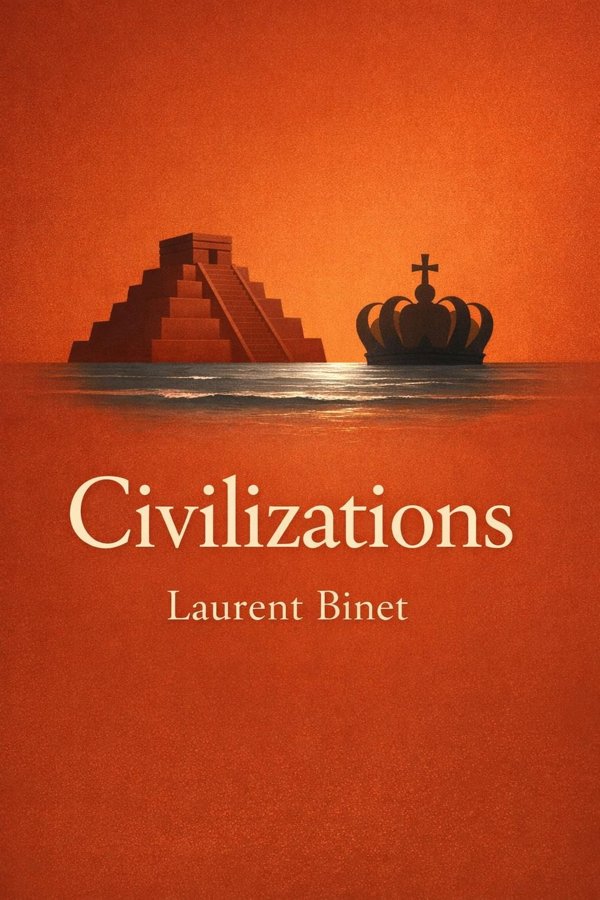
Civilizations: Summary & Key Insights
 10 min10 chaptersAudio available
What Is Civilizations About?
Civilizations by Laurent Binet is a bestsellers book spanning 10 pages. In this alternate history novel, Laurent Binet imagines a world where the Incas and Aztecs discover and conquer Europe. By reversing the course of history, he explores themes of power, religion, and civilization, while questioning the foundations of cultural and colonial domination.
This FizzRead summary covers all 10 key chapters of Civilizations in approximately 10 minutes, distilling the most important ideas, arguments, and takeaways from Laurent Binet's work. Also available as an audio summary and Key Quotes Podcast.
Civilizations
In this alternate history novel, Laurent Binet imagines a world where the Incas and Aztecs discover and conquer Europe. By reversing the course of history, he explores themes of power, religion, and civilization, while questioning the foundations of cultural and colonial domination.
Who Should Read Civilizations?
This book is perfect for anyone interested in bestsellers and looking to gain actionable insights in a short read. Whether you're a student, professional, or lifelong learner, the key ideas from Civilizations by Laurent Binet will help you think differently.
- ✓Readers who enjoy bestsellers and want practical takeaways
- ✓Professionals looking to apply new ideas to their work and life
- ✓Anyone who wants the core insights of Civilizations in just 10 minutes
Want the full summary?
Get instant access to this book summary and 100K+ more with Fizz Moment.
Get Free SummaryAvailable on App Store • Free to download
Key Chapters
The story begins at the edge of the known world, in the sagas of the Norse. I wanted to ground the alternate timeline in a plausible deviation — the kind of historical accident that could have changed everything. Freydis, daughter of Erik the Red, becomes the pivot point. In her defiance and courage, she leads an expedition that survives where others faltered. Unlike the historical Norse colonies of Vinland that vanished into legend, her settlement endures. Yet this endurance depends not on domination, but on synthesis: the Norse and the indigenous peoples of the Americas exchange crafts, myths, and knowledge. The sea-faring heirs of Valhalla learn of maize and gold, while the local communities absorb shipbuilding and ironwork.
It is a fragile coexistence, but this spark is enough to ignite centuries of transformation. The Norse voyages open cultural arteries linking Europe’s cold fjords to the fertile valleys of the New World. This part of the novel unfolds like a lost saga, narrated with the tone of medieval chronicles but quickened by the awareness of an alternate future. Freydis becomes not just an adventurer, but the unintentional founder of a bridge between continents. Theoretically, everything that follows sprouts from her decision to challenge the masculine world that sought to limit her — a reminder that entire civilizations may hinge on one act of rebellion.
From these Norse roots grows an Inca Empire very different from the one history recorded. Here, the Andes breathe not isolation but expansion. When Inca seers and craftsmen discover fragments of Norse steel and boat design, they incorporate them into their empire’s fabric with astonishing ingenuity. I wanted this section to reflect the adaptive genius of Andean civilization — an empire of roads, terraces, and astronomers capable of turning every encounter into innovation.
In this world, Atahualpa inherits not merely the memory of Pachacutec’s conquests but an empire armed with ocean-going ships and tempered steel. The air shimmers with new possibility. What fascinated me most was imagining how technology and mythology would intertwine: Norse metallurgy becomes sacred, the hammer of the blacksmith merging with the resonance of Inti’s sun. This empire is more unified, more confident, and poised to look beyond the Pacific and Atlantic alike.
As I wrote this part, the Inca world ceased to be mythic backdrop; it became the center. The Incas are no longer passive victims of fate but active participants in global destiny. Through this lens, 'civilization' itself becomes suspect — a word whose meaning alters depending on who holds the pen.
+ 8 more chapters — available in the FizzRead app
All Chapters in Civilizations
About the Author
Laurent Binet is a French writer born in 1972 in Paris. Winner of the Prix Goncourt du Premier Roman for *HHhH*, he is known for works that blend fiction, history, and reflections on narrative form.
Get This Summary in Your Preferred Format
Read or listen to the Civilizations summary by Laurent Binet anytime, anywhere. FizzRead offers multiple formats so you can learn on your terms — all free.
Available formats: App · Audio · PDF · EPUB — All included free with FizzRead
Download Civilizations PDF and EPUB Summary
Key Quotes from Civilizations
“The story begins at the edge of the known world, in the sagas of the Norse.”
“From these Norse roots grows an Inca Empire very different from the one history recorded.”
Frequently Asked Questions about Civilizations
Civilizations by Laurent Binet is a bestsellers book that explores key ideas across 10 chapters. In this alternate history novel, Laurent Binet imagines a world where the Incas and Aztecs discover and conquer Europe. By reversing the course of history, he explores themes of power, religion, and civilization, while questioning the foundations of cultural and colonial domination.
You Might Also Like

The Godfather
Mario Puzo
10 min
The Handmaid's Tale
Margaret Atwood
10 min
The Hunger Games
Suzanne Collins
10 min
The Nightingale
Kristin Hannah
10 min
The Seven Husbands of Evelyn Hugo
Taylor Jenkins Reid
10 min
Backwater Justice
Fern Michaels
10 minBrowse by Category
Ready to read Civilizations?
Get the full summary and 100K+ more books with Fizz Moment.