
Chicka Chicka Ho Ho Ho: Summary & Key Insights
 10 min8 chaptersAudio available
Key Takeaways from Chicka Chicka Ho Ho Ho
One of the smartest things a picture book can do is turn abstract learning into something alive, and Chicka Chicka Ho Ho Ho does exactly that.
Children often learn best when instruction hides inside excitement, and holiday stories are especially good at creating that kind of learning.
Before children fully understand words on a page, they respond to sound, and Chicka Chicka Ho Ho Ho uses that truth beautifully.
A great picture book does more than entertain a child; it creates a shared emotional space between reader and listener.
Children often resist what feels like instruction but eagerly embrace what feels like play.
What Is Chicka Chicka Ho Ho Ho About?
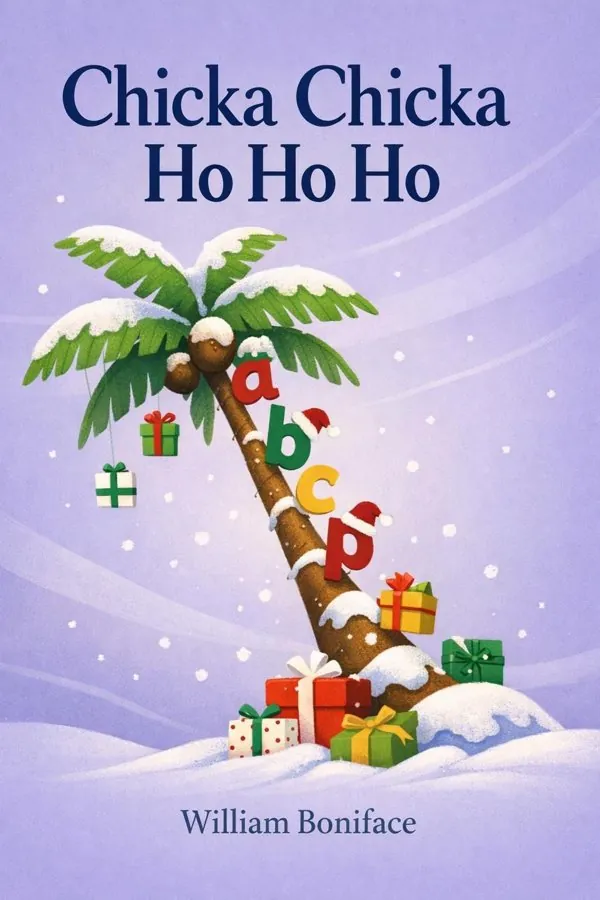
Chicka Chicka Ho Ho Ho by William Boniface is a bestsellers book. Chicka Chicka Ho Ho Ho is a cheerful holiday picture book that reimagines the familiar energy of the beloved alphabet world in a Christmas setting. Written by William Boniface, the book takes the playful spirit, rhythm, and letter-based fun associated with the Chicka Chicka tradition and fills it with candy canes, ornaments, snowy excitement, and festive anticipation. At its core, this is a read-aloud celebration of language, sound, and seasonal joy. Children are invited to follow letters as if they were lively little characters, turning the alphabet into a holiday adventure rather than a lesson. What makes the book matter is its ability to do several things at once: entertain young readers, reinforce letter recognition, and create a warm shared reading experience between children and adults. Boniface understands how to meet children where they are—through repetition, rhyme, humor, and movement. His writing is especially effective for preschool and early elementary audiences who learn best when education feels like play. More than a simple Christmas story, Chicka Chicka Ho Ho Ho shows how books can make literacy memorable, musical, and emotionally connected to family traditions. It is a festive reminder that reading aloud can be both instruction and celebration.
This FizzRead summary covers all 8 key chapters of Chicka Chicka Ho Ho Ho in approximately 10 minutes, distilling the most important ideas, arguments, and takeaways from William Boniface's work. Also available as an audio summary and Key Quotes Podcast.
Chicka Chicka Ho Ho Ho
Chicka Chicka Ho Ho Ho is a cheerful holiday picture book that reimagines the familiar energy of the beloved alphabet world in a Christmas setting. Written by William Boniface, the book takes the playful spirit, rhythm, and letter-based fun associated with the Chicka Chicka tradition and fills it with candy canes, ornaments, snowy excitement, and festive anticipation. At its core, this is a read-aloud celebration of language, sound, and seasonal joy. Children are invited to follow letters as if they were lively little characters, turning the alphabet into a holiday adventure rather than a lesson.
What makes the book matter is its ability to do several things at once: entertain young readers, reinforce letter recognition, and create a warm shared reading experience between children and adults. Boniface understands how to meet children where they are—through repetition, rhyme, humor, and movement. His writing is especially effective for preschool and early elementary audiences who learn best when education feels like play. More than a simple Christmas story, Chicka Chicka Ho Ho Ho shows how books can make literacy memorable, musical, and emotionally connected to family traditions. It is a festive reminder that reading aloud can be both instruction and celebration.
Who Should Read Chicka Chicka Ho Ho Ho?
This book is perfect for anyone interested in bestsellers and looking to gain actionable insights in a short read. Whether you're a student, professional, or lifelong learner, the key ideas from Chicka Chicka Ho Ho Ho by William Boniface will help you think differently.
- ✓Readers who enjoy bestsellers and want practical takeaways
- ✓Professionals looking to apply new ideas to their work and life
- ✓Anyone who wants the core insights of Chicka Chicka Ho Ho Ho in just 10 minutes
Want the full summary?
Get instant access to this book summary and 100K+ more with Fizz Moment.
Get Free SummaryAvailable on App Store • Free to download
Key Chapters
One of the smartest things a picture book can do is turn abstract learning into something alive, and Chicka Chicka Ho Ho Ho does exactly that. Instead of presenting the alphabet as a static sequence to memorize, the book treats letters like energetic personalities taking part in a holiday scene. This matters because young children rarely connect with symbols in isolation; they connect with motion, emotion, and story. When letters seem to move, celebrate, and interact, children are more likely to remember them.
William Boniface builds on a format children already find irresistible: rhythm, repetition, and playful visual action. The result is that alphabet exposure becomes naturally engaging rather than instructional in a heavy-handed way. A child who sees letters in festive activity is not only noticing shapes but also forming positive emotional associations with print. That emotional connection is powerful. Early literacy grows faster when children feel delight instead of pressure.
Parents and educators can apply this principle beyond the book. Rather than drilling letters through flashcards alone, they can animate letters in everyday life. For example, a caregiver might say, "B is bouncing into the box," or "S is sliding through the snow." Teachers can assign personalities to letters during circle time or create simple games in which children act out what a letter is doing.
The deeper lesson is that memory strengthens when meaning and play work together. Chicka Chicka Ho Ho Ho shows that children learn more easily when letters are not mere symbols but participants in a joyful world.
Actionable takeaway: Turn at least three letters a day into mini characters with voices, actions, or holiday-themed adventures to help children build stronger, happier alphabet recall.
Children often learn best when instruction hides inside excitement, and holiday stories are especially good at creating that kind of learning. Chicka Chicka Ho Ho Ho uses Christmas imagery not as decoration alone but as a bridge into literacy. Snow, ornaments, candy, and festive anticipation give the book an atmosphere children instantly recognize, which lowers resistance and raises attention. A child may come for the holiday fun, but along the way that child is absorbing sounds, letter forms, sequence, and verbal patterns.
This approach works because context matters. When children encounter educational material in a meaningful setting, it sticks more effectively. Holidays come with rituals, colors, songs, and family traditions, all of which create emotional resonance. Boniface uses that resonance to make the alphabet feel timely and alive. The book becomes more than a lesson; it becomes part of the season itself.
This idea has practical value for caregivers. Learning can be woven into seasonal routines with very little effort. During December, adults might invite children to find letters on gift tags, identify the first letter of holiday words, or create ornament crafts shaped like initials. In classrooms, teachers can organize alphabet hunts around seasonal decorations or ask students to match letters with winter vocabulary.
The larger point is that children do not separate emotion from learning. Festive excitement helps focus attention, and focused attention supports memory. Books like Chicka Chicka Ho Ho Ho remind adults that educational success often begins with atmosphere.
Actionable takeaway: Pair literacy activities with seasonal experiences—such as reading aloud near holiday decorations or labeling festive objects with letters—to make learning feel joyful and effortless.
Before children fully understand words on a page, they respond to sound, and Chicka Chicka Ho Ho Ho uses that truth beautifully. Its musical language invites children to listen, predict, repeat, and join in. Rhythm and rhyme are not just entertaining features of picture books; they are foundational tools for literacy development. When children hear recurring sounds and patterned phrasing, they begin to notice how language works.
Boniface’s festive style supports phonological awareness, which is the ability to recognize and play with sounds in spoken language. This skill is one of the strongest predictors of future reading success. A child who can hear rhyme, repetition, and similar sound structures is building the mental habits needed for decoding words later on. That is why playful read-alouds matter so much, even before a child can read independently.
In practice, adults can maximize this benefit by reading the book aloud with expression and participation. Pause before a repeated phrase and let children fill it in. Clap to the rhythm. Exaggerate rhyming words. Invite children to guess what sound or word might come next. These techniques transform a passive reading session into an active sound-learning experience.
This principle extends beyond the book. Singing nursery songs, inventing silly rhymes, and repeating patterned phrases during daily routines all strengthen sound awareness. The important thing is not perfection but repetition with pleasure. Children learn language structure by hearing it used musically and memorably.
Actionable takeaway: During read-aloud time, emphasize rhythm and rhyme by pausing for child participation, repeating catchy lines, and encouraging children to echo sounds aloud.
A great picture book does more than entertain a child; it creates a shared emotional space between reader and listener. Chicka Chicka Ho Ho Ho is especially suited to this because it is playful, seasonal, and highly performative. The book invites adults to use voice, expression, pacing, and humor, which turns reading into an event rather than a task. For many children, these shared reading moments become some of their earliest and strongest associations with books.
This matters because emotional safety and warmth are deeply tied to learning. When a child cuddles up for a holiday read-aloud and hears a familiar adult bring a story to life, books start to mean comfort, attention, and delight. That emotional bond increases motivation to return to reading again and again. In early childhood, repetition is not boredom; it is reassurance.
Boniface’s text supports this ritual quality. The festive setting makes the book ideal for bedtime, classroom circle time, or family gatherings during the holiday season. Adults can extend the experience by discussing favorite pages, asking children which letters they noticed, or relating the story to family traditions such as decorating a tree or wrapping gifts.
In homes and schools, the practical lesson is simple: literacy grows in relationships. Flashier educational tools can help, but few are as powerful as a consistent, joyful reading ritual. Even a short daily read-aloud sends the message that books matter and that language is worth sharing.
Actionable takeaway: Use the book as part of a recurring holiday reading ritual—same chair, same time, same warm tone—to help children link books with closeness, joy, and belonging.
Children often resist what feels like instruction but eagerly embrace what feels like play. Chicka Chicka Ho Ho Ho succeeds because it never presents itself as a lesson, even though it clearly supports learning. Its humor, motion, festive imagery, and lively alphabet cast make the experience feel spontaneous and fun. That design choice is more important than it may first appear. When children do not feel evaluated, they take more risks, engage more openly, and absorb more naturally.
William Boniface understands that early literacy should begin in curiosity, not correction. A child laughing at the antics of letters in a holiday setting is still practicing attention, recall, and sound recognition. In fact, this kind of low-pressure exposure may be more effective than formal drills for many young learners, especially those who are active, reluctant, or easily frustrated.
Adults can use this insight in everyday teaching. Instead of asking, "What letter is this?" in a testing tone, they can try, "Can you help this letter find its holiday friend?" Instead of correcting every mistake immediately, they can model the answer in a playful way and keep the interaction moving. Games, puppets, songs, and seasonal props all help children stay engaged without anxiety.
The larger message is that enjoyment is not the opposite of learning; it is often the doorway to it. Books like Chicka Chicka Ho Ho Ho remind adults that the best educational experiences can feel effortless precisely because they are designed with delight in mind.
Actionable takeaway: Replace one formal alphabet practice session each week with a playful reading or letter game that emphasizes laughter, storytelling, and participation over correctness.
Children gain confidence when they encounter something both recognizable and fresh, and Chicka Chicka Ho Ho Ho benefits from that balance. It draws on a familiar alphabet-centered style that many families already know, then gives it a new seasonal twist. This combination helps young readers and listeners feel oriented from the start. They understand the playful logic of the book, so they can focus on enjoying the holiday variation rather than decoding an entirely new structure.
Confidence is crucial in early reading development. A child who feels successful with a book is more likely to revisit it, participate during read-alouds, and notice patterns. Familiarity supports prediction, and prediction is an important literacy behavior. When children can anticipate sounds, phrases, or story movement, they are actively engaging with text.
This insight is especially useful for adults selecting books. Repetition across themes and formats is not redundancy; it is reinforcement. If a child enjoys one alphabet-based story, related books can deepen that interest while introducing new vocabulary and settings. In classrooms, teachers can use familiar structures to transition into seasonal units without losing engagement. At home, families can rotate trusted favorites with themed companion titles to keep reading exciting but manageable.
Boniface’s book shows how novelty works best when anchored in something a child already understands. New content enters more smoothly when it rides on a known pattern. This is one reason sequels, adaptations, and themed spin-offs can be so effective for younger audiences.
Actionable takeaway: Build a small reading stack around familiar formats—such as alphabet books or rhyming stories—so children can enjoy the security of repetition while exploring new themes.
Some of the most effective children’s books never stop to explain their value, and Chicka Chicka Ho Ho Ho is a good example of that quiet strength. It does not lecture children about reading, holidays, or behavior. Instead, it creates a lively experience in which learning is embedded in the form itself. The alphabet appears, patterns repeat, sounds echo, and the festive world keeps attention high. The teaching happens almost invisibly.
That subtlety matters. Young children are highly responsive to tone. If a book feels too moralizing or overly instructional, interest can fade quickly. Boniface respects the intelligence of his audience by trusting that engagement itself will carry much of the educational work. Children do not need a formal explanation for why rhyme helps them or why letters matter; they need memorable, repeated exposure in a form they enjoy.
Adults can take this as a broader lesson about supporting learning. Rather than always explaining the purpose of an activity, they can design environments in which the purpose is naturally fulfilled. A reading corner stocked with appealing books, magnetic letters on the fridge, or holiday labels around the house can teach as effectively as direct instruction when used consistently.
The best educational experiences often leave children with a feeling first and a skill second. A child may simply remember that the book was fun and festive, yet that memory can carry forward into stronger comfort with letters and books in general.
Actionable takeaway: Choose at least one children’s book each week that teaches through story, sound, and imagery rather than overt instruction, and let enjoyment do part of the educational work.
Books often become traditions not because they are the most complex stories on the shelf but because they return at meaningful moments. Chicka Chicka Ho Ho Ho has exactly that kind of potential. Its holiday theme makes it more than a one-time read; it can become part of the yearly rhythm of family life. When a book appears each December, it gathers emotional meaning over time. Children begin to associate it with decorations, anticipation, togetherness, and the comfort of familiar routines.
This recurring role matters because tradition deepens a child’s relationship with reading. A book that is tied to warm family memories gains power beyond its pages. It becomes a ritual object, something children look for and request. Repeated annual reading also strengthens literacy through natural revisiting. Children notice more each year, join in more confidently, and often move from listening to partial independent reading as they grow.
Families can intentionally build this kind of ritual. They might read the book on the first night decorations go up, pair it with cocoa and pajamas, or bring it out with other holiday favorites in a special basket. Teachers can create classroom traditions by revisiting seasonal titles each year and linking them to songs, crafts, or alphabet activities.
Boniface’s contribution here is not just a festive story but a book designed for return. Its energy and brevity suit repeat readings, and repeat readings are where many of its literacy benefits deepen.
Actionable takeaway: Make the book part of a yearly holiday ritual so children connect reading with celebration, memory, and joyful anticipation.
All Chapters in Chicka Chicka Ho Ho Ho
About the Author
William Boniface is a children’s author recognized for creating lively, imaginative books that appeal to young readers and the adults who read with them. His writing often combines humor, rhythmic language, and playful concepts that make stories especially effective in read-aloud settings. Boniface has a gift for understanding how children engage with books—not only through plot, but through sound, repetition, and visual energy. In Chicka Chicka Ho Ho Ho, he channels those strengths into a festive alphabet adventure that supports early literacy while keeping the tone light and joyful. His work stands out for making learning feel natural and entertaining, which is why his books continue to resonate with families, teachers, and early childhood readers.
Get This Summary in Your Preferred Format
Read or listen to the Chicka Chicka Ho Ho Ho summary by William Boniface anytime, anywhere. FizzRead offers multiple formats so you can learn on your terms — all free.
Available formats: App · Audio · PDF · EPUB — All included free with FizzRead
Download Chicka Chicka Ho Ho Ho PDF and EPUB Summary
Key Quotes from Chicka Chicka Ho Ho Ho
“One of the smartest things a picture book can do is turn abstract learning into something alive, and Chicka Chicka Ho Ho Ho does exactly that.”
“Children often learn best when instruction hides inside excitement, and holiday stories are especially good at creating that kind of learning.”
“Before children fully understand words on a page, they respond to sound, and Chicka Chicka Ho Ho Ho uses that truth beautifully.”
“A great picture book does more than entertain a child; it creates a shared emotional space between reader and listener.”
“Children often resist what feels like instruction but eagerly embrace what feels like play.”
Frequently Asked Questions about Chicka Chicka Ho Ho Ho
Chicka Chicka Ho Ho Ho by William Boniface is a bestsellers book that explores key ideas across 8 chapters. Chicka Chicka Ho Ho Ho is a cheerful holiday picture book that reimagines the familiar energy of the beloved alphabet world in a Christmas setting. Written by William Boniface, the book takes the playful spirit, rhythm, and letter-based fun associated with the Chicka Chicka tradition and fills it with candy canes, ornaments, snowy excitement, and festive anticipation. At its core, this is a read-aloud celebration of language, sound, and seasonal joy. Children are invited to follow letters as if they were lively little characters, turning the alphabet into a holiday adventure rather than a lesson. What makes the book matter is its ability to do several things at once: entertain young readers, reinforce letter recognition, and create a warm shared reading experience between children and adults. Boniface understands how to meet children where they are—through repetition, rhyme, humor, and movement. His writing is especially effective for preschool and early elementary audiences who learn best when education feels like play. More than a simple Christmas story, Chicka Chicka Ho Ho Ho shows how books can make literacy memorable, musical, and emotionally connected to family traditions. It is a festive reminder that reading aloud can be both instruction and celebration.
You Might Also Like
The Godfather
Mario Puzo
10 min
The Handmaid's Tale
Margaret Atwood
10 min
The Hunger Games
Suzanne Collins
10 min
The Nightingale
Kristin Hannah
10 min
The Seven Husbands of Evelyn Hugo
Taylor Jenkins Reid
10 min
Backwater Justice
Fern Michaels
10 minBrowse by Category
Ready to read Chicka Chicka Ho Ho Ho?
Get the full summary and 100K+ more books with Fizz Moment.