
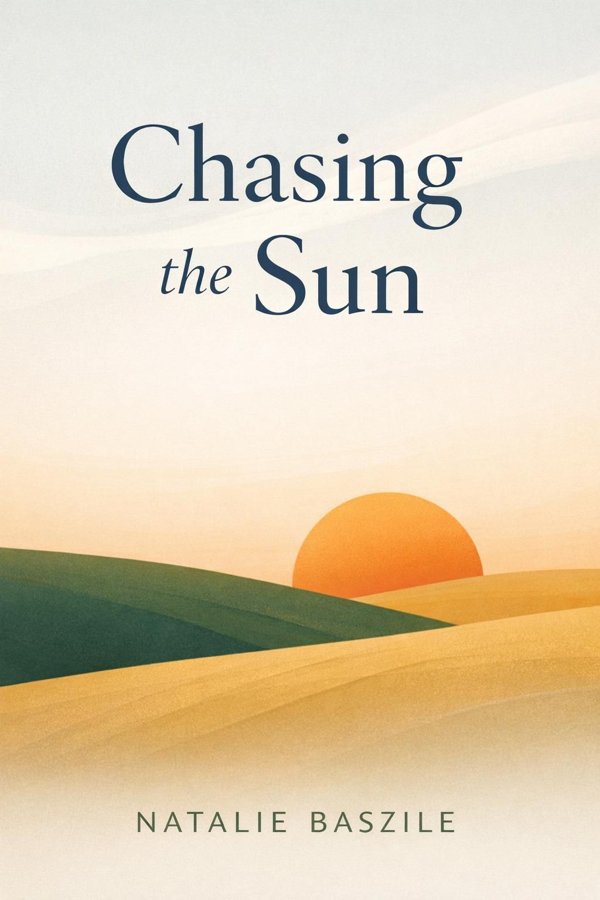
Chasing the Sun: Summary & Key Insights
 10 min9 chaptersAudio available
Key Takeaways from Chasing the Sun
Some life changes arrive with noise, but the most devastating ones often begin in silence.
When a relationship ends suddenly, the deepest wound is often the collapse of the story we told ourselves about our lives.
We often think of identity as psychological, but Chasing the Sun argues that identity is also geographic, ancestral, and material.
Independence is often celebrated as the highest form of strength, but Baszile reminds us that survival is frequently collective.
One of the novel’s most powerful questions is whether a woman can define herself outside the roles that others reward.
What Is Chasing the Sun About?
Chasing the Sun by Natalie Baszile is a bestsellers book spanning 5 pages. Chasing the Sun is a moving contemporary novel about what remains after a life suddenly breaks apart. At its center is Ava, a woman living in the American South whose world is upended when her husband leaves without warning. What follows is not just a story of heartbreak, but a deeper journey into identity, family history, womanhood, and the difficult work of rebuilding a self that no longer depends on old certainties. Set against the emotional and physical landscape of the South, the novel explores how loss can force buried questions to the surface: Where do we belong? What do we inherit? And how do we become whole after betrayal? The book matters because it treats personal crisis not as melodrama, but as a doorway to transformation. Natalie Baszile writes with emotional intelligence and a sharp understanding of family, race, place, and resilience. Best known for Queen Sugar, Baszile has earned recognition for portraying African American life with richness and nuance. In Chasing the Sun, she brings those strengths to a powerful story about survival, reinvention, and learning to stand in one’s own light.
This FizzRead summary covers all 9 key chapters of Chasing the Sun in approximately 10 minutes, distilling the most important ideas, arguments, and takeaways from Natalie Baszile's work. Also available as an audio summary and Key Quotes Podcast.
Chasing the Sun
Chasing the Sun is a moving contemporary novel about what remains after a life suddenly breaks apart. At its center is Ava, a woman living in the American South whose world is upended when her husband leaves without warning. What follows is not just a story of heartbreak, but a deeper journey into identity, family history, womanhood, and the difficult work of rebuilding a self that no longer depends on old certainties. Set against the emotional and physical landscape of the South, the novel explores how loss can force buried questions to the surface: Where do we belong? What do we inherit? And how do we become whole after betrayal?
The book matters because it treats personal crisis not as melodrama, but as a doorway to transformation. Natalie Baszile writes with emotional intelligence and a sharp understanding of family, race, place, and resilience. Best known for Queen Sugar, Baszile has earned recognition for portraying African American life with richness and nuance. In Chasing the Sun, she brings those strengths to a powerful story about survival, reinvention, and learning to stand in one’s own light.
Who Should Read Chasing the Sun?
This book is perfect for anyone interested in bestsellers and looking to gain actionable insights in a short read. Whether you're a student, professional, or lifelong learner, the key ideas from Chasing the Sun by Natalie Baszile will help you think differently.
- ✓Readers who enjoy bestsellers and want practical takeaways
- ✓Professionals looking to apply new ideas to their work and life
- ✓Anyone who wants the core insights of Chasing the Sun in just 10 minutes
Want the full summary?
Get instant access to this book summary and 100K+ more with Fizz Moment.
Get Free SummaryAvailable on App Store • Free to download
Key Chapters
Some life changes arrive with noise, but the most devastating ones often begin in silence. Chasing the Sun opens with that kind of rupture: Ava wakes to the absence of her husband and to the unnerving realization that the life she trusted is no longer intact. There is no dramatic scene to explain what happened, no tidy moment of closure. Instead, Baszile explores the emotional reality of abandonment as it is often lived: through confusion, suspended routine, and the shock of ordinary objects suddenly feeling unfamiliar.
This opening matters because it shows how loss destabilizes more than companionship. It unsettles identity. Ava is not simply asking where her husband has gone; she is also forced to confront who she is without the role she has been performing for years. Marriage had structured her time, her emotional expectations, and her sense of social place. Once it dissolves, even the smallest decisions begin to feel weighted.
Readers can recognize this pattern in many forms of life disruption: divorce, job loss, illness, relocation, or the end of a friendship. Often, the first stage is not action but disorientation. Baszile honors that truth by allowing silence, uncertainty, and grief to occupy space.
The novel suggests that the beginning of healing is not immediate strength but honest recognition. Before Ava can rebuild, she must face the fact that what was stable is gone. That is painful, but it is also clarifying. Naming the fracture becomes the first step toward transformation.
Actionable takeaway: When a major loss disrupts your life, resist the urge to force instant answers. Start by acknowledging what has changed and what feelings are present, because clarity begins with naming reality.
When a relationship ends suddenly, the deepest wound is often the collapse of the story we told ourselves about our lives. Ava’s struggle in the aftermath of her husband’s departure is not limited to sadness; it is a crisis of self-definition. She must continue functioning, making choices, and caring for daily responsibilities while carrying a private sense that the ground beneath her has shifted.
Baszile portrays this period with sensitivity, showing how grief rarely moves in a straight line. Ava swings between numbness, anger, memory, self-doubt, and determination. In doing so, the novel rejects simplistic narratives of empowerment. Healing is not an instant awakening but a process of repeated negotiation with pain. Motherhood, domestic obligations, and community expectations all shape that journey. Ava cannot disappear into grief because life still demands her attention, yet those same demands can make emotional recovery harder.
One of the book’s strengths is its insistence that a woman’s identity should not end where her marriage does. Ava must learn to see herself beyond relational roles. This is a difficult shift because many people build self-worth around being needed, chosen, or validated by others. Baszile asks what happens when that external validation disappears.
In practical terms, readers may see themselves in Ava’s attempts to regain routine, set boundaries, and rediscover preferences that had been submerged. Emotional recovery often begins with small acts: making a decision independently, reclaiming time, tending one’s body, or refusing to let shame dictate the future.
Actionable takeaway: After a personal rupture, focus on rebuilding identity through small, self-directed choices. Let daily acts of care and decision-making remind you that your life still belongs to you.
We often think of identity as psychological, but Chasing the Sun argues that identity is also geographic, ancestral, and material. As Ava reconnects with her roots, the land becomes more than scenery; it becomes a living archive. Family history, cultural inheritance, and the Southern landscape combine to help her understand who she is beyond the immediate pain of abandonment.
Baszile’s use of land echoes a long literary tradition in which place holds memory. Soil, houses, fields, weather, and inherited spaces carry stories that formal history often leaves out. For Ava, reconnecting with these roots is not about nostalgia alone. It is about recovering a lineage of endurance. She comes to see that her life is part of a longer continuum shaped by women, family labor, and generational struggle.
This idea resonates powerfully in a modern world where people are often disconnected from origin stories. Many readers know what it feels like to live inside urgent present problems while having only a partial understanding of the histories that formed them. Reconnection does not erase suffering, but it can expand perspective. Ava’s pain is personal, yet it becomes more bearable when placed within a broader family and cultural legacy.
There is also a practical lesson here. Re-rooting can take many forms: speaking with elders, revisiting family stories, studying local history, preserving recipes or rituals, or returning to physical spaces that shaped us. These acts can create continuity when life feels fragmented.
Actionable takeaway: When your sense of self feels unstable, reconnect with the places, people, and histories that preceded you. Personal strength often deepens when you remember that your story did not begin with your current crisis.
Independence is often celebrated as the highest form of strength, but Baszile reminds us that survival is frequently collective. As Ava moves through heartbreak and uncertainty, community becomes one of the novel’s most important forces. Friends, family, neighbors, and the larger social fabric of Southern life do not magically solve her problems, yet they create a web of witness and support that keeps her from disappearing into isolation.
What makes this portrayal compelling is its realism. Community can be nurturing, intrusive, imperfect, and demanding all at once. People show up with advice, assumptions, comfort, and judgment. Baszile does not romanticize connection, but she does insist that healing often happens in relationship. To be seen by others can help restore a self that has been diminished by rejection.
The novel also broadens the meaning of womanhood through these interactions. Ava’s journey is not just about becoming self-sufficient; it is about redefining strength beyond sacrifice and silence. Through other women, she encounters different models of endurance, autonomy, tenderness, and self-respect. Community therefore becomes a space of reflection, where she can compare inherited expectations with new possibilities.
In everyday life, many people retreat after betrayal because vulnerability feels dangerous. Yet selective connection can be essential. This may mean confiding in trusted friends, joining a support network, seeking therapy, or simply allowing practical help during a difficult season.
Actionable takeaway: Do not confuse healing with isolation. Choose a few trustworthy people and let them witness your struggle, because recovery is often strengthened by supportive connection rather than solitary endurance.
One of the novel’s most powerful questions is whether a woman can define herself outside the roles that others reward. Ava’s crisis exposes how strongly social identity is tied to marriage, caretaking, and the appearance of stability. Once her husband leaves, she is forced to confront not only private grief but also the cultural script she has been living inside.
Baszile explores womanhood as something more expansive than dutiful performance. Ava’s growth involves recognizing where she has internalized expectations about being accommodating, resilient, attractive, loyal, and self-sacrificing. These traits may once have felt virtuous, but the novel asks whether they have also kept her from fully inhabiting her own desires and limits.
This makes Chasing the Sun relevant well beyond its plot. Many readers, especially women, know the pressure to be endlessly dependable while neglecting their own emotional truth. The book challenges the idea that worth must be earned through service or attachment. It suggests that maturity is not simply about maintaining appearances, but about developing an inner authority that remains intact even when external roles shift.
Practically, this can look like learning to say no, clarifying personal values, separating self-respect from relationship status, and reconsidering inherited beliefs about what a good woman should endure. Ava’s transformation is meaningful because it is not rebellion for its own sake. It is a movement toward integrity.
Actionable takeaway: Examine the roles you perform to feel accepted. Keep what reflects your true values, but release what requires you to abandon your needs, boundaries, or sense of self.
In this novel, the sun is not merely a symbol of warmth or hope; it is also a force of exposure. To stand in sunlight is to be revealed. Baszile uses this metaphor to show that transformation is rarely comfortable. Ava’s life is brought into painful visibility after her husband leaves. Illusions fade, unresolved wounds surface, and truths she may have avoided become impossible to ignore.
This dual meaning gives the title much of its richness. Chasing the sun suggests longing for light, clarity, and renewal, but it also implies pursuing something that may strip away protective shadows. Ava’s rebirth depends on her willingness to be exposed to reality. She must see her marriage clearly, see herself clearly, and face the difference between what she wanted life to be and what it actually is.
That idea has broad application. People often want healing while avoiding revelation. We seek a better future without fully examining the habits, relationships, or beliefs that keep us trapped. Baszile suggests that new life begins not in denial but in illumination. The same light that hurts the eyes at first can eventually orient us.
The metaphor also speaks to resilience. The sun returns each day regardless of the previous night. That rhythm mirrors Ava’s gradual emergence. She does not transform in one dramatic moment; she changes through repeated encounters with truth, endurance, and renewed possibility.
Actionable takeaway: Let difficult clarity serve you rather than frighten you. When life exposes a painful truth, ask what that illumination makes possible instead of only mourning what it destroys.
Home is often imagined as something stable, a place or relationship we can rely on without question. Chasing the Sun complicates that idea by showing how quickly home can become uncertain. Ava’s marriage once helped define home for her, but when that bond is broken, she must reconsider whether home is a person, a place, a history, or an internal sense of belonging.
Baszile treats home as both emotional and physical. The Southern setting matters because it carries intimacy, memory, and contradiction. It can be a source of comfort, pressure, heritage, and unresolved pain. As Ava reorients herself, she learns that home cannot depend entirely on another person’s presence. If it does, it remains vulnerable to collapse.
This insight speaks to anyone who has experienced upheaval. We often outsource our sense of safety to marriage, family structure, income, or geography. When one of those pillars fails, we may feel homeless even while staying in the same house. The novel suggests that real belonging must eventually be built from within, supported but not wholly defined by external arrangements.
In practical life, reconstructing home may involve creating new routines, reclaiming a living space, preserving meaningful traditions, or redefining what emotional safety feels like. It can also mean recognizing that home may evolve over time rather than remain fixed.
Actionable takeaway: If your sense of home has been shaken, begin rebuilding it intentionally through routines, spaces, and relationships that reflect who you are now, not only who you once were.
Setting in Chasing the Sun is not decorative; it shapes the emotional logic of the story. The American South in Baszile’s hands is a place of beauty, complexity, inherited memory, and social expectation. It informs how Ava understands family, gender, belonging, and endurance. To read the novel well is to see how place influences what characters believe they owe one another and what they imagine is possible.
Baszile’s Southern landscape carries layered meanings, especially in relation to African American experience. History is not remote background but an active presence embedded in land, community structures, and family memory. This gives Ava’s personal story broader resonance. Her struggle is intimate, yet it unfolds within cultural patterns shaped by generations of survival and adaptation.
The setting also deepens the novel’s tone. The South can hold contradiction gracefully: warmth and scrutiny, rootedness and limitation, hospitality and silence. These tensions mirror Ava’s internal world. She seeks comfort in what is familiar, yet familiarity can also reinforce old roles she is trying to outgrow.
Readers can apply this insight by paying attention to how their own environments shape them. Cities, neighborhoods, hometowns, and family regions all carry scripts about success, love, gender, and identity. Sometimes growth requires recognizing which parts of those scripts nourish us and which constrain us.
Actionable takeaway: Reflect on how your environment has shaped your beliefs about relationships, duty, and self-worth. Awareness of place-based influence can help you choose what to keep and what to rewrite.
Many stories about recovery confuse resilience with toughness, but Chasing the Sun offers a more humane vision. Ava does not heal by becoming cold, invulnerable, or indifferent. Instead, her resilience emerges through honesty, endurance, and a gradual return to wholeness. Baszile shows that true strength is not the absence of pain; it is the capacity to move through pain without letting it define the entirety of who you are.
This distinction matters. In the face of betrayal, people often believe they must protect themselves by shutting down emotionally. Yet emotional numbness can become another form of loss. Ava’s journey suggests that growth requires feeling deeply while also refusing to remain trapped in injury. She learns to carry experience forward as knowledge rather than as permanent damage.
The novel’s contribution here is subtle but important. Rebirth is not presented as a complete break from the past. Ava does not become a brand-new person. She becomes a more integrated one, someone who can hold grief, memory, desire, history, and self-respect together. That is a more realistic and more hopeful model of transformation.
In practical terms, this insight encourages readers to replace performance with process. Resilience may look like asking for help, resting, revising plans, speaking a difficult truth, or trying again after disappointment. It is not always dramatic. Often, it is the quiet decision to remain open to life.
Actionable takeaway: Redefine resilience as wholeness rather than hardness. Let difficult experiences deepen your self-knowledge, but do not let them turn you into someone cut off from feeling, trust, or possibility.
All Chapters in Chasing the Sun
About the Author
Natalie Baszile is an American author, educator, and speaker whose work focuses on family, history, identity, and African American life. She is best known for her acclaimed novel Queen Sugar, which gained even wider attention when it was adapted into a television series produced by Oprah Winfrey and developed by Ava DuVernay. Baszile’s writing is noted for its lyrical style, emotional intelligence, and strong sense of place, particularly in relation to the modern South. She often explores how personal lives are shaped by ancestry, land, memory, and cultural inheritance. In Chasing the Sun, she brings those same strengths to a story of abandonment, self-discovery, and renewal. Her work continues to resonate with readers who value nuanced, character-rich fiction grounded in history and human complexity.
Get This Summary in Your Preferred Format
Read or listen to the Chasing the Sun summary by Natalie Baszile anytime, anywhere. FizzRead offers multiple formats so you can learn on your terms — all free.
Available formats: App · Audio · PDF · EPUB — All included free with FizzRead
Download Chasing the Sun PDF and EPUB Summary
Key Quotes from Chasing the Sun
“Some life changes arrive with noise, but the most devastating ones often begin in silence.”
“When a relationship ends suddenly, the deepest wound is often the collapse of the story we told ourselves about our lives.”
“We often think of identity as psychological, but Chasing the Sun argues that identity is also geographic, ancestral, and material.”
“Independence is often celebrated as the highest form of strength, but Baszile reminds us that survival is frequently collective.”
“One of the novel’s most powerful questions is whether a woman can define herself outside the roles that others reward.”
Frequently Asked Questions about Chasing the Sun
Chasing the Sun by Natalie Baszile is a bestsellers book that explores key ideas across 9 chapters. Chasing the Sun is a moving contemporary novel about what remains after a life suddenly breaks apart. At its center is Ava, a woman living in the American South whose world is upended when her husband leaves without warning. What follows is not just a story of heartbreak, but a deeper journey into identity, family history, womanhood, and the difficult work of rebuilding a self that no longer depends on old certainties. Set against the emotional and physical landscape of the South, the novel explores how loss can force buried questions to the surface: Where do we belong? What do we inherit? And how do we become whole after betrayal? The book matters because it treats personal crisis not as melodrama, but as a doorway to transformation. Natalie Baszile writes with emotional intelligence and a sharp understanding of family, race, place, and resilience. Best known for Queen Sugar, Baszile has earned recognition for portraying African American life with richness and nuance. In Chasing the Sun, she brings those strengths to a powerful story about survival, reinvention, and learning to stand in one’s own light.
You Might Also Like

The Godfather
Mario Puzo
10 min
The Handmaid's Tale
Margaret Atwood
10 min
The Hunger Games
Suzanne Collins
10 min
The Nightingale
Kristin Hannah
10 min
The Seven Husbands of Evelyn Hugo
Taylor Jenkins Reid
10 min
Backwater Justice
Fern Michaels
10 minBrowse by Category
Ready to read Chasing the Sun?
Get the full summary and 100K+ more books with Fizz Moment.