
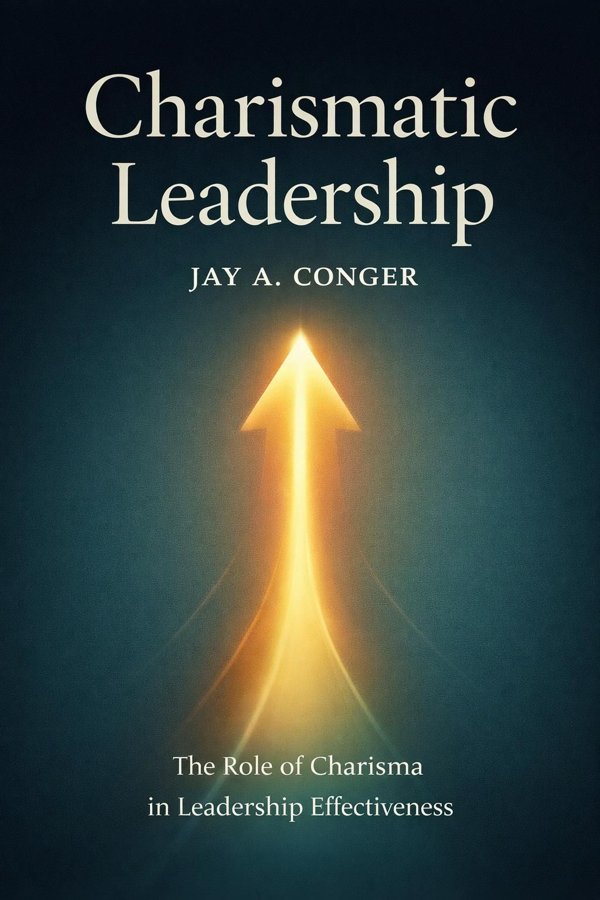
Charismatic Leadership: The Role of Charisma in Leadership Effectiveness: Summary & Key Insights
 10 min9 chaptersAudio available
What Is Charismatic Leadership: The Role of Charisma in Leadership Effectiveness About?
Charismatic Leadership: The Role of Charisma in Leadership Effectiveness by Jay A. Conger is a leadership book spanning 9 pages. This book explores the nature and dynamics of charismatic leadership, examining how charisma influences organizational effectiveness and follower motivation. Jay A. Conger analyzes the psychological and behavioral foundations of charisma, offering a framework for understanding how leaders inspire commitment and performance through vision, communication, and personal example.
This FizzRead summary covers all 9 key chapters of Charismatic Leadership: The Role of Charisma in Leadership Effectiveness in approximately 10 minutes, distilling the most important ideas, arguments, and takeaways from Jay A. Conger's work. Also available as an audio summary and Key Quotes Podcast.
Charismatic Leadership: The Role of Charisma in Leadership Effectiveness
This book explores the nature and dynamics of charismatic leadership, examining how charisma influences organizational effectiveness and follower motivation. Jay A. Conger analyzes the psychological and behavioral foundations of charisma, offering a framework for understanding how leaders inspire commitment and performance through vision, communication, and personal example.
Who Should Read Charismatic Leadership: The Role of Charisma in Leadership Effectiveness?
This book is perfect for anyone interested in leadership and looking to gain actionable insights in a short read. Whether you're a student, professional, or lifelong learner, the key ideas from Charismatic Leadership: The Role of Charisma in Leadership Effectiveness by Jay A. Conger will help you think differently.
- ✓Readers who enjoy leadership and want practical takeaways
- ✓Professionals looking to apply new ideas to their work and life
- ✓Anyone who wants the core insights of Charismatic Leadership: The Role of Charisma in Leadership Effectiveness in just 10 minutes
Want the full summary?
Get instant access to this book summary and 100K+ more with Fizz Moment.
Get Free SummaryAvailable on App Store • Free to download
Key Chapters
Charisma has ancient roots. The term itself comes from the Greek 'charis,' meaning gift or grace, but its sociological significance was first articulated by Max Weber, who described charismatic authority as a form of influence grounded in devotion to the exceptional sanctity or heroism of an individual. For Weber, charisma was revolutionary—it disrupted traditional and bureaucratic orders through the leader’s personal magnetism.
But in modern organizations, charisma functions differently. It isn’t about divine favor but about the emotional and symbolic bond between a leader and followers. Charisma is constructed through perception: followers attribute extraordinary qualities to leaders who articulate a compelling vision, demonstrate confidence under uncertainty, and show personal sacrifice for a collective cause.
In contrasting charismatic leadership with other styles such as transactional and transformational leadership, I make several distinctions. Transactional leaders focus on exchanges—rewards, compliance, and control—while transformational leaders aim to elevate motivation and morality in followers. Charismatic leadership shares overlap with transformational leadership, but it is more emotionally charged and symbolically expressed. Charisma centers on the leader’s ability to articulate a vision so vivid and inspiring that followers internalize it as their own.
This redefinition helps us see charisma as a relationship, not an essence. It emerges through interaction, communication, and social context—an alignment of emotional energy between leader and followers around a shared vision. In organizations, this means charisma can flourish amidst challenge and change, when people crave meaning and direction.
To understand charisma is to understand the psychology of human perception and emotion. Charismatic leaders differ not necessarily in intellect or technical expertise, but in emotional expressiveness, self-confidence, and sensitivity to the needs of others. They radiate conviction and empathy simultaneously—and this duality is what captivates followers.
Research suggests charismatic leaders score high in self-esteem and self-efficacy. They believe profoundly in their vision and their capacity to realize it. This belief is transmitted contagiously: followers, sensing the leader’s unshakable confidence, adopt it themselves. Yet charisma is not arrogance; genuine self-assurance is tempered by empathy and the ability to read emotional cues. Charismatic leaders are emotionally intelligent long before the term became popular. They sense the moods of followers, adjust their tone, and create a shared emotional field.
Another psychological layer lies in attribution theory. People attribute extraordinary qualities to those who emerge in crisis or ambiguity with decisive behavior and a compelling story. The leader becomes a symbolic figure—a lens through which followers interpret their collective experience. This psychological process means charisma is co-created: it exists only through the perceptions of followers who seek meaning and inspiration.
When viewed this way, charisma becomes less about mystique and more about transparency of belief—about the emotional congruence between what a leader says, feels, and does. This integrity of expression transforms personality into presence.
+ 7 more chapters — available in the FizzRead app
All Chapters in Charismatic Leadership: The Role of Charisma in Leadership Effectiveness
About the Author
Jay A. Conger is an American organizational behavior scholar and leadership expert. He has served as a professor at institutions such as the London Business School and Claremont McKenna College, and is widely recognized for his research on leadership, organizational change, and executive development.
Get This Summary in Your Preferred Format
Read or listen to the Charismatic Leadership: The Role of Charisma in Leadership Effectiveness summary by Jay A. Conger anytime, anywhere. FizzRead offers multiple formats so you can learn on your terms — all free.
Available formats: App · Audio · PDF · EPUB — All included free with FizzRead
Download Charismatic Leadership: The Role of Charisma in Leadership Effectiveness PDF and EPUB Summary
Key Quotes from Charismatic Leadership: The Role of Charisma in Leadership Effectiveness
“To understand charisma is to understand the psychology of human perception and emotion.”
Frequently Asked Questions about Charismatic Leadership: The Role of Charisma in Leadership Effectiveness
Charismatic Leadership: The Role of Charisma in Leadership Effectiveness by Jay A. Conger is a leadership book that explores key ideas across 9 chapters. This book explores the nature and dynamics of charismatic leadership, examining how charisma influences organizational effectiveness and follower motivation. Jay A. Conger analyzes the psychological and behavioral foundations of charisma, offering a framework for understanding how leaders inspire commitment and performance through vision, communication, and personal example.
You Might Also Like

Extreme Ownership
Jocko Willink
10 min
Dare to Lead
Brene Brown
10 min
Leaders Eat Last
Simon Sinek
10 min
The 21 Irrefutable Laws of Leadership
John Maxwell
10 min
Start With Why
Simon Sinek
10 min
How to Lead When You're Not in Charge
Clay Scroggins
10 minBrowse by Category
Ready to read Charismatic Leadership: The Role of Charisma in Leadership Effectiveness?
Get the full summary and 100K+ more books with Fizz Moment.