
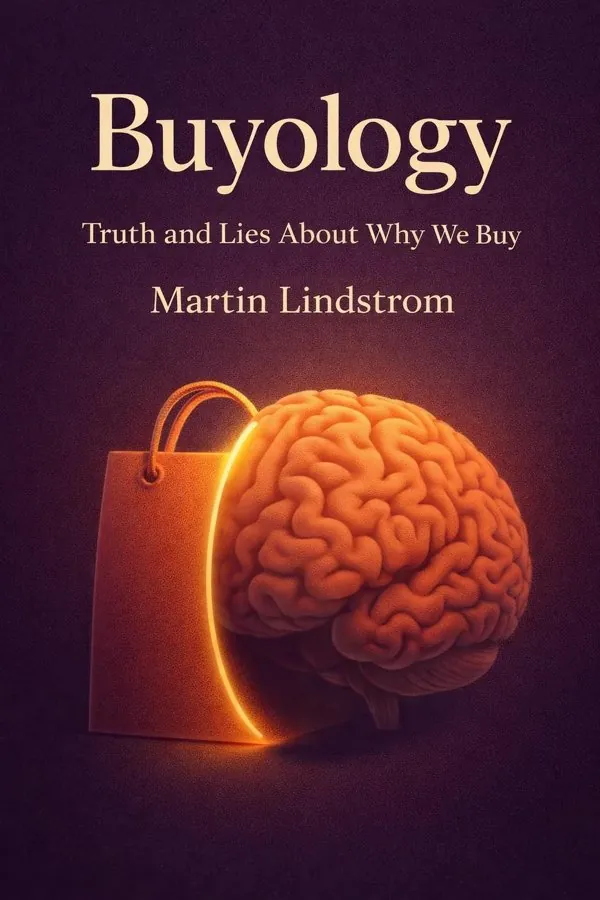
Buyology: Truth and Lies About Why We Buy: Summary & Key Insights
 10 min8 chaptersAudio available
What Is Buyology: Truth and Lies About Why We Buy About?
Buyology: Truth and Lies About Why We Buy by Martin Lindstrom is a marketing book spanning 8 pages. Buyology explores the hidden forces that shape consumer behavior, revealing how subconscious desires, emotions, and cultural cues influence purchasing decisions. Drawing on neuromarketing research, Martin Lindstrom uncovers the psychological and biological triggers that drive brand loyalty and buying habits, challenging traditional marketing assumptions.
This FizzRead summary covers all 8 key chapters of Buyology: Truth and Lies About Why We Buy in approximately 10 minutes, distilling the most important ideas, arguments, and takeaways from Martin Lindstrom's work. Also available as an audio summary and Key Quotes Podcast.
Buyology: Truth and Lies About Why We Buy
Buyology explores the hidden forces that shape consumer behavior, revealing how subconscious desires, emotions, and cultural cues influence purchasing decisions. Drawing on neuromarketing research, Martin Lindstrom uncovers the psychological and biological triggers that drive brand loyalty and buying habits, challenging traditional marketing assumptions.
Who Should Read Buyology: Truth and Lies About Why We Buy?
This book is perfect for anyone interested in marketing and looking to gain actionable insights in a short read. Whether you're a student, professional, or lifelong learner, the key ideas from Buyology: Truth and Lies About Why We Buy by Martin Lindstrom will help you think differently.
- ✓Readers who enjoy marketing and want practical takeaways
- ✓Professionals looking to apply new ideas to their work and life
- ✓Anyone who wants the core insights of Buyology: Truth and Lies About Why We Buy in just 10 minutes
Want the full summary?
Get instant access to this book summary and 100K+ more with Fizz Moment.
Get Free SummaryAvailable on App Store • Free to download
Key Chapters
When I first coined the term *Buyology*, I wanted to describe the biological and psychological forces that govern our purchasing behavior. Traditional marketing assumes that people make conscious, rational choices — that persuasion happens from the outside in. Neuromarketing, however, shows the opposite: influence begins from the inside out.
Through a three-year global study worth over seven million dollars, we tested hundreds of ads, brands, and symbols using fMRI and SST scanning. These tools revealed which regions of the brain lit up during exposure to marketing stimuli. We discovered that most purchase decisions occur subconsciously — within the limbic system, where emotion, memory, and decision-making intertwine.
For instance, when participants viewed cigarette warning labels designed to instill fear, the regions associated with craving were activated instead. Fear didn’t repel; it reinforced desire. Similarly, religious imagery such as crosses and halos provoked neural responses parallel to those triggered by powerful brands like Apple, Ferrari, or Harley-Davidson. These brands didn’t just represent products; they symbolized belief systems. Consumers internalized them with near-spiritual fervor.
The implications are staggering. Marketing isn’t just storytelling — it’s neurochemistry. Every purchase we make reflects a network of associations lodged deep in our brains from years of cultural conditioning. Understanding this helps us not only sell more effectively but also recognize the boundaries of ethical influence.
One of the most fascinating revelations from our research was how closely brand devotion mirrors religious devotion. When I analyzed how Harley-Davidson enthusiasts spoke about their motorcycles, or how Apple users lined up for product launches, I realized they were enacting rituals that looked suspiciously familiar — akin to lighting candles in church or kneeling in prayer.
Religion provides meaning, community, and continuity; brands do the same in secular society. A logo becomes a sacred icon. A store opening feels like a pilgrimage. Even the annual release of a new product carries the anticipation of a holy day.
Using brain scans, we found that strong brands activate the same neural regions associated with faith — the medial prefrontal cortex and areas responsible for emotional bonding. These symbols construct identity. Consumers are not simply buying machines or phones; they’re purchasing a piece of their narrative — their belonging in a symbolic tribe.
The marketing lesson is clear: great brands don’t sell products, they sell belief systems. They offer rituals consumers can repeat — opening a box, tasting the same coffee each morning, wearing a logo proudly. These repetitive acts nurture emotional memory, turning a simple purchase into an act of affirmation. Understanding this allows marketers to create humane, enduring brands built not on manipulation but on genuine meaning.
+ 6 more chapters — available in the FizzRead app
All Chapters in Buyology: Truth and Lies About Why We Buy
About the Author
Martin Lindstrom is a Danish author and branding expert known for his work in neuromarketing and consumer psychology. He has advised major global companies on brand strategy and is recognized for his bestselling books on marketing and behavioral science.
Get This Summary in Your Preferred Format
Read or listen to the Buyology: Truth and Lies About Why We Buy summary by Martin Lindstrom anytime, anywhere. FizzRead offers multiple formats so you can learn on your terms — all free.
Available formats: App · Audio · PDF · EPUB — All included free with FizzRead
Download Buyology: Truth and Lies About Why We Buy PDF and EPUB Summary
Key Quotes from Buyology: Truth and Lies About Why We Buy
“When I first coined the term *Buyology*, I wanted to describe the biological and psychological forces that govern our purchasing behavior.”
“One of the most fascinating revelations from our research was how closely brand devotion mirrors religious devotion.”
Frequently Asked Questions about Buyology: Truth and Lies About Why We Buy
Buyology: Truth and Lies About Why We Buy by Martin Lindstrom is a marketing book that explores key ideas across 8 chapters. Buyology explores the hidden forces that shape consumer behavior, revealing how subconscious desires, emotions, and cultural cues influence purchasing decisions. Drawing on neuromarketing research, Martin Lindstrom uncovers the psychological and biological triggers that drive brand loyalty and buying habits, challenging traditional marketing assumptions.
More by Martin Lindstrom
You Might Also Like
Captivology: The Science of Capturing People's Attention
Ben Parr
10 min
Marketing 5.0: Technology for Humanity
Philip Kotler, Hermawan Kartajaya, Iwan Setiawan
10 min
Marketing Strategy
Paul Fifield
10 min
UnMarketing: Stop Marketing. Start Engaging.
Scott Stratten
10 min
$100M Leads: How to Get Strangers to Want to Buy Your Stuff
Alex Hormozi
10 min
80/20 Sales and Marketing: The Definitive Guide to Working Less and Making More
Perry Marshall
10 minBrowse by Category
Ready to read Buyology: Truth and Lies About Why We Buy?
Get the full summary and 100K+ more books with Fizz Moment.