
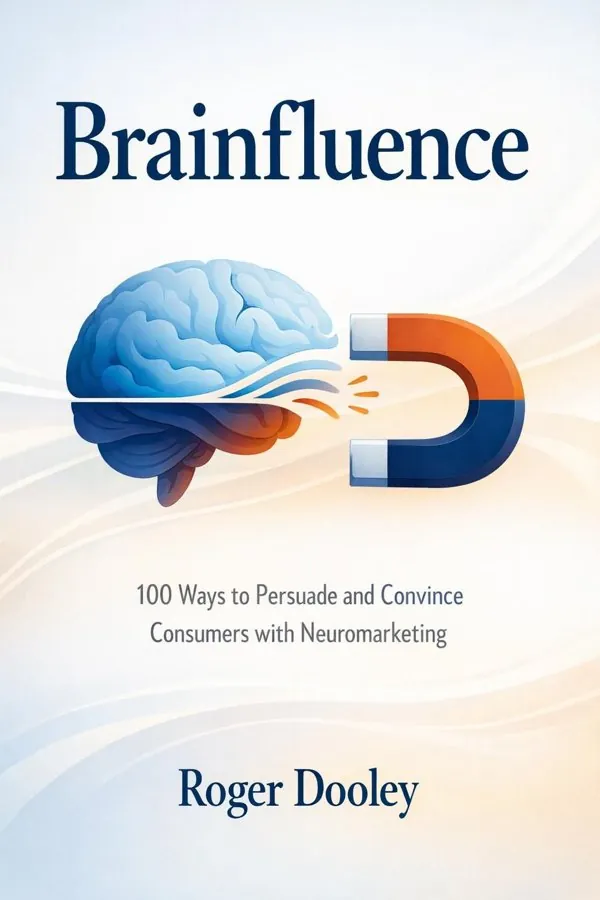
Brainfluence: 100 Ways to Persuade and Convince Consumers with Neuromarketing: Summary & Key Insights
by Roger Dooley
 10 min4 chaptersAudio available
What Is Brainfluence: 100 Ways to Persuade and Convince Consumers with Neuromarketing About?
Brainfluence: 100 Ways to Persuade and Convince Consumers with Neuromarketing by Roger Dooley is a marketing book spanning 4 pages. Brainfluence explains how marketers and business leaders can use insights from neuroscience and psychology to influence consumer behavior. The book presents 100 practical techniques based on brain science to improve advertising, sales, and customer engagement.
This FizzRead summary covers all 4 key chapters of Brainfluence: 100 Ways to Persuade and Convince Consumers with Neuromarketing in approximately 10 minutes, distilling the most important ideas, arguments, and takeaways from Roger Dooley's work. Also available as an audio summary and Key Quotes Podcast.
Brainfluence: 100 Ways to Persuade and Convince Consumers with Neuromarketing
Brainfluence explains how marketers and business leaders can use insights from neuroscience and psychology to influence consumer behavior. The book presents 100 practical techniques based on brain science to improve advertising, sales, and customer engagement.
Who Should Read Brainfluence: 100 Ways to Persuade and Convince Consumers with Neuromarketing?
This book is perfect for anyone interested in marketing and looking to gain actionable insights in a short read. Whether you're a student, professional, or lifelong learner, the key ideas from Brainfluence: 100 Ways to Persuade and Convince Consumers with Neuromarketing by Roger Dooley will help you think differently.
- ✓Readers who enjoy marketing and want practical takeaways
- ✓Professionals looking to apply new ideas to their work and life
- ✓Anyone who wants the core insights of Brainfluence: 100 Ways to Persuade and Convince Consumers with Neuromarketing in just 10 minutes
Want the full summary?
Get instant access to this book summary and 100K+ more with Fizz Moment.
Get Free SummaryAvailable on App Store • Free to download
Key Chapters
If unconscious processes drive decisions, emotions are the fuel. Our brains are constantly assessing how experiences make us feel, encoding positive moments into memory and avoiding negative ones. This emotional coding explains why some brands achieve cult-like loyalty while others fade away despite better products.
Emotional triggers—like the warmth of human connection or the thrill of scarcity—activate the brain’s pleasure centers. In neuromarketing, we learn to design for feelings rather than facts. For instance, sensory marketing harnesses our five senses to build emotional resonance. The softness of a fabric, the scent of a store, or the crisp sound of a laptop closing—all evoke emotional associations that deepen brand attachment.
Neuroscience has proven that sensory experiences are stored in memory more effectively when paired with emotion. When a perfume brand uses a signature scent in its boutiques, it creates a subconscious connection between smell and satisfaction. When a café plays mellow acoustic music, it subtly slows heart rates, encouraging longer visits and higher purchases. In designing for the senses, you connect directly to the primal parts of your customer’s brain.
And this extends beyond physical experiences—visual design and language are sensory, too. A word like “velvet” can evoke texture; an image of a smiling face can trigger empathy. Emotionally charged words and visuals bypass rational analysis and go straight to the amygdala, where emotional responses are formed. That’s why storytelling is so effective—it invites the audience into an emotional simulation rather than a logical argument.
Every marketer should think like a filmmaker, not a statistician. You are crafting experiences that make people feel something tangible. When you evoke genuine emotion—joy, relief, confidence—you not only earn attention, you build memory, and memory is the foundation of brand loyalty.
+ 2 more chapters — available in the FizzRead app
All Chapters in Brainfluence: 100 Ways to Persuade and Convince Consumers with Neuromarketing
About the Author
Roger Dooley is an American author, speaker, and consultant specializing in neuromarketing and behavioral science. He writes about applying brain and behavior research to marketing and business strategy.
Get This Summary in Your Preferred Format
Read or listen to the Brainfluence: 100 Ways to Persuade and Convince Consumers with Neuromarketing summary by Roger Dooley anytime, anywhere. FizzRead offers multiple formats so you can learn on your terms — all free.
Available formats: App · Audio · PDF · EPUB — All included free with FizzRead
Download Brainfluence: 100 Ways to Persuade and Convince Consumers with Neuromarketing PDF and EPUB Summary
Key Quotes from Brainfluence: 100 Ways to Persuade and Convince Consumers with Neuromarketing
“One of the most remarkable findings from brain science is that our unconscious minds make most of our decisions long before we are aware of them.”
“If unconscious processes drive decisions, emotions are the fuel.”
Frequently Asked Questions about Brainfluence: 100 Ways to Persuade and Convince Consumers with Neuromarketing
Brainfluence: 100 Ways to Persuade and Convince Consumers with Neuromarketing by Roger Dooley is a marketing book that explores key ideas across 4 chapters. Brainfluence explains how marketers and business leaders can use insights from neuroscience and psychology to influence consumer behavior. The book presents 100 practical techniques based on brain science to improve advertising, sales, and customer engagement.
You Might Also Like
Captivology: The Science of Capturing People's Attention
Ben Parr
10 min
Marketing 5.0: Technology for Humanity
Philip Kotler, Hermawan Kartajaya, Iwan Setiawan
10 min
Marketing Strategy
Paul Fifield
10 min
UnMarketing: Stop Marketing. Start Engaging.
Scott Stratten
10 min
$100M Leads: How to Get Strangers to Want to Buy Your Stuff
Alex Hormozi
10 min
80/20 Sales and Marketing: The Definitive Guide to Working Less and Making More
Perry Marshall
10 minFeatured In
Browse by Category
Ready to read Brainfluence: 100 Ways to Persuade and Convince Consumers with Neuromarketing?
Get the full summary and 100K+ more books with Fizz Moment.