
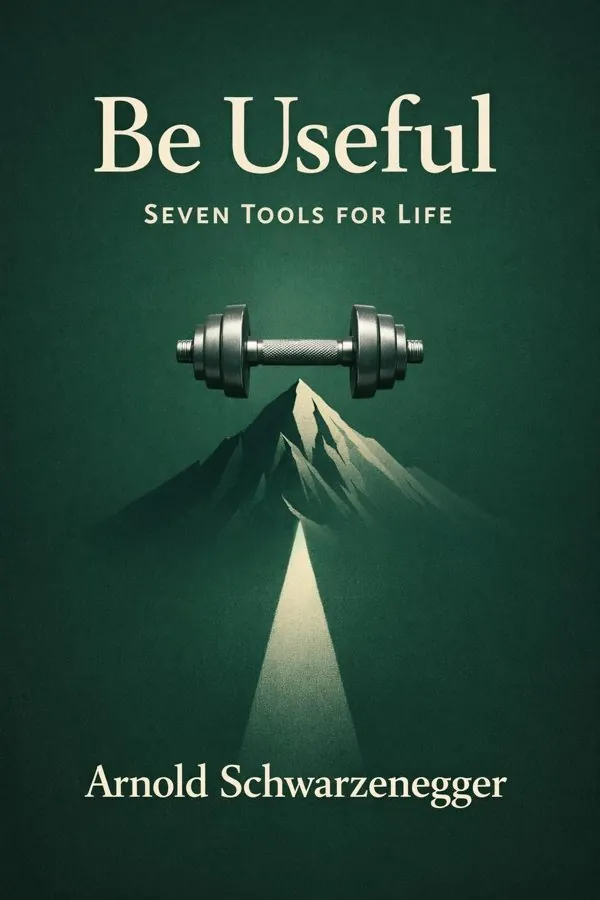
Be Useful: Seven Tools for Life: Summary & Key Insights
 10 min7 chaptersAudio available
What Is Be Useful: Seven Tools for Life About?
Be Useful: Seven Tools for Life by Arnold Schwarzenegger is a leadership book spanning 7 pages. In this motivational book, Arnold Schwarzenegger distills the lessons he has learned from his extraordinary life as a bodybuilder, actor, and public servant into seven practical tools for achieving purpose and success. Drawing on his personal experiences, he emphasizes discipline, hard work, and service to others as the foundation for a meaningful life.
This FizzRead summary covers all 7 key chapters of Be Useful: Seven Tools for Life in approximately 10 minutes, distilling the most important ideas, arguments, and takeaways from Arnold Schwarzenegger's work. Also available as an audio summary and Key Quotes Podcast.
Be Useful: Seven Tools for Life
In this motivational book, Arnold Schwarzenegger distills the lessons he has learned from his extraordinary life as a bodybuilder, actor, and public servant into seven practical tools for achieving purpose and success. Drawing on his personal experiences, he emphasizes discipline, hard work, and service to others as the foundation for a meaningful life.
Who Should Read Be Useful: Seven Tools for Life?
This book is perfect for anyone interested in leadership and looking to gain actionable insights in a short read. Whether you're a student, professional, or lifelong learner, the key ideas from Be Useful: Seven Tools for Life by Arnold Schwarzenegger will help you think differently.
- ✓Readers who enjoy leadership and want practical takeaways
- ✓Professionals looking to apply new ideas to their work and life
- ✓Anyone who wants the core insights of Be Useful: Seven Tools for Life in just 10 minutes
Want the full summary?
Get instant access to this book summary and 100K+ more with Fizz Moment.
Get Free SummaryAvailable on App Store • Free to download
Key Chapters
The first and most important tool is vision. Without vision, no amount of effort or talent will make you happy or successful. Vision gives direction to your energy—it tells you where to push, where to focus, and when to ignore the noise. When I was fifteen, standing in my tiny bedroom in Austria and looking at posters of Reg Park, my vision became crystal clear: I would become the greatest bodybuilder in the world, then the highest-paid actor in Hollywood. At the time, that sounded insane. But the vision gave me purpose. It told me what to eat, how to train, how to think.
Vision is your GPS. It keeps you going when the path gets rocky. When I arrived in America, I hardly spoke English, didn’t know anyone, and had no money. But I had that vision burning inside. Every rep in the gym and every class I attended was in service of that picture I carried in my mind. Later, when I entered politics, the vision changed but the process stayed the same. I didn’t wake up one day saying, ‘I’ll be governor.’ I asked myself, ‘What’s the most useful thing I can do now?’ My answer was: serve the people of California. That became my new vision.
Defining your vision is not about finding an easy path; it’s about finding the meaningful one. Once you know it, you begin to make decisions differently. You stop drifting. You stop following what others think is possible. The day you clearly define your vision, the fog lifts, and every obstacle becomes part of the journey rather than a reason to quit.
When you think small, you cut yourself off before you even begin. I’ve always refused to think small, not because I was arrogant, but because I understood that the size of your goals determines the size of your growth. In Austria, I could have settled for being a local champion, but I wanted the world. Later, as a bodybuilder, I could have been satisfied after winning Mr. Universe once, but I wanted to push until there were no competitors left. Thinking big forces you to expand. It demands new habits, new courage, new surroundings.
When I walked into Hollywood, people told me my accent was too thick, my body too muscular, and my name too long. They said, ‘Arnold, you’ll never make it. You’re too unusual.’ That was fine. I thought big anyway. Instead of asking, ‘Could I play a role?’ I asked, ‘How do I become a movie star who defines an era?’ I studied acting, reinvented myself, and used my uniqueness instead of hiding it. That’s what happens when you don’t think small—the obstacles become your assets.
Thinking big is also contagious. When others see you aiming high, they rise with you. My advice isn’t simply to dream bigger—it’s to live bigger. Enlarge your context, surround yourself with people who challenge your limits, and refuse to let your fears dictate your plans. Remember, you never grow in the comfort of small thoughts.
+ 5 more chapters — available in the FizzRead app
All Chapters in Be Useful: Seven Tools for Life
About the Author
Arnold Schwarzenegger is an Austrian-American actor, producer, businessman, retired bodybuilder, and former governor of California. Known for his iconic film roles and his achievements in sports and politics, he has become a global symbol of determination and self-improvement.
Get This Summary in Your Preferred Format
Read or listen to the Be Useful: Seven Tools for Life summary by Arnold Schwarzenegger anytime, anywhere. FizzRead offers multiple formats so you can learn on your terms — all free.
Available formats: App · Audio · PDF · EPUB — All included free with FizzRead
Download Be Useful: Seven Tools for Life PDF and EPUB Summary
Key Quotes from Be Useful: Seven Tools for Life
“The first and most important tool is vision.”
“When you think small, you cut yourself off before you even begin.”
Frequently Asked Questions about Be Useful: Seven Tools for Life
Be Useful: Seven Tools for Life by Arnold Schwarzenegger is a leadership book that explores key ideas across 7 chapters. In this motivational book, Arnold Schwarzenegger distills the lessons he has learned from his extraordinary life as a bodybuilder, actor, and public servant into seven practical tools for achieving purpose and success. Drawing on his personal experiences, he emphasizes discipline, hard work, and service to others as the foundation for a meaningful life.
You Might Also Like
Extreme Ownership
Jocko Willink
10 min
Dare to Lead
Brene Brown
10 min
Leaders Eat Last
Simon Sinek
10 min
The 21 Irrefutable Laws of Leadership
John Maxwell
10 min
Start With Why
Simon Sinek
10 min
How to Lead When You're Not in Charge
Clay Scroggins
10 minBrowse by Category
Ready to read Be Useful: Seven Tools for Life?
Get the full summary and 100K+ more books with Fizz Moment.