
William Rees-Mogg Books
William Rees-Mogg was a British journalist and former editor of The Times, recognized for his commentary on economics and politics.
Known for: The Sovereign Individual: Mastering the Transition to the Information Age
Books by William Rees-Mogg
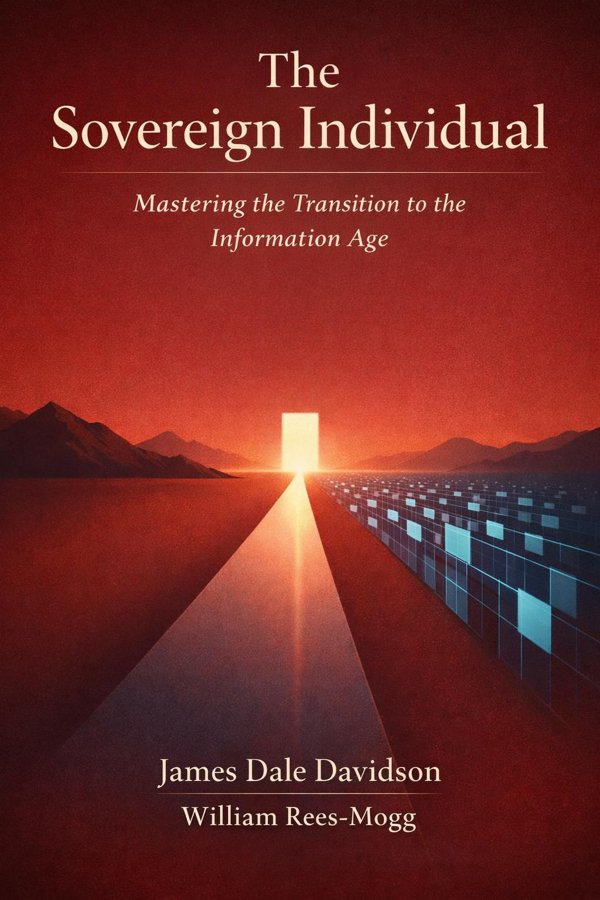
The Sovereign Individual: Mastering the Transition to the Information Age
The Sovereign Individual is a bold, provocative forecast about what happens when information becomes the most valuable resource in society. James Dale Davidson and William Rees-Mogg argue that just as agriculture created kingdoms and industry created mass nation-states, digital technology is reshaping power at its foundations. In their view, the information age weakens centralized government, transforms money, changes work, and gives highly mobile, skilled individuals unprecedented leverage over institutions. The result is the rise of the “sovereign individual”: a person able to earn, invest, communicate, and protect wealth beyond the traditional reach of geography and bureaucracy. What makes the book matter is not simply its predictions, but its framework. It invites readers to see history as a sequence of technological revolutions that rearrange politics, economics, and social hierarchy. Many of its claims remain controversial, yet its themes—digital money, remote work, global talent, declining trust in institutions, and jurisdictional competition—feel strikingly relevant. Davidson, an investor and economic forecaster, and Rees-Mogg, a distinguished journalist and editor, combine macroeconomic analysis with historical interpretation to offer a sweeping guide to an age in which individuals may become more powerful than the states that once contained them.
Read SummaryKey Insights from William Rees-Mogg
Technology Reshapes the Architecture of Power
History changes most dramatically when the tools of production change. That is the book’s starting insight: political systems do not lead civilization so much as adapt to deeper shifts in technology. Agriculture made land the central source of wealth, so societies organized around territory, heredit...
From The Sovereign Individual: Mastering the Transition to the Information Age
The Nation-State Faces Structural Decline
A state is strongest when it can easily identify wealth, tax it, and compel compliance. The authors argue that the nation-state reached its peak in the industrial era because wealth was visible and immobile: factories sat in one place, workers gathered physically, banks operated through regulated ch...
From The Sovereign Individual: Mastering the Transition to the Information Age
The Sovereign Individual Becomes a New Elite
The most important figure in the book is not a corporation or a government, but a person. The “sovereign individual” is someone whose productive power comes from portable knowledge rather than fixed assets. This person can earn through expertise, entrepreneurship, investment, or intellectual propert...
From The Sovereign Individual: Mastering the Transition to the Information Age
Information Changes Money, Taxation, and Wealth
When wealth becomes intangible, money itself begins to change character. Davidson and Rees-Mogg argue that the information revolution will undermine governments’ ability to control currency, tax savings, and quietly inflate away purchasing power. In earlier eras, rulers debased coinage or manipulate...
From The Sovereign Individual: Mastering the Transition to the Information Age
Violence and Security Are Being Rewritten
Political power has always rested partly on a monopoly of violence. The authors contend that technological change transforms not only economics but also the cost and distribution of force. In the industrial age, large states had an enormous advantage because military power depended on mass armies, h...
From The Sovereign Individual: Mastering the Transition to the Information Age
Mass Democracy Enters a Period of Strain
Democracy is often treated as the natural endpoint of political progress, but the authors argue that the mass-democratic nation-state was a product of industrial conditions rather than a permanent settlement. Industrial economies rewarded scale, standardization, and broad political mobilization. Mas...
From The Sovereign Individual: Mastering the Transition to the Information Age
About William Rees-Mogg
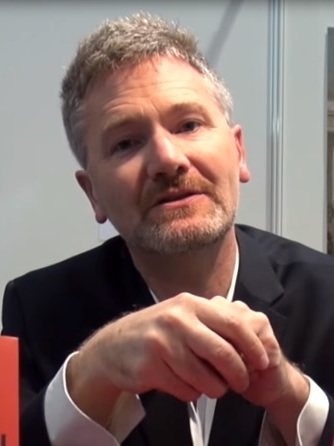
William Rees-Mogg was a British journalist and former editor of The Times, recognized for his commentary on economics and politics.


Frequently Asked Questions
William Rees-Mogg was a British journalist and former editor of The Times, recognized for his commentary on economics and politics.
Read William Rees-Mogg's books in 15 minutes
Get AI-powered summaries with key insights from 1 book by William Rees-Mogg.