
Steven D. Levitt and Stephen J. Dubner Books
Steven D. Levitt is an American economist known for his work on crime, incentives, and rational choice theory, and a professor at the University of Chicago.
Known for: SuperFreakonomics: Global Cooling, Patriotic Prostitutes, and Why Suicide Bombers Should Buy Life Insurance
Books by Steven D. Levitt and Stephen J. Dubner
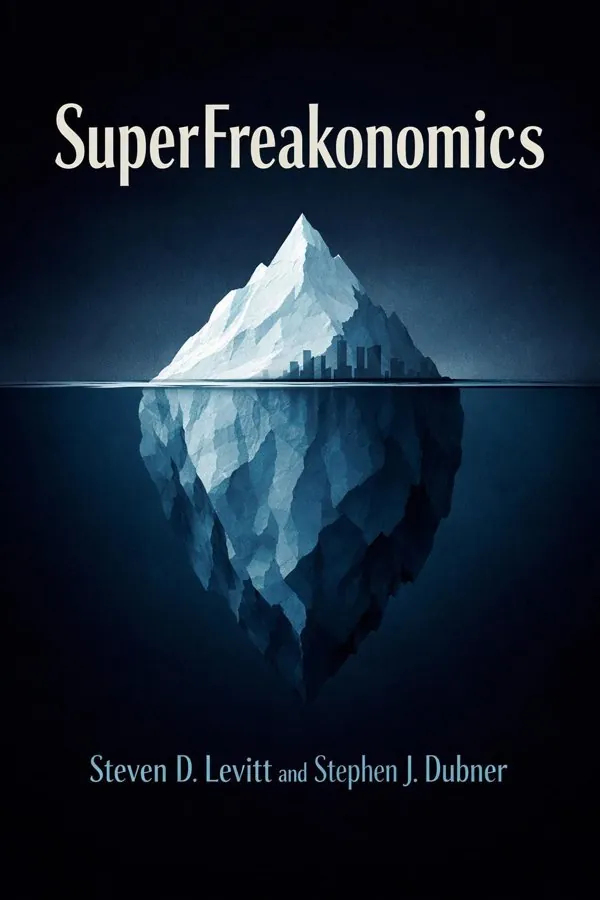
SuperFreakonomics: Global Cooling, Patriotic Prostitutes, and Why Suicide Bombers Should Buy Life Insurance
SuperFreakonomics is a provocative, data-driven tour through the hidden logic of human behavior. In this follow-up to Freakonomics, Steven D. Levitt and Stephen J. Dubner ask the kinds of questions most people never think to ask: Why do incentives so often backfire? What does prostitution reveal about markets? Why do people misjudge risk? And can big global problems sometimes be solved more cheaply and creatively than experts assume? Rather than offering tidy moral lessons, the book uses economics as a lens for seeing how people actually behave when faced with rewards, pressures, uncertainty, and social expectations. What makes the book matter is its refusal to accept conventional wisdom at face value. Levitt, a renowned University of Chicago economist, brings analytical rigor and a talent for finding patterns in surprising places. Dubner, an accomplished journalist and storyteller, translates complex ideas into memorable narratives. Together, they show that many social problems are less mysterious when you follow incentives, examine data carefully, and remain open to uncomfortable conclusions. SuperFreakonomics is not just about economics; it is about learning to think more clearly in a world full of myths, assumptions, and unintended consequences.
Read SummaryKey Insights from Steven D. Levitt and Stephen J. Dubner
Incentives Quietly Drive Human Decisions
The simplest way to understand human behavior is often the least flattering: people respond to incentives. That does not mean everyone is greedy or immoral. It means choices change when costs, benefits, rewards, and penalties change. SuperFreakonomics builds on this core insight by showing how incen...
From SuperFreakonomics: Global Cooling, Patriotic Prostitutes, and Why Suicide Bombers Should Buy Life Insurance
Self-Interest Can Produce Surprising Good
One of the book’s most uncomfortable but useful ideas is that self-interest is not the opposite of social good. In many cases, it is the mechanism that creates it. SuperFreakonomics challenges the instinct to divide behavior into clean categories of selfish and altruistic. Instead, Levitt and Dubner...
From SuperFreakonomics: Global Cooling, Patriotic Prostitutes, and Why Suicide Bombers Should Buy Life Insurance
Unintended Consequences Matter More Than Intentions
A policy can be compassionate, intelligent, and well-funded and still fail spectacularly. Why? Because intentions do not determine outcomes; incentives and reactions do. One of the central lessons of SuperFreakonomics is that every intervention changes behavior, often in ways its designers never ant...
From SuperFreakonomics: Global Cooling, Patriotic Prostitutes, and Why Suicide Bombers Should Buy Life Insurance
Data Reveals What Stories Hide
People love stories, but stories often mislead. A dramatic anecdote can feel more convincing than a mountain of evidence, even when it points in the wrong direction. SuperFreakonomics argues that if you want to understand the world, you must learn to distrust intuition and look closely at data. Thi...
From SuperFreakonomics: Global Cooling, Patriotic Prostitutes, and Why Suicide Bombers Should Buy Life Insurance
People Consistently Misjudge Risk and Danger
What people fear most is often not what is most likely to harm them. SuperFreakonomics explores the gap between perceived risk and actual risk, showing that human beings are notoriously bad at evaluating danger. We overreact to vivid, unusual threats and underreact to common, slow-moving ones. This...
From SuperFreakonomics: Global Cooling, Patriotic Prostitutes, and Why Suicide Bombers Should Buy Life Insurance
Climate Problems Need Creative Economic Thinking
Large global problems are often treated as if only grand, expensive, morally uplifting solutions count. SuperFreakonomics pushes against this tendency, especially in its discussion of climate change. The authors do not deny the seriousness of environmental problems; instead, they question whether th...
From SuperFreakonomics: Global Cooling, Patriotic Prostitutes, and Why Suicide Bombers Should Buy Life Insurance
About Steven D. Levitt and Stephen J. Dubner
Steven D. Levitt is an American economist known for his work on crime, incentives, and rational choice theory, and a professor at the University of Chicago. Stephen J. Dubner is an American journalist and author, recognized for his engaging writing on economics and social behavior. Together, they co...
Read more
Steven D. Levitt is an American economist known for his work on crime, incentives, and rational choice theory, and a professor at the University of Chicago. Stephen J. Dubner is an American journalist and author, recognized for his engaging writing on economics and social behavior. Together, they co...
Steven D. Levitt is an American economist known for his work on crime, incentives, and rational choice theory, and a professor at the University of Chicago. Stephen J. Dubner is an American journalist and author, recognized for his engaging writing on economics and social behavior. Together, they co-authored the Freakonomics series, blending economics with storytelling to make complex ideas accessible to a broad audience.



Frequently Asked Questions
Steven D. Levitt is an American economist known for his work on crime, incentives, and rational choice theory, and a professor at the University of Chicago.
Read Steven D. Levitt and Stephen J. Dubner's books in 15 minutes
Get AI-powered summaries with key insights from 1 book by Steven D. Levitt and Stephen J. Dubner.