
Søren Kierkegaard Books
Søren Kierkegaard (1813–1855) was a Danish philosopher, theologian, and writer, often regarded as the first existentialist. His works delve into the individual's relationship with faith, ethics, and existence, and he frequently employed pseudonyms to express different perspectives.
Known for: Either/Or: A Fragment of Life, Fear and Trembling, The Sickness Unto Death
Books by Søren Kierkegaard
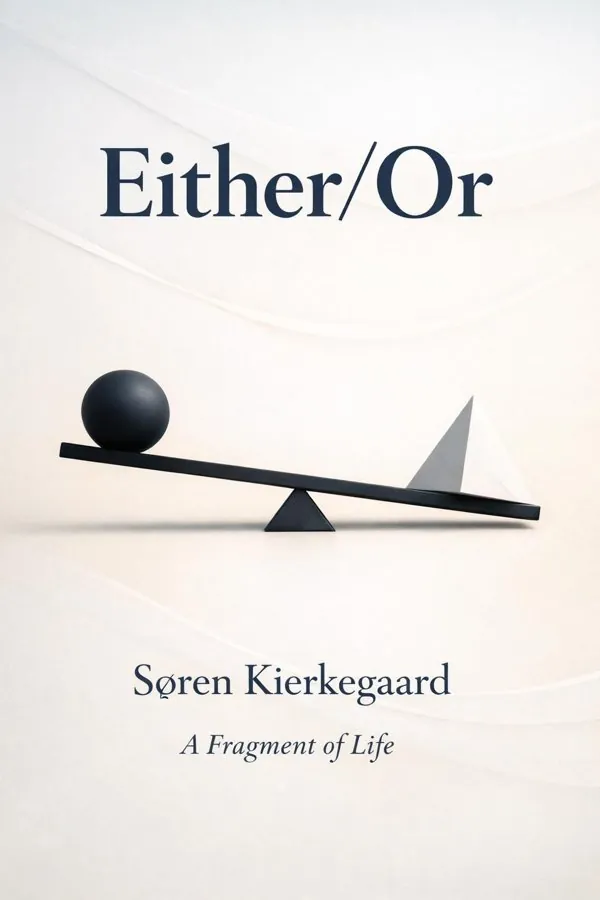
Either/Or: A Fragment of Life
First published in 1843, Either/Or is the book in which Søren Kierkegaard announces himself as one of the most original minds in modern philosophy. Presented through pseudonymous voices rather than di...

Fear and Trembling
What if true faith begins where reason, ethics, and social approval all fail? In Fear and Trembling, Søren Kierkegaard, writing under the pseudonym Johannes de Silentio, confronts that unsettling ques...

The Sickness Unto Death
What if the deepest human illness is not anxiety, sadness, or failure, but the inability to become truly oneself? In The Sickness Unto Death, Søren Kierkegaard, writing under the pseudonym Anti-Climac...
Key Insights from Søren Kierkegaard
The Aesthetic Papers and the Cult of Possibility
A life devoted to enjoyment can look dazzling from the outside, yet Kierkegaard shows how quickly it can become hollow from within. In the first volume of Either/Or, the writer known as “A” represents the aesthetic mode of existence. He is not simply a hedonist chasing crude pleasure. He is refined,...
From Either/Or: A Fragment of Life
The Rotation Method and the Fear of Boredom
Boredom, in Kierkegaard’s aesthetic universe, is not a minor inconvenience but a spiritual threat. In one of the most memorable sections of Either/Or, “A” proposes the “rotation method” as a strategy for avoiding boredom. Instead of exhausting life by changing outer circumstances too dramatically, h...
From Either/Or: A Fragment of Life
The Seducer’s Diary and Manipulated Desire
Seduction is often imagined as passion, but Kierkegaard exposes it as a form of control. In The Seducer’s Diary, one of the most famous sections of Either/Or, Johannes records his calculated effort to win Cordelia. What makes the diary disturbing is not simply that he deceives her, but that he treat...
From Either/Or: A Fragment of Life
Music, Art, and the Power of Immediacy
Art can reveal truths that argument alone cannot reach, and Kierkegaard uses aesthetics to show both the grandeur and limitation of immediate experience. In the first volume, “A” reflects on music, erotic desire, and artistic expression, especially through his famous discussion of Mozart’s Don Giova...
From Either/Or: A Fragment of Life
Judge Wilhelm and the Ethical Self
A self is not discovered by accident; it is built through commitment. That is the essential argument of Judge Wilhelm, the author of the second volume of Either/Or. Writing in the form of letters to the aesthete, Wilhelm presents the ethical life as superior not because it is dull, conventional, or ...
From Either/Or: A Fragment of Life
Marriage as the School of Commitment
Romantic intensity often receives more cultural praise than faithful companionship, but Kierkegaard uses marriage to reverse that hierarchy. In Judge Wilhelm’s reflections, marriage becomes the clearest image of ethical existence because it joins love to decision, feeling to obligation, and desire t...
From Either/Or: A Fragment of Life
About Søren Kierkegaard
Søren Kierkegaard (1813–1855) was a Danish philosopher, theologian, and writer, often regarded as the first existentialist. His works delve into the individual's relationship with faith, ethics, and existence, and he frequently employed pseudonyms to express different perspectives. Kierkegaard's inf...
Read more
Søren Kierkegaard (1813–1855) was a Danish philosopher, theologian, and writer, often regarded as the first existentialist. His works delve into the individual's relationship with faith, ethics, and existence, and he frequently employed pseudonyms to express different perspectives. Kierkegaard's inf...
Søren Kierkegaard (1813–1855) was a Danish philosopher, theologian, and writer, often regarded as the first existentialist. His works delve into the individual's relationship with faith, ethics, and existence, and he frequently employed pseudonyms to express different perspectives. Kierkegaard's influence extends beyond philosophy into theology, literature, and psychology.


Frequently Asked Questions
Søren Kierkegaard (1813–1855) was a Danish philosopher, theologian, and writer, often regarded as the first existentialist. His works delve into the individual's relationship with faith, ethics, and existence, and he frequently employed pseudonyms to express different perspectives.
Read Søren Kierkegaard's books in 15 minutes
Get AI-powered summaries with key insights from 3 books by Søren Kierkegaard.