
Roger Bootle Books
Roger Bootle is a British economist and author, founder of Capital Economics, and a frequent commentator on economic and financial issues. He has advised governments and major corporations and is known for his accessible writing on macroeconomics and the future of capitalism.
Known for: The AI Economy: Work, Wealth and Welfare in the Age of the Robot
Books by Roger Bootle
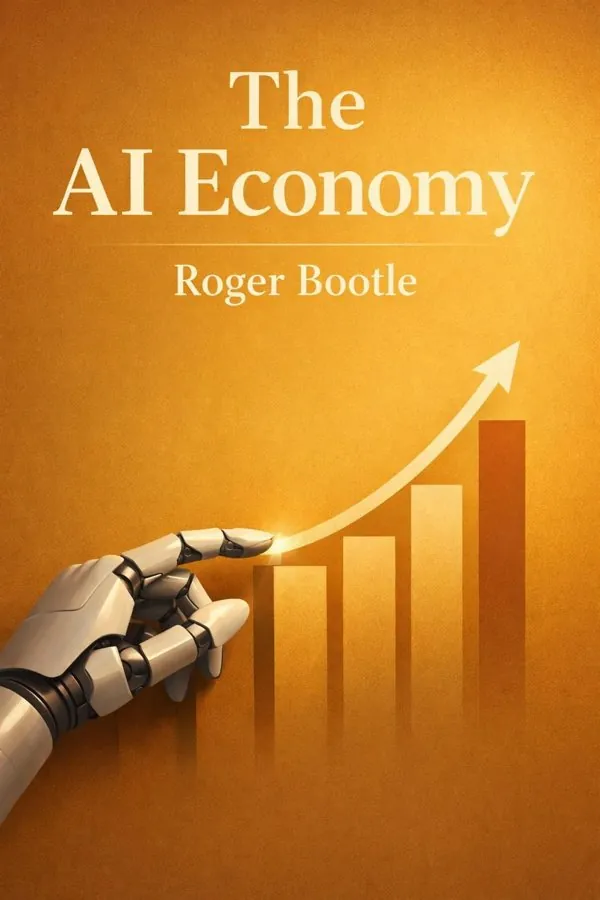
The AI Economy: Work, Wealth and Welfare in the Age of the Robot
Artificial intelligence is often discussed as a technological marvel, but Roger Bootle asks a more consequential question: what will it do to the economy, to work, and to the social contract that holds modern societies together? In The AI Economy, he examines AI not as a gadget trend but as a force on the scale of the Industrial Revolution—one capable of transforming productivity, wages, inequality, business ownership, and public policy. The book explores whether intelligent machines will create broad prosperity, deepen insecurity, or produce both at once. What makes this book especially valuable is Bootle’s ability to combine economic history, macroeconomic analysis, and public-policy realism. He neither celebrates technology uncritically nor falls into apocalyptic pessimism. Instead, he offers a sober framework for thinking about how automation changes the balance between labor and capital, why traditional welfare systems may become inadequate, and which policy choices could help societies adapt. For readers trying to understand the future of jobs, growth, and fairness in an AI-driven world, this book provides a lucid and timely guide.
Read SummaryKey Insights from Roger Bootle
Every revolution rewrites economic rules
Technological revolutions rarely just improve existing systems; they reorder the foundations of economic life. Bootle places artificial intelligence within a long lineage that includes mechanization, electrification, mass production, and computing. Each previous wave displaced some tasks, created ne...
From The AI Economy: Work, Wealth and Welfare in the Age of the Robot
Work is income, status, and meaning
The deepest challenge of automation is not merely lost wages; it is the possible erosion of work as a source of identity and social belonging. Bootle emphasizes that employment does more than pay bills. It gives people structure, recognition, purpose, and a place in society. If AI steadily absorbs r...
From The AI Economy: Work, Wealth and Welfare in the Age of the Robot
Productivity gains can enrich everyone
At its best, AI is a productivity machine. Bootle argues that the strongest economic case for AI lies in its potential to produce more output with fewer inputs, lowering costs, improving quality, and increasing overall prosperity. Productivity growth is the ultimate source of rising living standards...
From The AI Economy: Work, Wealth and Welfare in the Age of the Robot
Labor markets will polarize and shift
When technology changes quickly, the labor market rarely adjusts smoothly. Bootle explores how AI may hollow out some middle-skill occupations while expanding both high-value expert roles and lower-paid service work. This pattern, already visible in earlier digital transitions, can widen inequality ...
From The AI Economy: Work, Wealth and Welfare in the Age of the Robot
Capital ownership may matter more than labor
One of Bootle’s most powerful arguments is that AI could increase the economic importance of capital relative to labor. If machines, software, data systems, and robotic platforms do a larger share of productive work, then returns may increasingly flow to those who own those assets rather than those ...
From The AI Economy: Work, Wealth and Welfare in the Age of the Robot
Policy must shape technological outcomes
Technology does not determine social outcomes on its own; policy channels its effects. Bootle rejects the idea that governments can simply stand aside and let markets sort everything out. If AI transforms employment patterns, inequality, tax bases, and bargaining power, then public institutions must...
From The AI Economy: Work, Wealth and Welfare in the Age of the Robot
About Roger Bootle
Roger Bootle is a British economist and author, founder of Capital Economics, and a frequent commentator on economic and financial issues. He has advised governments and major corporations and is known for his accessible writing on macroeconomics and the future of capitalism.



Frequently Asked Questions
Roger Bootle is a British economist and author, founder of Capital Economics, and a frequent commentator on economic and financial issues. He has advised governments and major corporations and is known for his accessible writing on macroeconomics and the future of capitalism.
Read Roger Bootle's books in 15 minutes
Get AI-powered summaries with key insights from 1 book by Roger Bootle.