

Ray Kurzweil Books
Ray Kurzweil is an American inventor, author, and futurist known for his pioneering work in optical character recognition, text-to-speech synthesis, and artificial intelligence. He has written several books on technology and the future, and serves as a director of engineering at Google.
Known for: How to Create a Mind: The Secret of Human Thought Revealed, The Age of Spiritual Machines: When Computers Exceed Human Intelligence, The Singularity Is Near: When Humans Transcend Biology, The Singularity Is Nearer: When We Merge With Ai, Transcendence
Books by Ray Kurzweil
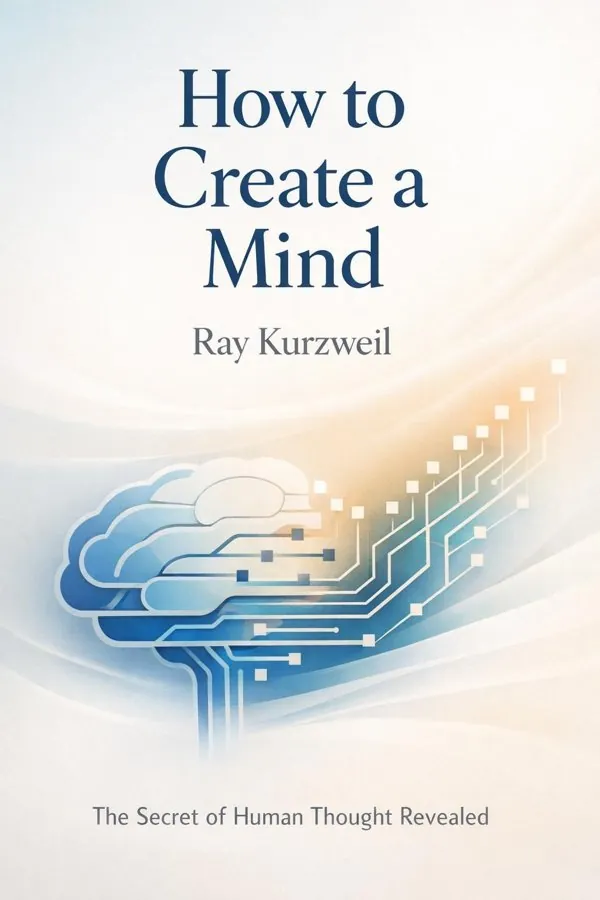
How to Create a Mind: The Secret of Human Thought Revealed
In this groundbreaking work, inventor and futurist Ray Kurzweil explores the workings of the human brain and proposes how we can replicate its processes to build intelligent machines. He examines the ...
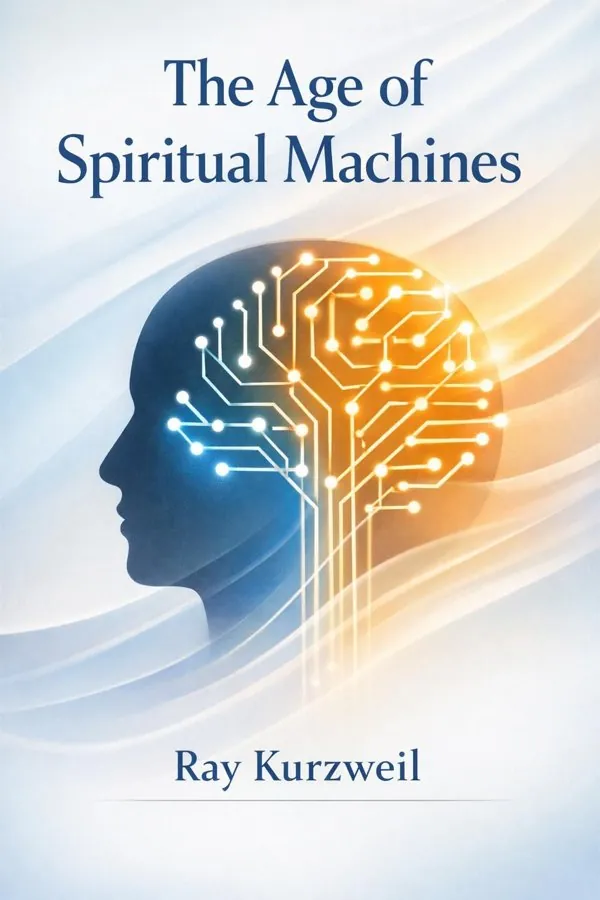
The Age of Spiritual Machines: When Computers Exceed Human Intelligence
In this influential work, inventor and futurist Ray Kurzweil explores the accelerating pace of technological progress and its implications for humanity. He predicts that computers will soon rival and ...
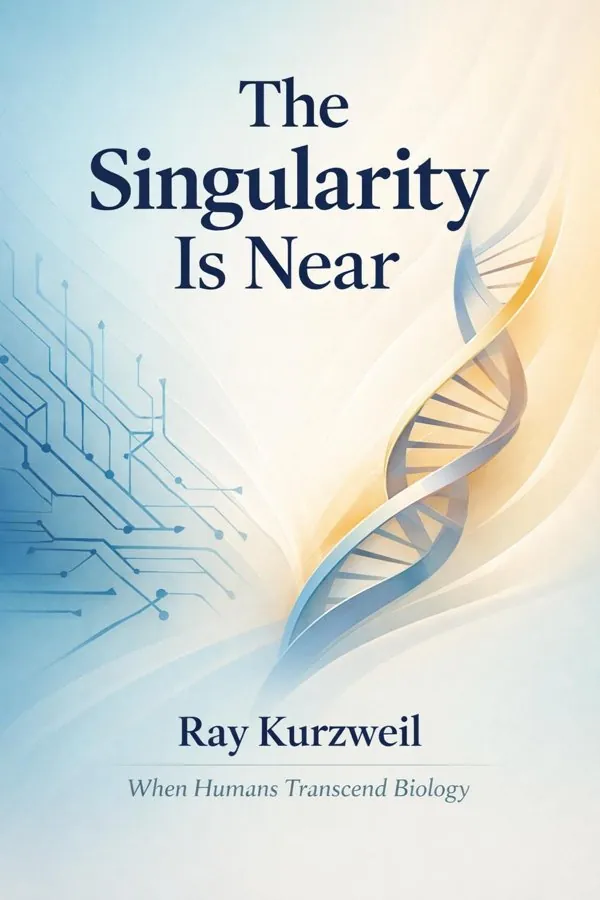
The Singularity Is Near: When Humans Transcend Biology
In this influential work, inventor and futurist Ray Kurzweil explores the accelerating pace of technological change and predicts a future where humans and machines merge. He argues that exponential gr...
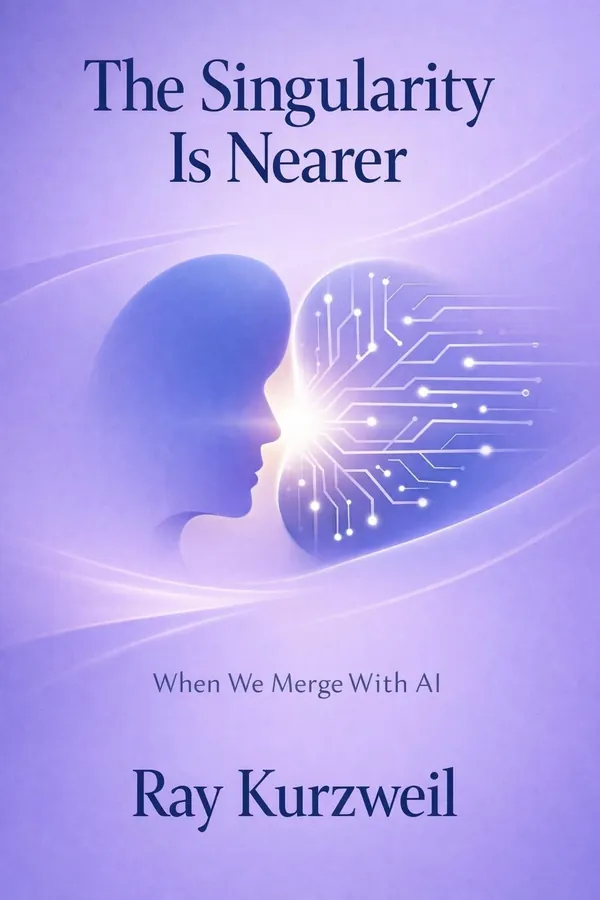
The Singularity Is Nearer: When We Merge With Ai
The Singularity Is Nearer explores the exponential progress of information technology, artificial intelligence, biotechnology, and nanotechnology, and how these advances are converging to transform hu...
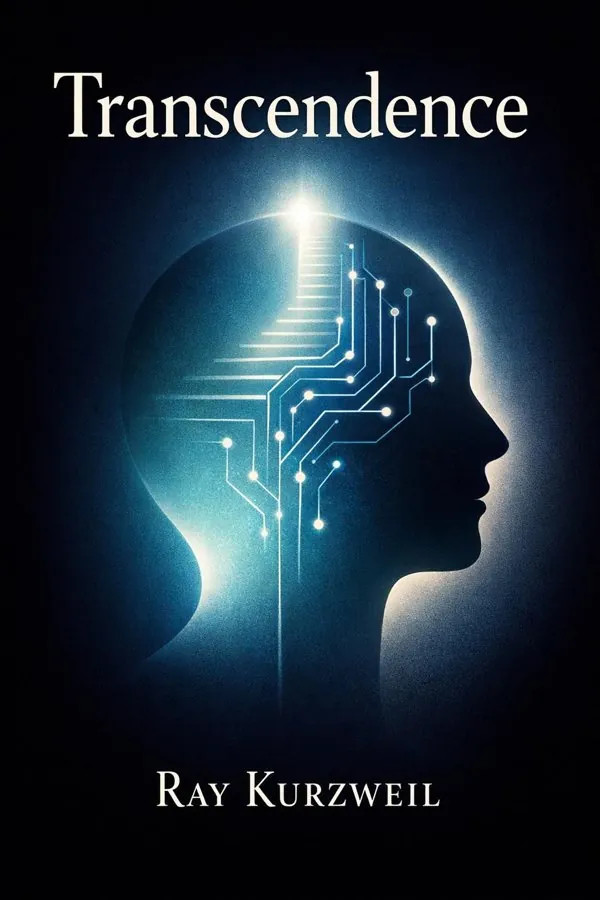
Transcendence
Transcendence: The Promise of Mind Over Matter es un libro de no ficción que explora cómo los avances en biotecnología, nanotecnología y neurociencia permitirán a los humanos trascender las limitacion...
Key Insights from Ray Kurzweil
The Pattern Recognition Theory of Mind
At the heart of my theory is a simple but powerful insight: the human brain operates as a hierarchy of pattern recognizers. Each layer of the neocortex receives inputs, detects regularities, and forms representations. These representations, in turn, become inputs for higher layers that recognize mor...
From How to Create a Mind: The Secret of Human Thought Revealed
Structure and Function of the Neocortex
The neocortex is a thin sheet of tissue, folded multiple times to fit within the skull, but its apparent simplicity hides an extraordinary uniformity of design. Each cubic millimeter contains about a hundred thousand neurons arranged in similar vertical structures, known as cortical columns. Every c...
From How to Create a Mind: The Secret of Human Thought Revealed
Historical Overview
To appreciate where we are going, we must first understand where we have been. Throughout history, each major technological epoch has built upon the previous one, compressing centuries of development into ever-shorter spans. The mechanical computers of the early twentieth century—the gears and relay...
From The Age of Spiritual Machines: When Computers Exceed Human Intelligence
The Law of Accelerating Returns
At the heart of my argument is a principle that governs all technological progress: the Law of Accelerating Returns. Unlike linear growth, which moves at a steady rate, exponential growth multiplies upon itself. Moore’s Law—the observation that computing power doubles roughly every two years—is just...
From The Age of Spiritual Machines: When Computers Exceed Human Intelligence
Introduction to the Law of Accelerating Returns
For decades, economic models and scientific projections assumed that progress moved linearly—slow, steady, predictable. Yet the evidence tells a different story. I illustrate how every major advance in computation, from the vacuum tube to the integrated circuit, follows an exponential curve. Each ge...
From The Singularity Is Near: When Humans Transcend Biology
Historical Patterns of Exponential Growth
The story of acceleration reaches back through history. I draw parallels between the evolution of life and the development of technology: DNA as the first information processor, neurons as a biological computer network, and civilization as a vast data transformation system. I examine data series fro...
From The Singularity Is Near: When Humans Transcend Biology
About Ray Kurzweil
Ray Kurzweil is an American inventor, author, and futurist known for his pioneering work in optical character recognition, text-to-speech synthesis, and artificial intelligence. He has written several books on technology and the future, and serves as a director of engineering at Google.
Frequently Asked Questions
Ray Kurzweil is an American inventor, author, and futurist known for his pioneering work in optical character recognition, text-to-speech synthesis, and artificial intelligence. He has written several books on technology and the future, and serves as a director of engineering at Google.
Read Ray Kurzweil's books in 15 minutes
Get AI-powered summaries with key insights from 5 books by Ray Kurzweil.