
Neil Howe Books
William Strauss fue escritor, historiador y dramaturgo estadounidense, conocido por su trabajo sobre teorías generacionales junto con Neil Howe. Neil Howe es historiador, economista y demógrafo, reconocido por desarrollar el modelo de ciclos generacionales y por acuñar el término 'Millennial Generation'.
Known for: Generations: The History of America's Future, 1584 to 2069, The Fourth Turning: An American Prophecy: What the Cycles of History Tell Us About America's Next Rendezvous with Destiny
Books by Neil Howe
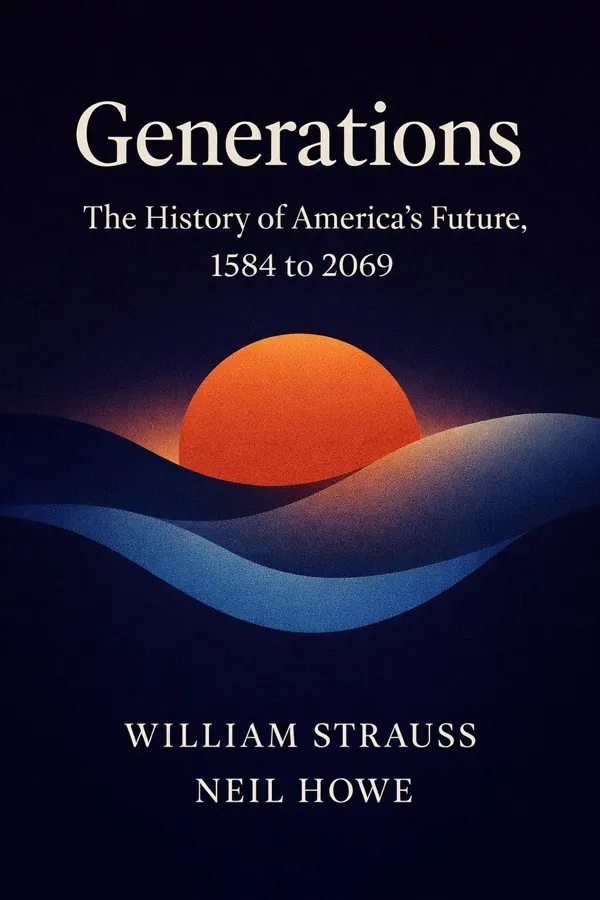
Generations: The History of America's Future, 1584 to 2069
Generations: The History of America's Future, 1584 to 2069 is a bold work of social history that argues America does not simply move forward through random change or steady progress. Instead, William ...
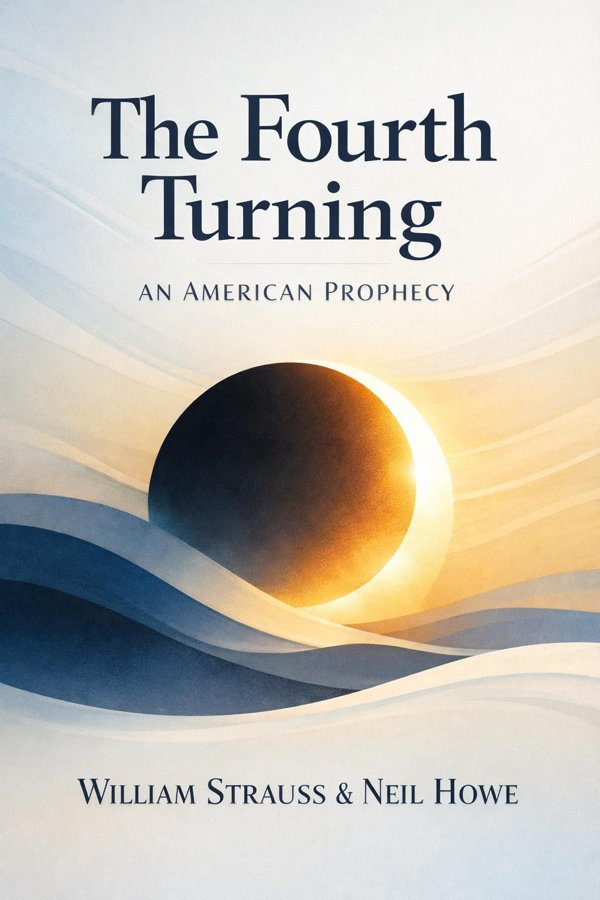
The Fourth Turning: An American Prophecy: What the Cycles of History Tell Us About America's Next Rendezvous with Destiny
The Fourth Turning presents a theory of recurring generational cycles in American history, proposing that society moves through four distinct eras, or 'turnings,' each lasting about twenty years. Stra...
Key Insights from Neil Howe
Four Archetypes Shape Generational Character
A generation is more than an age bracket; it is a social personality formed by history. Strauss and Howe argue that across American history, generations tend to reappear in four recurring archetypes: Prophet, Nomad, Hero, and Artist. Each archetype is shaped by the social environment of childhood an...
From Generations: The History of America's Future, 1584 to 2069
History Moves Through Four Turnings
Societies do not merely drift; they pass through recurring moods. Strauss and Howe claim that American history unfolds through a cycle of four “turnings,” each lasting roughly two decades: High, Awakening, Unraveling, and Crisis. Together, these four phases form a saeculum, an approximately eighty- ...
From Generations: The History of America's Future, 1584 to 2069
Colonial America Already Followed Cycles
The deepest claim in Generations is that America’s recurring rhythms began long before the modern United States existed. Strauss and Howe trace the pattern back to the colonial period, arguing that early settlers did not simply build institutions from scratch; they also began reproducing a long cycl...
From Generations: The History of America's Future, 1584 to 2069
Revolutions and Civil Wars Repeat Patterns
America’s great upheavals are not isolated explosions; in Strauss and Howe’s telling, they are recurring climax points in a larger civic rhythm. The Revolutionary era and the Civil War era, though separated by generations and circumstances, both function as crisis periods in which institutional brea...
From Generations: The History of America's Future, 1584 to 2069
Modern America Reflects the Same Rhythm
One of the book’s most provocative contributions is its application of the generational cycle to modern American history. Strauss and Howe connect the Progressive era, the world wars, the postwar boom, and the cultural revolutions of the late twentieth century into a coherent sequence rather than a ...
From Generations: The History of America's Future, 1584 to 2069
Generation X and Millennials Fit the Model
Strauss and Howe became especially well known for applying their framework to living and emerging generations. In Generations, they identify Generation X as a cohort shaped by institutional neglect, rising divorce, economic uncertainty, and cultural fragmentation. As a result, they portray this gene...
From Generations: The History of America's Future, 1584 to 2069
About Neil Howe
William Strauss fue escritor, historiador y dramaturgo estadounidense, conocido por su trabajo sobre teorías generacionales junto con Neil Howe. Neil Howe es historiador, economista y demógrafo, reconocido por desarrollar el modelo de ciclos generacionales y por acuñar el término 'Millennial Genera...
Read more
William Strauss fue escritor, historiador y dramaturgo estadounidense, conocido por su trabajo sobre teorías generacionales junto con Neil Howe. Neil Howe es historiador, economista y demógrafo, reconocido por desarrollar el modelo de ciclos generacionales y por acuñar el término 'Millennial Genera...
William Strauss fue escritor, historiador y dramaturgo estadounidense, conocido por su trabajo sobre teorías generacionales junto con Neil Howe. Neil Howe es historiador, economista y demógrafo, reconocido por desarrollar el modelo de ciclos generacionales y por acuñar el término 'Millennial Generation'.


Frequently Asked Questions
William Strauss fue escritor, historiador y dramaturgo estadounidense, conocido por su trabajo sobre teorías generacionales junto con Neil Howe. Neil Howe es historiador, economista y demógrafo, reconocido por desarrollar el modelo de ciclos generacionales y por acuñar el término 'Millennial Generation'.
Read Neil Howe's books in 15 minutes
Get AI-powered summaries with key insights from 2 books by Neil Howe.