
Neil Cohn Books
Neil Cohn is a cognitive scientist and linguist specializing in the structure and cognition of visual languages. His research focuses on how the mind processes sequential images, drawing, and visual narratives.
Known for: The Visual Language of Comics: Introduction to the Structure and Cognition of Sequential Images
Books by Neil Cohn
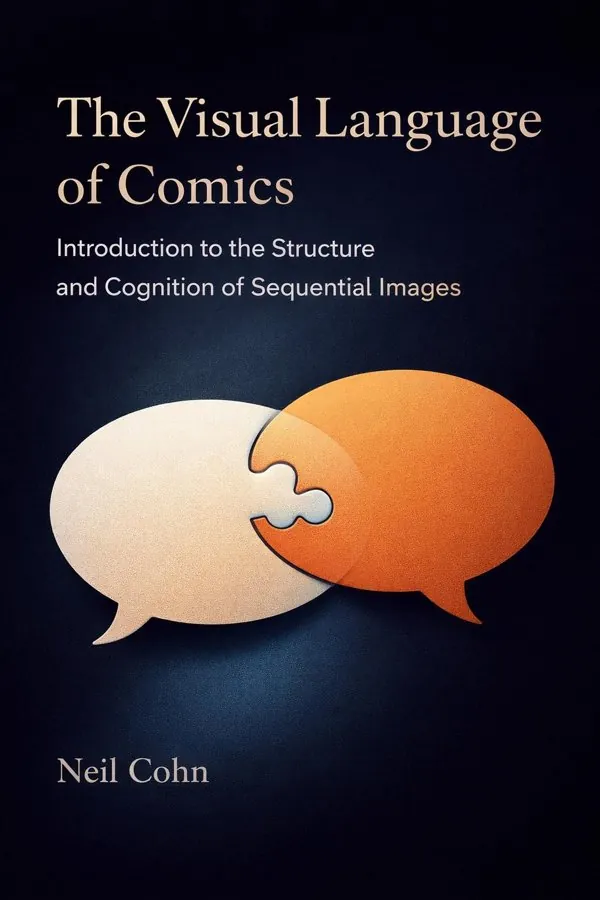
The Visual Language of Comics: Introduction to the Structure and Cognition of Sequential Images
Comics may look effortless on the page, but Neil Cohn argues that their meaning is anything but accidental. In The Visual Language of Comics, he makes a bold and intellectually rich case: sequential images are not merely illustrations arranged in order, but a genuine visual language with its own structure, conventions, and grammar. Just as spoken and written language rely on learned systems of meaning, comics depend on shared visual patterns that readers must acquire and interpret. What makes this book especially important is the way it bridges fields that are often kept apart. Cohn draws from linguistics, cognitive psychology, comics studies, and visual communication to explain how people understand panels, transitions, narrative roles, and graphic symbols. He shows that reading comics is an active cognitive achievement, not a passive act of looking. Cohn is uniquely qualified to make this argument. As a cognitive scientist and linguist focused on visual narratives, he has spent years studying how the mind processes sequential images across cultures. The result is a foundational book for anyone who wants to understand not only how comics work, but what they reveal about language, learning, and human thought.
Read SummaryKey Insights from Neil Cohn
Comics Function Like a Real Language
The most provocative idea in this book is also its central claim: comics are not simply a mixture of art and text, but a structured visual language. That statement challenges a common assumption that images are universally understood and require no special learning. Cohn argues the opposite. Like sp...
From The Visual Language of Comics: Introduction to the Structure and Cognition of Sequential Images
Meaning Begins with Visual Building Blocks
What seems visually obvious is often carefully constructed from smaller parts. Cohn shows that visual language begins with basic graphic units that carry conventional meaning, much like morphemes or words in verbal language. These include lines, shapes, icons, facial expressions, body postures, fram...
From The Visual Language of Comics: Introduction to the Structure and Cognition of Sequential Images
Narrative Sequences Have Their Own Syntax
Stories in comics do not unfold randomly from panel to panel. Cohn’s concept of visual narrative grammar argues that sequences have an underlying syntax, a patterned organization that helps readers understand what role each panel plays in the larger event. This is one of the book’s most powerful con...
From The Visual Language of Comics: Introduction to the Structure and Cognition of Sequential Images
Visual Languages Differ Across Cultures
One of the most important corrections Cohn makes is to the myth that images are universal. While people everywhere can perceive shapes and faces, the conventions used in comics are not the same across cultures. Visual languages are shaped by shared traditions, publication histories, artistic norms, ...
From The Visual Language of Comics: Introduction to the Structure and Cognition of Sequential Images
Reading Comics Is a Cognitive Achievement
It is easy to underestimate comics because they can be read quickly. But speed should not be confused with simplicity. Cohn demonstrates that understanding sequential images requires sophisticated cognitive processing. Readers must perceive visual forms, recognize symbolic conventions, infer actions...
From The Visual Language of Comics: Introduction to the Structure and Cognition of Sequential Images
Visual Fluency Develops Through Experience
People are not born knowing how to read comics any more than they are born reading text. Cohn emphasizes that visual language is learned, and proficiency develops gradually through exposure, practice, and cultural participation. This idea has major consequences for how we think about education, lite...
From The Visual Language of Comics: Introduction to the Structure and Cognition of Sequential Images
About Neil Cohn
Neil Cohn is a cognitive scientist and linguist specializing in the structure and cognition of visual languages. His research focuses on how the mind processes sequential images, drawing, and visual narratives. He has published extensively on the linguistics of comics and teaches at Tilburg Universi...
Read more
Neil Cohn is a cognitive scientist and linguist specializing in the structure and cognition of visual languages. His research focuses on how the mind processes sequential images, drawing, and visual narratives. He has published extensively on the linguistics of comics and teaches at Tilburg Universi...
Neil Cohn is a cognitive scientist and linguist specializing in the structure and cognition of visual languages. His research focuses on how the mind processes sequential images, drawing, and visual narratives. He has published extensively on the linguistics of comics and teaches at Tilburg University in the Netherlands.


Frequently Asked Questions
Neil Cohn is a cognitive scientist and linguist specializing in the structure and cognition of visual languages. His research focuses on how the mind processes sequential images, drawing, and visual narratives.
Read Neil Cohn's books in 15 minutes
Get AI-powered summaries with key insights from 1 book by Neil Cohn.