
Milton Friedman Books
Milton Friedman (1912–2006) was an American economist and statistician who received the 1976 Nobel Memorial Prize in Economic Sciences. A leading figure in the Chicago School of Economics, he was known for his research on consumption analysis, monetary history and theory, and the complexity of stabilization policy.
Known for: Capitalism and Freedom, Free To Choose: A Personal Statement
Books by Milton Friedman
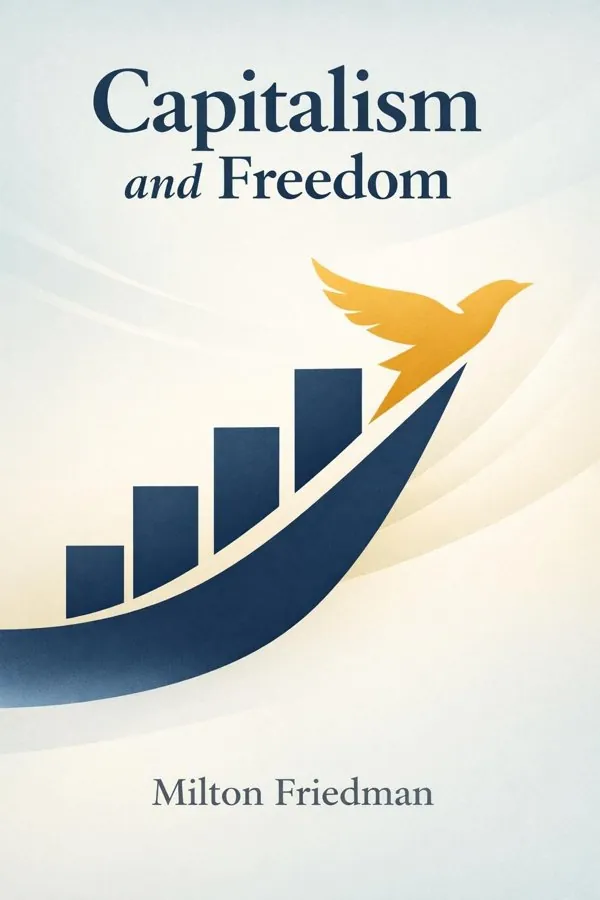
Capitalism and Freedom
In this influential work, economist Milton Friedman argues that economic freedom is a necessary condition for political freedom. He explores the relationship between capitalism and democracy, advocati...
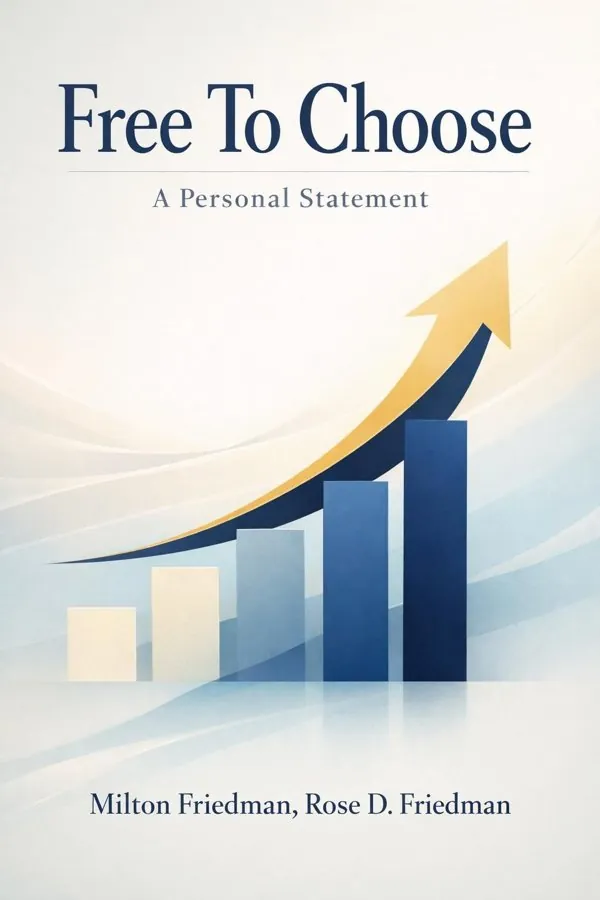
Free To Choose: A Personal Statement
Free To Choose: A Personal Statement is Milton and Rose D. Friedman’s bold defense of economic freedom as the foundation of personal freedom, prosperity, and social cooperation. First published in 198...
Key Insights from Milton Friedman
The Relation Between Economic and Political Freedom
Throughout history, societies have struggled to balance the rights of individuals with the demands of collective governance. My central claim is simple yet profound: economic freedom is not just one aspect of freedom—it is its foundation. A person who is not free to engage in voluntary exchange, to ...
From Capitalism and Freedom
The Role of Government in a Free Society
The proper role of government is a theme that dominates modern debate. I hold that government is essential—but only within a definite and narrow scope. Its purpose is to maintain the rules of the game, not play the game itself. In a free society, legitimate functions of the state include national de...
From Capitalism and Freedom
The Power of Voluntary Exchange
Most social cooperation does not begin with orders; it begins with choice. That is the Friedmans’ central insight about markets. A free market is not chaos, greed, or a moral vacuum. It is a system in which millions of people, each pursuing their own goals, coordinate peacefully through voluntary ex...
From Free To Choose: A Personal Statement
The Tyranny of Economic Controls
Policies meant to protect people often end up trapping them. The Friedmans show how price controls, tariffs, quotas, subsidies, and licensing rules are frequently introduced with noble language—fairness, stability, security—but produce shortages, inefficiency, and special privileges. Controls distor...
From Free To Choose: A Personal Statement
Government Failure Can Cause Crisis
Economic crises are often blamed on markets, but the Friedmans insist that many severe disruptions are worsened—or even created—by bad government policy. One of their major contributions is to challenge the comforting idea that officials stand outside the economy as neutral fixers. In reality, gover...
From Free To Choose: A Personal Statement
Welfare Can Undermine Self-Reliance
Compassion is essential, but compassion badly designed can backfire. In discussing the modern welfare state, the Friedmans do not deny the importance of helping people in need. Their argument is subtler: systems built to provide security from cradle to grave often weaken initiative, create dependenc...
From Free To Choose: A Personal Statement
About Milton Friedman
Milton Friedman (1912–2006) was an American economist and statistician who received the 1976 Nobel Memorial Prize in Economic Sciences. A leading figure in the Chicago School of Economics, he was known for his research on consumption analysis, monetary history and theory, and the complexity of stabi...
Read more
Milton Friedman (1912–2006) was an American economist and statistician who received the 1976 Nobel Memorial Prize in Economic Sciences. A leading figure in the Chicago School of Economics, he was known for his research on consumption analysis, monetary history and theory, and the complexity of stabi...
Milton Friedman (1912–2006) was an American economist and statistician who received the 1976 Nobel Memorial Prize in Economic Sciences. A leading figure in the Chicago School of Economics, he was known for his research on consumption analysis, monetary history and theory, and the complexity of stabilization policy. His advocacy for free markets and limited government profoundly influenced global economic policy.


Frequently Asked Questions
Milton Friedman (1912–2006) was an American economist and statistician who received the 1976 Nobel Memorial Prize in Economic Sciences. A leading figure in the Chicago School of Economics, he was known for his research on consumption analysis, monetary history and theory, and the complexity of stabilization policy.
Read Milton Friedman's books in 15 minutes
Get AI-powered summaries with key insights from 2 books by Milton Friedman.