
Linus Pauling Books
Linus Pauling (1901–1994) was an American chemist, biochemist, and peace activist. He is one of the few individuals to have received two unshared Nobel Prizes—one in Chemistry (1954) for his research into the nature of the chemical bond, and one for Peace (1962) for his activism against nuclear weapons testing.
Known for: General Chemistry, The Nature of the Chemical Bond and the Structure of Molecules and Crystals: An Introduction to Modern Structural Chemistry
Books by Linus Pauling
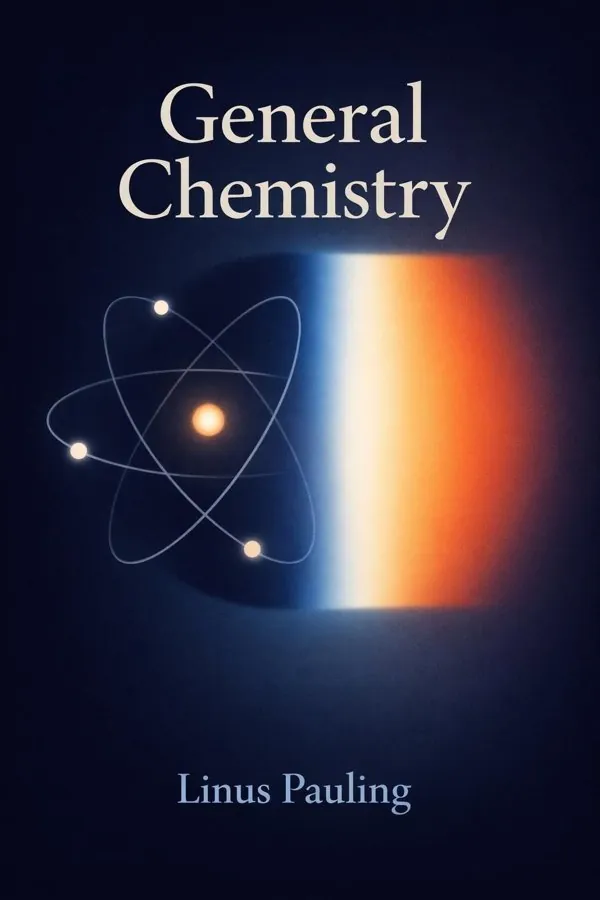
General Chemistry
General Chemistry by Linus Pauling is far more than an introductory science textbook. It is a masterful explanation of how matter is built, how substances interact, and why the physical world behaves ...
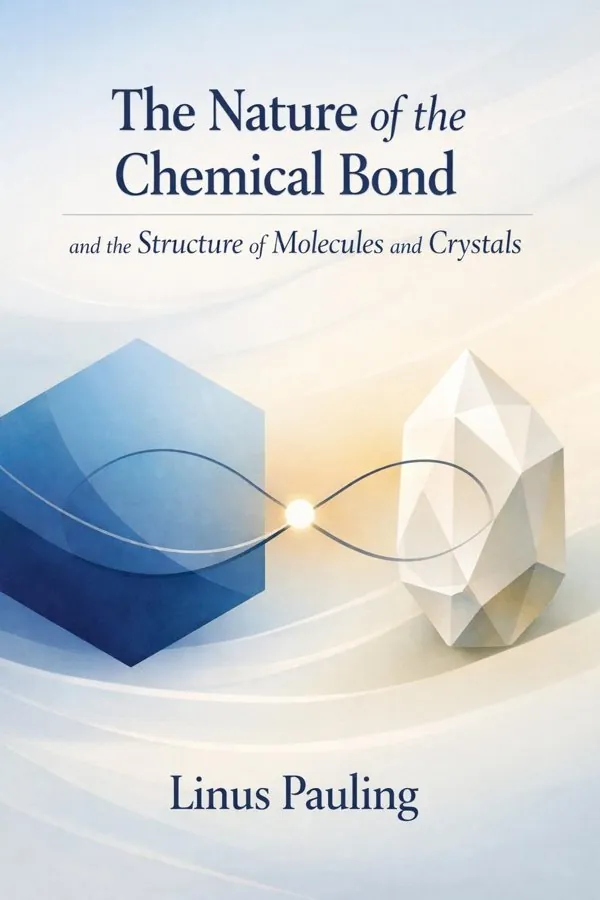
The Nature of the Chemical Bond and the Structure of Molecules and Crystals: An Introduction to Modern Structural Chemistry
This seminal work by Linus Pauling presents a comprehensive treatment of chemical bonding and molecular structure, introducing the valence bond theory and the concept of resonance. It laid the foundat...
Key Insights from Linus Pauling
Chemistry Connects the Worlds of Matter
Chemistry becomes exciting the moment you realize it is not just about substances in jars, but about the hidden rules governing everything material. Pauling presents chemistry as the central science because it links physics, which explains fundamental forces and particles, with biology, which explai...
From General Chemistry
Atomic Theory Gives Matter Its Logic
All of chemistry becomes understandable once matter is seen as built from tiny, countable units. Pauling traces the birth of atomic theory to the need for a model that explains why substances combine in fixed proportions and why chemical reactions follow precise numerical laws. Dalton’s atomic hypot...
From General Chemistry
Atomic Structure Shapes the Periodic System
The periodic table is not a chart to memorize first and understand later; it is a map of atomic structure. Pauling explains that the properties of elements arise from the arrangement of electrons around the nucleus. Atomic number determines the identity of an element, while electron configuration de...
From General Chemistry
Chemical Bonds Build the Architecture of Substances
A substance’s character depends less on which atoms it contains than on how those atoms are joined. Pauling’s greatest scientific legacy lies in explaining chemical bonding, and General Chemistry brings that insight to the center of the subject. Chemical bonds arise because arrangements of electrons...
From General Chemistry
Molecular Shape Determines Chemical Behavior
Knowing that atoms are connected is only the beginning; chemistry becomes far more powerful when you see that three-dimensional shape governs function. Pauling emphasizes that molecules are not flat symbols on paper. They possess definite geometries determined by bond angles, electron pair repulsion...
From General Chemistry
States, Reactions, and Quantities Follow Rules
Matter may look chaotic in everyday life, but its transformations follow clear quantitative rules. Pauling links the states of matter and the mathematics of chemical reactions to show that chemistry is both conceptual and measurable. Solids, liquids, and gases differ because particles move and inter...
From General Chemistry
About Linus Pauling
Linus Pauling (1901–1994) was an American chemist, biochemist, and peace activist. He is one of the few individuals to have received two unshared Nobel Prizes—one in Chemistry (1954) for his research into the nature of the chemical bond, and one for Peace (1962) for his activism against nuclear weap...
Read more
Linus Pauling (1901–1994) was an American chemist, biochemist, and peace activist. He is one of the few individuals to have received two unshared Nobel Prizes—one in Chemistry (1954) for his research into the nature of the chemical bond, and one for Peace (1962) for his activism against nuclear weap...
Linus Pauling (1901–1994) was an American chemist, biochemist, and peace activist. He is one of the few individuals to have received two unshared Nobel Prizes—one in Chemistry (1954) for his research into the nature of the chemical bond, and one for Peace (1962) for his activism against nuclear weapons testing.


Frequently Asked Questions
Linus Pauling (1901–1994) was an American chemist, biochemist, and peace activist. He is one of the few individuals to have received two unshared Nobel Prizes—one in Chemistry (1954) for his research into the nature of the chemical bond, and one for Peace (1962) for his activism against nuclear weapons testing.
Read Linus Pauling's books in 15 minutes
Get AI-powered summaries with key insights from 2 books by Linus Pauling.