
Leon Festinger Books
Leon Festinger (1919–1989) was an American social psychologist known for his pioneering research on cognitive dissonance and social comparison theory. His work profoundly shaped modern psychology, emphasizing the role of cognitive processes in social behavior.
Known for: A Theory of Cognitive Dissonance
Books by Leon Festinger
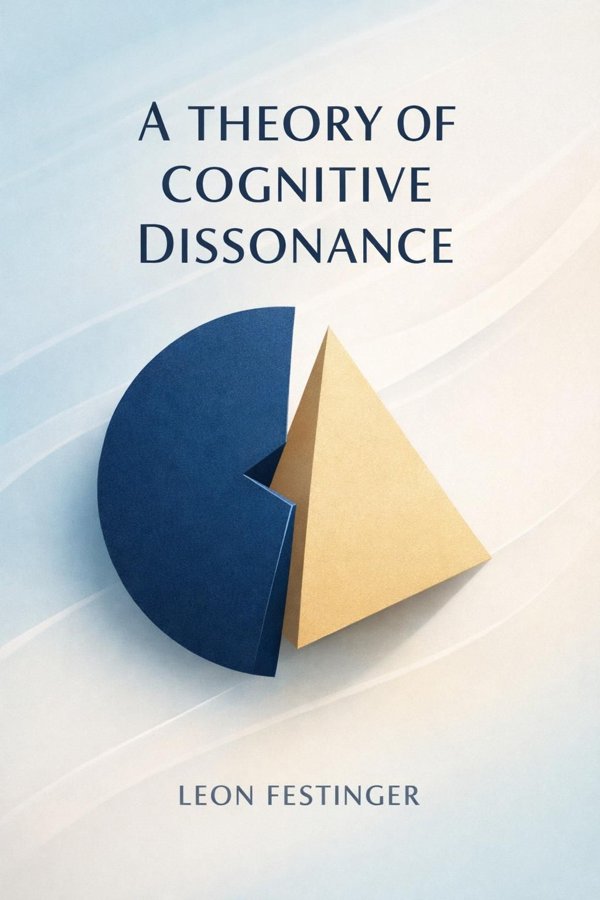
A Theory of Cognitive Dissonance
Why do people defend bad decisions, justify behavior they know is wrong, or reject evidence that threatens what they already believe? In A Theory of Cognitive Dissonance, Leon Festinger offers a powerful answer: human beings are deeply motivated to maintain internal consistency among their beliefs, actions, and self-image. When those elements clash, we experience psychological discomfort—dissonance—and we are driven to reduce it, often in surprisingly creative ways. First published in 1957, this book transformed social psychology by shifting attention from simple reward-and-punishment models to the internal tensions that shape judgment and behavior. Festinger shows that attitude change does not always come from persuasion imposed from outside; often it begins within, as people try to resolve contradictions in their own minds. The theory helps explain everything from buyer’s remorse and political polarization to group loyalty, moral rationalization, and personal growth. Festinger was one of the most influential psychologists of the twentieth century, and this work remains foundational because it reveals a timeless truth: people do not merely seek truth or comfort in isolation—they seek coherence. Understanding that impulse helps us understand ourselves.
Read SummaryKey Insights from Leon Festinger
Cognitive Consistency Creates Psychological Pressure
A troubling contradiction inside the mind can feel more urgent than a problem in the outside world. Festinger begins with the idea that people strive for consistency among their cognitions—their beliefs, attitudes, memories, values, and awareness of their own behavior. When two cognitions fit togeth...
From A Theory of Cognitive Dissonance
The Size of Dissonance Determines Reaction
Not every inconsistency shakes us equally; some contradictions are mild irritations, while others threaten our sense of self. Festinger argues that the magnitude of dissonance depends mainly on two things: how important the relevant cognitions are and how much dissonant material exists relative to c...
From A Theory of Cognitive Dissonance
People Reduce Dissonance in Three Main Ways
When the mind cannot tolerate contradiction, it starts negotiating with reality. Festinger explains that people typically reduce dissonance through three broad strategies: changing behavior, changing cognition, or adding new consonant cognitions that justify the inconsistency. These strategies diffe...
From A Theory of Cognitive Dissonance
Every Choice Produces Post-Decision Tension
Choosing is not the end of conflict; often it is the moment conflict becomes psychologically vivid. Festinger shows that after making a decision between two attractive alternatives, people experience dissonance because the chosen option has drawbacks and the rejected option has advantages. The more ...
From A Theory of Cognitive Dissonance
Forced Compliance Can Change Inner Belief
One of Festinger’s most striking insights is that people can come to believe what they were initially pressured to say or do—especially when the external pressure is not strong enough to fully explain their behavior. This is the basis of forced compliance. When someone acts contrary to their private...
From A Theory of Cognitive Dissonance
We Prefer Information That Protects Consistency
People like to imagine they are open-minded seekers of truth, yet Festinger shows that we often seek information strategically. When facing dissonance, individuals tend to avoid messages that intensify conflict and gravitate toward information that confirms existing choices, beliefs, or behavior. In...
From A Theory of Cognitive Dissonance
About Leon Festinger
Leon Festinger (1919–1989) was an American social psychologist known for his pioneering research on cognitive dissonance and social comparison theory. His work profoundly shaped modern psychology, emphasizing the role of cognitive processes in social behavior.


Frequently Asked Questions
Leon Festinger (1919–1989) was an American social psychologist known for his pioneering research on cognitive dissonance and social comparison theory. His work profoundly shaped modern psychology, emphasizing the role of cognitive processes in social behavior.
Read Leon Festinger's books in 15 minutes
Get AI-powered summaries with key insights from 1 book by Leon Festinger.