
Jonathan Haskel Books
Jonathan Haskel is a Professor of Economics at Imperial College Business School and a member of the Bank of England’s Monetary Policy Committee.
Known for: Capitalism Without Capital: The Rise of the Intangible Economy
Books by Jonathan Haskel
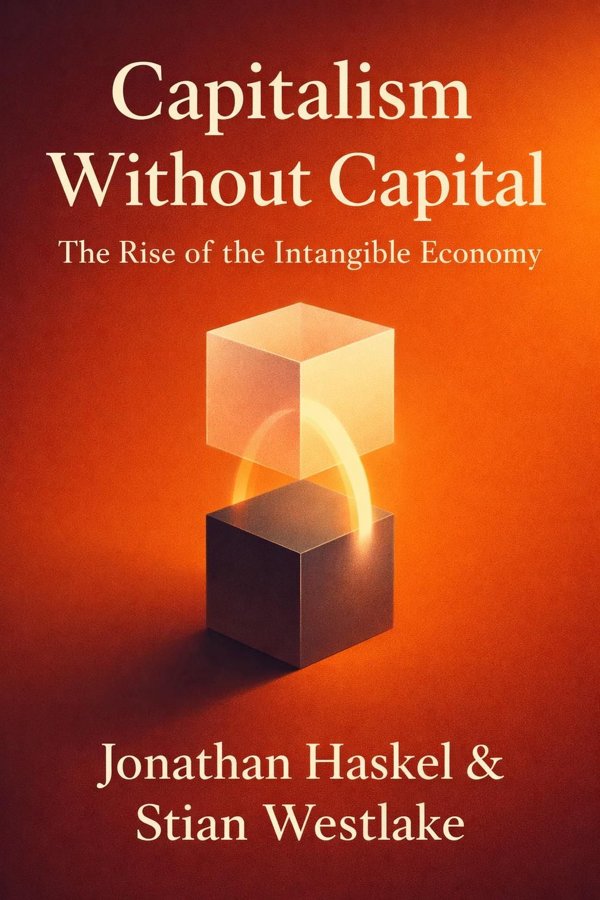
Capitalism Without Capital: The Rise of the Intangible Economy
What if the most valuable assets in the economy are the ones you cannot see? In Capitalism Without Capital, Jonathan Haskel and Stian Westlake argue that modern prosperity is increasingly built not on factories, machines, and warehouses, but on software, data, design, branding, organizational know-how, and research. These intangible assets now drive competitive advantage across industries, from technology and pharmaceuticals to retail, finance, and media. Yet many of the assumptions behind accounting, finance, management, and public policy were designed for a world dominated by physical capital. That mismatch helps explain puzzles such as weak productivity growth, rising inequality, superstar firms, and regional divergence. Haskel, a leading economist, and Westlake, a prominent thinker on innovation and institutions, bring together economic history, business analysis, and policy insight to show why this shift matters so deeply. Their book is both a diagnosis and a guide: it explains how the rise of intangibles is changing capitalism itself, and why governments, investors, business leaders, and workers need a new mental model for the economy we now inhabit.
Read SummaryKey Insights from Jonathan Haskel
The Great Shift to Intangible Investment
A quiet revolution has changed what businesses invest in. In the past, economic power usually came from physical assets: railroads, blast furnaces, assembly lines, office towers, and fleets of trucks. Today, a growing share of value comes from assets that cannot be touched but can be immensely power...
From Capitalism Without Capital: The Rise of the Intangible Economy
The Four S’s Define Intangibles
Not all capital behaves the same, and intangibles follow very different rules. Haskel and Westlake describe these differences through four defining properties: scalability, sunk costs, spillovers, and synergies. Together, these explain why the intangible economy creates both extraordinary opportunit...
From Capitalism Without Capital: The Rise of the Intangible Economy
Why Measuring Intangibles Is So Hard
What gets measured gets managed, and one of the book’s most important warnings is that the modern economy is often mismeasured. Traditional accounting systems were built for a world where investment meant buying equipment, constructing buildings, or acquiring inventory. Intangible spending, by contr...
From Capitalism Without Capital: The Rise of the Intangible Economy
Intangibles Reshape Productivity and Growth
One of the strangest features of recent decades is that economies seem full of innovation, yet productivity growth has often disappointed. Haskel and Westlake use the rise of intangibles to help explain this paradox. Intangible investment can drive major long-term gains, but those gains may arrive s...
From Capitalism Without Capital: The Rise of the Intangible Economy
Why Intangibles Increase Inequality and Concentration
The intangible economy does not reward everyone equally. Because intangible assets are scalable and often produce winner-take-most dynamics, successful firms can pull far ahead of rivals. A superior search engine, operating system, drug portfolio, or global brand can serve vast markets without needi...
From Capitalism Without Capital: The Rise of the Intangible Economy
Financing Ideas Is Harder Than Financing Machines
Banks love collateral, and intangible assets often make poor collateral. A factory can be appraised, repossessed, and resold. A failed software project, a demoralized engineering team, or an abandoned brand campaign usually cannot. This creates a financing problem at the heart of the intangible econ...
From Capitalism Without Capital: The Rise of the Intangible Economy
About Jonathan Haskel
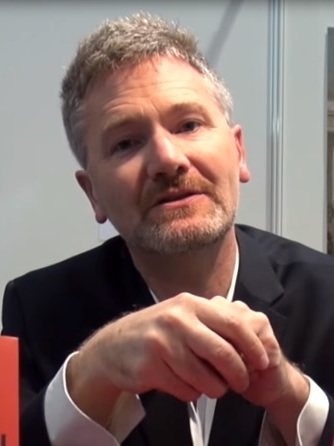
Jonathan Haskel is a Professor of Economics at Imperial College Business School and a member of the Bank of England’s Monetary Policy Committee.


Frequently Asked Questions
Jonathan Haskel is a Professor of Economics at Imperial College Business School and a member of the Bank of England’s Monetary Policy Committee.
Read Jonathan Haskel's books in 15 minutes
Get AI-powered summaries with key insights from 1 book by Jonathan Haskel.