
John Hands Books
John Hands is a British author and researcher known for his interdisciplinary works on science and human evolution. He has written both fiction and nonfiction, combining scientific rigor with philosophical inquiry.
Known for: Cosmosapiens: Human Evolution from the Origin of the Universe
Books by John Hands
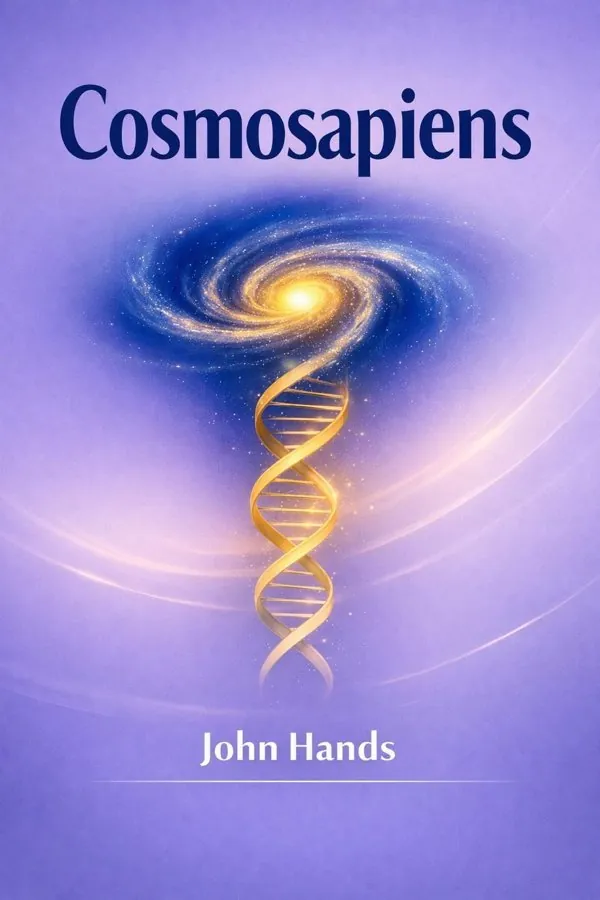
Cosmosapiens: Human Evolution from the Origin of the Universe
How did a universe of particles, stars, chemistry, and chance eventually produce beings capable of asking where they came from? In Cosmosapiens, John Hands tackles that immense question by tracing the story of existence from the Big Bang to human consciousness, language, science, and self-reflection. Rather than treating cosmology, biology, neuroscience, and philosophy as separate domains, he weaves them into one continuous inquiry: how matter became life, how life became mind, and how mind came to understand the cosmos that formed it. What makes this book stand out is its refusal to settle for easy answers. Hands surveys the leading scientific explanations for cosmic origins, evolution, consciousness, and human development, but he also tests their assumptions and limitations. He is especially skeptical of purely reductionist accounts that claim complex realities can be fully explained by breaking them down into smaller parts. Drawing on his background in chemistry, physics, and interdisciplinary research, Hands offers a broad, critical, and intellectually ambitious framework. The result is a challenging but rewarding book for readers who want more than isolated facts: they want a coherent account of humanity’s place in the universe.
Read SummaryKey Insights from John Hands
Cosmic Origins Begin the Human Story
To understand humanity, Hands argues, we must begin long before biology—with the birth of the universe itself. Human beings are not an exception to cosmic history but its latest expression. That is why Cosmosapiens opens with cosmology: if we want to know what we are, we must first ask how anything ...
From Cosmosapiens: Human Evolution from the Origin of the Universe
Stars Forged the Conditions for Life
Every cell in the human body is made from materials that were forged in stars. That fact is more than poetic; it is the bridge between cosmology and biology. Hands shows that after the early universe cooled, clouds of hydrogen and helium gathered under gravity, igniting nuclear fusion and creating t...
From Cosmosapiens: Human Evolution from the Origin of the Universe
Life Emerged Through More Than Chemistry
The origin of life remains one of science’s greatest mysteries, and Hands argues that we should resist pretending otherwise. Chemistry can explain many of the building blocks of life, but the leap from molecules to self-organizing, self-replicating, evolving systems is still deeply contested. In thi...
From Cosmosapiens: Human Evolution from the Origin of the Universe
Evolution Produces Novelty, Not Just Adaptation
Evolution is often described as a simple process of random mutation and natural selection, but Hands argues that this familiar formula can become misleading when treated as a complete explanation for biological complexity. He does not deny Darwinian evolution; instead, he asks whether standard neo-D...
From Cosmosapiens: Human Evolution from the Origin of the Universe
Consciousness Challenges Mechanistic Explanations
Few facts are more immediate than conscious experience, yet few are harder to explain. Hands treats consciousness as a central turning point in the story of the universe because it marks the emergence of beings for whom reality is not only processed but felt. Brain science can map neural activity wi...
From Cosmosapiens: Human Evolution from the Origin of the Universe
Human Evolution Transformed the Evolutionary Game
Human beings did not merely evolve larger brains; they evolved new ways of evolving. Hands presents human emergence as a biological event with far-reaching cultural consequences. Over time, changes in bipedalism, manual dexterity, social coordination, diet, tool use, and brain development created th...
From Cosmosapiens: Human Evolution from the Origin of the Universe
About John Hands
John Hands is a British author and researcher known for his interdisciplinary works on science and human evolution. He has written both fiction and nonfiction, combining scientific rigor with philosophical inquiry. His background includes teaching and research in chemistry and physics, and he is rec...
Read more
John Hands is a British author and researcher known for his interdisciplinary works on science and human evolution. He has written both fiction and nonfiction, combining scientific rigor with philosophical inquiry. His background includes teaching and research in chemistry and physics, and he is rec...
John Hands is a British author and researcher known for his interdisciplinary works on science and human evolution. He has written both fiction and nonfiction, combining scientific rigor with philosophical inquiry. His background includes teaching and research in chemistry and physics, and he is recognized for his ability to synthesize complex scientific ideas for general readers.


Frequently Asked Questions
John Hands is a British author and researcher known for his interdisciplinary works on science and human evolution. He has written both fiction and nonfiction, combining scientific rigor with philosophical inquiry.
Read John Hands's books in 15 minutes
Get AI-powered summaries with key insights from 1 book by John Hands.