
Irving Stone Books
Irving Stone (1903–1989) was an American writer best known for his biographical novels about historical figures, including 'Lust for Life' about Vincent van Gogh and 'The Agony and the Ecstasy' about Michelangelo. His works combine meticulous research with vivid storytelling.
Known for: The Agony and the Ecstasy: A Biographical Novel of Michelangelo
Books by Irving Stone
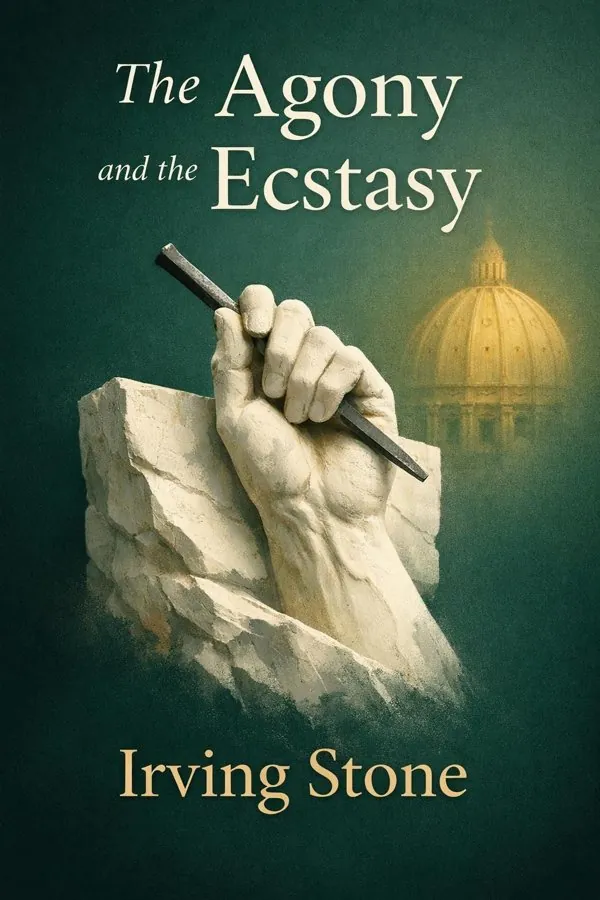
The Agony and the Ecstasy: A Biographical Novel of Michelangelo
Irving Stone’s The Agony and the Ecstasy transforms the life of Michelangelo Buonarroti into a sweeping, deeply human portrait of artistic obsession, spiritual struggle, and relentless discipline. More than a historical novel, it dramatizes the making of genius: the years of apprenticeship, the battles for patronage, the rivalries with other masters, the torment of unfinished commissions, and the physical and emotional cost of creating immortal art. Stone traces Michelangelo from his youth in Renaissance Florence to his work for powerful popes in Rome, showing how each sculpture, fresco, and architectural project emerged from conflict as much as inspiration. The book matters because it treats art not as a decorative luxury but as a force shaped by politics, faith, ambition, and sacrifice. Michelangelo appears not as a distant icon, but as a stubborn, vulnerable, fiercely principled worker determined to release truth from stone. Stone was uniquely suited to tell this story: famous for rigorously researched biographical novels, he combined historical detail with narrative energy, making the Renaissance vivid and immediate. The result is both a compelling novel and an illuminating meditation on what it costs to devote a life to greatness.
Read SummaryKey Insights from Irving Stone
Early Apprenticeship Forms Enduring Vision
Greatness rarely begins in glory; it begins in disciplined exposure to difficult work. In The Agony and the Ecstasy, Michelangelo’s early life in Caprese and Florence is not romanticized as the predestined rise of a prodigy. Instead, Irving Stone shows a boy drawn toward form, craft, and beauty long...
From The Agony and the Ecstasy: A Biographical Novel of Michelangelo
Patronage Demands Both Skill and Resolve
Creative freedom often depends on people who can limit it. One of Stone’s sharpest insights is that Michelangelo’s career advances not in isolation but through uneasy dependence on patrons whose money, politics, and vanity shape the conditions of art. After Lorenzo de’ Medici’s death, the fragile st...
From The Agony and the Ecstasy: A Biographical Novel of Michelangelo
David Turns Art Into Civic Power
A masterpiece does more than display skill; it can embody the spirit of an entire people. Stone’s treatment of David shows Michelangelo at a crucial point in his development, where technical brilliance meets public meaning. The colossal statue is not just an artistic challenge carved from damaged ma...
From The Agony and the Ecstasy: A Biographical Novel of Michelangelo
Rivalry Sharpens Identity and Purpose
Competition is not always pleasant, but it often reveals who we are. In Stone’s novel, Michelangelo’s rivalries, especially within the charged artistic world of Renaissance Italy, serve as catalysts for self-definition. Tensions with Leonardo da Vinci, friction with contemporaries, and recurring cla...
From The Agony and the Ecstasy: A Biographical Novel of Michelangelo
The Tomb of Julius Teaches Endurance
Some of the most important work of a life is never completed as first imagined. Few episodes in The Agony and the Ecstasy better capture the frustration of ambition than Michelangelo’s long, painful struggle with the tomb of Pope Julius II. What begins as a monumental commission full of promise turn...
From The Agony and the Ecstasy: A Biographical Novel of Michelangelo
The Sistine Ceiling Redefines Human Capacity
People often discover their fullest powers in tasks they never wanted. Stone’s account of the Sistine Chapel ceiling is one of the book’s most compelling sections because it shows Michelangelo pressed into a commission he initially resists. He thinks of himself as a sculptor, not a fresco painter, a...
From The Agony and the Ecstasy: A Biographical Novel of Michelangelo
About Irving Stone
Irving Stone (1903–1989) was an American writer best known for his biographical novels about historical figures, including 'Lust for Life' about Vincent van Gogh and 'The Agony and the Ecstasy' about Michelangelo. His works combine meticulous research with vivid storytelling.


Frequently Asked Questions
Irving Stone (1903–1989) was an American writer best known for his biographical novels about historical figures, including 'Lust for Life' about Vincent van Gogh and 'The Agony and the Ecstasy' about Michelangelo. His works combine meticulous research with vivid storytelling.
Read Irving Stone's books in 15 minutes
Get AI-powered summaries with key insights from 1 book by Irving Stone.