

Ibn Khaldun Books
The Economist is a globally recognized weekly publication founded in 1843 in London, known for its authoritative analysis of international news, politics, economics, and business. Its editorial team produces a range of guides and books that distill complex subjects into accessible insights for professionals and readers worldwide.
Known for: The Muqaddimah, The Muqaddimah: An Introduction to History
Books by Ibn Khaldun
The Muqaddimah
Some books explain a civilization; a rare few explain how civilizations themselves rise, flourish, and fall. The Muqaddimah by Ibn Khaldun is one of those rare works. Written in the 14th century as th...
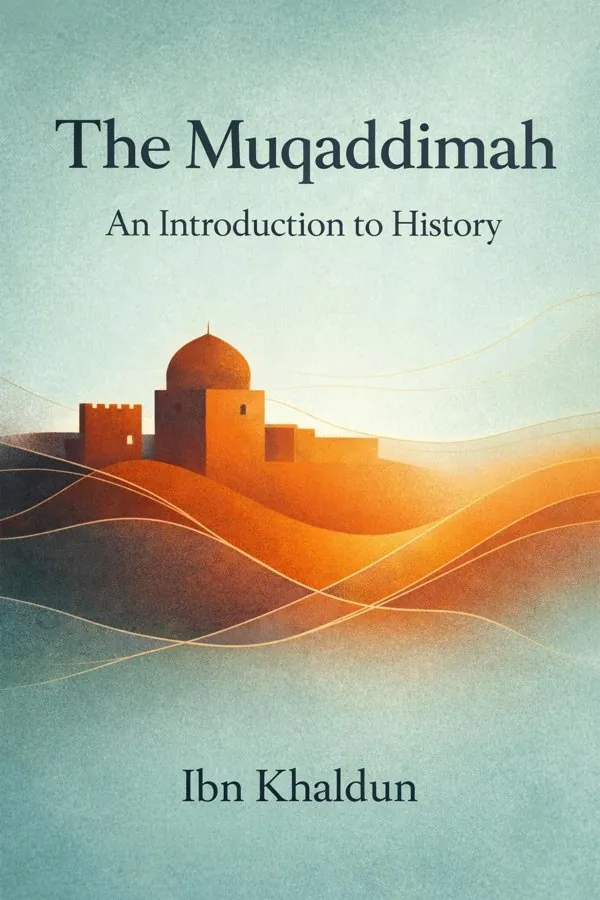
The Muqaddimah: An Introduction to History
What if history were not just a record of kings, battles, and dates, but a science of how human societies actually work? In The Muqaddimah: An Introduction to History, Ibn Khaldun answers that questio...
Key Insights from Ibn Khaldun
Social Cohesion Creates Political Power
Every durable state begins with an invisible asset: solidarity. Ibn Khaldun’s most famous concept is asabiyyah, often translated as social cohesion, group feeling, or collective solidarity. His insight is simple but profound: people do not build power through wealth alone; they build it through shar...
From The Muqaddimah
Labor Is the Source of Wealth
Wealth does not appear by magic; it is created when human effort transforms the world. Long before modern economics formalized the role of production, Ibn Khaldun argued that labor lies at the heart of value, income, and prosperity. Goods acquire worth because people work to produce, transport, refi...
From The Muqaddimah
High Taxes Can Destroy Prosperity
A government can weaken itself by taking too much from the very activity that sustains it. One of Ibn Khaldun’s most striking economic insights concerns taxation. He argues that at the beginning of a dynasty, tax rates are generally low and revenues are strong because people are motivated to work, i...
From The Muqaddimah
Civilizations Decline Through Luxury and Dependence
Success often carries the seeds of its own undoing. Ibn Khaldun argues that once a ruling group secures power and wealth, it tends to move from austerity to luxury. What began as disciplined leadership gradually becomes indulgence. Rulers delegate difficult tasks, rely on mercenaries or bureaucrats,...
From The Muqaddimah
Cities Reflect the Peak of Development
A city is more than a place where people live; it is a visible record of economic surplus and social complexity. Ibn Khaldun sees urban life as the culmination of civilization. Cities emerge when productive labor and political order generate enough surplus to support specialized crafts, architecture...
From The Muqaddimah
History Must Be Tested, Not Repeated
A story is not true just because it has been written down. One of Ibn Khaldun’s most revolutionary ideas is his method of historical criticism. He argues that historians often accept reports too easily, passing along exaggerated numbers, implausible events, and flattering narratives without examinin...
From The Muqaddimah
About Ibn Khaldun
The Economist is a globally recognized weekly publication founded in 1843 in London, known for its authoritative analysis of international news, politics, economics, and business. Its editorial team produces a range of guides and books that distill complex subjects into accessible insights for profe...
Read more
The Economist is a globally recognized weekly publication founded in 1843 in London, known for its authoritative analysis of international news, politics, economics, and business. Its editorial team produces a range of guides and books that distill complex subjects into accessible insights for profe...
The Economist is a globally recognized weekly publication founded in 1843 in London, known for its authoritative analysis of international news, politics, economics, and business. Its editorial team produces a range of guides and books that distill complex subjects into accessible insights for professionals and readers worldwide.


Frequently Asked Questions
The Economist is a globally recognized weekly publication founded in 1843 in London, known for its authoritative analysis of international news, politics, economics, and business. Its editorial team produces a range of guides and books that distill complex subjects into accessible insights for professionals and readers worldwide.
Read Ibn Khaldun's books in 15 minutes
Get AI-powered summaries with key insights from 2 books by Ibn Khaldun.