
Evelyn Fox Keller Books
Evelyn Fox Keller (1936–2023) was an American physicist, author, and feminist philosopher of science. Her work focused on the history and philosophy of modern biology, gender and science, and the role of language and metaphor in scientific thought.
Known for: A Feeling for the Organism: The Life and Work of Barbara McClintock
Books by Evelyn Fox Keller
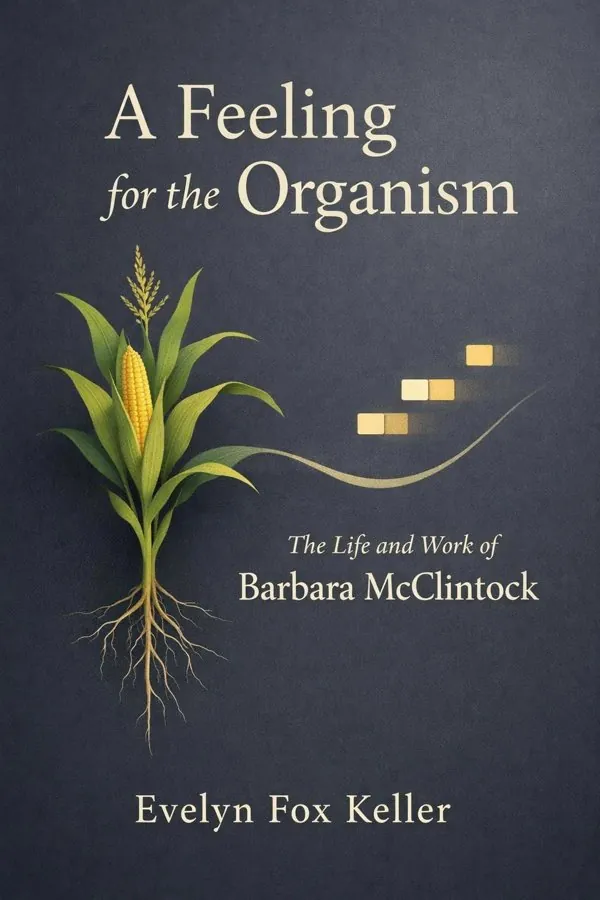
A Feeling for the Organism: The Life and Work of Barbara McClintock
A Feeling for the Organism is far more than a scientific biography. In this elegant and influential book, Evelyn Fox Keller reconstructs the life of Barbara McClintock, the brilliant geneticist whose work on maize chromosomes led to the discovery of transposable elements, later known as “jumping genes.” But Keller’s deeper purpose is to show how McClintock thought: with extraordinary patience, intimacy, and responsiveness to the living systems she studied. Rather than portraying science as cold detachment, the book presents discovery as a disciplined form of attention shaped by empathy, intuition, and long immersion in complexity. The book matters because it reframes both scientific creativity and scientific history. McClintock’s breakthroughs were initially misunderstood, then celebrated decades later with a Nobel Prize, making her story a powerful case study in how transformative ideas can arrive before a field is ready to receive them. Keller brings unusual authority to this task as a physicist, historian of science, and leading feminist thinker who examined how language, gender, and culture shape knowledge. The result is a biography that illuminates one scientist’s life while challenging readers to rethink what genuine understanding looks like.
Read SummaryKey Insights from Evelyn Fox Keller
Independence Began Early and Never Left
Great scientific originality often begins as a personality before it becomes a method. Barbara McClintock’s early life reveals a child marked by restlessness, self-possession, and a willingness to think apart from the crowd. Born in 1902, she grew up in a family that did not consistently encourage i...
From A Feeling for the Organism: The Life and Work of Barbara McClintock
Training Turned Curiosity into Precision
Raw curiosity matters, but without technique it rarely changes a field. McClintock’s scientific beginnings at Cornell came at a moment when cytogenetics was emerging as a powerful way to connect visible chromosome behavior with inherited traits. Keller shows how McClintock quickly distinguished hers...
From A Feeling for the Organism: The Life and Work of Barbara McClintock
Chromosomes Tell Stories if You Watch
Discovery often begins when someone learns to read motion where others see static structure. One of McClintock’s major early achievements was revealing how chromosomes behave during cell division and how that behavior explains inheritance. Keller presents these studies as more than narrow technical ...
From A Feeling for the Organism: The Life and Work of Barbara McClintock
Solitude Can Protect Unconventional Thinking
Not all isolation is a setback; sometimes it is the price of intellectual freedom. McClintock’s career included long stretches of professional marginality. As a woman in a male-dominated scientific world and as a researcher pursuing questions others did not fully understand, she often worked at a di...
From A Feeling for the Organism: The Life and Work of Barbara McClintock
Maize Revealed a Genome in Motion
The most revolutionary discoveries often begin as attempts to explain stubborn exceptions. McClintock’s maize experiments led her to investigate chromosome breakage and unusual patterns of pigmentation in corn kernels. From these observations she identified controlling elements—genetic sequences cap...
From A Feeling for the Organism: The Life and Work of Barbara McClintock
Understanding Requires Feeling for the Organism
The book’s most famous phrase expresses a radical idea: deep knowledge is not achieved only by distance, but also by intimacy. Keller uses “a feeling for the organism” to describe McClintock’s distinctive way of working. She immersed herself so completely in maize that she developed a responsive, al...
From A Feeling for the Organism: The Life and Work of Barbara McClintock
About Evelyn Fox Keller
Evelyn Fox Keller (1936–2023) was an American physicist, author, and feminist philosopher of science. Her work focused on the history and philosophy of modern biology, gender and science, and the role of language and metaphor in scientific thought. She was a professor at MIT and a leading voice in f...
Read more
Evelyn Fox Keller (1936–2023) was an American physicist, author, and feminist philosopher of science. Her work focused on the history and philosophy of modern biology, gender and science, and the role of language and metaphor in scientific thought. She was a professor at MIT and a leading voice in f...
Evelyn Fox Keller (1936–2023) was an American physicist, author, and feminist philosopher of science. Her work focused on the history and philosophy of modern biology, gender and science, and the role of language and metaphor in scientific thought. She was a professor at MIT and a leading voice in feminist science studies.


Frequently Asked Questions
Evelyn Fox Keller (1936–2023) was an American physicist, author, and feminist philosopher of science. Her work focused on the history and philosophy of modern biology, gender and science, and the role of language and metaphor in scientific thought.
Read Evelyn Fox Keller's books in 15 minutes
Get AI-powered summaries with key insights from 1 book by Evelyn Fox Keller.