
Douglas R. Hofstadter Books
Douglas Richard Hofstadter (nacido en 1945) es un científico cognitivo, físico y escritor estadounidense. Es conocido por su trabajo en la conciencia, la analogía y la inteligencia artificial, así como por su estilo interdisciplinario que combina ciencia, arte y filosofía.
Known for: Gödel, Escher, Bach: An Eternal Golden Braid, Surfaces and Essences: Analogy as the Fuel and Fire of Thinking
Books by Douglas R. Hofstadter
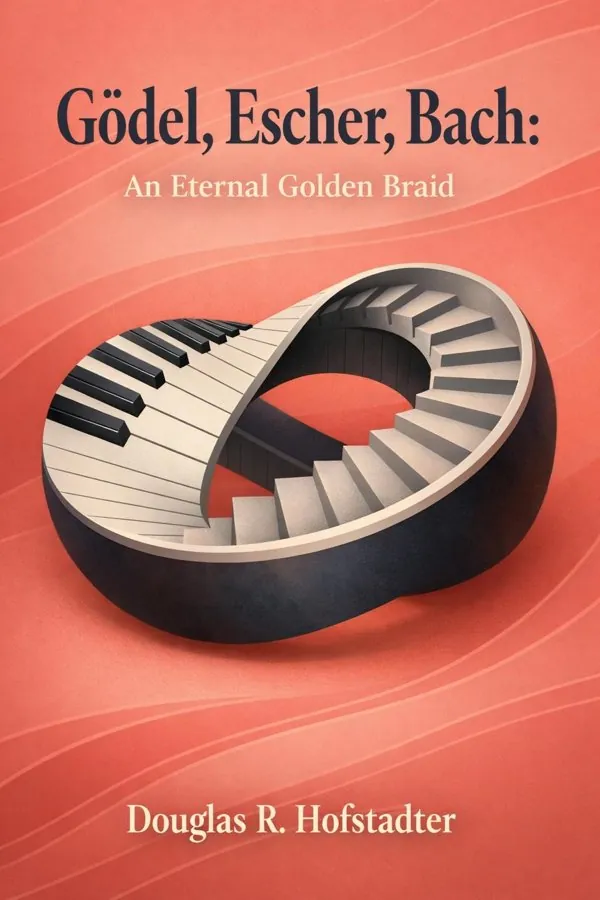
Gödel, Escher, Bach: An Eternal Golden Braid
Douglas R. Hofstadter’s Gödel, Escher, Bach: An Eternal Golden Braid is one of the most ambitious books ever written about the mind. First published in 1979, it weaves together mathematics, art, music...
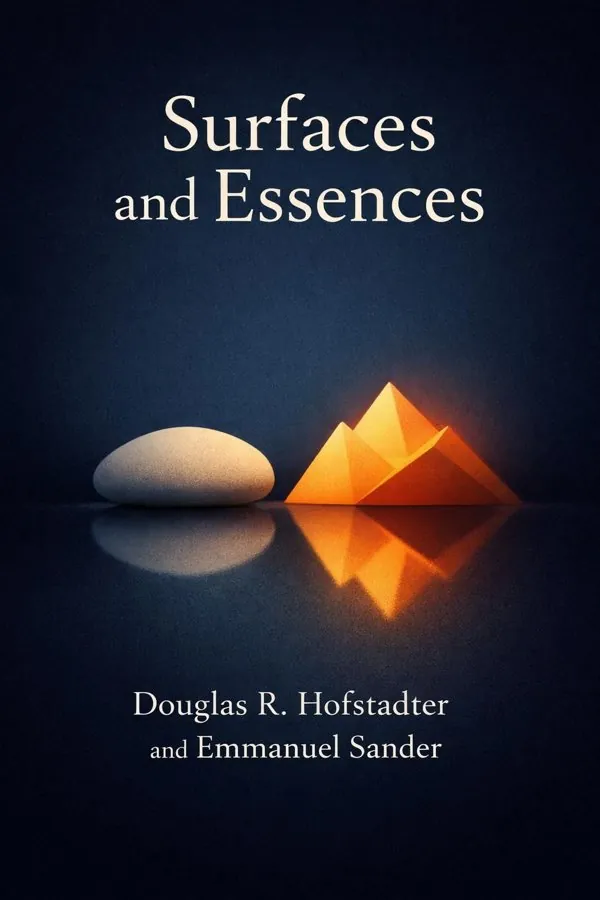
Surfaces and Essences: Analogy as the Fuel and Fire of Thinking
What if the mind’s most basic act is not calculation, deduction, or memory, but comparison? In Surfaces and Essences, Douglas R. Hofstadter and Emmanuel Sander argue that analogy is the hidden mechani...
Key Insights from Douglas R. Hofstadter
Gödel and the Power of Self-Reference
One of the deepest shocks in intellectual history is that mathematics can speak about itself. Hofstadter uses Gödel’s incompleteness theorem to show that any sufficiently rich formal system contains statements that refer, indirectly but precisely, to their own unprovability. This is not just a techn...
From Gödel, Escher, Bach: An Eternal Golden Braid
Escher’s Art and Impossible Worlds
Sometimes a drawing can expose a truth that philosophy takes pages to describe. Hofstadter turns to M. C. Escher because his images are visual laboratories for recursion, paradox, and level-crossing. In works like Drawing Hands, Ascending and Descending, and Waterfall, Escher creates scenes that app...
From Gödel, Escher, Bach: An Eternal Golden Braid
Bach’s Fugues and Musical Recursion
Music can think in patterns long before language explains them. Hofstadter uses Johann Sebastian Bach’s fugues and canons to illustrate how repetition with transformation can create extraordinary richness from simple rules. A fugue introduces a theme, repeats it in different voices, shifts it in tim...
From Gödel, Escher, Bach: An Eternal Golden Braid
The Strange Loop and the Self
What if the feeling of being a self is not a mysterious substance, but a loop? Hofstadter’s most famous concept is the strange loop: a pattern in which a system ascends through layers of representation only to circle back and encounter itself. This is the bridge he builds from Gödel’s theorem, Esche...
From Gödel, Escher, Bach: An Eternal Golden Braid
Dialogue as a Method of Thinking
The form of a book can embody its argument. Hofstadter structures Gödel, Escher, Bach through whimsical dialogues—often featuring Achilles and the Tortoise—that mirror the book’s themes of recursion, echo, inversion, and layered interpretation. These exchanges are not decorative interruptions. They ...
From Gödel, Escher, Bach: An Eternal Golden Braid
Symbols Become Meaning Through Interpretation
A symbol by itself is nothing; meaning appears when a system can use it. One of Hofstadter’s central concerns is how inert marks—numbers on a page, notes in a score, signals in a brain, bits in a computer—come to stand for something. Formal systems manipulate symbols according to rules, but meaning ...
From Gödel, Escher, Bach: An Eternal Golden Braid
About Douglas R. Hofstadter
Douglas Richard Hofstadter (nacido en 1945) es un científico cognitivo, físico y escritor estadounidense. Es conocido por su trabajo en la conciencia, la analogía y la inteligencia artificial, así como por su estilo interdisciplinario que combina ciencia, arte y filosofía. Ganó el Premio Pulitzer en...
Read more
Douglas Richard Hofstadter (nacido en 1945) es un científico cognitivo, físico y escritor estadounidense. Es conocido por su trabajo en la conciencia, la analogía y la inteligencia artificial, así como por su estilo interdisciplinario que combina ciencia, arte y filosofía. Ganó el Premio Pulitzer en...
Douglas Richard Hofstadter (nacido en 1945) es un científico cognitivo, físico y escritor estadounidense. Es conocido por su trabajo en la conciencia, la analogía y la inteligencia artificial, así como por su estilo interdisciplinario que combina ciencia, arte y filosofía. Ganó el Premio Pulitzer en 1980 por Gödel, Escher, Bach: An Eternal Golden Braid.


Frequently Asked Questions
Douglas Richard Hofstadter (nacido en 1945) es un científico cognitivo, físico y escritor estadounidense. Es conocido por su trabajo en la conciencia, la analogía y la inteligencia artificial, así como por su estilo interdisciplinario que combina ciencia, arte y filosofía.
Read Douglas R. Hofstadter's books in 15 minutes
Get AI-powered summaries with key insights from 2 books by Douglas R. Hofstadter.