
C. Wright Mills Books
Charles Wright Mills (1916–1962) was an American sociologist and professor at Columbia University. Known for his critical approach to social theory, Mills explored power structures, class, and the role of intellectuals in society.
Known for: The Power Elite, The Sociological Imagination, White Collar: The American Middle Classes
Books by C. Wright Mills
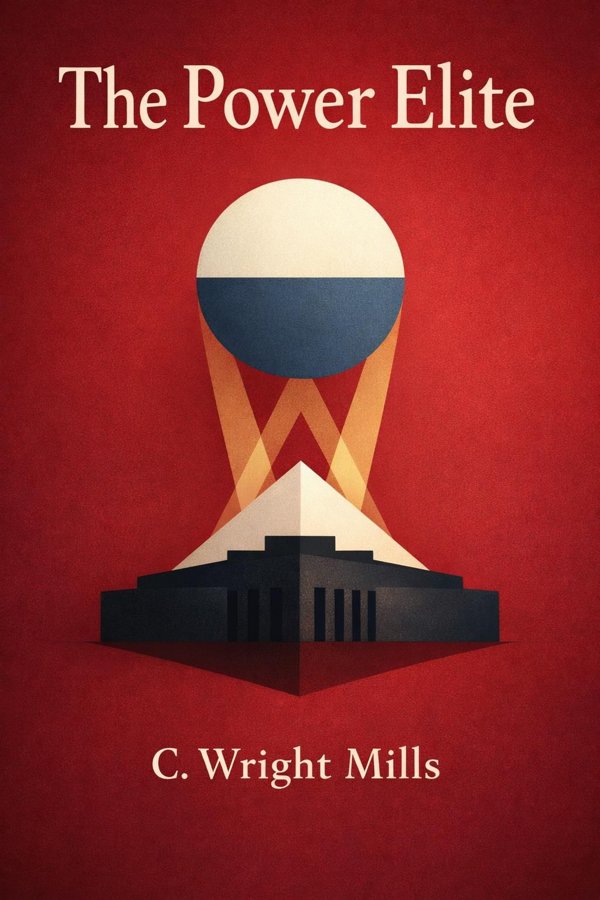
The Power Elite
What if the most important decisions in a democracy are not really made in public at all? In The Power Elite, C. Wright Mills argues that modern American society is not governed primarily by the will ...
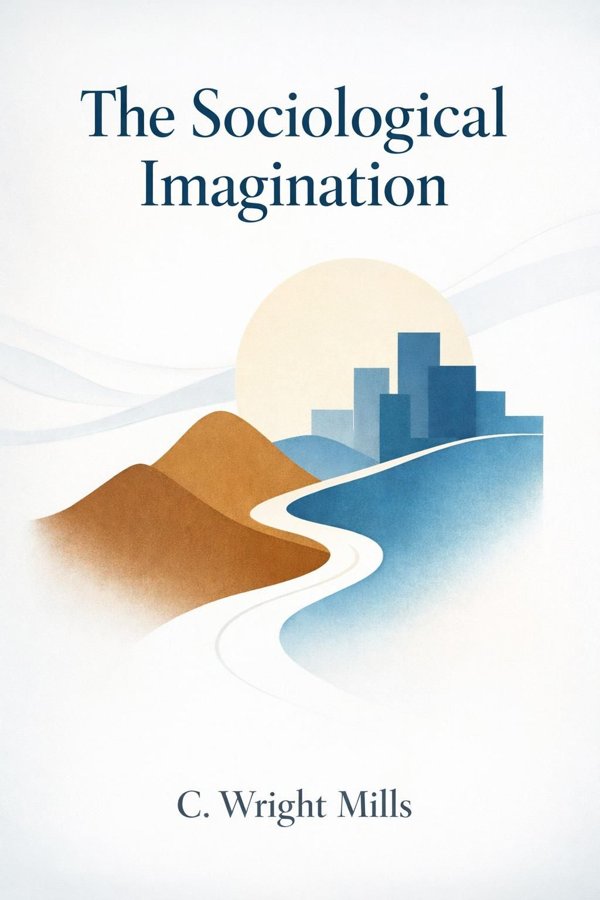
The Sociological Imagination
Published in 1959, The Sociological Imagination is one of the most important books ever written about how to think sociologically. In it, C. Wright Mills argues that we cannot understand our lives by ...
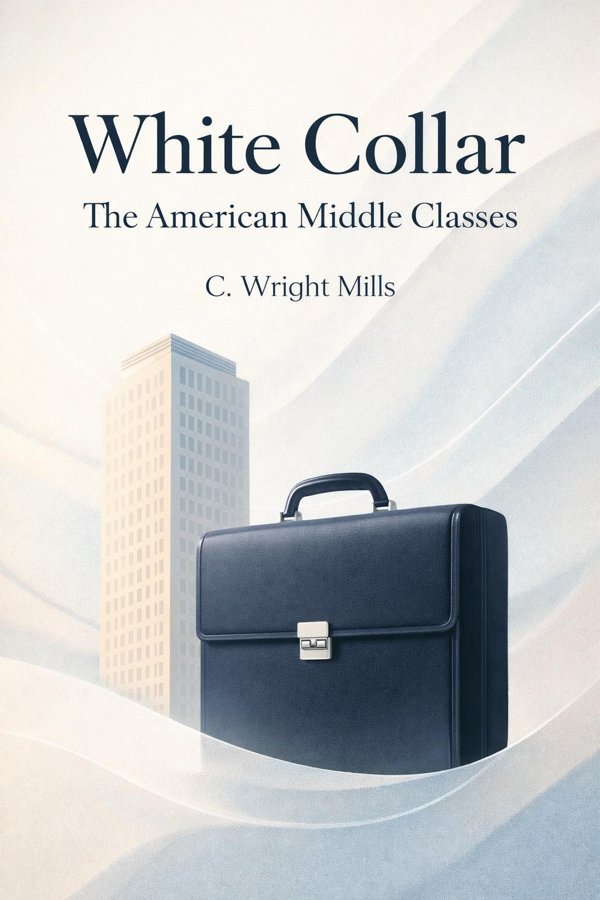
White Collar: The American Middle Classes
White Collar: The American Middle Classes is a sociological study by C. Wright Mills that examines the rise of the white-collar worker in mid-20th-century America. Mills explores how the growth of bur...
Key Insights from C. Wright Mills
Power concentrates at the top
Democracy can look open on the surface while real power narrows behind the scenes. This is the central insight of The Power Elite. Mills argues that in modern mass society, authority does not remain widely distributed among citizens, local communities, and competing groups. Instead, it becomes conce...
From The Power Elite
Elite institutions become deeply intertwined
The most powerful groups matter most when they stop acting separately. One of Mills's most enduring arguments is that the corporate, political, and military orders increasingly overlap rather than compete in isolation. The leaders of these spheres often share common interests, move in the same socia...
From The Power Elite
Mass society weakens public influence
A public can become an audience before it realizes it has lost its voice. Mills distinguishes between an active public, where people can debate and influence decisions, and a mass society, where individuals are largely spectators. In smaller, more participatory settings, citizens can form opinions, ...
From The Power Elite
Corporate power shapes national priorities
Economic power does not stay in the economy; it spills into politics, culture, and everyday life. Mills argues that the rise of large corporations transformed the structure of American power. In earlier periods, property might have been dispersed among many smaller owners, but in the modern corporat...
From The Power Elite
The military rises beyond defense
Institutions created for protection can become central organizers of society. Mills wrote during the Cold War, when the military establishment in the United States had expanded dramatically in size, prestige, and political significance. He observed that military leaders were no longer confined to na...
From The Power Elite
Political leaders manage more than govern
Political office can appear powerful while actually operating within narrow boundaries. Mills argues that top political leaders are important not only because they make decisions, but because they sit at the intersection of other major institutions. Government is often presented as the sovereign are...
From The Power Elite
About C. Wright Mills
Charles Wright Mills (1916–1962) was an American sociologist and professor at Columbia University. Known for his critical approach to social theory, Mills explored power structures, class, and the role of intellectuals in society. His major works include The Power Elite and White Collar, which, alon...
Read more
Charles Wright Mills (1916–1962) was an American sociologist and professor at Columbia University. Known for his critical approach to social theory, Mills explored power structures, class, and the role of intellectuals in society. His major works include The Power Elite and White Collar, which, alon...
Charles Wright Mills (1916–1962) was an American sociologist and professor at Columbia University. Known for his critical approach to social theory, Mills explored power structures, class, and the role of intellectuals in society. His major works include The Power Elite and White Collar, which, along with The Sociological Imagination, established him as one of the most influential sociologists of the twentieth century.


Frequently Asked Questions
Charles Wright Mills (1916–1962) was an American sociologist and professor at Columbia University. Known for his critical approach to social theory, Mills explored power structures, class, and the role of intellectuals in society.
Read C. Wright Mills's books in 15 minutes
Get AI-powered summaries with key insights from 3 books by C. Wright Mills.