
Andrew Schloss Books
Andrew Schloss is a chef and author specializing in food chemistry and innovative cooking methods.
Known for: The Science of Good Food: The Ultimate Reference on How Cooking Works
Books by Andrew Schloss
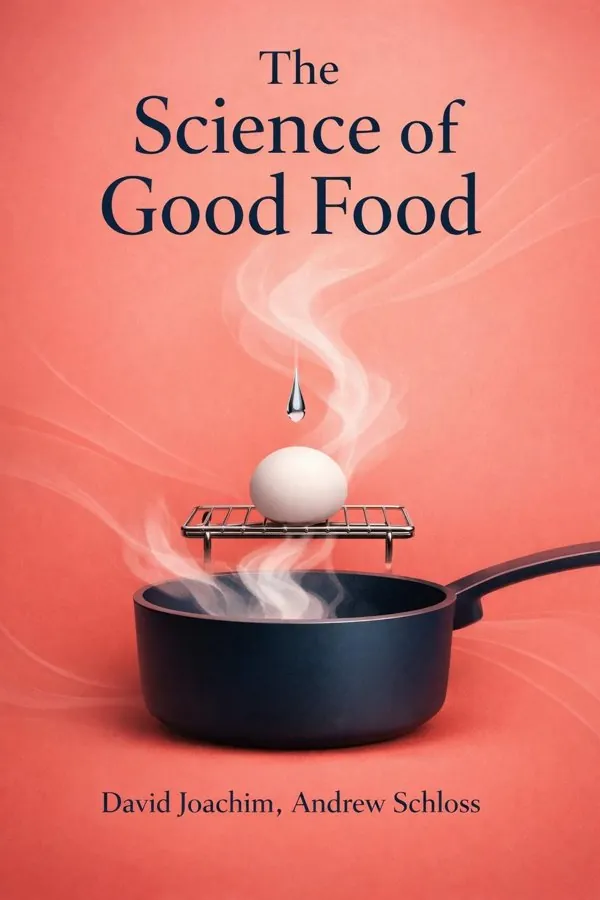
The Science of Good Food: The Ultimate Reference on How Cooking Works
Why does steak brown beautifully on the outside but dry out when overcooked? Why do some vegetables turn sweeter with heat while others become bitter or mushy? The Science of Good Food answers these kinds of kitchen mysteries by revealing the chemistry, physics, and biology behind everyday cooking. Rather than treating recipes as rigid instructions, David Joachim and Andrew Schloss show readers how food behaves under heat, pressure, moisture, acidity, and time. The result is a practical guide to understanding not just what to do in the kitchen, but why it works. What makes this book especially valuable is its blend of scientific clarity and culinary usefulness. Joachim, an experienced food writer and editor, and Schloss, a chef and food science-minded author, translate technical concepts into accessible explanations that home cooks can apply immediately. Their book serves as both reference and problem-solving manual, helping readers troubleshoot failed dishes, improve flavor, and cook with more confidence. For anyone who has ever wanted to move beyond memorizing recipes and toward true mastery, this book offers the intellectual foundation for better, smarter cooking.
Read SummaryKey Insights from Andrew Schloss
Food Is Built from Four Foundations
A surprising truth sits beneath nearly every ingredient in your kitchen: wildly different foods are constructed from the same core components—water, proteins, carbohydrates, and fats. Once you understand these building blocks, cooking stops feeling random and starts becoming predictable. A potato, a...
From The Science of Good Food: The Ultimate Reference on How Cooking Works
Heat Is the Engine of Change
Cooking is really the controlled application of energy. Heat is what transforms raw food into something safer, tastier, more aromatic, and often more digestible. But heat is never just “hot.” It moves in specific ways—through conduction, convection, and radiation—and each method affects food differe...
From The Science of Good Food: The Ultimate Reference on How Cooking Works
Proteins Change Shape Under Pressure
One of the most important events in cooking happens at a microscopic level: proteins unfold, bond, tighten, and set. This process, called denaturation and coagulation, explains why eggs become solid, why meat firms up, why fish flakes, and why dairy can curdle. What feels like texture on the plate i...
From The Science of Good Food: The Ultimate Reference on How Cooking Works
The Maillard Reaction Creates Deep Flavor
One of the greatest culinary miracles is also one of the most misunderstood: browning is not just color, but flavor creation. The Maillard reaction occurs when amino acids and sugars react under heat, producing hundreds of new aroma and flavor compounds. This is what gives roasted coffee, toasted br...
From The Science of Good Food: The Ultimate Reference on How Cooking Works
Flavor Is Chemistry and Perception
Taste is not located only on the tongue, and flavor is not contained solely in ingredients. What we call flavor is a full sensory event created by taste, smell, texture, temperature, and even sound. The Science of Good Food shows that cooking well means managing perception as much as chemistry. Swee...
From The Science of Good Food: The Ultimate Reference on How Cooking Works
Water Controls Texture More Than Expected
Many cooking successes and failures come down to moisture management. Water is not merely present in food; it actively shapes tenderness, crispness, juiciness, dilution, and spoilage. The way ingredients absorb, release, or retain water explains why bread crust softens in a bag, why salting eggplant...
From The Science of Good Food: The Ultimate Reference on How Cooking Works
About Andrew Schloss
Andrew Schloss is a chef and author specializing in food chemistry and innovative cooking methods.


Frequently Asked Questions
Andrew Schloss is a chef and author specializing in food chemistry and innovative cooking methods.
Read Andrew Schloss's books in 15 minutes
Get AI-powered summaries with key insights from 1 book by Andrew Schloss.