
Andrew J. Scott Books
Scott is a professor of economics at London Business School, specializing in longevity and macroeconomics.
Known for: The 100-Year Life: Living and Working in an Age of Longevity
Books by Andrew J. Scott
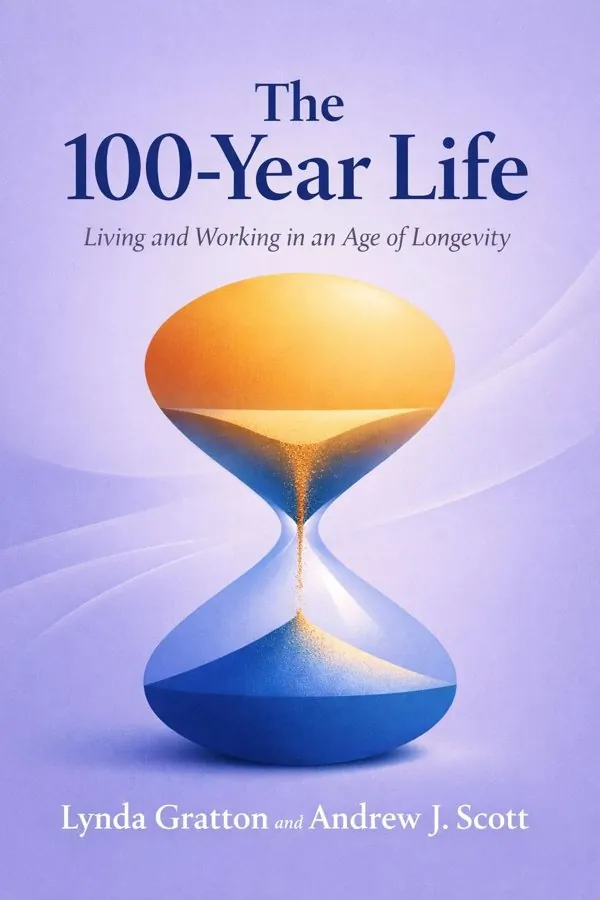
The 100-Year Life: Living and Working in an Age of Longevity
What if living to 100 stopped being an exception and became a normal expectation? In The 100-Year Life, Lynda Gratton and Andrew J. Scott argue that longer lives will reshape everything: education, careers, retirement, relationships, identity, and the economy itself. This is not a book about aging in the narrow sense. It is a practical and strategic guide to how individuals, families, companies, and governments must adapt to a world where many people will live decades longer than previous generations. The authors show why the old three-stage life model—education, work, retirement—no longer fits a century-long lifespan, and why clinging to it creates financial, emotional, and social strain. Gratton, a leading thinker on the future of work, and Scott, a renowned economist specializing in longevity and macroeconomics, combine behavioral insight with economic analysis to make a compelling case: longevity is both a gift and a challenge. Those who understand its implications can design richer, more flexible, and more resilient lives. This book matters because the future it describes has already begun.
Read SummaryKey Insights from Andrew J. Scott
Longevity Changes the Rules of Life
A longer life is not just more years tacked onto old patterns; it changes the entire architecture of how life is lived. Gratton and Scott argue that rising life expectancy is one of the most profound economic and social shifts of our time. If many people now have a realistic chance of living to 100,...
From The 100-Year Life: Living and Working in an Age of Longevity
The Three-Stage Life Is Obsolete
The old life script feels natural only because it was historically convenient, not because it is timeless. One of the book’s central arguments is that the three-stage model—education first, work second, retirement last—is breaking down under the weight of longevity. This structure made sense when fo...
From The 100-Year Life: Living and Working in an Age of Longevity
Intangible Assets Matter More Than Ever
In a 100-year life, your most valuable assets may not be the ones listed on a balance sheet. The authors distinguish between tangible assets, such as savings and property, and intangible assets, which include productive skills, vitality, reputation, relationships, adaptability, and self-knowledge. A...
From The 100-Year Life: Living and Working in an Age of Longevity
Recreation Must Replace Traditional Retirement
The dream of stopping work completely at 60 becomes much harder to sustain when life may continue for four more decades. Gratton and Scott do not argue that people should simply work forever in the same exhausting way. Instead, they propose a reimagining of later life: less full-stop retirement, mor...
From The 100-Year Life: Living and Working in an Age of Longevity
Career Reinvention Becomes a Lifelong Necessity
In a long life, reinvention is no longer a crisis response; it is a normal skill. The authors emphasize that technological change, globalization, and shifting labor markets make continuous adaptation essential. If a working life may span 50 or 60 years, very few people will thrive by relying on one ...
From The 100-Year Life: Living and Working in an Age of Longevity
Relationships Shape Long-Life Success
A 100-year life cannot be built by individual planning alone; it depends heavily on the quality of human relationships. Gratton and Scott stress that longer lives increase the importance of family structures, partnerships, friendships, and social networks. As lifespans extend, people may experience ...
From The 100-Year Life: Living and Working in an Age of Longevity
About Andrew J. Scott
Scott is a professor of economics at London Business School, specializing in longevity and macroeconomics.



Frequently Asked Questions
Scott is a professor of economics at London Business School, specializing in longevity and macroeconomics.
Read Andrew J. Scott's books in 15 minutes
Get AI-powered summaries with key insights from 1 book by Andrew J. Scott.