
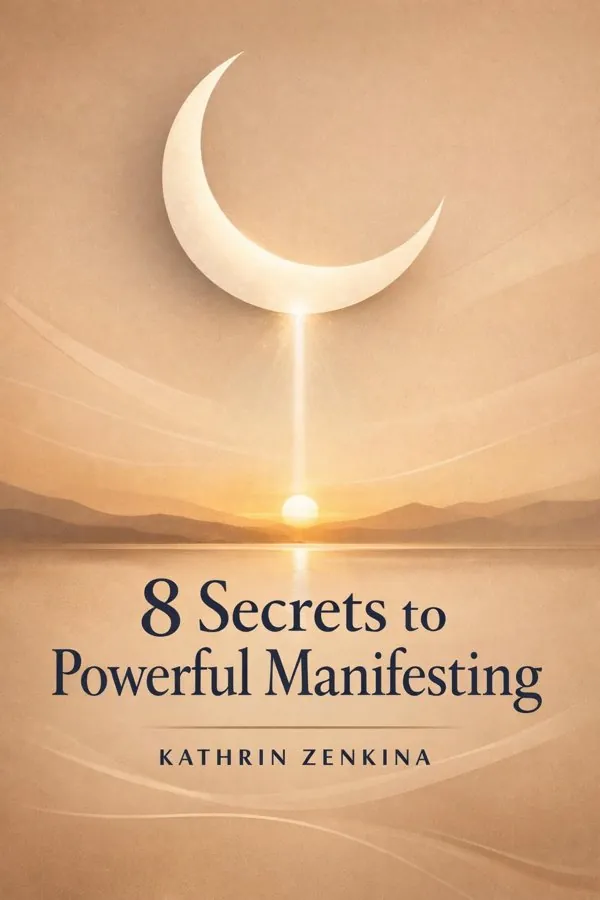
8 Secrets to Powerful Manifesting: How to Create the Reality of Your Dreams: Summary & Key Insights
 10 min9 chaptersAudio available
Key Takeaways from 8 Secrets to Powerful Manifesting: How to Create the Reality of Your Dreams
Most people are not held back by a lack of desire, but by a lack of precision.
A powerful dream can be canceled by a powerless self-image.
You may speak affirmations with your mouth while broadcasting fear with your body.
The brain often responds to vividly imagined experience as if it were preparation for reality.
Manifestation is not a substitute for movement; it is a way of making movement more intentional.
What Is 8 Secrets to Powerful Manifesting: How to Create the Reality of Your Dreams About?
8 Secrets to Powerful Manifesting: How to Create the Reality of Your Dreams by Kathrin Zenkina is a mindset book spanning 8 pages. 8 Secrets to Powerful Manifesting is a practical mindset guide for anyone who wants to stop wishing for a better life and start consciously creating one. In this concise but energizing book, Kathrin Zenkina argues that manifestation is not about vague positive thinking or waiting for miracles. It is about becoming clear on what you want, aligning your beliefs and emotions with that vision, and taking the kind of action that matches the life you say you desire. Blending personal transformation, coaching insights, neuroscience, and spiritual principles, she breaks manifestation down into eight accessible lessons. What makes the book valuable is its balance of inspiration and application. Zenkina does not present manifestation as a magical shortcut. Instead, she treats it as a practice of inner reprogramming, emotional mastery, and consistent self-leadership. As the founder of Manifestation Babe, she brings years of experience helping people shift limiting beliefs around money, relationships, purpose, and self-worth. For readers interested in mindset, personal growth, and intentional living, this book offers a motivating framework for turning dreams into lived reality.
This FizzRead summary covers all 9 key chapters of 8 Secrets to Powerful Manifesting: How to Create the Reality of Your Dreams in approximately 10 minutes, distilling the most important ideas, arguments, and takeaways from Kathrin Zenkina's work. Also available as an audio summary and Key Quotes Podcast.
8 Secrets to Powerful Manifesting: How to Create the Reality of Your Dreams
8 Secrets to Powerful Manifesting is a practical mindset guide for anyone who wants to stop wishing for a better life and start consciously creating one. In this concise but energizing book, Kathrin Zenkina argues that manifestation is not about vague positive thinking or waiting for miracles. It is about becoming clear on what you want, aligning your beliefs and emotions with that vision, and taking the kind of action that matches the life you say you desire. Blending personal transformation, coaching insights, neuroscience, and spiritual principles, she breaks manifestation down into eight accessible lessons.
What makes the book valuable is its balance of inspiration and application. Zenkina does not present manifestation as a magical shortcut. Instead, she treats it as a practice of inner reprogramming, emotional mastery, and consistent self-leadership. As the founder of Manifestation Babe, she brings years of experience helping people shift limiting beliefs around money, relationships, purpose, and self-worth. For readers interested in mindset, personal growth, and intentional living, this book offers a motivating framework for turning dreams into lived reality.
Who Should Read 8 Secrets to Powerful Manifesting: How to Create the Reality of Your Dreams?
This book is perfect for anyone interested in mindset and looking to gain actionable insights in a short read. Whether you're a student, professional, or lifelong learner, the key ideas from 8 Secrets to Powerful Manifesting: How to Create the Reality of Your Dreams by Kathrin Zenkina will help you think differently.
- ✓Readers who enjoy mindset and want practical takeaways
- ✓Professionals looking to apply new ideas to their work and life
- ✓Anyone who wants the core insights of 8 Secrets to Powerful Manifesting: How to Create the Reality of Your Dreams in just 10 minutes
Want the full summary?
Get instant access to this book summary and 100K+ more with Fizz Moment.
Get Free SummaryAvailable on App Store • Free to download
Key Chapters
Most people are not held back by a lack of desire, but by a lack of precision. They say they want abundance, love, freedom, or success, yet those words remain abstract. Zenkina’s first secret is that manifestation begins the moment vague longing becomes clear intention. The mind, body, and behavior cannot organize around a blurry target. When your desire is undefined, your energy becomes scattered, your actions inconsistent, and your expectations confusing.
Clarity means getting specific about what you want and why you want it. Instead of saying, “I want more money,” you might define a monthly income goal, the type of work that creates it, and how that money supports your preferred lifestyle. Instead of “I want a better relationship,” you clarify the qualities you want to experience: emotional safety, playfulness, commitment, honesty, or growth. This level of detail is not about controlling every outcome. It is about communicating to yourself what matters most.
Zenkina suggests that desire should feel expansive rather than performative. A goal chosen to impress others will often carry anxiety and resistance. A goal chosen from genuine alignment creates motivation, emotional resonance, and persistence. Journaling, scripting, and vision work can help uncover what you truly want beneath old conditioning.
A useful practice is to write a “dream statement” for one area of life, such as career, health, or relationships. Describe the result, how it feels, and why it matters. Then ask whether this desire is really yours or borrowed from expectation. Actionable takeaway: choose one important desire and define it in concrete, emotionally meaningful terms this week.
A powerful dream can be canceled by a powerless self-image. Zenkina’s second secret is that manifestation does not depend only on what you want, but on who you believe yourself to be. If your conscious mind says, “I want success,” while your deeper identity says, “I’m not the kind of person who gets chosen, earns more, or feels secure,” your actions will quietly reinforce the old story.
This is why belief work matters. Manifestation fails less from impossible goals than from unexamined identity patterns. Many people carry hidden assumptions formed in childhood, past failures, or social conditioning: money is hard, relationships are painful, visibility is dangerous, success changes people, or asking for more is selfish. These beliefs shape behavior automatically. You hesitate, self-sabotage, overthink, undercharge, or settle.
Zenkina encourages readers to upgrade identity before waiting for evidence. This means rehearsing the self-concept of the person who already belongs in the reality you want. Someone manifesting a thriving business may begin identifying as disciplined, visible, and valuable before the income fully arrives. Someone calling in love may practice seeing themselves as worthy of respect and reciprocity now, not later.
A practical way to work with identity is to notice recurring thoughts during stress. They often reveal your core programming. Then replace “I’m the kind of person who always struggles” with “I’m becoming the kind of person who handles challenges creatively and receives support.” The goal is not forced positivity, but intentional rewiring through repetition, evidence, and aligned choices. Actionable takeaway: identify one limiting identity belief and create a new identity statement you will practice daily for the next 30 days.
You may speak affirmations with your mouth while broadcasting fear with your body. Zenkina’s third secret is that emotional frequency matters because emotions shape what you notice, how you respond, and the energetic tone you bring into life. Manifestation is not just a mental exercise. It is deeply embodied. If you constantly rehearse scarcity, resentment, shame, or panic, those states influence your decisions and expectations.
This does not mean you must be happy all the time. One of the most helpful distinctions in the book is that authentic emotional awareness is different from toxic positivity. Suppressing grief, anger, or fear does not raise your frequency; it often traps the emotion deeper. Instead, emotional mastery means feeling honestly without building a permanent home there. You can process difficult emotions and still choose not to identify with them forever.
Zenkina emphasizes cultivating states such as trust, joy, excitement, relief, gratitude, and self-worth because these emotions support expansive action. For example, someone who feels unworthy may avoid applying for a dream opportunity. Someone who feels grounded and capable is more likely to speak up, follow through, and recognize openings. In this way, emotions do not magically create reality on their own, but they heavily influence the behavior that does.
Practical tools include breathwork, music, movement, meditation, and emotional check-ins. Before an important meeting, date, or creative project, ask: “What state am I bringing into this?” Then shift gently toward the emotion that best supports your intention. Actionable takeaway: start a daily five-minute emotional reset practice to move from reactive feelings into a more empowered, intentional state.
The brain often responds to vividly imagined experience as if it were preparation for reality. Zenkina’s fourth secret is that visualization and imagination are not escapist fantasies when used well; they are tools for conditioning the subconscious. Repeated mental rehearsal can strengthen expectancy, confidence, and familiarity, making desired outcomes feel more possible and less threatening.
Many people unconsciously visualize worst-case scenarios all day long. They imagine rejection, embarrassment, loss, and failure, then wonder why they feel anxious or stuck. Zenkina invites readers to reverse that habit by intentionally creating internal images of desired outcomes. This does not guarantee an exact result, but it changes your relationship to possibility. What once felt foreign starts to feel normal.
Effective visualization includes sensory and emotional detail. Do not merely picture a big house, successful launch, or loving relationship. Imagine how your body feels waking up in that reality. Hear the conversations. Notice the environment. Most importantly, experience the emotional texture: safety, excitement, pride, ease, or gratitude. This emotional rehearsal helps bridge the gap between current identity and future self.
Visualization also works best when paired with grounded behavior. If you imagine becoming a confident speaker, then practice speaking, posting, or pitching, your mind receives reinforcing evidence. A person seeking financial growth might visualize receiving money calmly and responsibly, then begin budgeting, learning, and opening themselves to higher-value opportunities.
A helpful method is to spend a few minutes each morning mentally entering your desired reality before the day begins. Let that version of you shape your posture and decisions. Actionable takeaway: create a short daily visualization around one goal and repeat it consistently for two weeks.
Manifestation is not a substitute for movement; it is a way of making movement more intentional. Zenkina’s fifth secret is inspired action, the kind of action that emerges from clarity and inner alignment rather than desperation. Many readers are drawn to manifestation because they want life to feel less forced. Her point is not that action disappears, but that it becomes cleaner, more intuitive, and more effective when rooted in belief and trust.
Inspired action often feels different from frantic hustle. It may be sending the email you have delayed, enrolling in a class, setting a boundary, launching a small offer, updating your résumé, or attending an event that feels strangely timely. It can be bold or simple. The key is responsiveness. When opportunities appear, aligned people move instead of waiting for perfect certainty.
This principle also protects against passivity disguised as spirituality. You cannot manifest a healthier body while ignoring sleep, food, and movement. You cannot manifest a dream career while never applying, learning, networking, or sharing your work. The inner shift creates readiness; action creates traction.
Zenkina suggests paying attention to nudges that bring expansion, even if they also bring nerves. Fear does not always mean stop. Sometimes it means you are near growth. A person wanting to manifest clients might feel called to post online consistently. A person wanting deeper love might need to have one honest conversation rather than hoping the relationship changes on its own.
The test of aligned action is simple: does it feel connected to your vision and values, or merely to your panic? Actionable takeaway: identify one next step your desired future self would take this week and complete it before waiting to feel completely ready.
The harder you grip an outcome, the more you teach yourself that you do not trust life without it. Zenkina’s sixth secret is detachment, a concept often misunderstood. Detachment does not mean apathy, indifference, or giving up on your desire. It means releasing the desperate, controlling energy that turns wanting into suffering. You can care deeply about a goal while no longer making your peace depend on immediate evidence.
Attachment often shows up as obsession with timing, constant checking, comparison, and emotional collapse whenever progress appears slow. This state narrows perception. You miss opportunities because you are fixated on one specific path. You interpret delays as personal failure. You overforce actions that should be strategic and become reactive when results lag.
Trust expands what detachment begins. Zenkina encourages readers to believe that the how and when do not have to be fully managed by the conscious mind. Sometimes the desired outcome arrives through routes you would not have predicted. A job appears after a conversation you almost skipped. A relationship begins after you stop chasing unavailable people. Money comes through a creative idea rather than the plan you thought had to work.
Practically, detachment can look like setting an intention, doing the work, and then returning to your life instead of monitoring every sign. It can also involve loosening rigid expectations around one exact person, timeline, or format. Desire remains; desperation softens.
A simple check is to ask, “Can I still feel grounded if this takes longer than I hoped?” If the answer is no, there is attachment to heal. Actionable takeaway: choose one goal you have been over-controlling and practice replacing monitoring with one daily statement of trust: “I am doing my part, and I am open to the right unfolding.”
Scarcity is not only a financial condition; it is often a habit of attention. Zenkina’s seventh secret is gratitude and abundance mindset. People commonly think gratitude means pretending everything is perfect. In her framework, gratitude is a deliberate focus that trains the mind to recognize support, progress, beauty, and possibility. It shifts you from chronic deficiency to resourcefulness.
When you constantly emphasize what is missing, your nervous system stays oriented around lack. That mindset influences choices. You may cling to underpaying work, accept poor treatment, or avoid investment in yourself because everything feels risky and insufficient. Gratitude interrupts this contraction. It reminds you that some forms of abundance already exist: skills, relationships, lessons, opportunities, time, creativity, health, or simple daily stability.
Importantly, gratitude does not cancel ambition. You can appreciate where you are while also calling in more. In fact, gratitude often creates the emotional steadiness needed for sustainable growth. Someone building a business can celebrate the first paying client rather than dismissing it because it is not yet ten clients. Someone healing emotionally can honor small signs of progress instead of waiting for total transformation before acknowledging change.
Zenkina also links gratitude to receiving. Many people ask for more while overlooking what they already have, which keeps them in a subtle posture of dissatisfaction. By honoring current blessings, you reinforce the identity of someone who notices and welcomes support.
A practical exercise is to keep an abundance log. Each day record three things you received: money, help, kindness, insight, rest, inspiration, or progress. This retrains attention over time. Actionable takeaway: begin a nightly gratitude and abundance practice focused not only on possessions, but on evidence that life is already supporting you.
A breakthrough is exciting, but a repeated way of being is what changes a life. Zenkina’s eighth secret is integration and embodiment. Manifestation is not just a set of techniques to use when you want something. It becomes most powerful when it matures into a lifestyle: how you think, feel, choose, respond, and relate to yourself on ordinary days.
Many people consume self-help content in bursts of motivation, then return to old patterns when stress appears. Embodiment closes that gap. It means your new beliefs are no longer intellectual concepts but lived standards. If you are embodying self-worth, you do not just journal about deserving better; you decline draining commitments, ask for fair compensation, and care for your body. If you are embodying abundance, you do not only visualize prosperity; you become responsible, generous, and available for growth.
Integration also requires patience. New patterns become stable through repetition. There will be moments when old fears return, but regression does not erase progress. Zenkina’s approach encourages compassion alongside discipline. Instead of asking whether you are manifesting perfectly, ask whether you are practicing consistently enough to become a different person over time.
One useful method is to create “embodiment anchors,” small behaviors that represent your future self now. This might be dressing with intention, keeping promises to yourself, speaking more directly, organizing finances weekly, or beginning mornings without chaos. These actions seem simple, but they teach the nervous system what normal now looks like.
Actionable takeaway: choose three everyday behaviors that your future self would consider standard and commit to practicing them consistently for the next month.
All Chapters in 8 Secrets to Powerful Manifesting: How to Create the Reality of Your Dreams
About the Author
Kathrin Zenkina is a mindset and manifestation coach, entrepreneur, speaker, and the founder of Manifestation Babe, a widely recognized personal development brand. She became known for teaching practical approaches to manifestation that combine belief work, emotional alignment, neuroscience-inspired tools, and spiritual principles. Drawing on her own transformation journey, Zenkina has built a global audience through courses, coaching, podcasts, and educational content focused on abundance, self-worth, purpose, and conscious creation. Her work is especially popular with readers who want to break through limiting beliefs around money, relationships, and success. Through her writing and teaching, she encourages people to move beyond passive wishing and instead embody the mindset, energy, and actions that support the life they want to create.
Get This Summary in Your Preferred Format
Read or listen to the 8 Secrets to Powerful Manifesting: How to Create the Reality of Your Dreams summary by Kathrin Zenkina anytime, anywhere. FizzRead offers multiple formats so you can learn on your terms — all free.
Available formats: App · Audio · PDF · EPUB — All included free with FizzRead
Download 8 Secrets to Powerful Manifesting: How to Create the Reality of Your Dreams PDF and EPUB Summary
Key Quotes from 8 Secrets to Powerful Manifesting: How to Create the Reality of Your Dreams
“Most people are not held back by a lack of desire, but by a lack of precision.”
“A powerful dream can be canceled by a powerless self-image.”
“You may speak affirmations with your mouth while broadcasting fear with your body.”
“The brain often responds to vividly imagined experience as if it were preparation for reality.”
“Manifestation is not a substitute for movement; it is a way of making movement more intentional.”
Frequently Asked Questions about 8 Secrets to Powerful Manifesting: How to Create the Reality of Your Dreams
8 Secrets to Powerful Manifesting: How to Create the Reality of Your Dreams by Kathrin Zenkina is a mindset book that explores key ideas across 9 chapters. 8 Secrets to Powerful Manifesting is a practical mindset guide for anyone who wants to stop wishing for a better life and start consciously creating one. In this concise but energizing book, Kathrin Zenkina argues that manifestation is not about vague positive thinking or waiting for miracles. It is about becoming clear on what you want, aligning your beliefs and emotions with that vision, and taking the kind of action that matches the life you say you desire. Blending personal transformation, coaching insights, neuroscience, and spiritual principles, she breaks manifestation down into eight accessible lessons. What makes the book valuable is its balance of inspiration and application. Zenkina does not present manifestation as a magical shortcut. Instead, she treats it as a practice of inner reprogramming, emotional mastery, and consistent self-leadership. As the founder of Manifestation Babe, she brings years of experience helping people shift limiting beliefs around money, relationships, purpose, and self-worth. For readers interested in mindset, personal growth, and intentional living, this book offers a motivating framework for turning dreams into lived reality.
You Might Also Like



Featured In
Browse by Category
Ready to read 8 Secrets to Powerful Manifesting: How to Create the Reality of Your Dreams?
Get the full summary and 100K+ more books with Fizz Moment.