
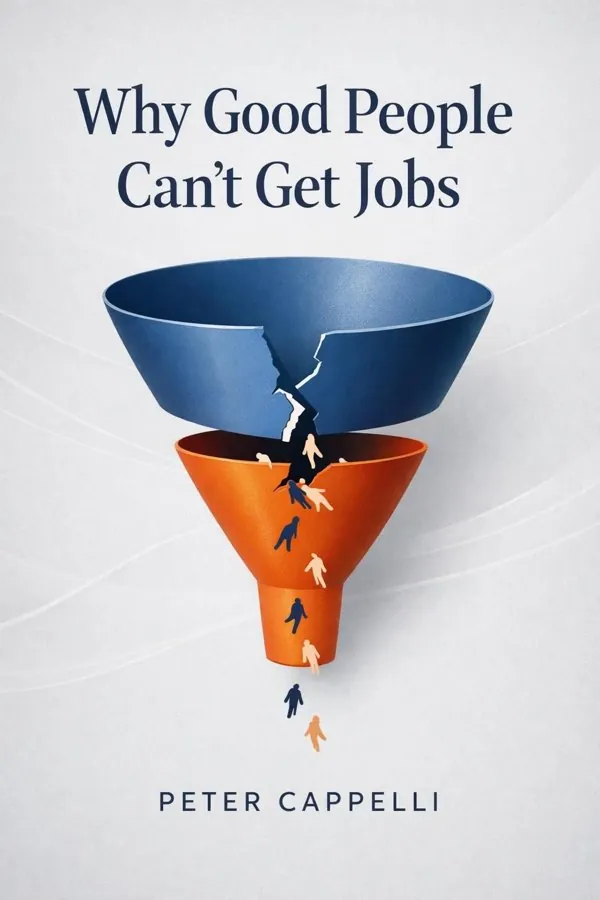
Why Good People Can't Get Jobs: The Skills Gap and What Companies Can Do About It: Summary & Key Insights
 10 min7 chaptersAudio available
What Is Why Good People Can't Get Jobs: The Skills Gap and What Companies Can Do About It About?
Why Good People Can't Get Jobs: The Skills Gap and What Companies Can Do About It by Peter Cappelli is a career book spanning 7 pages. In this book, Peter Cappelli, a professor at the Wharton School, examines the so-called 'skills gap' and argues that the real problem lies not with job seekers but with employers. He explores how hiring practices, unrealistic expectations, and outdated recruitment systems prevent qualified candidates from getting jobs. Cappelli offers practical solutions for companies to rethink their hiring strategies and for policymakers to address employment challenges more effectively.
This FizzRead summary covers all 7 key chapters of Why Good People Can't Get Jobs: The Skills Gap and What Companies Can Do About It in approximately 10 minutes, distilling the most important ideas, arguments, and takeaways from Peter Cappelli's work. Also available as an audio summary and Key Quotes Podcast.
Why Good People Can't Get Jobs: The Skills Gap and What Companies Can Do About It
In this book, Peter Cappelli, a professor at the Wharton School, examines the so-called 'skills gap' and argues that the real problem lies not with job seekers but with employers. He explores how hiring practices, unrealistic expectations, and outdated recruitment systems prevent qualified candidates from getting jobs. Cappelli offers practical solutions for companies to rethink their hiring strategies and for policymakers to address employment challenges more effectively.
Who Should Read Why Good People Can't Get Jobs: The Skills Gap and What Companies Can Do About It?
This book is perfect for anyone interested in career and looking to gain actionable insights in a short read. Whether you're a student, professional, or lifelong learner, the key ideas from Why Good People Can't Get Jobs: The Skills Gap and What Companies Can Do About It by Peter Cappelli will help you think differently.
- ✓Readers who enjoy career and want practical takeaways
- ✓Professionals looking to apply new ideas to their work and life
- ✓Anyone who wants the core insights of Why Good People Can't Get Jobs: The Skills Gap and What Companies Can Do About It in just 10 minutes
Want the full summary?
Get instant access to this book summary and 100K+ more with Fizz Moment.
Get Free SummaryAvailable on App Store • Free to download
Key Chapters
To understand today’s hiring crisis, we must look to history. Post-World War II, the American employment model was built around long-term relationships between companies and employees. Firms didn’t expect new hires to be fully 'job-ready.' They invested in on-the-job training, apprenticeships, and internal development programs. The implicit bargain was clear: employers cultivated talent internally, and workers repaid that investment with loyalty.
By the 1980s and 1990s, however, shifts in competition, technology, and corporate governance had dismantled that model. Companies outsourced work, downsized, and cut training budgets. MBA programs and consultancies encouraged leaner organizations and just-in-time staffing models. 'Human resources' evolved from a developmental function into a gatekeeping system. Employers grew accustomed to expecting fully formed skills from the external market rather than nurturing them in-house.
This historical shift laid the groundwork for the so-called 'skills gap.' When training disappears but job requirements remain rigid—or even expand—companies inevitably confront shortages. Ironically, those shortages are of their own making. When I examined data over decades, I found that investment in training declined sharply across industries. Employers began to treat training costs as an unnecessary expense rather than a strategic asset. In effect, businesses stopped preparing their future workforce—and then complained that the workforce wasn’t prepared.
The idea that we face a national shortage of skilled workers sounds intuitive, but evidence consistently undermines it. Time and again, employers claim they can’t find 'qualified' candidates, yet wage data and job vacancy patterns tell another story. In a truly tight labor market—when skills are scarce—wages for those skills should rise. But across most sectors, wages have remained stagnant. This simple economic fact suggests that the 'scarcity' narrative is overstated.
When I interviewed HR executives and analyzed survey data, I found that many vacancies remained open not because no one was qualified, but because employers either set unrealistic requirements or refused to offer market-rate compensation. A manufacturing firm might post for an entry-level machinist but demand five years’ experience with niche software; an IT company might want a specialist in a programming language barely five years old yet insist on a decade’s experience. These expectations create artificial barriers. When employers cling to idealized candidate profiles rather than realistic ones, they effectively invent the 'skills gap.'
What we’re witnessing, therefore, isn’t a shortage of ability—it’s a mismatch between employer fantasy and labor-market reality. The myth persists because it externalizes blame. It’s easier for organizations to fault schools and job seekers than to rethink their own hiring models. But as this book demonstrates, blaming workers obscures the deeper structural issues that keep positions vacant.
+ 5 more chapters — available in the FizzRead app
All Chapters in Why Good People Can't Get Jobs: The Skills Gap and What Companies Can Do About It
About the Author
Peter Cappelli is the George W. Taylor Professor of Management at the Wharton School of the University of Pennsylvania and Director of Wharton’s Center for Human Resources. He is known for his research on employment relations, talent management, and workforce development.
Get This Summary in Your Preferred Format
Read or listen to the Why Good People Can't Get Jobs: The Skills Gap and What Companies Can Do About It summary by Peter Cappelli anytime, anywhere. FizzRead offers multiple formats so you can learn on your terms — all free.
Available formats: App · Audio · PDF · EPUB — All included free with FizzRead
Download Why Good People Can't Get Jobs: The Skills Gap and What Companies Can Do About It PDF and EPUB Summary
Key Quotes from Why Good People Can't Get Jobs: The Skills Gap and What Companies Can Do About It
“To understand today’s hiring crisis, we must look to history.”
“The idea that we face a national shortage of skilled workers sounds intuitive, but evidence consistently undermines it.”
Frequently Asked Questions about Why Good People Can't Get Jobs: The Skills Gap and What Companies Can Do About It
Why Good People Can't Get Jobs: The Skills Gap and What Companies Can Do About It by Peter Cappelli is a career book that explores key ideas across 7 chapters. In this book, Peter Cappelli, a professor at the Wharton School, examines the so-called 'skills gap' and argues that the real problem lies not with job seekers but with employers. He explores how hiring practices, unrealistic expectations, and outdated recruitment systems prevent qualified candidates from getting jobs. Cappelli offers practical solutions for companies to rethink their hiring strategies and for policymakers to address employment challenges more effectively.
More by Peter Cappelli


You Might Also Like

60 Seconds & You're Hired!
Robin Ryan
10 min
A New Way for Mothers: A Revolutionary Approach for Mothers to Use Their Skills and Talents While Their Children Are at School
Louise Webster
10 min
Betting on You: How to Put Yourself First and (Finally) Take Control of Your Career
Laurie Ruettimann
10 min
Born for This: How to Find the Work You Were Meant to Do
Chris Guillebeau
10 min
Brag Better: Master the Art of Fearless Self-Promotion
Meredith Fineman
10 min
Build for Tomorrow: An Action Plan for Embracing Change, Adapting Fast, and Future-Proofing Your Career
Jason Feifer
10 minBrowse by Category
Ready to read Why Good People Can't Get Jobs: The Skills Gap and What Companies Can Do About It?
Get the full summary and 100K+ more books with Fizz Moment.