
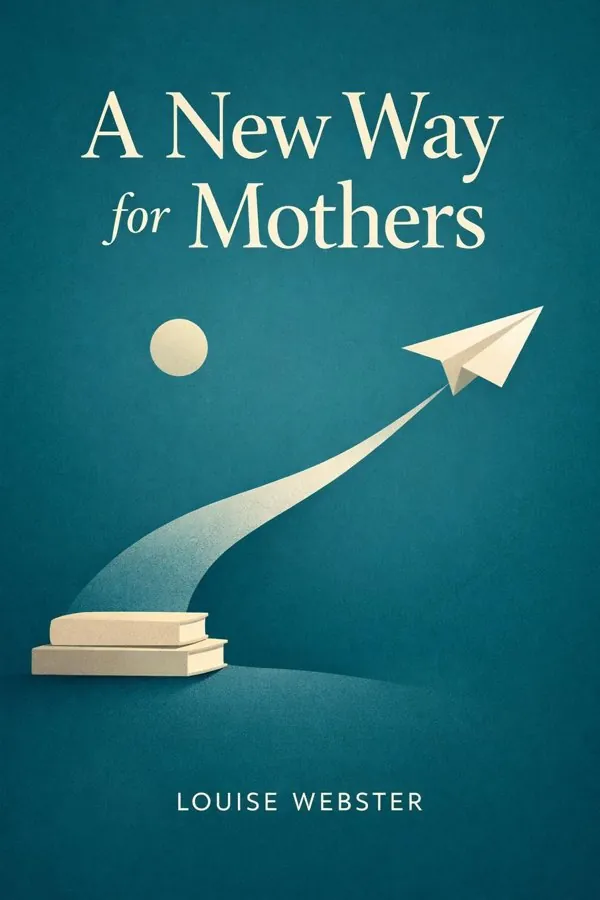
A New Way for Mothers: A Revolutionary Approach for Mothers to Use Their Skills and Talents While Their Children Are at School: Summary & Key Insights
 10 min9 chaptersAudio available
Key Takeaways from A New Way for Mothers: A Revolutionary Approach for Mothers to Use Their Skills and Talents While Their Children Are at School
One of the quietest crises in adult life is losing a version of yourself that no one else can see disappearing.
Clarity rarely arrives in the middle of constant busyness; it appears when you create space to listen to yourself again.
Ambition does not disappear when women become mothers; it often becomes more personal, more selective, and more meaningful.
Confidence rarely returns through waiting; it returns through evidence.
The best career plan for a mother is not the most prestigious one; it is the one that can survive a school calendar, sick days, and the unpredictability of family life.
What Is A New Way for Mothers: A Revolutionary Approach for Mothers to Use Their Skills and Talents While Their Children Are at School About?
A New Way for Mothers: A Revolutionary Approach for Mothers to Use Their Skills and Talents While Their Children Are at School by Louise Webster is a career book spanning 11 pages. A New Way for Mothers is a practical, encouraging guide for women who want to reconnect with their abilities, ambitions, and sense of identity after having children. Louise Webster addresses a reality many mothers quietly experience: motherhood can be deeply meaningful while also disrupting confidence, career direction, and personal purpose. Rather than treating this tension as a private failure, she reframes it as a structural and emotional challenge that can be thoughtfully solved. The book explores how mothers can use school hours, overlooked skills, and flexible working models to build work that fits family life without abandoning aspiration. Webster’s message is not that women must “have it all,” but that they can define success in a more realistic, personal, and sustainable way. Her authority comes from both lived experience and her work supporting mothers through Beyondtheschoolrun.com, where she has collected the stories, struggles, and breakthroughs of women trying to return to work or reinvent themselves. The result is a compassionate roadmap for mothers who want to contribute, earn, create, and grow while raising children.
This FizzRead summary covers all 9 key chapters of A New Way for Mothers: A Revolutionary Approach for Mothers to Use Their Skills and Talents While Their Children Are at School in approximately 10 minutes, distilling the most important ideas, arguments, and takeaways from Louise Webster's work. Also available as an audio summary and Key Quotes Podcast.
A New Way for Mothers: A Revolutionary Approach for Mothers to Use Their Skills and Talents While Their Children Are at School
A New Way for Mothers is a practical, encouraging guide for women who want to reconnect with their abilities, ambitions, and sense of identity after having children. Louise Webster addresses a reality many mothers quietly experience: motherhood can be deeply meaningful while also disrupting confidence, career direction, and personal purpose. Rather than treating this tension as a private failure, she reframes it as a structural and emotional challenge that can be thoughtfully solved. The book explores how mothers can use school hours, overlooked skills, and flexible working models to build work that fits family life without abandoning aspiration. Webster’s message is not that women must “have it all,” but that they can define success in a more realistic, personal, and sustainable way. Her authority comes from both lived experience and her work supporting mothers through Beyondtheschoolrun.com, where she has collected the stories, struggles, and breakthroughs of women trying to return to work or reinvent themselves. The result is a compassionate roadmap for mothers who want to contribute, earn, create, and grow while raising children.
Who Should Read A New Way for Mothers: A Revolutionary Approach for Mothers to Use Their Skills and Talents While Their Children Are at School?
This book is perfect for anyone interested in career and looking to gain actionable insights in a short read. Whether you're a student, professional, or lifelong learner, the key ideas from A New Way for Mothers: A Revolutionary Approach for Mothers to Use Their Skills and Talents While Their Children Are at School by Louise Webster will help you think differently.
- ✓Readers who enjoy career and want practical takeaways
- ✓Professionals looking to apply new ideas to their work and life
- ✓Anyone who wants the core insights of A New Way for Mothers: A Revolutionary Approach for Mothers to Use Their Skills and Talents While Their Children Are at School in just 10 minutes
Want the full summary?
Get instant access to this book summary and 100K+ more with Fizz Moment.
Get Free SummaryAvailable on App Store • Free to download
Key Chapters
One of the quietest crises in adult life is losing a version of yourself that no one else can see disappearing. Webster begins with the emotional dislocation many mothers feel after children arrive. The issue is not a lack of love for motherhood; it is the sudden compression of identity. A woman who was once known through her work, ideas, routines, and independence may find that her days are now organized around care, logistics, and the needs of others. Society often celebrates maternal devotion but gives less attention to the inner cost of becoming invisible to oneself.
Webster argues that this experience is widespread, not personal weakness. Many mothers feel guilty for wanting more than family life, as if ambition and love are incompatible. But the problem is not motherhood itself. It is the outdated assumption that women should either fully step back from work or force themselves into rigid professional structures that ignore family realities. This false choice leaves many women feeling stalled.
The book invites mothers to name what has changed. Perhaps confidence has dropped, professional networks have faded, or old goals no longer feel relevant. That honesty is powerful because it turns vague dissatisfaction into something workable. For example, a former marketing manager may realize she does not want her old corporate life back, but she does want stimulating work and financial agency. That insight opens new possibilities.
Actionable takeaway: Write down three parts of your pre-motherhood identity that you miss most, and then ask how each could be expressed in your life now in a new form.
Clarity rarely arrives in the middle of constant busyness; it appears when you create space to listen to yourself again. Webster emphasizes that rediscovery starts not with a grand reinvention but with attention. Mothers often become so focused on everyone else’s schedules and needs that they stop noticing their own interests, strengths, and values. The first step back toward fulfillment is remembering what energizes you.
This means looking beyond job titles. A woman may think she misses her old career, when what she actually misses is problem-solving, adult conversation, creativity, leadership, or the satisfaction of making progress. By identifying the underlying drivers, she can build a new path that fits her current life. Webster encourages mothers to review their experiences broadly: paid work, volunteer roles, hobbies, community activities, and informal family management all reveal transferable capabilities.
Practical methods include journaling about moments when you feel most engaged, listing skills others naturally seek from you, or reflecting on subjects you read about even when no one asks you to. Someone who once worked in finance but now organizes school events may discover she still loves planning and coordination. That could evolve into freelance project management, event consulting, or part-time operations work.
Rediscovery also involves permission. You do not need a perfect five-year plan before taking yourself seriously. Small experiments can restore momentum faster than endless thinking.
Actionable takeaway: Set aside one uninterrupted hour this week to list your values, favorite tasks, strongest skills, and interests, then circle the patterns that appear across all four lists.
Ambition does not disappear when women become mothers; it often becomes more personal, more selective, and more meaningful. Webster challenges the narrow definition of ambition as climbing a traditional ladder at maximum speed. For mothers, ambition may mean earning independently, doing intellectually engaging work, building something from home, contributing to society, or creating a career that leaves room for family presence. None of these goals is lesser. They are simply shaped by a different season of life.
This reframing matters because many women dismiss their own desires if they no longer match conventional ideas of success. A mother might think, “If I do not want a full-time executive role, maybe I am not ambitious anymore.” Webster argues the opposite: choosing a life-aligned form of work can require more courage and creativity than following an established path. It asks women to design instead of inherit.
Examples include a lawyer who transitions into consultancy during school hours, a former teacher who develops online resources, or a corporate professional who launches a niche service for local businesses. These paths may look modest from the outside but feel deeply successful because they integrate purpose, flexibility, and family priorities.
The key is to define success according to what matters now: income, autonomy, flexibility, creative expression, impact, or room to grow later. Ambition becomes sustainable when it reflects real life rather than social comparison.
Actionable takeaway: Write your own definition of success in one sentence using the words that matter most to you now, not the words you used before becoming a mother.
Confidence rarely returns through waiting; it returns through evidence. Webster recognizes that many mothers feel less capable after time away from formal work. Their skills may still be intact, but self-belief has weakened through interrupted careers, reduced professional validation, and the relentless comparison that can come with modern parenting culture. The answer is not to magically feel ready before acting. It is to act in ways that generate proof.
She encourages mothers to begin with manageable steps. Update a CV. Contact one former colleague. Take a short course. Offer a skill to a local group. Complete a small paid project. Each action contradicts the story that you are no longer relevant. Confidence grows when you can point to recent examples of competence.
Webster also reminds readers that motherhood itself develops valuable strengths: negotiation, emotional intelligence, prioritization, crisis management, adaptability, and resilience. These are not sentimental add-ons. They are serious capabilities. A mother who coordinates family schedules, manages school communications, and solves daily disruptions is practicing organization under pressure. The challenge is learning to name those abilities in professional language.
A practical example is someone returning after years at home who starts by doing social media for a friend’s business. The project may be small, but it helps rebuild rhythm, create a portfolio, and re-establish professional identity. Momentum matters more than scale in the early stages.
Actionable takeaway: Choose one low-risk action you can complete within seven days that creates visible proof of your ability, such as finishing a profile, course module, or sample project.
The best career plan for a mother is not the most prestigious one; it is the one that can survive a school calendar, sick days, and the unpredictability of family life. Webster makes flexibility central to her approach. Instead of asking mothers to squeeze themselves back into rigid work structures, she encourages them to build roles, businesses, or working patterns that reflect their actual constraints and capacities.
This can mean part-time employment, freelancing, consulting, portfolio careers, remote work, term-time contracts, or entrepreneurship. The goal is not simply convenience. It is sustainability. Too many women return to work in ways that look successful on paper but create constant stress, guilt, and exhaustion. Webster argues that long-term fulfillment comes from designing work with honesty.
To do this, mothers need to map the practical realities of their week. How many school-hour hours are reliably available? What childcare backup exists? What income is needed immediately, and what growth can happen gradually? A realistic plan might involve three mornings of client work, one afternoon for admin, and protected time for family logistics. Another mother might start with a service business that can grow later into digital products or training.
Flexibility does not mean a lack of seriousness. It means strategic alignment between professional goals and family structure. Careers built this way may grow more slowly, but they are often more resilient because they are rooted in lived reality.
Actionable takeaway: Sketch your ideal working week based on the hours, energy, and responsibilities you actually have, then identify one career option that fits that structure.
Opportunities often come through people before they come through plans. Webster highlights that many mothers trying to re-enter work feel isolated, disconnected from professional circles, and unsure where to begin. Networking can sound intimidating, especially after time away, but she reframes it as relationship-building rather than self-promotion. The aim is to reconnect, learn, and become visible again.
Mothers already move through communities with hidden professional potential: school gates, local groups, online forums, alumni circles, former workplaces, and neighborhood businesses. These spaces can lead to partnerships, referrals, freelance work, mentoring, and encouragement. A casual conversation with another parent might uncover a need for bookkeeping, copywriting, design, tutoring, coaching, or project support. The key is to speak about your interests and skills clearly enough that others understand how you can help.
Collaboration is especially valuable because it lowers the burden of starting alone. Two mothers might share a service, trade expertise, or refer clients to each other. A returning professional can also seek informational conversations, not just jobs. Asking others how they built flexible careers often produces practical ideas and emotional reassurance.
Webster suggests that community also protects confidence. Being around women who are actively rebuilding careers normalizes the process and reduces shame. Progress feels more possible when you see peers doing it imperfectly but successfully.
Actionable takeaway: Reach out to three people this week, one former colleague, one local contact, and one new connection, and tell them specifically what kind of work or opportunities you are exploring.
For mothers, the problem is not usually a lack of motivation; it is a constant collision between finite hours and competing demands. Webster treats productivity not as doing more, but as using limited time with intention. School hours can seem like an expansive window until errands, household labor, emotional admin, and interruptions consume them. Without clear boundaries, meaningful work never gets enough protected attention.
She encourages mothers to distinguish between urgent tasks and important ones. Folding laundry may feel immediate, but building a client proposal, attending a course, or contacting a potential employer may matter more for long-term fulfillment. This requires discipline and self-respect. If every available hour is surrendered to domestic maintenance, career progress remains permanently postponed.
Practical strategies include batching similar tasks, planning the week around energy peaks, using short focused work sessions, and assigning home responsibilities more deliberately across the family. Webster also emphasizes that boundaries are psychological. Mothers may feel guilty prioritizing work during school hours, even when children are cared for and safe. Letting work matter is part of the transformation.
An example is setting Monday and Wednesday mornings as untouchable work blocks, keeping errands for one afternoon, and using a shared family calendar to reduce last-minute chaos. Even a modest structure can dramatically increase output and calm.
Actionable takeaway: Protect two recurring work blocks in your weekly schedule and treat them with the same seriousness as any school appointment or family commitment.
Balance is often described as a static state, but for mothers it is better understood as ongoing negotiation. Webster does not promise perfect harmony between work and family. Instead, she offers a more realistic idea: integration with intention. The question is not how to avoid all tension, but how to create a family life in which a mother’s aspirations are visible, respected, and workable.
This requires communication. Partners, children, and extended family may unconsciously assume that a mother’s work is optional or secondary, especially if it begins small or from home. Webster argues that mothers need to speak clearly about what they are building, why it matters, and what support is required. When a family understands that work is not a hobby squeezed into spare moments but a meaningful part of identity and contribution, expectations can shift.
Integration also means accepting imperfection. Some days family will dominate; other days work will need priority. The goal is not equal time but aligned choices. Children can benefit from seeing a mother use her talents, pursue goals, and contribute beyond caregiving. This models agency, commitment, and self-worth.
Real-life examples in the book show mothers creating arrangements that evolve over time: starting with school-hour projects, expanding when children become more independent, or adjusting during demanding family periods without abandoning long-term goals. Progress can be cyclical and still be valid.
Actionable takeaway: Have one explicit conversation with your household about your work goals, the time they require, and the specific practical support that would make them easier to sustain.
The most meaningful career change is not the one that looks impressive in the first month, but the one that remains nourishing over the years. Webster closes with a long-term view. Mothers often begin with urgency, wanting immediate clarity or quick proof that they have not fallen behind. But a fulfilling working life after children is usually built incrementally. It develops through experiments, revisions, and periods of growth that match family life stages.
This is where support systems matter. Webster points to the role of encouraging peers, mentors, practical childcare help, and communities of mothers who understand both the ambition and the constraints. No one sustains change entirely alone. Real-life case studies show that progress often comes through persistence rather than dramatic breakthroughs: one contact leads to one project, which becomes a service, which becomes a business or a new professional identity.
Sustainability also depends on internal measures of success. If mothers judge themselves only against uninterrupted career trajectories, they will always feel late. Webster invites them to measure growth by alignment, confidence, contribution, financial independence, and the sense of using their abilities well. Fulfillment is not a reward given at the end of a flawless plan; it is something built through repeated choices that honor both self and family.
Actionable takeaway: Choose one 12-month goal that feels meaningful and realistic, then break it into quarterly milestones so progress becomes visible, adaptable, and easier to maintain.
All Chapters in A New Way for Mothers: A Revolutionary Approach for Mothers to Use Their Skills and Talents While Their Children Are at School
About the Author
Louise Webster is a British entrepreneur, writer, and speaker focused on helping mothers reconnect with their skills, confidence, and ambitions after having children. She is the founder of Beyondtheschoolrun.com, a platform created to support women who want to build flexible, meaningful careers during their children’s school years. Drawing on her own experiences as a mother as well as conversations with many women navigating similar transitions, Webster has become a thoughtful voice on the relationship between motherhood, identity, and modern work. Her work challenges the outdated assumption that maternal devotion and professional fulfillment are in conflict. Instead, she advocates for a more realistic and empowering model in which mothers can contribute, earn, create, and grow in ways that fit family life while honoring their talents.
Get This Summary in Your Preferred Format
Read or listen to the A New Way for Mothers: A Revolutionary Approach for Mothers to Use Their Skills and Talents While Their Children Are at School summary by Louise Webster anytime, anywhere. FizzRead offers multiple formats so you can learn on your terms — all free.
Available formats: App · Audio · PDF · EPUB — All included free with FizzRead
Download A New Way for Mothers: A Revolutionary Approach for Mothers to Use Their Skills and Talents While Their Children Are at School PDF and EPUB Summary
Key Quotes from A New Way for Mothers: A Revolutionary Approach for Mothers to Use Their Skills and Talents While Their Children Are at School
“One of the quietest crises in adult life is losing a version of yourself that no one else can see disappearing.”
“Clarity rarely arrives in the middle of constant busyness; it appears when you create space to listen to yourself again.”
“Ambition does not disappear when women become mothers; it often becomes more personal, more selective, and more meaningful.”
“Confidence rarely returns through waiting; it returns through evidence.”
“The best career plan for a mother is not the most prestigious one; it is the one that can survive a school calendar, sick days, and the unpredictability of family life.”
Frequently Asked Questions about A New Way for Mothers: A Revolutionary Approach for Mothers to Use Their Skills and Talents While Their Children Are at School
A New Way for Mothers: A Revolutionary Approach for Mothers to Use Their Skills and Talents While Their Children Are at School by Louise Webster is a career book that explores key ideas across 9 chapters. A New Way for Mothers is a practical, encouraging guide for women who want to reconnect with their abilities, ambitions, and sense of identity after having children. Louise Webster addresses a reality many mothers quietly experience: motherhood can be deeply meaningful while also disrupting confidence, career direction, and personal purpose. Rather than treating this tension as a private failure, she reframes it as a structural and emotional challenge that can be thoughtfully solved. The book explores how mothers can use school hours, overlooked skills, and flexible working models to build work that fits family life without abandoning aspiration. Webster’s message is not that women must “have it all,” but that they can define success in a more realistic, personal, and sustainable way. Her authority comes from both lived experience and her work supporting mothers through Beyondtheschoolrun.com, where she has collected the stories, struggles, and breakthroughs of women trying to return to work or reinvent themselves. The result is a compassionate roadmap for mothers who want to contribute, earn, create, and grow while raising children.
You Might Also Like
60 Seconds & You're Hired!
Robin Ryan
10 min
Betting on You: How to Put Yourself First and (Finally) Take Control of Your Career
Laurie Ruettimann
10 min
Born for This: How to Find the Work You Were Meant to Do
Chris Guillebeau
10 min
Brag Better: Master the Art of Fearless Self-Promotion
Meredith Fineman
10 min
Build for Tomorrow: An Action Plan for Embracing Change, Adapting Fast, and Future-Proofing Your Career
Jason Feifer
10 min
Career Fear (And How to Beat It): Get the Perspective, Mindset and Skills You Need to Futureproof Your Work Life
Nicholas Wyman
10 minFeatured In
Browse by Category
Ready to read A New Way for Mothers: A Revolutionary Approach for Mothers to Use Their Skills and Talents While Their Children Are at School?
Get the full summary and 100K+ more books with Fizz Moment.