
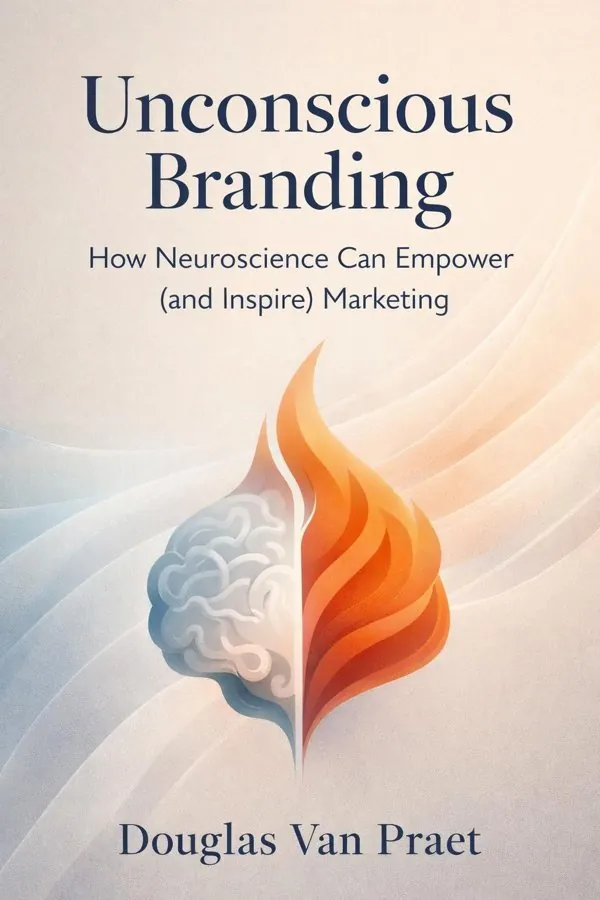
Unconscious Branding: How Neuroscience Can Empower (and Inspire) Marketing: Summary & Key Insights
 10 min11 chaptersAudio available
What Is Unconscious Branding: How Neuroscience Can Empower (and Inspire) Marketing About?
Unconscious Branding: How Neuroscience Can Empower (and Inspire) Marketing by Douglas Van Praet is a marketing book spanning 11 pages. Unconscious Branding explores how insights from neuroscience and behavioral psychology can transform marketing by appealing to consumers’ subconscious motivations. Douglas Van Praet argues that effective branding taps into instinctive emotional triggers rather than rational persuasion, offering a seven-step process for creating campaigns that resonate deeply with audiences.
This FizzRead summary covers all 11 key chapters of Unconscious Branding: How Neuroscience Can Empower (and Inspire) Marketing in approximately 10 minutes, distilling the most important ideas, arguments, and takeaways from Douglas Van Praet's work. Also available as an audio summary and Key Quotes Podcast.
Unconscious Branding: How Neuroscience Can Empower (and Inspire) Marketing
Unconscious Branding explores how insights from neuroscience and behavioral psychology can transform marketing by appealing to consumers’ subconscious motivations. Douglas Van Praet argues that effective branding taps into instinctive emotional triggers rather than rational persuasion, offering a seven-step process for creating campaigns that resonate deeply with audiences.
Who Should Read Unconscious Branding: How Neuroscience Can Empower (and Inspire) Marketing?
This book is perfect for anyone interested in marketing and looking to gain actionable insights in a short read. Whether you're a student, professional, or lifelong learner, the key ideas from Unconscious Branding: How Neuroscience Can Empower (and Inspire) Marketing by Douglas Van Praet will help you think differently.
- ✓Readers who enjoy marketing and want practical takeaways
- ✓Professionals looking to apply new ideas to their work and life
- ✓Anyone who wants the core insights of Unconscious Branding: How Neuroscience Can Empower (and Inspire) Marketing in just 10 minutes
Want the full summary?
Get instant access to this book summary and 100K+ more with Fizz Moment.
Get Free SummaryAvailable on App Store • Free to download
Key Chapters
For decades, marketing has thrived on a mechanical assumption: convince people with logic, and they’ll buy. Show the advantages of your product, list its benefits, and the rational consumer will make the rational choice. The problem is, neuroscience tells us that this model is wrong.
Consumers rarely process advertisements as cognitive arguments. They respond emotionally. They feel something first, and only afterward do they justify it rationally. As I discovered through research and campaigns at Deutsch LA, data-driven persuasion often fails because the human brain simply isn’t wired to make decisions that way. We make decisions emotionally and defend them logically.
Traditional marketing also assumes an outdated model of attention—that people willingly absorb incoming messages. But attention must be earned, not imposed. In a media-saturated world, our instinct is to tune out anything that feels intrusive or insincere. This is precisely where unconscious branding offers a solution: by connecting on a subconscious level, brands can bypass resistance and spark genuine curiosity.
This is more than theory—it’s confirmed by behavioral studies showing that decision-making happens milliseconds before rational awareness catches up. The cortex arrives late to the party; the limbic brain calls the shots. This means that the most effective campaigns are not the ones that explain but those that evoke. They activate emotional circuits that make people feel good about choosing, belonging, and trusting.
When marketers ignore this truth, they end up producing ads that sound clever but feel cold. When they embrace it, they create experiences that resonate at the deepest levels of the human psyche.
To reshape marketing, we must first understand the architecture of the mind. The discovery that emotion precedes reason comes from decades of cognitive science and behavioral neuroscience. Studies of the limbic system—the emotional core of the brain—show that it governs decision-making more powerfully than the neocortex.
Our brains evolved to react to the world emotionally first, cognitively second. This hierarchy means that advertisers who appeal primarily to the rational mind are targeting the wrong gatekeeper. By contrast, campaigns that engage feelings simultaneously activate neural pathways associated with memory and trust.
Neuroscientists like Antonio Damasio and Joseph LeDoux have demonstrated that without emotion, we cannot make meaning. Emotion provides the signal that tells us what matters. It gives weight to our perceptions. When marketers speak to emotion, they’re not bypassing reason—they’re building the emotional foundation upon which reason operates.
This isn’t manipulation; it’s alignment. The subconscious mind craves coherence between internal emotional states and external messages. When a brand evokes familiar neural patterns—joy, safety, belonging—the brain accepts those messages as congruent. That sense of congruence is what we call trust.
From this neurological reality I developed the seven steps of unconscious branding, each born from how the mind actually processes new information and integrates it into behavior.
+ 9 more chapters — available in the FizzRead app
All Chapters in Unconscious Branding: How Neuroscience Can Empower (and Inspire) Marketing
About the Author
Douglas Van Praet is a marketing strategist and former executive at Deutsch LA, known for his work on major advertising campaigns such as Volkswagen’s ‘The Force’. He specializes in applying neuroscience and behavioral science to marketing and brand strategy.
Get This Summary in Your Preferred Format
Read or listen to the Unconscious Branding: How Neuroscience Can Empower (and Inspire) Marketing summary by Douglas Van Praet anytime, anywhere. FizzRead offers multiple formats so you can learn on your terms — all free.
Available formats: App · Audio · PDF · EPUB — All included free with FizzRead
Download Unconscious Branding: How Neuroscience Can Empower (and Inspire) Marketing PDF and EPUB Summary
Key Quotes from Unconscious Branding: How Neuroscience Can Empower (and Inspire) Marketing
“For decades, marketing has thrived on a mechanical assumption: convince people with logic, and they’ll buy.”
“To reshape marketing, we must first understand the architecture of the mind.”
Frequently Asked Questions about Unconscious Branding: How Neuroscience Can Empower (and Inspire) Marketing
Unconscious Branding: How Neuroscience Can Empower (and Inspire) Marketing by Douglas Van Praet is a marketing book that explores key ideas across 11 chapters. Unconscious Branding explores how insights from neuroscience and behavioral psychology can transform marketing by appealing to consumers’ subconscious motivations. Douglas Van Praet argues that effective branding taps into instinctive emotional triggers rather than rational persuasion, offering a seven-step process for creating campaigns that resonate deeply with audiences.
You Might Also Like
Captivology: The Science of Capturing People's Attention
Ben Parr
10 min
Marketing 5.0: Technology for Humanity
Philip Kotler, Hermawan Kartajaya, Iwan Setiawan
10 min
Marketing Strategy
Paul Fifield
10 min
UnMarketing: Stop Marketing. Start Engaging.
Scott Stratten
10 min
$100M Leads: How to Get Strangers to Want to Buy Your Stuff
Alex Hormozi
10 min
80/20 Sales and Marketing: The Definitive Guide to Working Less and Making More
Perry Marshall
10 minBrowse by Category
Ready to read Unconscious Branding: How Neuroscience Can Empower (and Inspire) Marketing?
Get the full summary and 100K+ more books with Fizz Moment.