
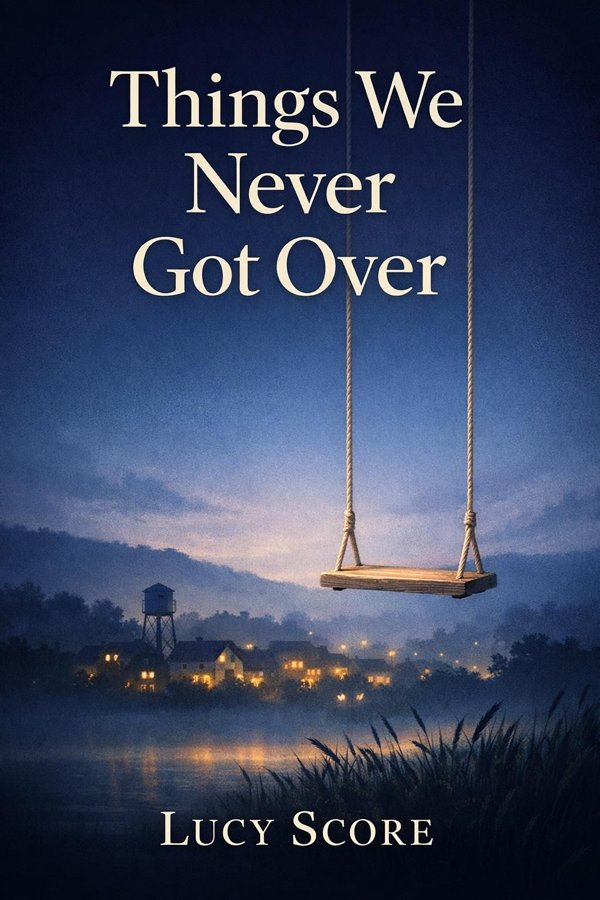
Things We Never Got Over: Summary & Key Insights
by Lucy Score
 10 min8 chaptersAudio available
Key Takeaways from Things We Never Got Over
Sometimes the moment that looks like failure is actually the beginning of a truer life.
The people who seem least interested in love are often the ones most frightened by what it demands.
Family is not only about blood; it is about who stays, who protects, and who chooses responsibility when it would be easier to leave.
We do not heal by pretending we are fine; we heal by facing what keeps repeating.
In a small town, privacy shrinks and connection expands.
What Is Things We Never Got Over About?
Things We Never Got Over by Lucy Score is a romantic_relationships book spanning 4 pages. What happens when the life you carefully planned collapses in a single day? In Things We Never Got Over, Lucy Score turns that question into a deeply satisfying small-town romance about reinvention, responsibility, and the terrifying hope of starting over. Naomi Witt arrives in Knockemout, Virginia, after fleeing her own wedding, expecting to rescue her troubled twin sister. Instead, she is robbed, stranded, and suddenly left to care for her niece, Waylay—a child she never knew existed. At the same time, she crashes into the life of Knox Morgan, a gruff barber with no interest in drama, commitment, or emotional complications. What follows is more than a romance. It is a story about learning the difference between rescuing others and respecting yourself, about found family, and about how love often asks people to confront the very wounds they have spent years avoiding. Score is especially skilled at blending sharp humor, tender emotional beats, and addictive chemistry, which is why she has become a standout voice in contemporary romance. This novel matters because beneath its banter and heat, it offers a moving portrait of healing: messy, inconvenient, and absolutely worth it.
This FizzRead summary covers all 8 key chapters of Things We Never Got Over in approximately 10 minutes, distilling the most important ideas, arguments, and takeaways from Lucy Score's work. Also available as an audio summary and Key Quotes Podcast.
Things We Never Got Over
What happens when the life you carefully planned collapses in a single day? In Things We Never Got Over, Lucy Score turns that question into a deeply satisfying small-town romance about reinvention, responsibility, and the terrifying hope of starting over. Naomi Witt arrives in Knockemout, Virginia, after fleeing her own wedding, expecting to rescue her troubled twin sister. Instead, she is robbed, stranded, and suddenly left to care for her niece, Waylay—a child she never knew existed. At the same time, she crashes into the life of Knox Morgan, a gruff barber with no interest in drama, commitment, or emotional complications.
What follows is more than a romance. It is a story about learning the difference between rescuing others and respecting yourself, about found family, and about how love often asks people to confront the very wounds they have spent years avoiding. Score is especially skilled at blending sharp humor, tender emotional beats, and addictive chemistry, which is why she has become a standout voice in contemporary romance. This novel matters because beneath its banter and heat, it offers a moving portrait of healing: messy, inconvenient, and absolutely worth it.
Who Should Read Things We Never Got Over?
This book is perfect for anyone interested in romantic_relationships and looking to gain actionable insights in a short read. Whether you're a student, professional, or lifelong learner, the key ideas from Things We Never Got Over by Lucy Score will help you think differently.
- ✓Readers who enjoy romantic_relationships and want practical takeaways
- ✓Professionals looking to apply new ideas to their work and life
- ✓Anyone who wants the core insights of Things We Never Got Over in just 10 minutes
Want the full summary?
Get instant access to this book summary and 100K+ more with Fizz Moment.
Get Free SummaryAvailable on App Store • Free to download
Key Chapters
Sometimes the moment that looks like failure is actually the beginning of a truer life. Naomi Witt’s decision to flee her wedding is not just a dramatic opening scene; it is the novel’s first major statement about self-betrayal and courage. On paper, Naomi has been doing what many people are taught to do: keep the peace, stay pleasant, make things work, and avoid disappointing others. Leaving her wedding destroys that script. It forces her to admit that a life built on performance cannot sustain genuine happiness.
When Naomi heads to Knockemout to help her estranged twin, she imagines she is stepping into a temporary crisis. Instead, she walks into a complete identity reset. Her money is stolen, her expectations collapse, and she is thrust into responsibilities she never asked for. Lucy Score uses this whirlwind beginning to show how quickly certainty can evaporate—and how revealing that can be. Once Naomi loses the polished version of herself, readers begin to see who she really is: resilient, compassionate, funny, and far stronger than she has been allowed to believe.
This idea resonates beyond fiction. Many people stay in jobs, relationships, or routines long after they know something is wrong because changing course feels embarrassing or selfish. Naomi’s story reminds us that walking away from the wrong future is not weakness. It is often the first honest decision.
A practical way to apply this insight is to notice where you are living for approval rather than alignment. Ask yourself: if fear of judgment disappeared, what would I stop pretending to want? That question can clarify where change is overdue.
Actionable takeaway: Treat disrupted plans as information, not proof that you failed.
The people who seem least interested in love are often the ones most frightened by what it demands. Knox Morgan enters the story as the archetypal gruff loner: blunt, reliable, physically capable, and deeply allergic to drama. He likes simplicity, avoids emotional entanglement, and has built a life around control. Yet Lucy Score makes him more than a fantasy of toughness. Knox’s resistance to intimacy is not cruelty for its own sake; it is self-protection shaped by experience, responsibility, and old wounds.
Knox helps people constantly. He shows up for his town, his family, and emergencies without hesitation. But emotional vulnerability is another matter. He can repair a problem, offer practical support, or step in during a crisis. What he struggles to do is admit need, articulate tenderness, or risk being changed by someone else. Naomi threatens the boundaries he depends on. She brings complication, emotion, and the possibility that caring deeply could cost him something.
This makes Knox compelling because his growth is not about becoming a different person. It is about understanding that strength without openness becomes isolation. Many readers will recognize this dynamic in real life. Some people become experts at being useful while remaining unreachable. They confuse distance with stability and competence with emotional health.
A practical application is to notice whether you tend to offer solutions instead of honesty. For example, someone might support friends financially or logistically but avoid saying, “I’m scared,” or “I need you too.” Knox’s journey shows that emotional maturity includes both dependability and vulnerability.
Actionable takeaway: If you pride yourself on being the strong one, practice one act of direct emotional honesty instead of hiding behind usefulness.
Family is not only about blood; it is about who stays, who protects, and who chooses responsibility when it would be easier to leave. Waylay, Naomi’s niece, transforms the novel from a straightforward romance into a richer story about caregiving, trust, and belonging. Naomi never expected to become responsible for a child, especially under chaotic circumstances. Yet Waylay forces her to move beyond survival and into commitment.
At first, the situation feels almost impossible. Naomi is emotionally overwhelmed, financially unstable, and trying to understand a smart, guarded child who has already been let down by adults. Waylay is not simply a plot device to make Naomi look nurturing. She is a fully meaningful presence in the story, representing both vulnerability and emotional truth. Children tend to expose what adults would rather avoid, and Waylay does exactly that. She reveals Naomi’s capacity for devotion, Knox’s hidden tenderness, and the deep hunger all three characters have for security.
Lucy Score uses their evolving bond to explore a powerful idea: loving someone well is less about grand declarations and more about repeated acts of consistency. Rides to school, hard conversations, meals, rules, comfort, patience—these ordinary gestures create trust. In real life, this applies to parenting, mentoring, friendship, and community care. People often imagine family as something fixed, but the novel argues that family is actively built through presence.
Readers can apply this insight by rethinking support in practical terms. If someone in your life needs stability, what repeated action could you offer? It might be a weekly check-in, childcare help, homework support, or simply keeping your promises.
Actionable takeaway: Measure love not only by intention, but by the reliability of your everyday actions.
We do not heal by pretending we are fine; we heal by facing what keeps repeating. One of the strongest threads in Things We Never Got Over is its insistence that growth is uncomfortable. Naomi and Knox are both tempted, in different ways, to avoid the deeper truths shaping their lives. Naomi overfunctions, smooths conflict, and tries to earn love through caretaking. Knox distances himself, sets hard limits, and treats emotional need as a threat. Their relationship works because it disrupts those patterns rather than reinforcing them.
The novel’s tension does not come only from external events. It comes from the way each character presses on the other’s unhealed places. Naomi wants safety but must learn boundaries. Knox wants control but must accept intimacy. Their attraction is intense, but attraction alone is not enough. Lucy Score repeatedly shows that for love to endure, both people have to confront the habits that once kept them safe but now keep them stuck.
This mirrors real emotional life. Conflict often reveals the hidden rules we live by: never ask for too much, never depend on anyone, never be difficult, never show weakness. Until those rules are challenged, people tend to recreate familiar pain in new settings. The novel suggests that the right relationship does not eliminate discomfort; it makes honest change possible.
A practical application is to examine your recurring conflicts. If the same issue appears across different relationships, the common thread may not be bad luck but an old coping strategy. Journaling after arguments or noting your strongest emotional triggers can reveal useful patterns.
Actionable takeaway: When conflict arises, ask not only “What happened?” but also “What old wound is this activating in me?”
In a small town, privacy shrinks and connection expands. Knockemout is not just a backdrop for romance; it is one of the book’s central forces. The town is nosy, lively, meddling, and unexpectedly supportive. Everyone seems to know everyone else’s business, which creates comedy, pressure, and a particular kind of emotional intensity. For Naomi, arriving in Knockemout means entering a place where reinvention is difficult because people are always watching. Yet it also means finding community in places she never expected.
Lucy Score uses the small-town setting to highlight a central tension: belonging can feel both comforting and invasive. In a highly connected environment, mistakes become public, but so do acts of kindness. Naomi cannot disappear into anonymity. Her struggles are noticed. So are her strengths. Knox, despite his desire for solitude, is deeply woven into the town’s fabric as well. His identity is shaped not only by his own preferences but by years of local expectations and relationships.
This idea matters because many readers experience some version of this dynamic, whether in a town, workplace, family network, or online community. Humans are shaped by social ecosystems. The places where people know our stories can expose us, but they can also hold us up when life falls apart.
A useful application is to consider the communities influencing your decisions. Are you surrounded by people who encourage your healthiest self, or by people who reward old habits? If your environment reinforces fear or performance, change becomes harder. If it supports honesty and accountability, growth becomes more possible.
Actionable takeaway: Choose communities that challenge you with care rather than keeping you trapped in old versions of yourself.
Laughter does not cancel suffering; it creates breathing room inside it. One reason Things We Never Got Over feels so absorbing is Lucy Score’s ability to balance emotional depth with humor. The book deals with abandonment, family betrayal, romantic fear, and the weight of responsibility. Yet it never becomes oppressively heavy because wit, banter, and absurd situations give both characters and readers space to recover.
This balance is especially visible in Naomi’s interactions with the townspeople and with Knox. Sharp dialogue allows attraction and emotional tension to build without every scene turning solemn. Humor becomes a sign of chemistry, but also of resilience. Characters joke because they are surviving. They tease because direct confession can feel too risky. The comedy makes the pain more believable, not less, because real people often do the same thing—using levity to navigate embarrassment, fear, or grief.
Importantly, the novel never treats humor as a substitute for emotional truth. It does not say, “If you can laugh, you must be fine.” Instead, it shows that joy and hurt can coexist. That is a valuable lesson for everyday life. In difficult seasons, people sometimes feel guilty for moments of lightness, as if laughter betrays the seriousness of what they are carrying. Score suggests the opposite: humor can be one of the tools that helps us keep going.
You can apply this insight by allowing room for lightness during stressful times. That might mean watching something funny after a hard day, sharing an inside joke with a friend, or refusing to let one painful situation define every hour.
Actionable takeaway: Use humor as emotional relief, but not as a way to avoid the conversations that truly matter.
Chemistry may start a romance, but trust is what makes it meaningful. Naomi and Knox have undeniable attraction from the beginning, and Lucy Score writes their tension with confidence and spark. But what gives the romance real staying power is not just physical pull. It is the gradual development of emotional safety—the sense that each person is being seen more fully than they expected, and still wanted.
This distinction matters because many love stories rely on intensity alone. Here, intensity is only the surface. Naomi is drawn to Knox’s steadiness beneath his rough edges. Knox is drawn to Naomi’s warmth, competence, and refusal to be as fragile as people assume. As they spend time together, acts of trust accumulate: showing up during crisis, protecting Waylay, speaking difficult truths, respecting vulnerabilities, and recognizing each other’s pain without exploiting it.
The novel quietly argues that desire is most powerful when paired with reliability. That idea has practical relevance beyond romance fiction. In any healthy relationship, attraction grows stronger when people feel secure enough to be honest. Grand gestures can be exciting, but trust is usually built through follow-through: calling when you say you will, apologizing sincerely, respecting boundaries, and being emotionally consistent.
Readers can use this insight to reflect on their own relationship standards. It is easy to confuse unpredictability with passion or emotional distance with mystery. Naomi and Knox show that being deeply wanted should not require feeling unsafe.
Actionable takeaway: When evaluating a relationship, ask not only “Is there chemistry?” but also “Do I feel respected, steady, and emotionally secure here?”
Kindness without boundaries often turns into self-erasure. Naomi’s biggest emotional challenge is not simply surviving chaos; it is learning that being generous does not require accepting mistreatment. Her history with her twin has trained her to absorb disappointment, clean up messes, and hope that love can be earned through endless patience. That instinct makes her compassionate, but it also leaves her vulnerable to manipulation.
Throughout the novel, Naomi must confront a painful truth: some relationships stay destructive because one person keeps confusing loyalty with surrender. This is especially important in stories centered on family, because cultural expectations often encourage people to tolerate harm in the name of unconditional love. Lucy Score does not suggest that caring for others is foolish. Rather, she shows that care without limits can become a trap.
Knox, despite his own flaws, often functions as a contrast here. He has no problem setting hard lines, though he sometimes does so too bluntly. Naomi gradually learns that healthy love requires both openness and discernment. Taking care of Waylay, protecting her own future, and deciding what she will no longer tolerate all become part of the same emotional education.
This lesson is highly practical. In everyday life, weak boundaries can show up as overcommitting, rescuing people from the consequences of their choices, tolerating repeated disrespect, or believing that saying no makes you selfish. In reality, boundaries clarify what is sustainable and what is not.
A simple application is to identify one draining relationship pattern and name a limit around it. That might mean refusing late-night crisis calls from someone who never changes, declining unreasonable demands, or requiring honesty before offering help.
Actionable takeaway: Protect your peace by defining what you will give freely and what you will no longer sacrifice.
All Chapters in Things We Never Got Over
About the Author
Lucy Score is an American contemporary romance author celebrated for her funny, heartfelt, and emotionally layered love stories. She has built a large readership through bestselling novels that often combine sharp banter, strong heroines, emotionally guarded heroes, and vivid small-town settings. Her work frequently explores themes such as second chances, found family, personal growth, and the courage required for real intimacy. Score first gained major attention in the indie romance world, where her accessible voice and satisfying storytelling made her a favorite among devoted romance readers. Over time, her books have reached a wider mainstream audience, with Things We Never Got Over becoming one of her most recognized titles. She is known for writing romances that are entertaining and swoony while still grounded in emotional truth.
Get This Summary in Your Preferred Format
Read or listen to the Things We Never Got Over summary by Lucy Score anytime, anywhere. FizzRead offers multiple formats so you can learn on your terms — all free.
Available formats: App · Audio · PDF · EPUB — All included free with FizzRead
Download Things We Never Got Over PDF and EPUB Summary
Key Quotes from Things We Never Got Over
“Sometimes the moment that looks like failure is actually the beginning of a truer life.”
“The people who seem least interested in love are often the ones most frightened by what it demands.”
“Family is not only about blood; it is about who stays, who protects, and who chooses responsibility when it would be easier to leave.”
“We do not heal by pretending we are fine; we heal by facing what keeps repeating.”
“In a small town, privacy shrinks and connection expands.”
Frequently Asked Questions about Things We Never Got Over
Things We Never Got Over by Lucy Score is a romantic_relationships book that explores key ideas across 8 chapters. What happens when the life you carefully planned collapses in a single day? In Things We Never Got Over, Lucy Score turns that question into a deeply satisfying small-town romance about reinvention, responsibility, and the terrifying hope of starting over. Naomi Witt arrives in Knockemout, Virginia, after fleeing her own wedding, expecting to rescue her troubled twin sister. Instead, she is robbed, stranded, and suddenly left to care for her niece, Waylay—a child she never knew existed. At the same time, she crashes into the life of Knox Morgan, a gruff barber with no interest in drama, commitment, or emotional complications. What follows is more than a romance. It is a story about learning the difference between rescuing others and respecting yourself, about found family, and about how love often asks people to confront the very wounds they have spent years avoiding. Score is especially skilled at blending sharp humor, tender emotional beats, and addictive chemistry, which is why she has become a standout voice in contemporary romance. This novel matters because beneath its banter and heat, it offers a moving portrait of healing: messy, inconvenient, and absolutely worth it.
You Might Also Like

Rebel
Beverly Jenkins
10 min
The Last Letter
Rebecca Yarros
10 min
A Thousand Boy Kisses
Tillie Cole
10 min
Aflame
Penelope Douglas
10 min
After The Bite
Lynsay Sands
10 min
Alchemised
SenLinYu
10 minBrowse by Category
Ready to read Things We Never Got Over?
Get the full summary and 100K+ more books with Fizz Moment.