
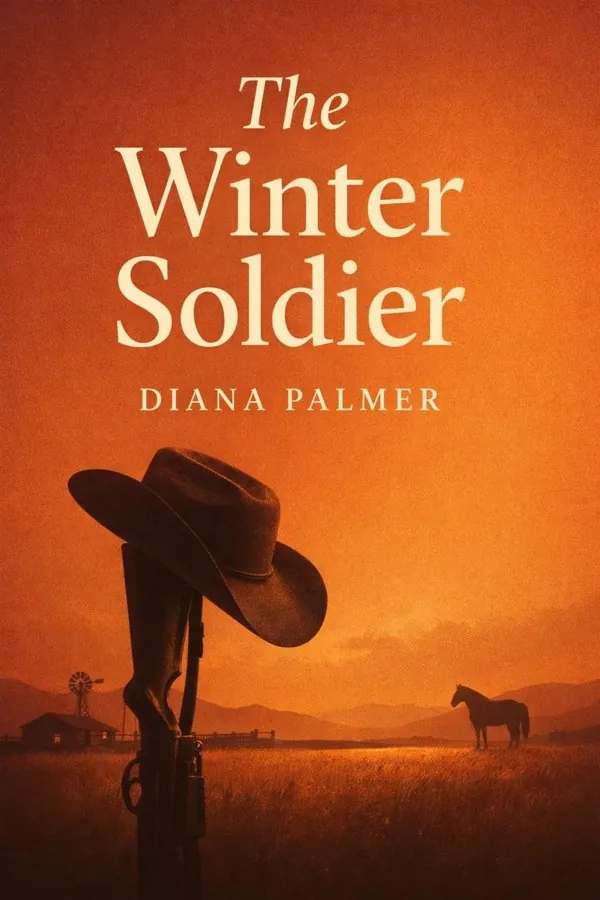
The Winter Soldier: Summary & Key Insights
by Diana Palmer
 10 min8 chaptersAudio available
Key Takeaways from The Winter Soldier
Coming home is often harder than leaving, because home is where memory waits.
The strongest people in a story are not always the loudest; often, they are the ones who keep showing up.
The most demanding courage is often invisible.
Healing rarely arrives all at once; more often, it comes like winter giving way to spring.
A second chance only works when it is not a repetition of the first attempt.
What Is The Winter Soldier About?
The Winter Soldier by Diana Palmer is a romantic_relationships book spanning 4 pages. The Winter Soldier by Diana Palmer is a romantic suspense novel that brings together war trauma, second chances, and the emotionally charged world of Texas ranch life. At the center of the story is Colt Winter, a decorated soldier who returns home carrying far more than medals. He comes back burdened by guilt, memory, and the unfinished business of a love he once left behind. Waiting in that familiar landscape is Marty Livingston, a compassionate doctor whose strength lies not in dramatic speeches but in her steady ability to care for others even while managing her own heartbreak. Their reunion becomes the emotional core of a story about whether love can survive time, distance, and emotional injury. What makes this novel matter is its blend of tenderness and tension: it is not only about romance, but about healing after conflict, rebuilding trust, and learning that courage is sometimes quiet. Diana Palmer brings authority to this terrain through her long career writing emotionally layered Western romances, especially stories featuring stoic heroes, resilient heroines, and communities where personal history runs deep.
This FizzRead summary covers all 8 key chapters of The Winter Soldier in approximately 10 minutes, distilling the most important ideas, arguments, and takeaways from Diana Palmer's work. Also available as an audio summary and Key Quotes Podcast.
The Winter Soldier
The Winter Soldier by Diana Palmer is a romantic suspense novel that brings together war trauma, second chances, and the emotionally charged world of Texas ranch life. At the center of the story is Colt Winter, a decorated soldier who returns home carrying far more than medals. He comes back burdened by guilt, memory, and the unfinished business of a love he once left behind. Waiting in that familiar landscape is Marty Livingston, a compassionate doctor whose strength lies not in dramatic speeches but in her steady ability to care for others even while managing her own heartbreak. Their reunion becomes the emotional core of a story about whether love can survive time, distance, and emotional injury. What makes this novel matter is its blend of tenderness and tension: it is not only about romance, but about healing after conflict, rebuilding trust, and learning that courage is sometimes quiet. Diana Palmer brings authority to this terrain through her long career writing emotionally layered Western romances, especially stories featuring stoic heroes, resilient heroines, and communities where personal history runs deep.
Who Should Read The Winter Soldier?
This book is perfect for anyone interested in romantic_relationships and looking to gain actionable insights in a short read. Whether you're a student, professional, or lifelong learner, the key ideas from The Winter Soldier by Diana Palmer will help you think differently.
- ✓Readers who enjoy romantic_relationships and want practical takeaways
- ✓Professionals looking to apply new ideas to their work and life
- ✓Anyone who wants the core insights of The Winter Soldier in just 10 minutes
Want the full summary?
Get instant access to this book summary and 100K+ more with Fizz Moment.
Get Free SummaryAvailable on App Store • Free to download
Key Chapters
Coming home is often harder than leaving, because home is where memory waits. In The Winter Soldier, Colt Winter’s return to Texas is not a triumphant ending but the beginning of a deeper confrontation. He has survived external conflict, yet the real battle starts when he steps back onto familiar land and realizes that everything he avoided still exists: old expectations, buried regret, and the woman he never truly forgot. Diana Palmer uses his homecoming to show that physical survival does not automatically restore emotional wholeness.
The ranch setting matters because it reflects Colt’s inner state. It is rugged, beautiful, and demanding, much like the work of rebuilding a damaged life. The silence around him is not peaceful at first; it is full of unspoken history. His return raises a central question: can a person resume an old life after being changed by violence and loss? Palmer’s answer is nuanced. The past cannot be erased, and home cannot remain frozen in time. Return is only meaningful when it leads to honesty.
This idea has practical resonance beyond fiction. Many people return from difficult seasons expecting familiarity to feel comforting, only to discover that they themselves have changed. A veteran returning from service, a professional coming back after burnout, or someone reentering family life after illness may all experience the same disorientation. The lesson is that reintegration requires patience, communication, and humility rather than the fantasy of simply picking up where things left off.
Colt’s journey reminds readers that the first act of healing is not escape but presence. He has to stay long enough to face what hurts. Actionable takeaway: when reentering a difficult chapter of your life, do not expect instant ease; name what has changed, accept discomfort, and begin rebuilding from truth rather than nostalgia.
The strongest people in a story are not always the loudest; often, they are the ones who keep showing up. Marty Livingston embodies that kind of strength in The Winter Soldier. As a doctor, she serves her community with discipline, compassion, and emotional control. She heals bodies, steadies nerves, and offers practical help in moments when others fall apart. Yet Palmer does not present her as invulnerable. Marty carries emotional wounds of her own, especially where Colt is concerned, and that complexity makes her far more compelling than a simple romantic ideal.
Marty’s importance lies in the way she balances tenderness with self-respect. She is capable of love, but she is not defined by waiting passively to be chosen. Her care for Colt emerges from empathy, not surrender. She understands pain professionally and personally, which allows her to see beyond his defenses. At the same time, she cannot do his healing for him. This distinction is crucial. Palmer shows that love can support recovery, but it cannot replace accountability or inner work.
In everyday life, Marty’s character offers a useful model for emotionally healthy caregiving. Many readers know what it feels like to support someone who is grieving, angry, shut down, or traumatized. The temptation is to overfunction, excuse harmful behavior, or believe enough patience will fix everything. Marty demonstrates a better path: remain kind, remain present, but do not abandon your own dignity.
Her role also broadens the novel’s emotional texture. She is not simply the reward awaiting the hero’s return; she is a moral and emotional force in her own right. She represents steadiness in a world shaped by instability. Actionable takeaway: if you are caring for someone in pain, lead with compassion but maintain clear boundaries, remembering that support is powerful only when it does not require self-erasure.
The most demanding courage is often invisible. The Winter Soldier explores this truth by contrasting public heroism with private vulnerability. Colt has proven himself in the field, where bravery is recognized, named, and honored. But back home, he faces a different kind of test: confessing weakness, revisiting old choices, and allowing himself to be seen without the armor of military identity. Diana Palmer suggests that valor in war and courage in love are related, but they are not the same.
This distinction gives the novel much of its emotional tension. A man who can act decisively under pressure may still struggle to express grief, ask for forgiveness, or trust another person with his fractured inner life. Palmer avoids reducing trauma to a single dramatic confession. Instead, she shows how conflict lingers in habits, silences, and emotional reflexes. Colt’s restlessness, reserve, and difficulty reconnecting are all signs that survival has a cost. Marty, in turn, must decide whether she can believe in the man beneath the guarded exterior.
The concept applies broadly. Many people are highly competent in public roles yet deeply uncomfortable with emotional exposure. A leader at work may avoid difficult conversations at home. A caregiver may manage crises brilliantly while neglecting personal needs. The novel reminds readers that strength without openness can become isolation.
Palmer also broadens the meaning of courage through Marty and the community around Colt. Their daily endurance, patience, and willingness to keep loving amid uncertainty are forms of bravery too. The story resists a narrow definition of heroism and invites readers to honor quieter acts of resilience.
Actionable takeaway: redefine courage in your own life by including emotional honesty, apology, and vulnerability alongside achievement and endurance; often the bravest thing you can do is let someone witness what you have been hiding.
Healing rarely arrives all at once; more often, it comes like winter giving way to spring. That sense of gradual thaw is central to The Winter Soldier. Colt and Marty do not simply reunite and instantly recover what was lost. Their path is marked by hesitation, memory, and the need to test whether old feelings can survive new realities. Palmer uses this slow movement to make redemption feel earned rather than sentimental.
Redemption in the novel is not a matter of grand declarations alone. It is built through repeated choices: staying instead of fleeing, listening instead of assuming, and facing pain instead of burying it. Colt must come to terms with the ways war and distance changed him. Marty must decide whether opening her heart again is wise or dangerous. Their healing depends not on forgetting the past, but on integrating it into a more honest future.
This is one of the book’s most practical emotional insights. In real relationships, repair usually happens through small, consistent acts rather than one dramatic moment. Trust grows when promises are kept, when communication improves, and when hurt is acknowledged without defensiveness. Someone rebuilding a marriage after estrangement, reconnecting with family after years apart, or recovering from emotional burnout will recognize this pattern. Progress can feel frustratingly slow, but slowness is often what makes it durable.
Palmer also links personal healing with place. The ranch, the routines of community life, and the constancy of work all provide grounding. Recovery is easier when it has structure. Love alone is transformative, but love supported by responsibility, purpose, and belonging becomes more sustainable.
Actionable takeaway: treat healing as a process of steady thaw rather than instant transformation; focus on consistent actions, honest conversations, and environments that support emotional safety.
A second chance only works when it is not a repetition of the first attempt. One of the strongest ideas in The Winter Soldier is that rekindled love cannot thrive on memory alone. Colt and Marty share a history, and that shared past gives their connection depth. But Palmer makes clear that nostalgia is not enough to carry them forward. If they are to build a future, they must meet each other as they are now, not as they once were.
This distinction is emotionally important. Many reunion romances rely on the fantasy that true love simply waits unchanged. Palmer takes a more mature approach. Time has altered both characters. Colt has been hardened by war and separated by experience. Marty has developed her own independence and emotional discipline. Their previous bond may create possibility, but only present-day honesty can create partnership.
The idea is useful in life because many people try to revive old relationships without acknowledging new realities. Former partners reconnect, adult siblings try to restore childhood closeness, or friends reunite after years apart. Problems arise when they assume affection alone will bridge the gap. Lasting reconnection requires curiosity. Who is this person now? What do they fear, value, and need? What expectations from the past no longer fit?
Palmer shows that second-chance love is powerful precisely because it includes choice. Marty is not obliged to welcome Colt simply because they once cared for each other. Colt is not entitled to the old relationship. They must create something more resilient than what existed before. That means humility, patience, and the willingness to let love evolve.
Actionable takeaway: if you are reviving an important relationship, stop trying to recreate the past; instead, ask fresh questions, set new expectations, and build connection around who both people are today.
Setting in romance is never just decoration; it tells us how people live, what they value, and what they are up against. In The Winter Soldier, Texas ranch life provides more than Western atmosphere. It shapes the emotional and moral world of the novel. The physical demands of the land, the close-knit nature of the community, and the expectation of self-reliance all intensify the choices Colt and Marty must make.
The ranch environment creates constant reminders that life is practical as well as emotional. Animals need care, land needs management, work does not stop because someone is grieving or conflicted. That pressure can harden people, but it can also clarify them. Palmer uses this world to show that love grows not in abstraction but amid duties, routines, and consequences. Feelings matter, but they must coexist with responsibility.
The setting also reinforces the novel’s themes of endurance and rootedness. A ranch is inherited history made visible. It carries memory across generations, which is why Colt’s return feels so charged. He is not entering neutral space; he is stepping into a place where identity, family, and belonging are woven into the land itself. For Marty, the local community adds another layer. Her work as a doctor is inseparable from trust and reputation, making every personal decision socially meaningful.
Readers can apply this insight by recognizing how much environment affects emotional life. Relationships do not exist outside context. Work stress, family expectations, financial pressures, and community ties all shape how people connect. A couple may love each other deeply yet struggle because their setting demands resilience they have not discussed.
Actionable takeaway: examine the environment around your key relationships; identify the routines, responsibilities, and outside pressures influencing connection, then talk openly about how to support each other within real-life conditions.
Trust is not restored by feeling alone; it is rebuilt by pattern. This principle runs quietly but powerfully through The Winter Soldier. Because Colt and Marty share a complicated past, affection by itself cannot resolve the tension between them. Whatever wounds, misunderstandings, or absences lie behind their separation, the emotional consequence is clear: trust must be earned again. Diana Palmer treats this process seriously, which gives the romance more credibility and emotional depth.
Colt’s challenge is not simply to declare that he cares. He must demonstrate reliability. He must show up, remain honest, and act in ways that make emotional safety possible. Marty’s challenge is different but equally difficult. She must discern whether his change is real without surrendering her judgment. Trust, then, becomes active on both sides: one person offers evidence, and the other remains open enough to receive it without naivete.
This is one of the most broadly useful ideas in the book. In any damaged relationship, people often seek one conversation that fixes everything. While honest dialogue matters, trust usually returns through repetition. A parent reconnects with an estranged child by consistently keeping commitments. A friend repairs hurt by changing behavior over time. A partner mends distance through transparency, follow-through, and respect for boundaries.
Palmer’s handling of trust also deepens the suspense element. Emotional uncertainty keeps readers asking not just whether love still exists, but whether it is safe to believe in it. That emotional question can feel as gripping as any external threat.
Actionable takeaway: when trying to repair trust, stop focusing on persuasive words alone; choose two or three consistent behaviors that signal reliability, then repeat them long enough for the other person to experience safety rather than merely hear promises.
Pride can protect dignity, but it can also imprison the heart. In The Winter Soldier, both Colt and Marty must navigate the tension between self-protection and emotional openness. Colt’s pride is tied to masculine stoicism, military conditioning, and the fear that vulnerability will expose weakness. Marty’s pride takes a different form: a rightful refusal to be hurt again, used, or emotionally overlooked. Palmer shows that neither form is entirely wrong, yet both become obstacles when left unexamined.
The emotional movement of the novel depends on softening without collapsing. Colt cannot reconnect with Marty if he remains hidden behind reserve and defensiveness. Marty cannot welcome the possibility of love if she lets past hurt harden into permanent distance. Their progress depends on surrendering the kind of pride that values being guarded more than being known.
This idea matters because many relationships fail not from lack of feeling but from excessive self-protection. People wait for the other person to make the first move, apologize imperfectly because they fear losing status, or avoid clarifying conversations because silence feels safer than rejection. Over time, pride masquerades as strength while quietly eroding intimacy.
Palmer’s insight is not that people should become emotionally reckless. Rather, she suggests that mature love requires selective surrender: the willingness to say what matters, to admit pain, and to risk being misunderstood for the sake of genuine connection. In that sense, humility is not humiliation. It is emotional courage in relational form.
Readers can apply this by noticing where they are defending themselves unnecessarily. Are you withholding affection to avoid appearing eager? Refusing an apology because hurt feels more powerful than hope? Waiting for perfect certainty before expressing what you need?
Actionable takeaway: identify one relationship where pride is blocking progress, then take one humble step this week, such as initiating a candid conversation, offering a sincere apology, or naming a feeling you usually hide.
All Chapters in The Winter Soldier
About the Author
Diana Palmer is an American bestselling author celebrated for her prolific work in romance fiction, especially Western romance and romantic suspense. Over the course of her career, she has written numerous novels featuring stoic, strong-willed heroes, intelligent heroines, and emotionally intense relationships shaped by longing, danger, and redemption. Her stories often unfold in ranching communities or small-town settings, where family legacy, pride, and personal history deepen the romantic stakes. Palmer has earned a loyal international readership thanks to her distinctive blend of tenderness, drama, and old-fashioned romantic tension. She is widely recognized as one of the enduring voices in contemporary popular romance, particularly for readers who enjoy rugged settings, wounded protagonists, and love stories that are hard-won rather than effortless.
Get This Summary in Your Preferred Format
Read or listen to the The Winter Soldier summary by Diana Palmer anytime, anywhere. FizzRead offers multiple formats so you can learn on your terms — all free.
Available formats: App · Audio · PDF · EPUB — All included free with FizzRead
Download The Winter Soldier PDF and EPUB Summary
Key Quotes from The Winter Soldier
“Coming home is often harder than leaving, because home is where memory waits.”
“The strongest people in a story are not always the loudest; often, they are the ones who keep showing up.”
“The most demanding courage is often invisible.”
“Healing rarely arrives all at once; more often, it comes like winter giving way to spring.”
“A second chance only works when it is not a repetition of the first attempt.”
Frequently Asked Questions about The Winter Soldier
The Winter Soldier by Diana Palmer is a romantic_relationships book that explores key ideas across 8 chapters. The Winter Soldier by Diana Palmer is a romantic suspense novel that brings together war trauma, second chances, and the emotionally charged world of Texas ranch life. At the center of the story is Colt Winter, a decorated soldier who returns home carrying far more than medals. He comes back burdened by guilt, memory, and the unfinished business of a love he once left behind. Waiting in that familiar landscape is Marty Livingston, a compassionate doctor whose strength lies not in dramatic speeches but in her steady ability to care for others even while managing her own heartbreak. Their reunion becomes the emotional core of a story about whether love can survive time, distance, and emotional injury. What makes this novel matter is its blend of tenderness and tension: it is not only about romance, but about healing after conflict, rebuilding trust, and learning that courage is sometimes quiet. Diana Palmer brings authority to this terrain through her long career writing emotionally layered Western romances, especially stories featuring stoic heroes, resilient heroines, and communities where personal history runs deep.
You Might Also Like

Rebel
Beverly Jenkins
10 min
The Last Letter
Rebecca Yarros
10 min
A Thousand Boy Kisses
Tillie Cole
10 min
Aflame
Penelope Douglas
10 min
After The Bite
Lynsay Sands
10 min
Alchemised
SenLinYu
10 minBrowse by Category
Ready to read The Winter Soldier?
Get the full summary and 100K+ more books with Fizz Moment.