
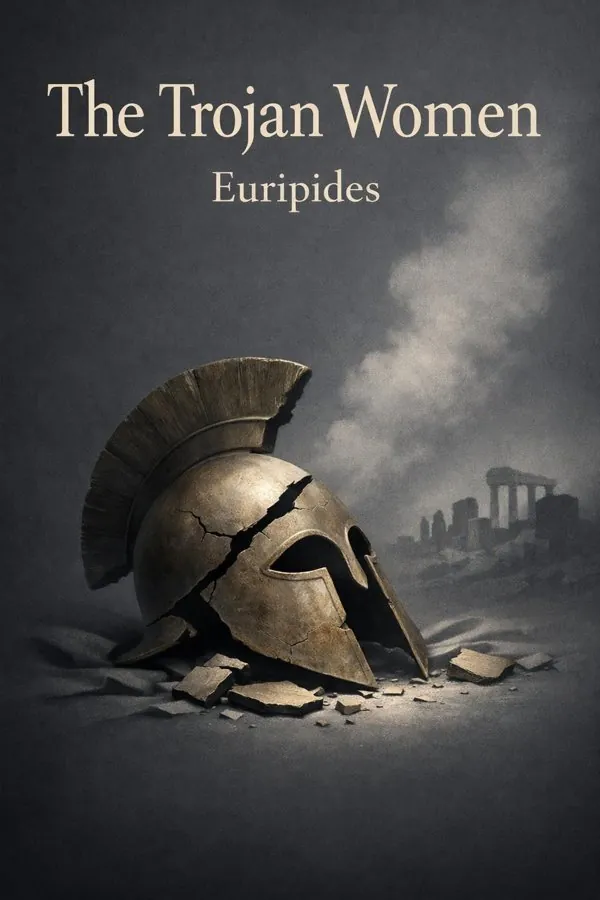
The Trojan Women: Summary & Key Insights
by Euripides
 10 min8 chaptersAudio available
What Is The Trojan Women About?
The Trojan Women by Euripides is a classics book spanning 8 pages. Euripides’ tragedy The Trojan Women, first performed in 415 BCE, unfolds in the aftermath of Troy’s destruction. The play centers on the fates of the city’s women—Hecuba, Cassandra, Andromache, and Helen—who face enslavement and despair at the hands of the victorious Greeks. Through their suffering, Euripides delivers a powerful denunciation of war’s brutality and the futility of vengeance, making it one of the most enduring anti-war works of classical literature.
This FizzRead summary covers all 8 key chapters of The Trojan Women in approximately 10 minutes, distilling the most important ideas, arguments, and takeaways from Euripides's work. Also available as an audio summary and Key Quotes Podcast.
The Trojan Women
Euripides’ tragedy The Trojan Women, first performed in 415 BCE, unfolds in the aftermath of Troy’s destruction. The play centers on the fates of the city’s women—Hecuba, Cassandra, Andromache, and Helen—who face enslavement and despair at the hands of the victorious Greeks. Through their suffering, Euripides delivers a powerful denunciation of war’s brutality and the futility of vengeance, making it one of the most enduring anti-war works of classical literature.
Who Should Read The Trojan Women?
This book is perfect for anyone interested in classics and looking to gain actionable insights in a short read. Whether you're a student, professional, or lifelong learner, the key ideas from The Trojan Women by Euripides will help you think differently.
- ✓Readers who enjoy classics and want practical takeaways
- ✓Professionals looking to apply new ideas to their work and life
- ✓Anyone who wants the core insights of The Trojan Women in just 10 minutes
Want the full summary?
Get instant access to this book summary and 100K+ more with Fizz Moment.
Get Free SummaryAvailable on App Store • Free to download
Key Chapters
The curtain rises not upon mortals but immortals. Poseidon stands amid the smoldering ruins of Troy, mourning the city whose ramparts he once built. In his speech lies both pity and reproach: though the Greeks have won, their sacrilege has doomed them. Athena arrives next, vowing vengeance for her own desecrated temple. Once allied with the Greeks, she now conspires with Poseidon to bring storms upon their returning fleet. In this divine exchange I wished to frame all human conflict within a moral cosmos—its boundaries defined not by strength but by reverence. Even the gods cannot endure human impiety. Their withdrawal from the mortal realm announces that the world has lost its balance. This is no celebratory prologue; it is the judgment of heaven over the arrogance of men.
When the divine voices fade, the human voice of Hecuba rises. Once queen of the proudest city in Asia, she now lies upon the ground, robed in rags. Through her enters the voice of endurance stripped of hope. Hecuba does not plead for reversal but articulates the bewilderment of one who has lost everything yet must still endure. Around her gather the chorus of Trojan women—widows, mothers, daughters—all awaiting their allotment as slaves. The rhythm of their lamentation mirrors the sound of dirges sung over Troy’s ashes.
In Hecuba I sought the measure of humanity not in actions but in speech. Her words begin as the collective grief of a destroyed people but gradually become philosophical: she asks what meaning remains to life when fate becomes relentless. Unlike the heroes of earlier tragedies who challenge the gods, Hecuba no longer believes in help from above. Yet her endurance transforms despair into a kind of moral witness: though broken, she embodies remembrance. In her, I placed the very essence of tragedy—the capacity to articulate suffering without surrendering to silence.
+ 6 more chapters — available in the FizzRead app
All Chapters in The Trojan Women
About the Author
Euripides (c. 480–406 BCE) was one of the three great tragedians of classical Athens, alongside Aeschylus and Sophocles. His plays are known for their psychological depth, realism, and humanism, often challenging the social and religious norms of his time. Many of his works, including Medea, The Bacchae, and The Trojan Women, remain central to the Western dramatic canon.
Get This Summary in Your Preferred Format
Read or listen to the The Trojan Women summary by Euripides anytime, anywhere. FizzRead offers multiple formats so you can learn on your terms — all free.
Available formats: App · Audio · PDF · EPUB — All included free with FizzRead
Download The Trojan Women PDF and EPUB Summary
Key Quotes from The Trojan Women
“The curtain rises not upon mortals but immortals.”
“When the divine voices fade, the human voice of Hecuba rises.”
Frequently Asked Questions about The Trojan Women
The Trojan Women by Euripides is a classics book that explores key ideas across 8 chapters. Euripides’ tragedy The Trojan Women, first performed in 415 BCE, unfolds in the aftermath of Troy’s destruction. The play centers on the fates of the city’s women—Hecuba, Cassandra, Andromache, and Helen—who face enslavement and despair at the hands of the victorious Greeks. Through their suffering, Euripides delivers a powerful denunciation of war’s brutality and the futility of vengeance, making it one of the most enduring anti-war works of classical literature.
You Might Also Like






Browse by Category
Ready to read The Trojan Women?
Get the full summary and 100K+ more books with Fizz Moment.