
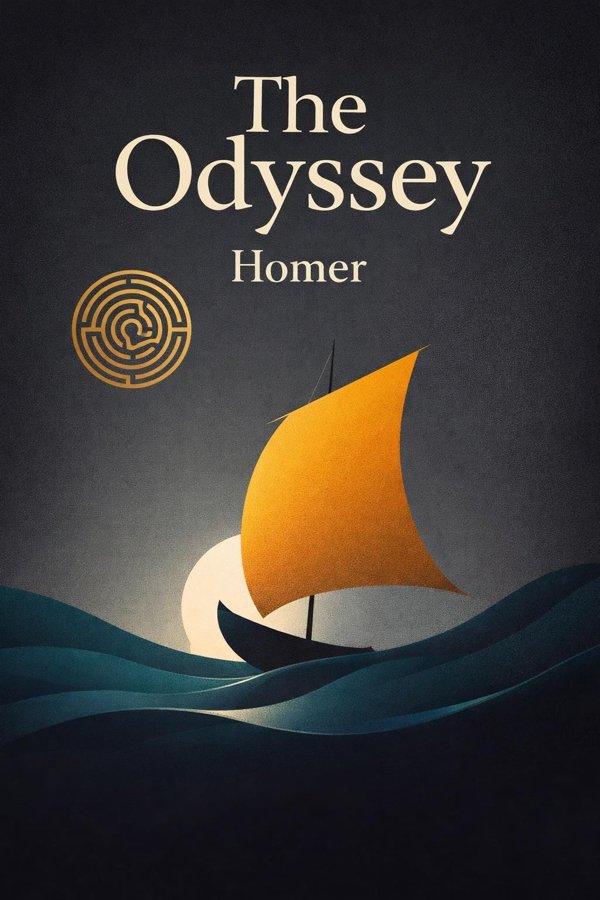
The Odyssey: Summary & Key Insights
by Homer
 10 min10 chaptersAudio available
What Is The Odyssey About?
The Odyssey by Homer is a classics book spanning 10 pages. The Odyssey is the epic tale of Odysseus and his ten-year journey home after the Trojan War, one of the earliest and greatest works of Western literature. It follows the Greek hero as he faces gods, monsters, and temptations on his way back to Ithaca, where his wife Penelope and son Telemachus await him. This enduring masterpiece explores themes of perseverance, loyalty, and the human struggle against fate.
This FizzRead summary covers all 10 key chapters of The Odyssey in approximately 10 minutes, distilling the most important ideas, arguments, and takeaways from Homer's work. Also available as an audio summary and Key Quotes Podcast.
The Odyssey
The Odyssey is the epic tale of Odysseus and his ten-year journey home after the Trojan War, one of the earliest and greatest works of Western literature. It follows the Greek hero as he faces gods, monsters, and temptations on his way back to Ithaca, where his wife Penelope and son Telemachus await him. This enduring masterpiece explores themes of perseverance, loyalty, and the human struggle against fate.
Who Should Read The Odyssey?
This book is perfect for anyone interested in classics and looking to gain actionable insights in a short read. Whether you're a student, professional, or lifelong learner, the key ideas from The Odyssey by Homer will help you think differently.
- ✓Readers who enjoy classics and want practical takeaways
- ✓Professionals looking to apply new ideas to their work and life
- ✓Anyone who wants the core insights of The Odyssey in just 10 minutes
Want the full summary?
Get instant access to this book summary and 100K+ more with Fizz Moment.
Get Free SummaryAvailable on App Store • Free to download
Key Chapters
I begin by calling upon the Muse, the divine breath of memory and creation. It is she who inspires the telling of Odysseus’s enduring wanderings. He has been gone for years after the fall of Troy, held far from home by both chance and divine will. Every listener knows his name; few yet know his fate. This invocation is my way of connecting the mortal and the divine—the storyteller and the source of truth. Odysseus’s absence anchors the opening of the epic; his home, Ithaca, languishes under the strain of waiting. His faithful wife Penelope is besieged by greedy suitors who consume his estate, while his son Telemachus grows into manhood amid uncertainty. In these shadows of longing, the audience perceives not just the absence of a hero, but the fracture of a household awaiting restoration.
This beginning demands patience, for even before Odysseus’s return, the stage must be set—the gods themselves are to debate his fate, and mortals, caught in their web, must act. I wanted the opening to mirror our human beginning: we cry out for inspiration, we face loss, and we seek truth beyond the limits of our strength. The invocation is the heartbeat beneath the story—a reminder that every endeavor, even storytelling itself, requires divine aid.
High on Olympus, the gods gather and speak of mortal destinies. Each deity holds power, yet rarely do they agree. Athena, goddess of wisdom and protector of Odysseus, advocates for his release. She pleads before Zeus, reminding him that this man of endurance has suffered enough—imprisoned by Calypso on her remote island. Poseidon, the god of the sea, remains wrathful. He remembers how Odysseus blinded his son, the Cyclops Polyphemus. Athena’s plea reveals divine empathy; Poseidon’s vengeance demonstrates divine pride. Between them lies the fate of Odysseus: a man who must outwit not only monsters but gods themselves.
In crafting this council, I exposed an essential truth of existence as perceived by ancient Greeks: human fate unfolds in the tension between divine justice and divine caprice. Athena’s compassion serves as the counterbalance to Poseidon’s rage, and through her, wisdom contends with chaos. Mortals are not pawns—they are participants in a grand dialogue with eternity. The gods decide that Odysseus must finally be set free, though his return will still demand trials. The council scene thus becomes a symbol of cosmic order seeking restoration: a man deserving of homecoming, and a world that requires his wisdom restored to balance.
+ 8 more chapters — available in the FizzRead app
All Chapters in The Odyssey
About the Author
Get This Summary in Your Preferred Format
Read or listen to the The Odyssey summary by Homer anytime, anywhere. FizzRead offers multiple formats so you can learn on your terms — all free.
Available formats: App · Audio · PDF · EPUB — All included free with FizzRead
Download The Odyssey PDF and EPUB Summary
Key Quotes from The Odyssey
“I begin by calling upon the Muse, the divine breath of memory and creation.”
“High on Olympus, the gods gather and speak of mortal destinies.”
Frequently Asked Questions about The Odyssey
The Odyssey by Homer is a classics book that explores key ideas across 10 chapters. The Odyssey is the epic tale of Odysseus and his ten-year journey home after the Trojan War, one of the earliest and greatest works of Western literature. It follows the Greek hero as he faces gods, monsters, and temptations on his way back to Ithaca, where his wife Penelope and son Telemachus await him. This enduring masterpiece explores themes of perseverance, loyalty, and the human struggle against fate.
More by Homer
You Might Also Like





Browse by Category
Ready to read The Odyssey?
Get the full summary and 100K+ more books with Fizz Moment.