
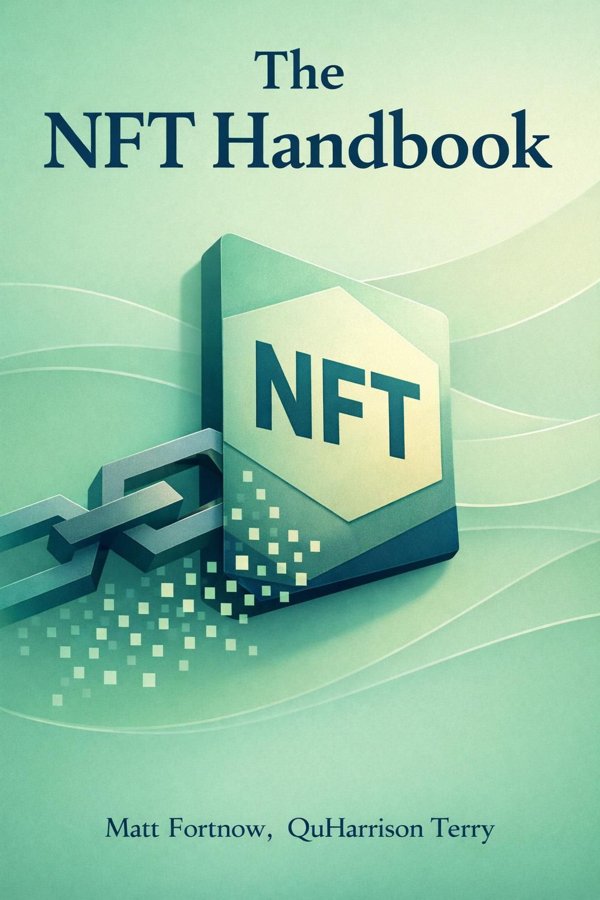
The NFT Handbook: How to Create, Sell and Buy Non-Fungible Tokens: Summary & Key Insights
by Matt Fortnow, QuHarrison Terry
 10 min5 chaptersAudio available
What Is The NFT Handbook: How to Create, Sell and Buy Non-Fungible Tokens About?
The NFT Handbook: How to Create, Sell and Buy Non-Fungible Tokens by Matt Fortnow, QuHarrison Terry is a emerging_tech book spanning 5 pages. The NFT Handbook is a comprehensive guide to understanding, creating, selling, and buying non-fungible tokens (NFTs). It explains the fundamentals of blockchain technology, the process of minting NFTs, and strategies for marketing and monetizing digital assets. The book provides practical insights for artists, entrepreneurs, and investors seeking to participate in the emerging NFT economy.
This FizzRead summary covers all 5 key chapters of The NFT Handbook: How to Create, Sell and Buy Non-Fungible Tokens in approximately 10 minutes, distilling the most important ideas, arguments, and takeaways from Matt Fortnow, QuHarrison Terry's work. Also available as an audio summary and Key Quotes Podcast.
The NFT Handbook: How to Create, Sell and Buy Non-Fungible Tokens
The NFT Handbook is a comprehensive guide to understanding, creating, selling, and buying non-fungible tokens (NFTs). It explains the fundamentals of blockchain technology, the process of minting NFTs, and strategies for marketing and monetizing digital assets. The book provides practical insights for artists, entrepreneurs, and investors seeking to participate in the emerging NFT economy.
Who Should Read The NFT Handbook: How to Create, Sell and Buy Non-Fungible Tokens?
This book is perfect for anyone interested in emerging_tech and looking to gain actionable insights in a short read. Whether you're a student, professional, or lifelong learner, the key ideas from The NFT Handbook: How to Create, Sell and Buy Non-Fungible Tokens by Matt Fortnow, QuHarrison Terry will help you think differently.
- ✓Readers who enjoy emerging_tech and want practical takeaways
- ✓Professionals looking to apply new ideas to their work and life
- ✓Anyone who wants the core insights of The NFT Handbook: How to Create, Sell and Buy Non-Fungible Tokens in just 10 minutes
Want the full summary?
Get instant access to this book summary and 100K+ more with Fizz Moment.
Get Free SummaryAvailable on App Store • Free to download
Key Chapters
To start, you must grasp what makes NFTs distinct in the digital economy. 'Non-fungible' means each token is unique and cannot be exchanged on a one-for-one basis like Bitcoin or Ethereum, which are fungible. Imagine two identical dollar bills – they carry the same value. NFTs, however, are like original artworks: each one different, each carrying its own provenance.
The blockchain enables this uniqueness. A decentralized ledger, transparent and immutable, records every transaction. When an NFT is created — ‘minted’ — it is written permanently into the blockchain. This is what establishes verifiable ownership. Unlike a centralized server controlled by a company, blockchain validation comes from consensus among thousands of independent nodes. No single entity can alter the record of who owns what.
Ethereum became the dominant blockchain for NFTs because of its smart contract capabilities. These programmable contracts define the token’s behavior — its ownership rules, transfer conditions, royalties for creators — all automated without intermediaries. These same principles underpin NFT marketplaces and the explosion of creativity within them. Once creators grasp that ownership can be cryptographically verified and royalties perpetually programmed, the paradigm shifts entirely.
The philosophical appeal is as profound as the technical one. NFTs turn digital abundance into scarcity. In digital media, copying used to dilute value; now, a single, authenticated version can carry status, exclusivity, and market worth. As creators and entrepreneurs, we see this not as an artificial limitation but as a tool to recognize and reward originality. It’s value measured in authenticity, not replication.
NFTs began finding life beyond theory through marketplaces such as OpenSea, Rarible, and Foundation. These platforms are where the creation process meets commerce. They act as the Sotheby’s of cyberspace, each providing a venue for minting — uploading your digital file, linking it to a smart contract, and paying the corresponding gas fees to inscribe it on the blockchain.
The minting process itself is relatively simple once you understand the mechanics. You select your blockchain — Ethereum, Polygon, or another network — you upload your work, define metadata such as title, description, and royalties, and confirm the transaction. But that simplicity hides the underlying complexity: gas fees fluctuate based on network congestion, smart contract settings determine future earnings, and marketplaces may have unique curation or verification standards.
Understanding marketplaces also means understanding their cultural environments. OpenSea, as the largest NFT market, thrives on diversity and accessibility, allowing anyone to create and sell. Foundation emphasizes curation and artistic credibility, appealing to digital art collectors seeking higher exclusivity. Rarible offers community governance, encouraging users to take part in decision-making about platform evolution. Each reflects different philosophies of the NFT movement — democratization, artistry, and decentralization.
As authors, we want readers to see beyond the transaction layer. Minting an NFT is not just publishing; it’s entering an ecosystem shaped by identity, trust, and creative reputation. When your NFT is on the blockchain, it becomes part of a transparent network where every interaction can reinforce or diminish that reputation. Thus, the advice is clear: mint thoughtfully. Consider your audience, your pricing structure, and your long-term narrative. NFTs live not only in markets but in stories — the story of how and why they exist.
+ 3 more chapters — available in the FizzRead app
All Chapters in The NFT Handbook: How to Create, Sell and Buy Non-Fungible Tokens
About the Authors
Matt Fortnow is an entrepreneur and entertainment lawyer who co-founded the first fantasy sports website, while QuHarrison Terry is a marketing executive and futurist known for his work in digital innovation and emerging technologies.
Get This Summary in Your Preferred Format
Read or listen to the The NFT Handbook: How to Create, Sell and Buy Non-Fungible Tokens summary by Matt Fortnow, QuHarrison Terry anytime, anywhere. FizzRead offers multiple formats so you can learn on your terms — all free.
Available formats: App · Audio · PDF · EPUB — All included free with FizzRead
Download The NFT Handbook: How to Create, Sell and Buy Non-Fungible Tokens PDF and EPUB Summary
Key Quotes from The NFT Handbook: How to Create, Sell and Buy Non-Fungible Tokens
“To start, you must grasp what makes NFTs distinct in the digital economy.”
“NFTs began finding life beyond theory through marketplaces such as OpenSea, Rarible, and Foundation.”
Frequently Asked Questions about The NFT Handbook: How to Create, Sell and Buy Non-Fungible Tokens
The NFT Handbook: How to Create, Sell and Buy Non-Fungible Tokens by Matt Fortnow, QuHarrison Terry is a emerging_tech book that explores key ideas across 5 chapters. The NFT Handbook is a comprehensive guide to understanding, creating, selling, and buying non-fungible tokens (NFTs). It explains the fundamentals of blockchain technology, the process of minting NFTs, and strategies for marketing and monetizing digital assets. The book provides practical insights for artists, entrepreneurs, and investors seeking to participate in the emerging NFT economy.
You Might Also Like
Blockchain Technology Guide (Chinese Edition)
Li Qilei
10 min
21st Century Technologies Revisited: What is Happening and What is Next
Organisation for Economic Co-operation and Development (OECD)
10 min
Autonomous Vehicles: Opportunities, Strategies, and Challenges
Various Authors
10 min
Autonomy
Lawrence Burns
10 min
Blockchain Basics: A Non-Technical Introduction in 25 Steps
Daniel Drescher
10 min
Blockchain Revolution: How the Technology Behind Bitcoin and Other Cryptocurrencies Is Changing the World
Don Tapscott & Alex Tapscott
10 minBrowse by Category
Ready to read The NFT Handbook: How to Create, Sell and Buy Non-Fungible Tokens?
Get the full summary and 100K+ more books with Fizz Moment.