
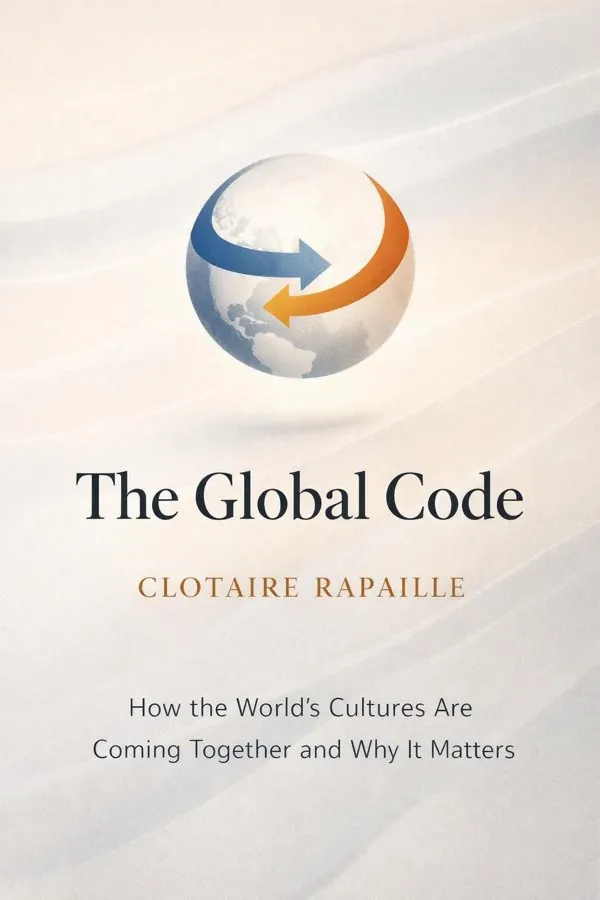
The Global Code: How the World’s Cultures Are Coming Together and Why It Matters: Summary & Key Insights
 10 min5 chaptersAudio available
What Is The Global Code: How the World’s Cultures Are Coming Together and Why It Matters About?
The Global Code: How the World’s Cultures Are Coming Together and Why It Matters by Clotaire Rapaille is a marketing book spanning 5 pages. In this book, cultural anthropologist and marketing expert Clotaire Rapaille explores how globalization is reshaping cultural codes across nations. Building on his earlier work on cultural archetypes, he examines how shared values and symbols are emerging worldwide, influencing consumer behavior, leadership, and identity. Rapaille argues that understanding these evolving global codes is essential for businesses and individuals seeking to thrive in an interconnected world.
This FizzRead summary covers all 5 key chapters of The Global Code: How the World’s Cultures Are Coming Together and Why It Matters in approximately 10 minutes, distilling the most important ideas, arguments, and takeaways from Clotaire Rapaille's work. Also available as an audio summary and Key Quotes Podcast.
The Global Code: How the World’s Cultures Are Coming Together and Why It Matters
In this book, cultural anthropologist and marketing expert Clotaire Rapaille explores how globalization is reshaping cultural codes across nations. Building on his earlier work on cultural archetypes, he examines how shared values and symbols are emerging worldwide, influencing consumer behavior, leadership, and identity. Rapaille argues that understanding these evolving global codes is essential for businesses and individuals seeking to thrive in an interconnected world.
Who Should Read The Global Code: How the World’s Cultures Are Coming Together and Why It Matters?
This book is perfect for anyone interested in marketing and looking to gain actionable insights in a short read. Whether you're a student, professional, or lifelong learner, the key ideas from The Global Code: How the World’s Cultures Are Coming Together and Why It Matters by Clotaire Rapaille will help you think differently.
- ✓Readers who enjoy marketing and want practical takeaways
- ✓Professionals looking to apply new ideas to their work and life
- ✓Anyone who wants the core insights of The Global Code: How the World’s Cultures Are Coming Together and Why It Matters in just 10 minutes
Want the full summary?
Get instant access to this book summary and 100K+ more with Fizz Moment.
Get Free SummaryAvailable on App Store • Free to download
Key Chapters
Every society holds a set of unconscious assumptions about what is right, desirable, and meaningful. These codes are emotional imprints formed during early experiences—the deep memories that link feeling with meaning. For example, when a child first encounters money, that experience—whether positive or fearful—shapes their lifelong understanding of value and wealth. Multiply that pattern across millions of people in the same culture, and you have a national code. Americans associate money with achievement; Japanese see it as collective responsibility. Such codes explain not only consumption behaviors but the entire emotional landscape of societies.
Understanding cultural codes matters because humans communicate primarily through emotion rather than logic. Advertising succeeds not by listing features, but by touching emotional truths. Politics moves not by rational argument, but by resonance with collective identity. When I studied these dynamics for international brands, I found that success came only when those brands reflected the emotional DNA of the cultures they targeted. The car that embodied freedom appealed to Americans; the car that embodied mastery appealed to Germans. Codes turn abstractions into living realities, and decoding them allows one to understand and connect authentically with entire populations.
Globalization is often misunderstood as a simple homogenization process—a flattening of the world into sameness. But to me, it is far more dynamic. What globalization really does is accelerate the exchange of emotional experiences. Travel, internet communication, and digital communities bring people into constant contact with diverse meanings. Each culture tests its old codes against the influx of new perspectives, and some codes begin to evolve. Consider success: once a purely local concept, it now carries global nuances—innovation from Silicon Valley, spiritual balance from India, social contribution from Scandinavia.
The younger generations, raised in global networks, internalize hybrid codes. A Korean teenager and a Brazilian one may understand freedom not through their parents’ nationalism but through digital mobility. However, this convergence does not erase difference—it redefines it. We now live in a multicultural consciousness where personal identity blends heritage with global citizenship. The world’s emotional software is being rewritten.
This evolution has profound effects on markets and organizations. Brands that express shared global emotions—such as belonging, creativity, sustainability—gain power faster than those tied to narrow local traditions. Yet those that ignore cultural sensitivity still fail. The challenge is to design communication that honors the local while speaking to the global heart.
+ 3 more chapters — available in the FizzRead app
All Chapters in The Global Code: How the World’s Cultures Are Coming Together and Why It Matters
About the Author
Clotaire Rapaille is a French-born cultural anthropologist, psychologist, and marketing consultant known for his research on cultural archetypes and consumer behavior. He has advised major corporations on cross-cultural marketing and authored several influential books on the psychology of culture and branding.
Get This Summary in Your Preferred Format
Read or listen to the The Global Code: How the World’s Cultures Are Coming Together and Why It Matters summary by Clotaire Rapaille anytime, anywhere. FizzRead offers multiple formats so you can learn on your terms — all free.
Available formats: App · Audio · PDF · EPUB — All included free with FizzRead
Download The Global Code: How the World’s Cultures Are Coming Together and Why It Matters PDF and EPUB Summary
Key Quotes from The Global Code: How the World’s Cultures Are Coming Together and Why It Matters
“Every society holds a set of unconscious assumptions about what is right, desirable, and meaningful.”
“Globalization is often misunderstood as a simple homogenization process—a flattening of the world into sameness.”
Frequently Asked Questions about The Global Code: How the World’s Cultures Are Coming Together and Why It Matters
The Global Code: How the World’s Cultures Are Coming Together and Why It Matters by Clotaire Rapaille is a marketing book that explores key ideas across 5 chapters. In this book, cultural anthropologist and marketing expert Clotaire Rapaille explores how globalization is reshaping cultural codes across nations. Building on his earlier work on cultural archetypes, he examines how shared values and symbols are emerging worldwide, influencing consumer behavior, leadership, and identity. Rapaille argues that understanding these evolving global codes is essential for businesses and individuals seeking to thrive in an interconnected world.
You Might Also Like
Captivology: The Science of Capturing People's Attention
Ben Parr
10 min
Marketing 5.0: Technology for Humanity
Philip Kotler, Hermawan Kartajaya, Iwan Setiawan
10 min
Marketing Strategy
Paul Fifield
10 min
UnMarketing: Stop Marketing. Start Engaging.
Scott Stratten
10 min
$100M Leads: How to Get Strangers to Want to Buy Your Stuff
Alex Hormozi
10 min
80/20 Sales and Marketing: The Definitive Guide to Working Less and Making More
Perry Marshall
10 minBrowse by Category
Ready to read The Global Code: How the World’s Cultures Are Coming Together and Why It Matters?
Get the full summary and 100K+ more books with Fizz Moment.