
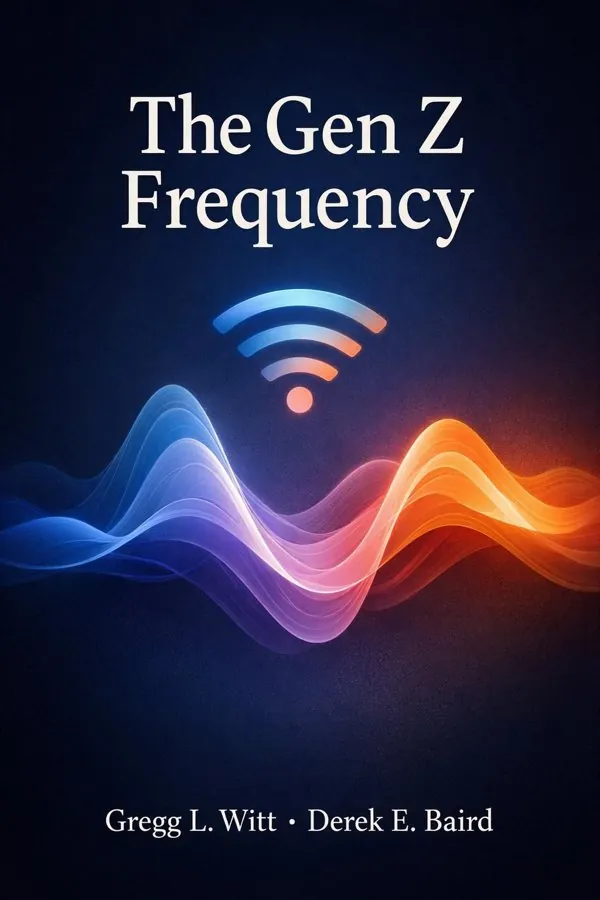
The Gen Z Frequency: How Brands Tune In and Build Credibility: Summary & Key Insights
by Gregg L. Witt, Derek E. Baird
 10 min8 chaptersAudio available
Key Takeaways from The Gen Z Frequency: How Brands Tune In and Build Credibility
The fastest way to lose Gen Z is to treat their values like a branding trend instead of a lived reality.
Attention can be bought, but credibility has to be earned.
Social media is not one giant audience; it is a collection of distinct cultural spaces with different rules, rhythms, and expectations.
Gen Z does not just want to be marketed to; they want to be involved.
For Gen Z, purpose is persuasive only when it is supported by action.
What Is The Gen Z Frequency: How Brands Tune In and Build Credibility About?
The Gen Z Frequency: How Brands Tune In and Build Credibility by Gregg L. Witt, Derek E. Baird is a marketing book spanning 6 pages. The Gen Z Frequency is a practical playbook for any brand, nonprofit, educator, or leader trying to understand the first truly digital-native generation. Gregg L. Witt and Derek E. Baird argue that Gen Z cannot be reached through old marketing formulas built on interruption, image management, and top-down messaging. This generation expects dialogue over broadcasting, transparency over polish, and proof over promises. To connect with them, organizations must learn how youth culture, online communities, identity, entertainment, and activism intersect in everyday life. What makes this book especially valuable is its focus on credibility. The authors show that Gen Z does not simply buy products; they assess whether a brand deserves attention, trust, and participation. That means understanding the platforms they use, the creators they follow, the causes they support, and the ways they express themselves through content and community. Witt brings deep experience in youth marketing and cultural insight, while Baird contributes expertise in digital media and online engagement. Together, they offer a clear framework for tuning into Gen Z’s mindset and building relationships that feel relevant, respectful, and real.
This FizzRead summary covers all 8 key chapters of The Gen Z Frequency: How Brands Tune In and Build Credibility in approximately 10 minutes, distilling the most important ideas, arguments, and takeaways from Gregg L. Witt, Derek E. Baird's work. Also available as an audio summary and Key Quotes Podcast.
The Gen Z Frequency: How Brands Tune In and Build Credibility
The Gen Z Frequency is a practical playbook for any brand, nonprofit, educator, or leader trying to understand the first truly digital-native generation. Gregg L. Witt and Derek E. Baird argue that Gen Z cannot be reached through old marketing formulas built on interruption, image management, and top-down messaging. This generation expects dialogue over broadcasting, transparency over polish, and proof over promises. To connect with them, organizations must learn how youth culture, online communities, identity, entertainment, and activism intersect in everyday life.
What makes this book especially valuable is its focus on credibility. The authors show that Gen Z does not simply buy products; they assess whether a brand deserves attention, trust, and participation. That means understanding the platforms they use, the creators they follow, the causes they support, and the ways they express themselves through content and community. Witt brings deep experience in youth marketing and cultural insight, while Baird contributes expertise in digital media and online engagement. Together, they offer a clear framework for tuning into Gen Z’s mindset and building relationships that feel relevant, respectful, and real.
Who Should Read The Gen Z Frequency: How Brands Tune In and Build Credibility?
This book is perfect for anyone interested in marketing and looking to gain actionable insights in a short read. Whether you're a student, professional, or lifelong learner, the key ideas from The Gen Z Frequency: How Brands Tune In and Build Credibility by Gregg L. Witt, Derek E. Baird will help you think differently.
- ✓Readers who enjoy marketing and want practical takeaways
- ✓Professionals looking to apply new ideas to their work and life
- ✓Anyone who wants the core insights of The Gen Z Frequency: How Brands Tune In and Build Credibility in just 10 minutes
Want the full summary?
Get instant access to this book summary and 100K+ more with Fizz Moment.
Get Free SummaryAvailable on App Store • Free to download
Key Chapters
The fastest way to lose Gen Z is to treat their values like a branding trend instead of a lived reality. The book emphasizes that authenticity, diversity, social impact, and self-expression are not optional themes for this generation; they are filters through which Gen Z evaluates companies, creators, and institutions. Unlike earlier audiences that may have tolerated polished but vague messaging, Gen Z tends to ask sharper questions: Does this brand really stand for what it says? Who is represented? Who is excluded? Is this message performative or proven?
Witt and Baird explain that Gen Z grew up in a world of constant visibility. They have seen social movements unfold online, watched brands make missteps in real time, and learned how to compare public claims with actual behavior. As a result, they are skilled at spotting contradictions. A company that celebrates diversity in an ad but lacks inclusive leadership, or claims to support mental health while creating unhealthy work culture, will quickly lose credibility.
The practical implication is that brands must understand values not as campaign language but as organizational commitments. Representation should show up in hiring, partnerships, product design, community involvement, and customer service. Self-expression should be encouraged by giving audiences room to customize, remix, comment, and co-create. Social impact should be measurable and ongoing, not activated only during major cultural moments.
A useful application is to audit your brand from Gen Z’s perspective. Review your messaging, visuals, social content, collaborations, and public actions. Ask whether they align consistently with the values you claim to hold. Actionable takeaway: identify one core value your brand promotes and prove it through a visible policy, partnership, or practice that Gen Z can actually verify.
Attention can be bought, but credibility has to be earned. One of the book’s strongest arguments is that Gen Z responds less to persuasion tactics and more to signals of trustworthiness. Because they have grown up surrounded by ads, sponsored content, algorithmic feeds, and brand activism, they are highly sensitive to manipulation. They do not expect perfection, but they do expect honesty, consistency, and responsiveness.
The authors describe credibility as a long-term asset built through behavior. For Gen Z, that means admitting mistakes, listening visibly, communicating clearly, and matching words with action. A brand that says, “We got this wrong, here is what we learned, and here is how we will fix it,” will often earn more respect than one that stays silent or hides behind corporate language. Transparency lowers skepticism because it treats young audiences like informed participants rather than passive consumers.
This idea applies across touchpoints. Product claims should be specific. Partnerships should make sense culturally. Influencer collaborations should feel natural instead of transactional. Customer interactions should sound human, not scripted. Even the tone of a reply in comments or direct messages can reinforce or undermine trust.
A practical example is a clothing brand facing criticism over sustainability claims. Instead of publishing a vague statement about caring for the planet, the brand could share data on materials, outline where it falls short, invite third-party review, and post regular progress updates. That approach converts abstract intention into visible accountability.
Actionable takeaway: replace one broad brand claim with concrete evidence. If you say you support inclusion, sustainability, or creators, show metrics, policies, or stories that demonstrate exactly how.
Gen Z does not just want to be marketed to; they want to be involved. A central insight of the book is that participation creates stronger emotional investment than passive exposure. This generation has grown up making content, reacting in real time, building online identities, and shaping culture through memes, comments, livestreams, edits, and fan communities. Brands that merely present polished messages miss the opportunity to invite agency.
The authors connect this to gamification and interactive experiences. When designed well, game mechanics can create belonging, curiosity, and momentum. But the point is not simply to add points, badges, or contests. Effective interactivity gives Gen Z a role in the experience. It turns the audience into contributors, not just spectators. That could mean voting on product variations, unlocking content through challenges, participating in digital scavenger hunts, or using augmented reality to personalize an experience.
The strongest examples create social currency. People engage because the activity is enjoyable, shareable, and meaningful within their peer networks. A beauty brand might let users co-create looks with filters and feature community creations. A music platform might reward fans for discovering new artists and sharing playlists. An educational organization could build interactive quests that connect learning to real-world causes.
The warning, however, is that gimmicks fail quickly. If gamification feels manipulative or unrelated to the brand’s purpose, Gen Z will dismiss it. Interactivity must enhance the experience, not distract from it.
Actionable takeaway: redesign one campaign so the audience has an active role. Ask what users can create, vote on, unlock, remix, or influence rather than simply watch or click.
For Gen Z, purpose is persuasive only when it is supported by action. The book shows that this generation is deeply aware of social issues, from climate change and racial justice to mental health, equity, and economic insecurity. Many young people expect brands to have values, but they are equally quick to reject empty activism. A slogan, hashtag, or symbolic post is not enough if the company’s decisions tell a different story.
Witt and Baird argue that purpose-driven branding works only when a cause connects authentically to the organization’s identity, resources, and long-term commitments. A brand should ask: Why this issue? What can we meaningfully contribute? Are we prepared to stay involved when attention fades? Gen Z respects brands that take responsibility within their sphere of influence rather than trying to comment on everything.
Practical application requires internal and external alignment. Internally, leadership, culture, policies, and operations must support the stated cause. Externally, partnerships with credible organizations, transparent funding, employee participation, and public progress reports make the effort believable. For example, a technology company focused on digital wellness might invest in youth mental health tools, redesign harmful engagement features, and collaborate with schools and researchers. That is stronger than merely posting awareness content during a themed month.
Purpose should also empower the audience. Instead of asking Gen Z only to admire the brand’s values, invite them to participate through volunteering, storytelling, donations, creative advocacy, or feedback on initiatives.
Actionable takeaway: pick one social issue that genuinely fits your brand and commit to a specific, measurable contribution over the next year. Then communicate progress regularly so purpose becomes visible behavior, not just messaging.
The brands Gen Z trusts most often feel less like authorities and more like collaborators. One of the book’s most useful ideas is that co-creation is not a marketing gimmick but a relationship model. Gen Z is accustomed to shaping the media they consume, whether by remixing sounds, joining fandoms, customizing avatars, or participating in community-led trends. They expect a say in the experiences that matter to them.
Co-creation can happen at many levels. It might involve user-generated content campaigns, community design input, creator partnerships, youth advisory boards, or beta-testing programs that influence product development. What matters is that participation is real. If a brand asks for ideas but ignores them, the exercise becomes performative. If it visibly incorporates community feedback, loyalty increases because young audiences can see their fingerprints on the final outcome.
The authors suggest that this is especially powerful for brands trying to stay culturally current. Instead of guessing what Gen Z wants, organizations can build systems for listening and iteration. A gaming company can invite players to help shape new features. A fashion label can work with emerging student designers. A media platform can commission content from niche creators instead of imposing a top-down voice.
Co-creation also improves credibility because it redistributes power. Rather than positioning the brand as the sole source of expertise, it acknowledges that the audience brings insight, creativity, and cultural intelligence. For a generation that values self-expression and inclusion, that matters.
Actionable takeaway: create one structured way for Gen Z to influence your brand this quarter, such as a youth advisory panel, creator collaboration series, or community voting process tied to a real decision.
Gen Z adapts quickly, and brands that move too slowly can seem out of touch almost overnight. The book highlights that emerging technologies are not important simply because they are new, but because they reshape how young people discover, communicate, learn, and express identity. Mobile-first behavior, short-form video, livestreaming, gaming environments, augmented reality, and creator tools all influence what Gen Z expects from modern brand experiences.
The key lesson is not to chase every trend. Instead, brands should monitor where behavior is changing and ask what new technology enables that older formats cannot. For example, AR can make products more tryable and playful. Livestreaming can create immediacy and conversation. Digital worlds can foster community participation. AI-driven personalization can be useful, but it also raises concerns about privacy, bias, and manipulation. Gen Z tends to appreciate innovation when it improves experience, but they are wary when it feels invasive or dehumanizing.
Witt and Baird frame this as adaptive literacy. Brands need teams that can observe emerging habits, test responsibly, and learn quickly without abandoning core values. A thoughtful experiment on a new platform can signal cultural awareness; an obviously forced attempt can weaken trust.
In practice, a brand might pilot an interactive product demo in an immersive environment, then gather feedback before expanding. Or it might use a new creator tool to empower community storytelling rather than centering the brand itself.
Actionable takeaway: choose one emerging format relevant to your audience and run a small, measurable experiment. Focus on whether it adds genuine value to Gen Z’s experience rather than whether it merely makes your brand look innovative.
Many brands claim to know Gen Z, but too few actually listen to them with discipline. A major contribution of the book is its insistence that youth insight is not something you collect once in a trend report and then file away. Gen Z culture changes quickly, and meaningful engagement requires ongoing observation, dialogue, and interpretation. Listening is not passive; it is an active strategic capability.
The authors encourage organizations to pay attention to language shifts, creator ecosystems, online communities, cultural tensions, and emerging behaviors. This includes both quantitative and qualitative methods: social listening, comment analysis, community participation, surveys, creator partnerships, and direct conversations with young people from varied backgrounds. The goal is not to mimic slang or chase viral moments blindly. It is to understand what matters, why it matters, and how your brand fits or does not fit within that context.
This kind of listening also helps brands avoid costly mistakes. Messages that seem harmless internally may feel tone-deaf externally if they ignore current cultural realities. Conversely, listening can reveal unmet needs and overlooked opportunities. A financial brand, for example, might discover that Gen Z wants less jargon and more realistic guidance on debt, side income, and economic anxiety. A food brand may find that convenience matters, but so do sourcing transparency and community identity.
Listening becomes most powerful when insights influence decisions across the business, not just social media posts. Product, partnerships, hiring, customer service, and innovation should all benefit from what the brand learns.
Actionable takeaway: build a repeatable Gen Z listening process, such as a monthly insights review combining social conversations, creator trends, and direct audience feedback, then use it to inform one real business decision each cycle.
All Chapters in The Gen Z Frequency: How Brands Tune In and Build Credibility
About the Authors
Gregg L. Witt is a youth marketing strategist, consultant, and speaker recognized for his work helping brands understand generational behavior and connect authentically with younger audiences. His expertise centers on youth culture, brand credibility, and the values that shape Gen Z decision-making. Derek E. Baird is a digital media educator, strategist, and researcher whose work focuses on online engagement, social platforms, and the evolving ways young people learn, communicate, and build community in digital spaces. Together, Witt and Baird bring a strong blend of cultural insight and media fluency. Their combined experience makes The Gen Z Frequency a practical guide for organizations seeking to engage Gen Z with greater relevance, trust, and long-term impact.
Get This Summary in Your Preferred Format
Read or listen to the The Gen Z Frequency: How Brands Tune In and Build Credibility summary by Gregg L. Witt, Derek E. Baird anytime, anywhere. FizzRead offers multiple formats so you can learn on your terms — all free.
Available formats: App · Audio · PDF · EPUB — All included free with FizzRead
Download The Gen Z Frequency: How Brands Tune In and Build Credibility PDF and EPUB Summary
Key Quotes from The Gen Z Frequency: How Brands Tune In and Build Credibility
“The fastest way to lose Gen Z is to treat their values like a branding trend instead of a lived reality.”
“Attention can be bought, but credibility has to be earned.”
“Social media is not one giant audience; it is a collection of distinct cultural spaces with different rules, rhythms, and expectations.”
“Gen Z does not just want to be marketed to; they want to be involved.”
“For Gen Z, purpose is persuasive only when it is supported by action.”
Frequently Asked Questions about The Gen Z Frequency: How Brands Tune In and Build Credibility
The Gen Z Frequency: How Brands Tune In and Build Credibility by Gregg L. Witt, Derek E. Baird is a marketing book that explores key ideas across 8 chapters. The Gen Z Frequency is a practical playbook for any brand, nonprofit, educator, or leader trying to understand the first truly digital-native generation. Gregg L. Witt and Derek E. Baird argue that Gen Z cannot be reached through old marketing formulas built on interruption, image management, and top-down messaging. This generation expects dialogue over broadcasting, transparency over polish, and proof over promises. To connect with them, organizations must learn how youth culture, online communities, identity, entertainment, and activism intersect in everyday life. What makes this book especially valuable is its focus on credibility. The authors show that Gen Z does not simply buy products; they assess whether a brand deserves attention, trust, and participation. That means understanding the platforms they use, the creators they follow, the causes they support, and the ways they express themselves through content and community. Witt brings deep experience in youth marketing and cultural insight, while Baird contributes expertise in digital media and online engagement. Together, they offer a clear framework for tuning into Gen Z’s mindset and building relationships that feel relevant, respectful, and real.
You Might Also Like
Captivology: The Science of Capturing People's Attention
Ben Parr
10 min
Marketing 5.0: Technology for Humanity
Philip Kotler, Hermawan Kartajaya, Iwan Setiawan
10 min
Marketing Strategy
Paul Fifield
10 min
UnMarketing: Stop Marketing. Start Engaging.
Scott Stratten
10 min
$100M Leads: How to Get Strangers to Want to Buy Your Stuff
Alex Hormozi
10 min
80/20 Sales and Marketing: The Definitive Guide to Working Less and Making More
Perry Marshall
10 minBrowse by Category
Ready to read The Gen Z Frequency: How Brands Tune In and Build Credibility?
Get the full summary and 100K+ more books with Fizz Moment.