
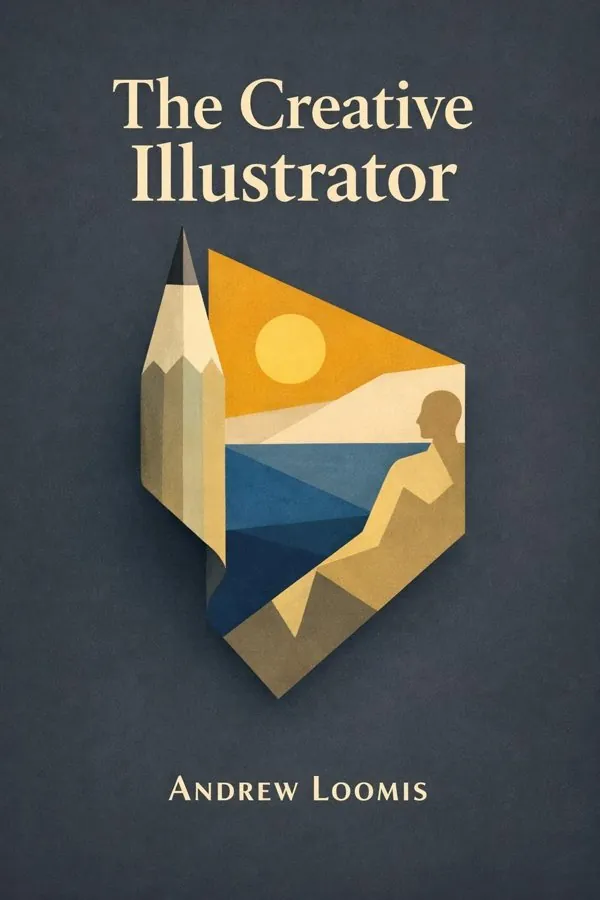
The Creative Illustrator: Summary & Key Insights
 10 min12 chaptersAudio available
What Is The Creative Illustrator About?
The Creative Illustrator by Andrew Loomis is a design book spanning 12 pages. Originally published in 1947, this book by Andrew Loomis is a comprehensive guide to professional illustration techniques. It covers composition, color, perspective, and figure drawing, offering practical advice for artists seeking to develop their creative and commercial skills. Loomis combines artistic theory with real-world application, making it a cornerstone text for illustrators and art students.
This FizzRead summary covers all 12 key chapters of The Creative Illustrator in approximately 10 minutes, distilling the most important ideas, arguments, and takeaways from Andrew Loomis's work. Also available as an audio summary and Key Quotes Podcast.
The Creative Illustrator
Originally published in 1947, this book by Andrew Loomis is a comprehensive guide to professional illustration techniques. It covers composition, color, perspective, and figure drawing, offering practical advice for artists seeking to develop their creative and commercial skills. Loomis combines artistic theory with real-world application, making it a cornerstone text for illustrators and art students.
Who Should Read The Creative Illustrator?
This book is perfect for anyone interested in design and looking to gain actionable insights in a short read. Whether you're a student, professional, or lifelong learner, the key ideas from The Creative Illustrator by Andrew Loomis will help you think differently.
- ✓Readers who enjoy design and want practical takeaways
- ✓Professionals looking to apply new ideas to their work and life
- ✓Anyone who wants the core insights of The Creative Illustrator in just 10 minutes
Want the full summary?
Get instant access to this book summary and 100K+ more with Fizz Moment.
Get Free SummaryAvailable on App Store • Free to download
Key Chapters
Composition is the skeleton upon which every successful picture stands. Without sound structure, even the most skilled draftsmanship or dazzling color cannot hold a viewer’s attention. When I compose an illustration, I think first of rhythm and balance. Just as music needs harmony and tempo, a picture must guide the eye smoothly from one part to another. The composition must be deliberate—accidents rarely produce lasting strength.
I often begin with simple shapes, arranging them to establish balance and visual weight. This stage is purely about direction and balance, not detail. Think of it as choreographing the eye’s movement through space. A composition should lead the viewer effortlessly toward the story’s center—the focal point—without confusion or fatigue.
One essential principle is dominance. Every picture must have one dominant feature—a shape, value, or color that commands attention. Subordinate elements must support it. Without dominance, the viewer feels lost; with it, the visual message is focused and emphatic.
But rhythm is what gives life. In illustration, rhythm controls how tension and release occur, how one line travels into another. In a scene of action, rhythm will echo vitality; in a tranquil design, rhythm calms and stabilizes. Whether you’re illustrating a novel or an advertisement, the same rule applies: composition creates emotion through control of movement and contrast.
I remind students that composition isn’t about formula. It’s about clarity of thought. Each compositional decision should answer one question: does this strengthen the idea? If an element distracts, omit it. The artist who can simplify his message without impoverishing it has mastered the heart of composition.
Design is the art of arranging elements so that they express purpose and beauty simultaneously. In commercial illustration, design carries more than aesthetic weight—it directs how effectively an idea is communicated. Line, mass, color, and space all speak a language of their own, and design teaches us how to make them converse in harmony.
When I teach design, I emphasize unity. Nothing should appear accidental. Every stroke, every tone should contribute to the total pattern. The viewer may not consciously notice design, but he feels it—just as he feels the architecture of good music. Strong design arrests attention before the subject is even recognized.
I’ve found that studying abstract design—composing with simple shapes and values—polishes one’s ability to control form without leaning on realism. If a composition reads well in abstract terms, it will only become stronger once details are added. This is why thumbnail sketches are so vital: they let us experiment freely, testing balance and proportion before we commit to a final drawing.
A creative illustrator learns early that design is not decoration; it is structure. The more deliberate your design decisions, the more convincing your illustration becomes. Design determines not only how the picture looks but how it feels—its tempo, its mood, its authority. When design aligns with intent, the picture begins to possess that rare quality: inevitability. It looks precisely as it ought to look—and could look no other way.
+ 10 more chapters — available in the FizzRead app
All Chapters in The Creative Illustrator
About the Author
Andrew Loomis (1892–1959) was an American illustrator, painter, and art instructor known for his influential books on drawing and illustration. His works, including 'Figure Drawing for All It's Worth' and 'Creative Illustration', have become classics in art education, admired for their clarity and professional insight.
Get This Summary in Your Preferred Format
Read or listen to the The Creative Illustrator summary by Andrew Loomis anytime, anywhere. FizzRead offers multiple formats so you can learn on your terms — all free.
Available formats: App · Audio · PDF · EPUB — All included free with FizzRead
Download The Creative Illustrator PDF and EPUB Summary
Key Quotes from The Creative Illustrator
“Composition is the skeleton upon which every successful picture stands.”
“Design is the art of arranging elements so that they express purpose and beauty simultaneously.”
Frequently Asked Questions about The Creative Illustrator
The Creative Illustrator by Andrew Loomis is a design book that explores key ideas across 12 chapters. Originally published in 1947, this book by Andrew Loomis is a comprehensive guide to professional illustration techniques. It covers composition, color, perspective, and figure drawing, offering practical advice for artists seeking to develop their creative and commercial skills. Loomis combines artistic theory with real-world application, making it a cornerstone text for illustrators and art students.
More by Andrew Loomis
You Might Also Like

The Design of Everyday Things
Don Norman
10 min
The Better Angels of Our Nature
Steven Pinker
10 min
A Designer's Art
Paul Rand
10 min
Architects' Sketchbooks
Various Editors
10 min
Architectural Graphic Standards
The American Institute of Architects
10 min
Design Is Storytelling
Ellen Lupton
10 minBrowse by Category
Ready to read The Creative Illustrator?
Get the full summary and 100K+ more books with Fizz Moment.