
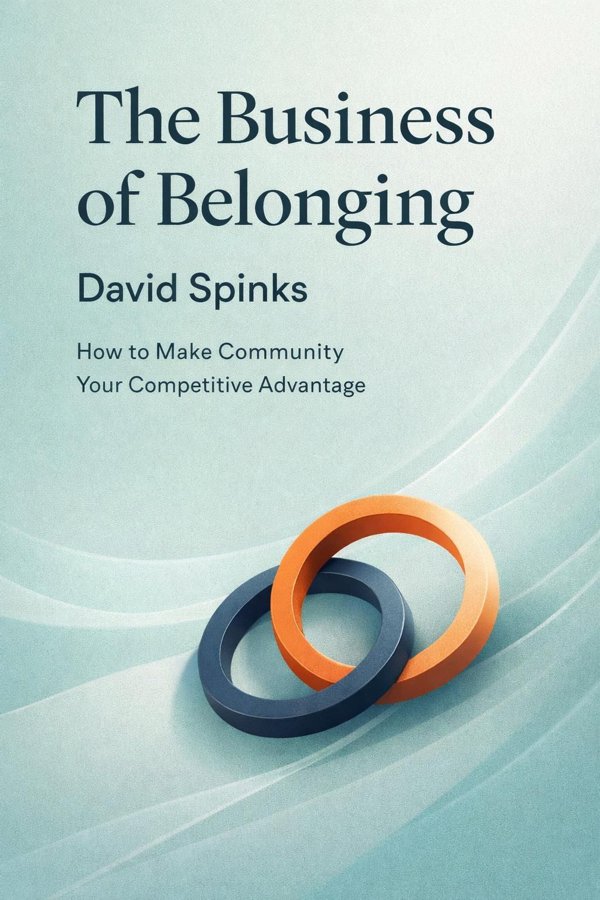
The Business of Belonging: How to Make Community Your Competitive Advantage: Summary & Key Insights
by David Spinks
 10 min7 chaptersAudio available
What Is The Business of Belonging: How to Make Community Your Competitive Advantage About?
The Business of Belonging: How to Make Community Your Competitive Advantage by David Spinks is a marketing book spanning 7 pages. The Business of Belonging offers a practical framework for building and managing communities that drive business growth. David Spinks, co-founder of CMX, provides actionable strategies for aligning community initiatives with organizational goals such as customer retention, brand loyalty, and engagement. The book serves as a tactical guide for leaders seeking to make community a core part of their competitive advantage.
This FizzRead summary covers all 7 key chapters of The Business of Belonging: How to Make Community Your Competitive Advantage in approximately 10 minutes, distilling the most important ideas, arguments, and takeaways from David Spinks's work. Also available as an audio summary and Key Quotes Podcast.
The Business of Belonging: How to Make Community Your Competitive Advantage
The Business of Belonging offers a practical framework for building and managing communities that drive business growth. David Spinks, co-founder of CMX, provides actionable strategies for aligning community initiatives with organizational goals such as customer retention, brand loyalty, and engagement. The book serves as a tactical guide for leaders seeking to make community a core part of their competitive advantage.
Who Should Read The Business of Belonging: How to Make Community Your Competitive Advantage?
This book is perfect for anyone interested in marketing and looking to gain actionable insights in a short read. Whether you're a student, professional, or lifelong learner, the key ideas from The Business of Belonging: How to Make Community Your Competitive Advantage by David Spinks will help you think differently.
- ✓Readers who enjoy marketing and want practical takeaways
- ✓Professionals looking to apply new ideas to their work and life
- ✓Anyone who wants the core insights of The Business of Belonging: How to Make Community Your Competitive Advantage in just 10 minutes
Want the full summary?
Get instant access to this book summary and 100K+ more with Fizz Moment.
Get Free SummaryAvailable on App Store • Free to download
Key Chapters
For decades, community was treated as a side project—a support forum here, a fan Facebook group there. I remember working with companies that saw community only as a means to reduce support ticket volume or as a PR tool for brand visibility. But the digital landscape changed that forever. Today, the most enduring organizations don’t see community as a byproduct of success; they see it as the foundation.
Community building has evolved from a marketing tactic into a core organizational strategy. With the rise of social networks, the sharing economy, and online platforms, people now expect meaningful connection from the brands they engage with. It’s no longer enough to have great products—customers crave experiences that make them feel seen and heard.
I trace this evolution to several key shifts. First, the rise of the customer voice has empowered communities. Second, technology has made it easier to link business systems with community platforms—bringing data, engagement, and insights together. Third, leadership has begun to recognize the direct impact of community on metrics like retention, advocacy, and lifetime value.
In this chapter, I challenge readers to see community not as a concentric circle on the edge of business but as an engine at its center. Once companies realize that every department benefits from strong community initiatives—marketing gains advocates, product gets insights, success enhances loyalty, and HR strengthens culture—they unlock a new dimension of growth. The story of this evolution is not about technology—it’s about a mindset shift from managing audiences to empowering people.
When we talk about a community-driven business, we’re talking about a company where belonging isn’t a buzzword—it’s embedded in the strategy itself. A community-driven company aligns every initiative, from marketing campaigns to product updates, with the goal of strengthening shared purpose.
I define this model around three outcomes: retention, engagement, and advocacy. Retention happens when customers feel a sense of belonging that keeps them loyal even when competitors emerge. Engagement happens when members actively contribute, share stories, and create value for one another. Advocacy happens when those same members become evangelists—spreading your message organically because they believe in your mission.
This model isn’t theoretical—it’s been proven by iconic brands. Think of how Salesforce’s Trailblazer Community powers its customer success, or how Duolingo’s learners energize each other through user-created forums. Each of these companies has moved beyond transaction to transformation.
When your business shifts to a community-driven approach, you stop asking, “How can we sell more?” and start asking, “How can we help people belong?” That shift changes everything about how you communicate, design products, and lead your teams.
+ 5 more chapters — available in the FizzRead app
All Chapters in The Business of Belonging: How to Make Community Your Competitive Advantage
About the Author
David Spinks is an entrepreneur and community builder, best known as the co-founder of CMX, a leading network for community professionals. He has worked with major organizations to develop community strategies and is recognized as a thought leader in the field of community management and engagement.
Get This Summary in Your Preferred Format
Read or listen to the The Business of Belonging: How to Make Community Your Competitive Advantage summary by David Spinks anytime, anywhere. FizzRead offers multiple formats so you can learn on your terms — all free.
Available formats: App · Audio · PDF · EPUB — All included free with FizzRead
Download The Business of Belonging: How to Make Community Your Competitive Advantage PDF and EPUB Summary
Key Quotes from The Business of Belonging: How to Make Community Your Competitive Advantage
“For decades, community was treated as a side project—a support forum here, a fan Facebook group there.”
“When we talk about a community-driven business, we’re talking about a company where belonging isn’t a buzzword—it’s embedded in the strategy itself.”
Frequently Asked Questions about The Business of Belonging: How to Make Community Your Competitive Advantage
The Business of Belonging: How to Make Community Your Competitive Advantage by David Spinks is a marketing book that explores key ideas across 7 chapters. The Business of Belonging offers a practical framework for building and managing communities that drive business growth. David Spinks, co-founder of CMX, provides actionable strategies for aligning community initiatives with organizational goals such as customer retention, brand loyalty, and engagement. The book serves as a tactical guide for leaders seeking to make community a core part of their competitive advantage.
You Might Also Like

Captivology: The Science of Capturing People's Attention
Ben Parr
10 min
Marketing 5.0: Technology for Humanity
Philip Kotler, Hermawan Kartajaya, Iwan Setiawan
10 min
Marketing Strategy
Paul Fifield
10 min
UnMarketing: Stop Marketing. Start Engaging.
Scott Stratten
10 min
$100M Leads: How to Get Strangers to Want to Buy Your Stuff
Alex Hormozi
10 min
80/20 Sales and Marketing: The Definitive Guide to Working Less and Making More
Perry Marshall
10 minBrowse by Category
Ready to read The Business of Belonging: How to Make Community Your Competitive Advantage?
Get the full summary and 100K+ more books with Fizz Moment.