
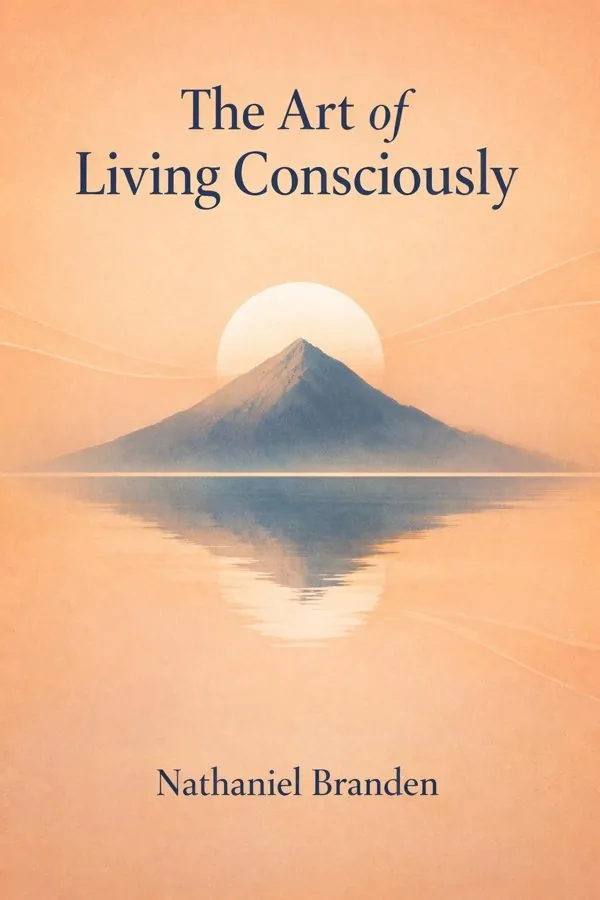
The Art of Living Consciously: The Power of Awareness to Transform Everyday Life: Summary & Key Insights
 10 min13 chaptersAudio available
What Is The Art of Living Consciously: The Power of Awareness to Transform Everyday Life About?
The Art of Living Consciously: The Power of Awareness to Transform Everyday Life by Nathaniel Branden is a self_awareness book spanning 13 pages. In this book, Nathaniel Branden explores the practice of living consciously as a fundamental skill for personal growth and self-esteem. He presents practical methods for increasing awareness, self-responsibility, and intentional living, arguing that conscious awareness is the key to transforming everyday experiences and achieving psychological well-being.
This FizzRead summary covers all 13 key chapters of The Art of Living Consciously: The Power of Awareness to Transform Everyday Life in approximately 10 minutes, distilling the most important ideas, arguments, and takeaways from Nathaniel Branden's work. Also available as an audio summary and Key Quotes Podcast.
The Art of Living Consciously: The Power of Awareness to Transform Everyday Life
In this book, Nathaniel Branden explores the practice of living consciously as a fundamental skill for personal growth and self-esteem. He presents practical methods for increasing awareness, self-responsibility, and intentional living, arguing that conscious awareness is the key to transforming everyday experiences and achieving psychological well-being.
Who Should Read The Art of Living Consciously: The Power of Awareness to Transform Everyday Life?
This book is perfect for anyone interested in self_awareness and looking to gain actionable insights in a short read. Whether you're a student, professional, or lifelong learner, the key ideas from The Art of Living Consciously: The Power of Awareness to Transform Everyday Life by Nathaniel Branden will help you think differently.
- ✓Readers who enjoy self_awareness and want practical takeaways
- ✓Professionals looking to apply new ideas to their work and life
- ✓Anyone who wants the core insights of The Art of Living Consciously: The Power of Awareness to Transform Everyday Life in just 10 minutes
Want the full summary?
Get instant access to this book summary and 100K+ more with Fizz Moment.
Get Free SummaryAvailable on App Store • Free to download
Key Chapters
Consciousness, at its essence, is our ability to perceive reality, to think, to reflect, and to choose. It is both the light that illuminates our inner world and the bridge connecting us to the external one. To understand it, we must first recognize that awareness is not automatic; it is an active engagement. Just as our eyes can open or close, our mind too can direct its focus intentionally or withdraw in avoidance.
Every living moment presents us with the possibility of choice: we can confront reality or retreat from it. The ability to choose distinguishes conscious life from automatic existence. In psychotherapy, I have often seen how individuals operate on psychological autopilot—repeating habits and beliefs formed decades earlier, often without realizing their origins. Living consciously begins when we interrupt that automaticity and ask questions: "Is this belief still valid? Is this reaction serving me?" Awareness demands effort, but it rewards us with freedom.
Attention is the practical expression of consciousness. To pay attention means to notice—the texture of our thoughts, the nuances of others’ words, the quiet signals of our body. Many people imagine awareness as an abstract state of meditation, but in reality, it’s woven into simple acts of noticing. The moment you recognize a recurring pattern of irritation with your spouse or the fatigue in your body after ignoring rest, you are practicing awareness. Through such micro-moments of attention, we transform vague experience into clarity and choice.
Choice is the highest fruit of consciousness. Each time we pause and reflect rather than react impulsively, we’re claiming responsibility for our own mind. I often remind readers: consciousness is not a passive observer—it is a participant. Awareness alone is not enough; it must be followed by deliberate choice. When we consciously choose our actions, we no longer live as prisoners of conditioning but as authors of our destiny.
Mindfulness is the living application of consciousness. It is the act of bringing awareness into the present moment—into the ordinary routines that form the texture of our lives. I have watched countless individuals learn that living consciously does not require adopting exotic rituals; it begins with noticing what is right here, right now.
Mindfulness exposes the difference between automatic behavior and deliberate action. We drive, speak, work, and even love through patterns learned long ago. The result is a sense of muted aliveness: our life passes, but we are seldom fully present for it. To reverse this tide, we cultivate attention. Awareness of breathing while waiting in traffic, attentiveness to our tone of voice in a meeting, curiosity toward irritation rather than resistance—each is a moment of conscious living.
Every act of mindfulness restores the link between who we are and what we do. When we bring mindful awareness to our daily tasks, even mundane actions become expressions of integrity. Sweeping the floor, writing an email, comforting a friend—these acts gain meaning when done with intention. Mindfulness also opens the door to self-compassion. When we become aware of self-criticism without judgment, we loosen its grip.
To live consciously through mindfulness means choosing presence over distraction. Our world intoxicates us with noise and urgency; mindfulness reclaims the silence in which authentic choice can emerge. Living mindfully, we cease chasing life and begin experiencing it.
+ 11 more chapters — available in the FizzRead app
All Chapters in The Art of Living Consciously: The Power of Awareness to Transform Everyday Life
About the Author
Nathaniel Branden (1930–2014) was a Canadian-American psychotherapist and writer known for his pioneering work in the psychology of self-esteem. He authored numerous influential books, including The Six Pillars of Self-Esteem and Taking Responsibility, and was a major figure in the human potential movement.
Get This Summary in Your Preferred Format
Read or listen to the The Art of Living Consciously: The Power of Awareness to Transform Everyday Life summary by Nathaniel Branden anytime, anywhere. FizzRead offers multiple formats so you can learn on your terms — all free.
Available formats: App · Audio · PDF · EPUB — All included free with FizzRead
Download The Art of Living Consciously: The Power of Awareness to Transform Everyday Life PDF and EPUB Summary
Key Quotes from The Art of Living Consciously: The Power of Awareness to Transform Everyday Life
“Consciousness, at its essence, is our ability to perceive reality, to think, to reflect, and to choose.”
“Mindfulness is the living application of consciousness.”
Frequently Asked Questions about The Art of Living Consciously: The Power of Awareness to Transform Everyday Life
The Art of Living Consciously: The Power of Awareness to Transform Everyday Life by Nathaniel Branden is a self_awareness book that explores key ideas across 13 chapters. In this book, Nathaniel Branden explores the practice of living consciously as a fundamental skill for personal growth and self-esteem. He presents practical methods for increasing awareness, self-responsibility, and intentional living, arguing that conscious awareness is the key to transforming everyday experiences and achieving psychological well-being.
More by Nathaniel Branden
You Might Also Like

Rising Strong
Brené Brown
10 min
You Do You
Sarah Knight
10 min
Master Your Emotions: A Practical Guide to Overcome Negativity and Better Manage Your Feelings
Thibaut Meurisse
10 min
The Mountain Is You: Transforming Self-Sabotage Into Self-Mastery
Brianna Wiest
10 min
101 Essays That Will Change The Way You Think
Brianna Wiest
10 min
A Radical Awakening: Turn Pain into Power, Embrace Your Truth, Live Free
Shefali Tsabary
10 minBrowse by Category
Ready to read The Art of Living Consciously: The Power of Awareness to Transform Everyday Life?
Get the full summary and 100K+ more books with Fizz Moment.